


For many travelers, the real shock of a car rental does not come at the booking stage, but when a small scrape or cracked windshield turns into a four-figure bill at the drop-off desk. Third-party rental car insurance providers like Bonzah and RentalCover promise to soften that blow and undercut the high prices at the counter. Yet their policies work quite differently, and choosing the wrong one for your trip can leave you exposed just when you need protection most.
Get the latest updates straight to your inbox!
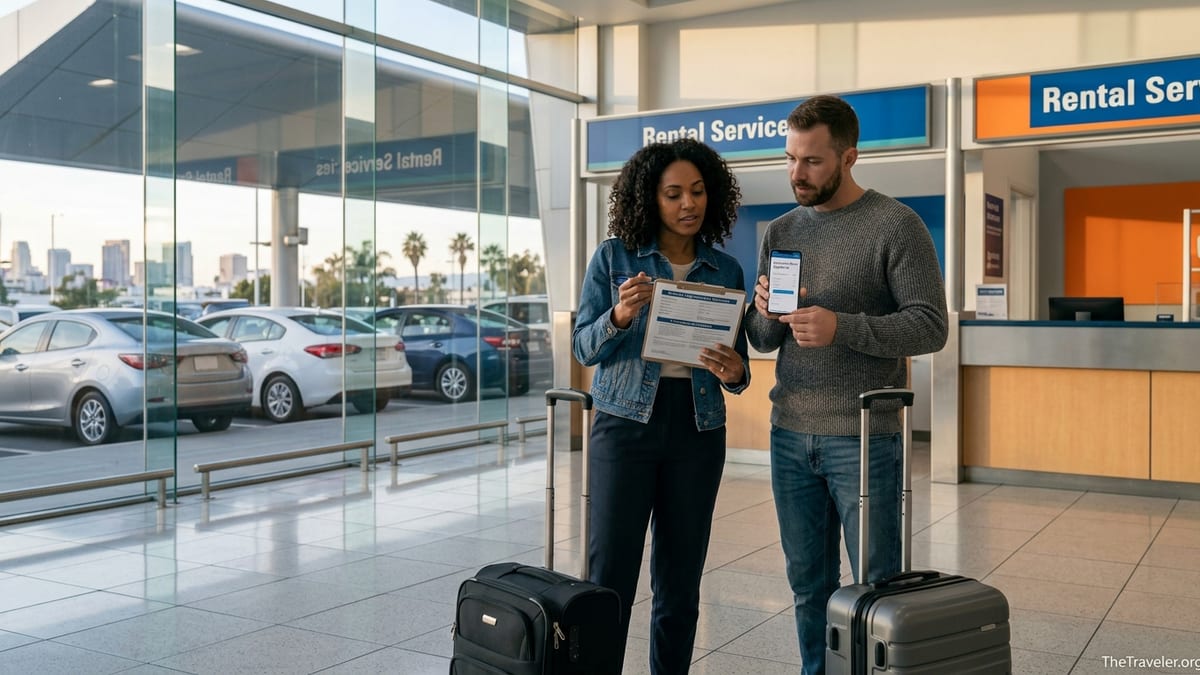
How Bonzah and RentalCover Work in Practice
Both Bonzah and RentalCover sit in the same niche: they offer insurance designed to replace or supplement the collision damage waiver and liability products sold by rental car companies. You buy cover online, usually when booking your car through a broker such as Rentalcars, Booking, Kayak, or a direct link from the provider, and bring a certificate or email when you pick up the vehicle. At the counter, you decline the rental company’s insurance and rely on your third-party policy instead.
In practical terms, the two services work differently. Bonzah, for U.S. customers, focuses on primary damage cover for the rental vehicle up to around 35,000 dollars per incident, plus liability options that meet at least state minimums and can be boosted to about 1 million dollars with supplemental liability. That means if you back into a pole with a car from Hertz in Phoenix, the claim goes to Bonzah first rather than to your personal auto policy, and you generally avoid a hit to your personal insurance premiums.
RentalCover, by contrast, positions itself globally and partners with big rental brokers and airlines. Its products are typically sold as zero‑deductible damage protection that reimburses you for what the rental company charges. For example, if you rent a compact from Europcar in Lisbon, decline their full protection, and later get billed 2,800 euros for a scratched bumper and “loss of use,” RentalCover’s policy is designed to pay you back those charges after you submit documents like invoices and the rental agreement.
Day to day, the experience feels similar: you still pay the rental company first if they insist, then claim back from Bonzah or RentalCover. The key differences are in how much is covered, which drivers and vehicles are eligible, and how strict each company is about timing and paperwork when something goes wrong.
Coverage: What Each Service Actually Protects
Bonzah’s core appeal is simple, front‑of‑house clarity. Its rental car damage coverage is primary and typically insures the rental vehicle itself up to about 35,000 dollars, subject to a modest deductible for collisions with another vehicle. Its liability suite includes a renter’s contingent liability policy that meets state minimum requirements plus optional supplemental liability up to roughly 1 million dollars in the United States and Canada. For a U.S. traveler who does not own a car and therefore lacks personal auto insurance, that combination can act as the main legal and financial shield behind the wheel.
RentalCover’s emphasis falls on reimbursement for damage and fees that rental companies love to charge. Policies usually promise zero deductible cover for the rental vehicle up to a specified limit, such as 50,000 dollars for collision damage protection, and often extend to extras like cracked windscreens, tire and wheel damage, lost keys, towing, and administrative fees. For a traveler driving narrow, stone‑lined roads on Italy’s Amalfi Coast or windy gravel tracks in Iceland, that broader protection for glass, wheels, and underbody damage can be extremely valuable.
There are important boundaries on both sides. Bonzah excludes certain vehicle categories such as BMWs and Corvettes for new policies, and like most insurers it has restrictions on exotic or commercial vehicles. RentalCover maintains its own exclusion lists and sometimes requires you to hold the rental company’s basic damage waiver as a condition of coverage in particular markets. A traveler renting a campervan in Reykjavik, for instance, may find that only specific types of vans or RVs qualify, and that off‑road driving or river crossings are excluded.
Both providers also cover additional drivers as long as they are named on the rental agreement and meet minimum age rules, commonly 21 or older. This can make a real difference for couples or friends sharing long drives in the western United States, where rental companies often charge extra per additional driver and some credit card coverages quietly exclude anyone but the cardholder.
Pricing and Real-World Cost Examples
Bonzah and RentalCover both market themselves as ways to avoid the rental desk’s 20 to 40 dollar daily insurance charges. In practice, travelers often see Bonzah quotes in the range of 7 to 12 dollars per day for basic damage cover in the United States, with liability add‑ons increasing that cost depending on state and limits. For a one‑week trip to Orlando, a traveler might pay around 70 to 90 dollars with Bonzah for vehicle damage and liability, versus more than 200 dollars for equivalent cover purchased at the counter.
RentalCover’s prices vary more widely by region, car class, and whether policies are sold through partners such as Ryanair, Booking, or Rentalcars. Still, it is common to see quotes around 8 to 15 dollars per day for a standard rental car in Western Europe or North America, with specific products for campervans, motorhomes, and car‑sharing sometimes priced a little higher. A family flying into Faro for a nine‑day beach holiday may pay roughly 100 to 130 euros for a RentalCover policy that promises zero deductible reimbursement if the rental company charges them for damage.
These price differences become most visible on longer rentals. Both Bonzah and RentalCover can cover rentals over 30 days, whereas many credit card benefits and rental company waivers stop at 28 or 30 days. On a month‑long drive across the western U.S., a traveler comparing options might face 900 to 1,200 dollars for combined insurance purchased at the counter versus perhaps 250 to 350 dollars via Bonzah or RentalCover.
However, the cheapest option is not always the best once you factor in what is excluded and how easy it will be to make a claim. A slightly more expensive plan that covers windscreens, tires, and “loss of use” charges might save a traveler far more money than it costs if they return a car with rim damage after parking too close to a granite curb in downtown Vancouver.
Claims Experiences: Where Travelers Run Into Trouble
On paper, both providers promise streamlined online claims and quick payouts, sometimes within a few business days after receiving complete documentation. In reality, traveler reviews paint a more nuanced picture, especially for RentalCover. Many customers report smooth experiences when the incident fits squarely within policy terms: a broken side mirror after a valet scraped a post, a chipped windshield on a highway in Arizona, or a scraped bumper in a Paris parking garage, all reimbursed after standard paperwork and a waiting period.
Problems tend to arise when something about the rental or the incident falls into a gray area. RentalCover, for example, is strict about timing. In some partner setups, coverage must be bought at least an hour before vehicle pickup and cannot start after the rental has begun. Yet travelers have reported being able to purchase policies after collection when a website or airline partner still displayed the offer. Only after a later claim for a scratched door or parking lot ding did they learn that the policy was technically invalid because of the purchase time.
There are also traveler accounts of delayed communication or denied RentalCover claims due to missing police reports, disputes over pre‑existing damage, or confusion about who was the official policyholder when multiple drivers were involved. A couple renting through an online travel agency, for instance, might discover after an accident in Spain that the spouse who was driving is not listed as the policy subscriber, creating friction when trying to recover more than 1,000 euros in damage charges.
Bonzah has a smaller digital footprint and fewer public complaints, which can reflect both lower volume and the fact that it primarily serves U.S. residents with relatively straightforward car rentals. Cases described by users tend to focus more on general satisfaction with clear policy wording and competitive pricing than on complex international claims. Still, as with any insurer, Bonzah expects complete documentation, including the rental agreement, photos of damage where possible, and the final invoice from the rental company. Travelers who skip a proper inspection at pick‑up or fail to document existing scratches risk finding themselves in the same difficult position they would face with any insurer or credit card coverage.
Where Each Provider Shines for Different Types of Trips
For a U.S. traveler without personal auto insurance planning a weeklong trip within the country, Bonzah is often the more straightforward option. Its combination of primary damage cover up to roughly 35,000 dollars and the ability to meet state minimum liability requirements, with an optional boost to higher limits, can effectively replace the rental company’s products at a much lower cost. Renting a midsize sedan from Budget in Denver, declining all waivers at the counter, and relying on Bonzah for both damage and liability is a typical scenario where the service fits naturally.
RentalCover tends to appeal more to international itineraries and complex vehicle types. A backpacker driving a small hatchback across Portugal and Spain, booked through Rentalcars, may find RentalCover prominently recommended and instantly purchasable with their reservation. Similarly, travelers renting a campervan in the United Kingdom or an SUV in Iceland for gravel‑road exploration often encounter dedicated RentalCover options tailored to those vehicles, something Bonzah generally does not emphasize for North American customers.
For frequent renters who often book through online platforms, RentalCover’s deep integrations with airlines, brokers, and travel sites can make it feel seamless. You might book a car through an airline’s website, tick a box for RentalCover damage protection, and have all documents in the same inbox as your flight confirmation. In contrast, Bonzah usually requires a deliberate decision to visit its site, purchase cover separately, and then match the dates and vehicle details to your rental agreement.
That said, there are scenarios where Bonzah’s narrower but clearer offering is an advantage even abroad. A U.S. resident spending two months in Canada, for example, may prefer Bonzah’s familiar structure and explicit liability limits to deciphering the fine print of multiple international RentalCover options, especially when provincial rules and cross‑border driving to the United States are involved.
Common Pitfalls and How to Avoid Them
Whether you choose Bonzah or RentalCover, the biggest risk is assuming you are covered without fully reading how and when the policy applies. Several travelers who ran into trouble with RentalCover did so because they purchased cover after picking up the car or through a partner site that did not clearly display timing restrictions. Others failed to realize that certain uses, such as commercial activity or peer‑to‑peer car‑sharing, fall outside the allowed scope of a leisure rental policy.
Another recurring issue is documentation. Both Bonzah and RentalCover require clear evidence of the rental agreement, the charges billed by the rental company, and often photos or a damage report. Renters who leave the lot without walking around the vehicle, taking time‑stamped pictures of every scratch and dent, or making sure those marks are noted on the rental form, are at greater risk of being billed later for damage they did not cause. Insurers are more likely to side with the rental company when documentation is weak.
Policy limits and exclusions matter just as much as price. A traveler might see that Bonzah’s damage protection caps at about 35,000 dollars and assume that is far more than they would ever need, but a high‑end SUV or premium sedan in a total loss accident can approach that figure once loss‑of‑use, towing, and administrative fees are added. RentalCover policies, meanwhile, often boast zero deductible and higher limits, but may leave gaps if the rental company insists on its own basic waiver first or if specific countries, such as Ireland or Israel for certain U.S. residents, are excluded.
Finally, renters should be realistic about their tolerance for handling claims themselves. With both Bonzah and RentalCover, you usually pay the rental company first and then wait for reimbursement. If the idea of fronting 2,000 dollars for a scuffed bumper in Dublin or a broken headlight in Los Angeles makes you uncomfortable, you may prefer to pay more up front for the rental company’s all‑inclusive protection, despite its higher daily cost.
The Takeaway
Bonzah and RentalCover each offer meaningful ways to cut the cost of rental car insurance and plug gaps left by personal auto policies and credit card benefits. Bonzah stands out for U.S. residents who want primary damage coverage and clear, defined liability options that can function as their main auto insurance while renting. It is particularly attractive for domestic road trips, travelers without their own cars, and those who value straightforward policy language over a wide range of international products.
RentalCover, on the other hand, shines as a flexible, globally focused option with robust reimbursement for damage, glass, tires, and the myriad fees that rental companies often add. It is well suited to overseas rentals, longer itineraries across multiple countries, and special vehicles like campervans and SUVs, provided travelers are careful about timing, eligibility, and documentation.
For most travelers, the “better” service is the one that fits their specific trip profile rather than the one that looks cheapest at checkout. If you are a U.S. traveler driving domestically and need a primary policy with clear liability protection, Bonzah is likely to be the more practical choice. If you are hopping between countries in Europe, renting a campervan, or booking through an international broker that integrates RentalCover, then RentalCover may offer more relevant and comprehensive protection.
Whichever you choose, take fifteen minutes before your trip to read the policy, confirm purchase timing rules, and photograph the car thoroughly at pick‑up and drop‑off. Those simple steps do more to protect your wallet than any brand name on your rental insurance certificate.
FAQ
Q1. Is Bonzah or RentalCover better for a U.S. road trip?
For a typical U.S. road trip, Bonzah often fits better because it offers primary damage cover for the rental car and clear liability options that can meet state minimums and extend to higher limits, making it easier to replace the rental desk’s insurance at a lower cost.
Q2. Which service is better for international rentals in Europe or Asia?
RentalCover usually has the edge for international rentals because it partners with many global brokers and offers products tailored to European and other foreign markets, including coverage for common local issues like glass and wheel damage and certain administrative fees.
Q3. Can I rely on Bonzah or RentalCover instead of my credit card insurance?
Many travelers use Bonzah or RentalCover to avoid relying solely on credit card insurance, which is often secondary, excludes longer rentals, and may omit damage to windscreens, tires, or underbodies, but the best choice depends on your card’s specific benefits and trip details.
Q4. Do these policies cover all drivers on the rental?
Both services generally cover additional drivers as long as they are listed on the rental agreement and meet age and licensing requirements, so it is important to add every intended driver at the counter and keep copies of the updated contract.
Q5. What happens if I buy RentalCover after picking up the car?
Some RentalCover products require that coverage be purchased before the rental starts, sometimes at least an hour before pickup, so buying it after leaving the lot can result in later claim denials even if the website allowed the purchase.
Q6. Are luxury or specialty vehicles covered by Bonzah and RentalCover?
Both providers exclude certain vehicle types, including selected luxury models and exotic or commercial vehicles, so travelers renting premium SUVs, sports cars, or campervans should carefully check each policy’s eligible vehicle list before purchase.
Q7. How quickly do Bonzah and RentalCover pay claims?
Both advertise relatively fast payouts once all documentation is received, sometimes within a few business days, but actual timelines vary and can stretch longer when claims are complex, involve international rentals, or require additional investigation.
Q8. Can I use Bonzah or RentalCover for peer-to-peer rentals like Turo?
Standard policies from both companies are designed for traditional rental car companies, and peer‑to‑peer or commercial uses are often excluded, so travelers using car‑sharing platforms should not assume coverage without confirming specific terms.
Q9. Do I still have to pay the rental company if I am insured by Bonzah or RentalCover?
In many cases you pay the rental company first for any damage charges and then seek reimbursement from Bonzah or RentalCover, so you should be prepared to put these costs on a credit card while the claim is processed.
Q10. How should I decide between Bonzah, RentalCover, or the rental company’s own insurance?
The choice comes down to your destination, whether you have personal auto insurance, how comfortable you are fronting money and handling claims, and which policy best matches the risks of your specific trip; comparing real coverage details, not just daily prices, is the safest approach.