


Booking.com is one of the world’s largest travel platforms, with millions of properties and aggressive “last room” pressure messages that can make it feel risky to hesitate. For many travelers it works smoothly: you compare prices, reserve in minutes, and check in without a hitch. But recent complaints, lawsuits, and even data breaches show that using Booking.com is not the same as booking directly with a hotel. Before you rely on it for a once‑a‑year vacation or a complex trip, it is worth understanding exactly how the platform works, where problems typically arise, and what you can do to protect yourself.
Get the latest updates straight to your inbox!
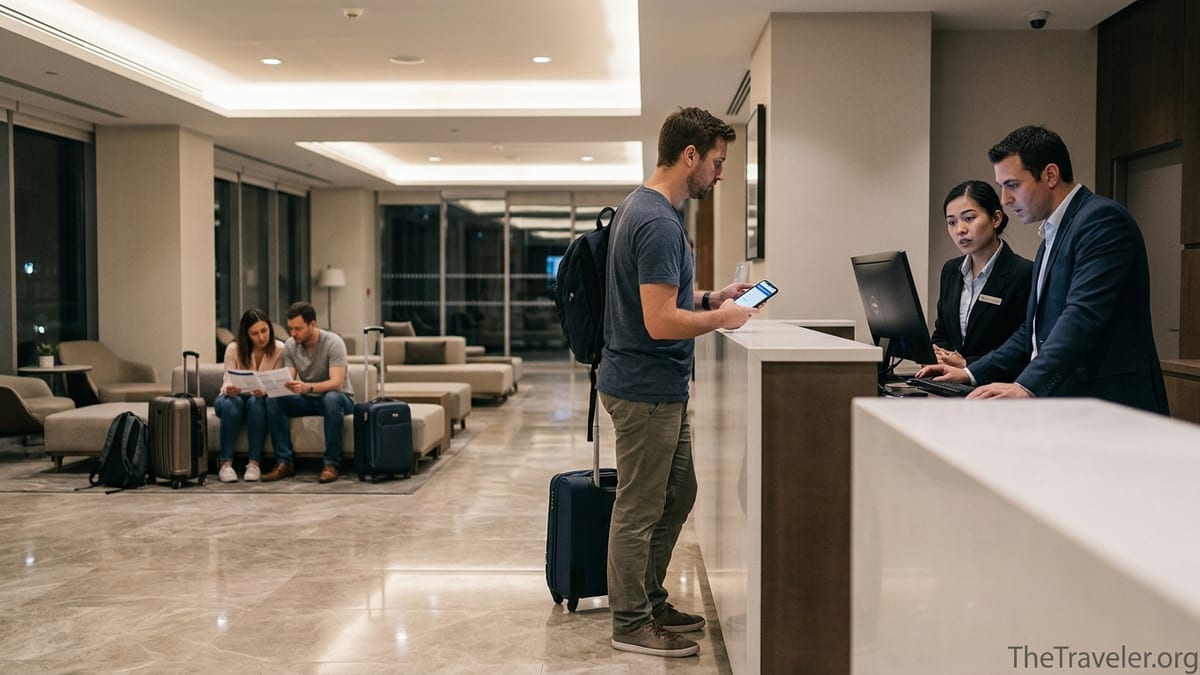
How Booking.com Actually Works Behind The Scenes
When you reserve through Booking.com, you are usually not entering a contract with Booking.com itself for the stay. In most cases, the contract is between you and the hotel or host, with Booking.com acting as an intermediary that runs the website, processes some payments, and passes details through to the property. This distinction sounds technical, but it becomes crucial if something goes wrong, such as a last‑minute cancellation or an overcharge, because each side can claim the other is responsible.
Properties pay Booking.com commissions that can run into double‑digits per booking, and in parts of Europe hotel groups have accused the company of abusing a dominant position and restricting their ability to offer cheaper prices on their own sites. In Spain, for example, the national competition authority imposed a large fine in 2024 over these practices. Those costs and conditions shape what you see: hotels are incentivized to push more expensive room types, add mandatory fees on arrival, or quietly steer guests away from Booking.com in favor of direct bookings.
The platform also operates ranking and visibility tools that can be tied to higher commissions. That means the first few results when you search for “Paris hotel near Gare du Nord” are not simply the best places for your dates, but often properties that have paid for stronger placement or agreed to deeper discounts. A three‑star hotel might appear above a better‑reviewed four‑star property because it participates in a “preferred” program that makes it more visible in exchange for higher commission payments.
Understanding this structure helps you read search results more critically. The headline price and “only 2 rooms left at this price” message are part of a commercial system, not a neutral directory. You can still find excellent deals, but you should treat every listing as marketing that needs to be checked, not as a definitive statement of availability or value.
Pricing, Fees, and Why “Best Price” Is Not Always Cheapest
Booking.com advertises competitive prices, and on many city stays it does deliver. It is common to see a chain hotel in Chicago or Lisbon listed at roughly the same base rate you will find on the hotel’s own website. However, traveler complaints, regulatory actions, and a 2025 “junk fee” settlement in Texas involving Booking.com’s parent company highlight that advertised “low” rates do not always include all mandatory costs. The issue is especially noticeable in the United States, where resort fees, destination fees, and cleaning charges are widespread.
Consider a long weekend in Miami Beach. On Booking.com you might see an ocean‑adjacent hotel advertised at 219 dollars per night. Only on the final booking screen do you notice a 45‑dollar per night “resort fee” plus city taxes that push the real nightly cost well above 260 dollars. In Las Vegas, a 79‑dollar room can end up closer to 150 dollars after resort charges. Some lawsuits in the United States have alleged that failing to show these unavoidable fees upfront is misleading. Booking.com has agreed in settlements to be clearer about total pricing, but travelers still report examples where the biggest extra charges only become obvious near the end of the process.
Outside the United States, the picture varies. In many European cities, the nightly total on Booking.com is close to what you actually pay, with only a modest city tax due at check‑in. But even there you can encounter local “tourist tax” notes in small print, or cleaning fees for apartments that add 40 or 60 euros to a short stay. A family who booked a three‑night apartment in Venice in late 2024 reported that the cleaning fee added through Booking.com was almost a full extra night’s rent, something they only fully understood after comparing with a similar apartment booked direct.
The safest habit is to always click through to the very last confirmation screen and read the “Price breakdown” and “Not included in the price” sections line by line. For a New York stay, check whether there is a nightly “facility fee” for Wi‑Fi and the gym. For a Caribbean resort, look for mandatory service charges and government levies. Then quickly open the hotel’s own website in a separate tab and run the same dates to see if the all‑in total is lower, higher, or the same. In many cases, Booking.com will match the hotel’s total or beat it by a small margin, but it is not unusual to find the direct rate two or three percent cheaper once all taxes and fees are counted.
Overbookings, Cancellations, and What Happens When a Room Disappears
The most stressful Booking.com problems involve reservations that vanish. Consumer reporters and travel forums regularly feature stories where a traveler arrives at a hotel only to be told that the property is overbooked or never actually received the reservation details from Booking.com. In late 2024, for instance, a traveler in Europe described calling a hotel weeks before arrival to reconfirm a Booking.com reservation, only to be told that the hotel had no room available because several rooms had been sold twice across different channels.
Overbooking is a longstanding practice in the hotel industry, but Booking.com can add another layer of complexity. The hotel might blame the platform, saying “their system did not sync.” Booking.com might then tell the guest that the property is responsible for honoring the stay or arranging alternative accommodation. The result can be a game of pass‑the‑blame played in a foreign language at 11 p.m., with the traveler caught between.
Another common pattern involves hosts canceling when they realize they underpriced or can re‑sell a peak‑season night for more. A Chicago‑area consumer group documented cases in which hosts on major platforms, including Booking.com, accepted full payment for a summer rental and then canceled weeks before arrival, offering only a refund rather than assistance in finding a comparable replacement. For the traveler, the refund may arrive, but nearby options might now cost several hundred dollars more per night.
To reduce the risk, it helps to treat high‑stakes stays differently. If you are booking a one‑night airport hotel in Dallas, the risk of disruption is low and there are many backups. If you are reserving a boutique ryokan during cherry blossom season in Kyoto or a tiny guesthouse in a Sardinian village in August, you are more exposed. In these cases, consider calling or emailing the property a few days after receiving your Booking.com confirmation to verify that they see the reservation in their own system, the room type matches, and your arrival time is clear. Keep a screenshot of this exchange on your phone so you can show it at check‑in if needed.
Payment, Double Charges, and Getting Your Money Back
Payment arrangements on Booking.com vary from property to property. Sometimes you pay the hotel directly at check‑in. Other times Booking.com charges your card in advance and sends a “virtual credit card” to the hotel for the room amount. Each method carries its own risks. In 2023 and 2024, travelers increasingly reported problems with double billing, where their card was charged both by Booking.com and again by the hotel claiming that the virtual card did not work. Several recent online discussions describe guests who were told at checkout that Booking.com’s payment had failed, were forced to pay again to avoid being stranded, and then struggled for months to obtain a refund.
Real‑world examples are easy to find. One traveler in 2025 reported being charged three times for a hotel stay through Booking.com after a payment glitch, with customer service repeatedly asking for the same documentation while weeks passed. Others shared experiences where they were asked to pay in cash on arrival because the hotel claimed Booking.com had not sent payment, even though the confirmation clearly stated “Paid in full.” In an advocacy case published in early 2026, a lodge canceled a guest’s reservation “by mistake” but Booking.com still billed the guest, who then had to fight for a refund.
Disputes are complicated by the triangular relationship between you, Booking.com, and the property. The hotel may insist that it never received money from Booking.com and therefore cannot issue a refund. Booking.com may tell you that the hotel controls cancellation policies. That is why savvy travelers use credit cards with strong dispute rights for all Booking.com payments and keep meticulous records: screenshots of the payment page, confirmation emails showing whether the stay is “paid,” and any chat transcripts with the property.
If you notice a duplicate charge, take immediate screenshots from your bank or card app, contact both the hotel and Booking.com through written channels, and set a clear deadline for resolution. If you do not see concrete progress within a reasonable time, escalate with your card issuer and file a formal dispute, explaining that you paid twice for the same service. Travelers who pursued chargebacks with major card networks often report faster outcomes than those who waited passively for Booking.com support to resolve the issue.
Data Security, Phishing, and Communication Scams
As Booking.com has grown, it has also become a lucrative target for criminals. In 2026, the company confirmed a data incident in which hackers accessed information related to customer reservations. Earlier reports from Dutch and British media documented cases of travelers receiving highly convincing phishing messages that referenced their real Booking.com stays and encouraged them to “update payment details” or “confirm card security.” Some messages arrived through the official Booking.com messaging system, while others appeared on email or WhatsApp, making them difficult to spot.
In one widely reported case, hundreds of Dutch travelers were defrauded after scammers gained access to hotel systems and used real reservation details to convince guests to send advance payments by bank transfer. The travelers believed they were dealing either with Booking.com or with their hotels. Instead, their money went straight to fraudsters, and both hotels and Booking.com initially distanced themselves from responsibility, arguing that guests should not have paid outside the official channels.
Today, it is essential to assume that any message about a Booking.com stay could be fake until proven otherwise. If you receive a text saying “Your reservation in Rome will be canceled unless you re‑verify your card,” do not click any links in the message. Instead, open the Booking.com app directly or type the official address into your browser, then check the Messages section inside your booking. If there is no matching message there, you are dealing with a scam. The same goes for emails that request bank transfers or gift‑card payments to “avoid cancellation.” Legitimate Booking.com and hotel communications about payment will not require you to send funds that way.
When in doubt, call the hotel using a telephone number you have verified independently, such as one listed on a major map service. Ask the front desk whether they have really requested additional payment or card details. Many travelers have saved their trips simply by making that quick call before clicking.
Regulators, Complaints, and What They Reveal About Risk
Across several countries, consumer agencies have seen a steady flow of complaints citing Booking.com. In Australia, a state fair trading office reported hundreds of complaints in 2024 and 2025 relating to refunds, quality of accommodation, and fees or charges linked to Booking.com reservations. In Europe, competition authorities in Spain and other countries have pursued cases arguing that Booking.com’s contracts with hotels restricted competition and may have misled consumers about availability and pricing.
In mid‑2025, a coalition of European hotel associations launched a collective action seeking damages for what they describe as years of anti‑competitive practices, including high commissions and ranking systems that reward properties that pay more. While these disputes are primarily between hotels and Booking.com, travelers can learn from them. If entire hotel sectors in countries like the Netherlands and Spain argue that they have felt pressured by Booking.com’s conditions, it is easier to understand why some hotels might be slow to help guests who booked through the platform, or why they might try to nudge you toward canceling and rebooking directly.
At the same time, it is important to keep a sense of proportion. Booking.com handles a huge volume of reservations every day, and the majority are completed without major incident. Many travelers continue to use the platform precisely because it can aggregate options in destinations where they do not know local brands. In a smaller U.S. city like Boise or an inland town in Portugal, Booking.com may show you locally owned motels, guesthouses, and apartments you would never have discovered on your own.
The takeaway from regulatory and media scrutiny is not that you should never use Booking.com, but that you should stop treating its listings as automatically authoritative. Complaints reveal recurring themes: confusion over who is responsible when things go wrong, difficulty getting timely support, and surprise costs that appear late in the booking flow. With that knowledge, you can develop the same skepticism and habits you would use when dealing with airlines, ticket resellers, or other powerful intermediaries.
Smart Ways To Use Booking.com Without Getting Burned
Used carefully, Booking.com can still be a powerful tool. One effective strategy is to treat it initially as a research engine rather than a final booking channel. For example, if you are planning a July trip to Lisbon, you might spend an evening on Booking.com identifying three or four appealing hotels in the Baixa and Alfama neighborhoods that match your budget and preferences. Then, once you have a shortlist, you open each hotel’s own site in another tab and compare direct rates, cancellation policies, and any included extras such as breakfast or airport transfers.
If a hotel’s own site offers a rate within a few dollars of Booking.com’s total, many travelers prefer to book direct to simplify any future problems. Hotels sometimes throw in perks like a slightly better room or late checkout for direct bookers, especially in competitive markets. On the other hand, if Booking.com shows a clearly lower price, flexible cancellation, or bundled extras that the hotel does not match, you might decide that the savings outweigh the risks for that particular stay.
Regardless of where you complete the reservation, some basic steps will protect you. Always check the most recent reviews, not just the overall score. If guests in the last two or three months complain that the property is “not as pictured” or “refusing to honor free cancellation,” consider that a red flag. Pay attention to how the property responds to negative reviews. A detailed, courteous reply that accepts responsibility and explains what has changed is a better sign than silence or hostility.
Finally, keep every scrap of documentation. Save your Booking.com confirmation as a PDF, including the total price, what is included, and the cancellation deadline. Take screenshots of key details such as “no resort fee” or “breakfast included.” If you make changes or receive promises in the in‑platform message system, capture those as well. These materials can be invaluable if you later need to dispute a charge with your bank, escalate a complaint with a consumer agency, or simply persuade a front desk clerk that a fee being demanded at check‑in does not match what you agreed to.
The Takeaway
Booking.com has transformed how people book hotels and apartments worldwide. It offers reach and convenience that would have been hard to imagine twenty years ago, bringing small guesthouses in rural France and mom‑and‑pop motels off American interstates onto the same digital shelf as global chains. Yet the very scale and power that make the platform so useful also create distortions: pressure tactics in the interface, complicated payment flows, tensions with hotels, and, at times, slow or fragmented customer support when something goes wrong.
If you approach Booking.com as a sophisticated marketplace rather than a neutral directory, you can use it to your advantage. Compare total prices with hotel websites, budget for possible extra fees, verify critical reservations directly with properties, and pay with credit cards that allow you to challenge unfair charges. Treat unexpected messages asking for payment with suspicion until you have double‑checked them through official channels.
For routine business trips and short city breaks, Booking.com may continue to be the quickest option to secure a decent room at a fair price. For big once‑in‑a‑lifetime trips, such as honeymoons, major family reunions, or rare long vacations, it may be worth adding extra layers of caution, or even booking direct once you have used the platform for research. Armed with realistic expectations and a few defensive habits, you can tap into the benefits of Booking.com while greatly reducing the chances that your dream trip is derailed by a preventable surprise.
FAQ
Q1. Is Booking.com safe to use for hotel reservations?
Booking.com is widely used and most stays go smoothly, but no platform is risk‑free. Recent data incidents and phishing scams show that you should be cautious with messages about payments and always verify requests through the official app or website rather than clicking unexpected links.
Q2. Why is the price on Booking.com different from the hotel’s own website?
Differences usually come from commissions, promotions, and how taxes or fees are displayed. Sometimes Booking.com offers a lower base rate but omits resort or cleaning fees until later in the process; other times hotels offer small discounts or extras for direct bookings.
Q3. What should I do if a hotel cancels my Booking.com reservation close to arrival?
First, contact the property and Booking.com through written channels to request equivalent alternative accommodation at the same price. If they cannot help and you must rebook at a higher rate, keep all receipts and correspondence in case you later seek compensation from the property, Booking.com, or your card issuer.
Q4. How can I avoid hidden fees when booking on Booking.com?
Click through to the final confirmation screen and read the price breakdown carefully, especially the sections labeled taxes, resort fees, destination fees, cleaning charges, or similar. Then compare the all‑in total with the hotel’s own site so you understand the true cost before you enter payment details.
Q5. Is it better to pay in advance through Booking.com or at the hotel?
Paying in advance can lock in a rate and sometimes offers a discount, but it may complicate refunds if something goes wrong. Paying at the hotel can give you more flexibility, especially for stays that might change, as long as you are comfortable with the property’s cancellation deadline and guarantee requirements.
Q6. What can I do if I am charged twice, by both Booking.com and the hotel?
Gather proof of the duplicate charges from your bank or card app and screenshots of your confirmation, then contact both the hotel and Booking.com in writing. If they do not resolve the issue quickly, file a dispute with your credit card issuer explaining that you paid twice for the same stay.
Q7. How do I recognize scam messages related to my Booking.com stay?
Treat any unsolicited message asking you to re‑enter card details, pay by bank transfer, or risk cancellation as suspicious. Instead of using links in the message, open the official Booking.com app or website directly and check your booking messages there, or call the hotel using a verified phone number.
Q8. Are Booking.com reviews trustworthy?
Most reviews come from real guests, but like any platform they can be influenced by incentives, selective responses, or changes in management. Focus on recent reviews from the last few months and read the text carefully, not just the overall score.
Q9. Should I ever avoid using Booking.com?
It can be wise to avoid intermediaries for especially important or complex trips, such as honeymoons, large group bookings, or stays in remote destinations with limited alternatives. In those cases, booking directly with a trusted hotel or local agency may give you clearer lines of responsibility if plans change.
Q10. What is the single most important step to protect myself when using Booking.com?
The most effective step is to document everything: save confirmations, take screenshots of prices and included services, and keep written records of any changes or promises. Combined with paying by credit card, this gives you leverage if you later need to challenge a charge or prove what you originally agreed to.