


The first time I priced a simple city break on Booking.com and saw the same hotel room jump by more than 80 dollars in a single afternoon, I assumed I had made a mistake. Same dates, same room, same number of guests. Yet depending on whether I was logged in, on my phone, or browsing from a different country, Booking.com quietly served me a different price. After repeating this across trips to Lisbon, New York and Tokyo, I realized it was not a glitch. The biggest surprise about Booking.com was just how dramatically prices could vary, even for the exact same stay.
Get the latest updates straight to your inbox!
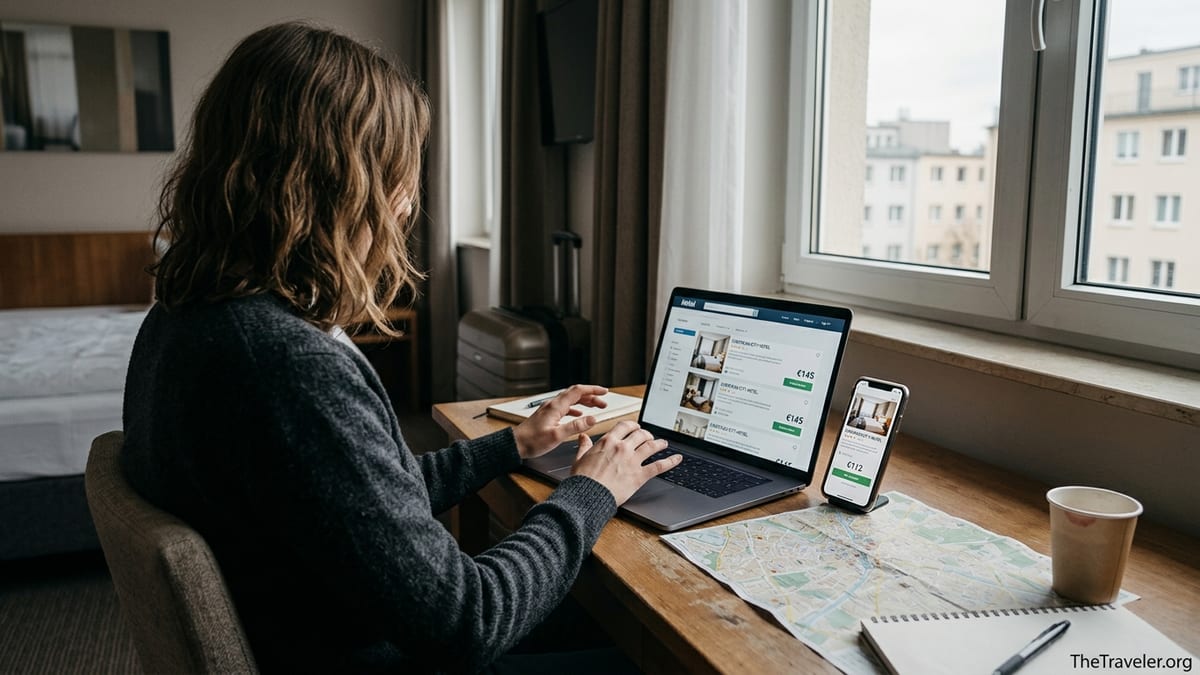
How I Discovered Booking.com’s Wild Price Swings
I first noticed the pattern planning a long weekend in Lisbon in early 2026. On a Tuesday morning, I pulled up a popular three-star hotel in Baixa for a Friday to Monday stay. On my laptop, not logged in, the standard double room showed roughly 145 dollars per night before taxes. Later that day, killing time at the airport, I checked the same dates and room on the Booking.com app, this time logged into my account. The nightly rate had dropped to around 118 dollars with a small “Genius price” badge, and an extra “mobile-only price” label on top. Same bed, same breakfast, noticeably different bill.
Intrigued, I tried again with other trips. A mid-range hotel near Times Square on a random September weeknight showed about 260 dollars per night on desktop in the afternoon. That evening, from the same sofa but on my phone, the app quoted closer to 225 dollars plus a small “Booking.com pays” promotion that shaved off another handful of dollars at checkout. When I asked friends in another country to check the exact same hotel for the same night, their price was different again, sometimes lower by 10 to 15 percent.
These were not one-off glitches. Property managers and pricing tools that connect to Booking.com have documented how the platform layers dynamic offers on top of a base rate, leading to different guest-facing prices depending on device, country, loyalty level and ongoing promotions. Hosts sometimes discover that once they join a promotion like Genius, Booking.com has quietly dropped their cheapest room type’s public rate even further than expected. For travelers, all of this amounts to a booking experience where the “real” price feels like a moving target.
Once I accepted that the price was not fixed, I started looking for patterns. The more I tested, the clearer it became that Booking.com’s price variations are not random; they are the product of an aggressive dynamic pricing ecosystem that reacts to who you are, how you search and when you decide to book.
The Big Levers: Genius, Mobile‑Only Rates and Promotions
One major driver of variability is Booking.com’s Genius program, a free loyalty scheme that promises discounts of up to around 30 percent for frequent users. Independent audits of hundreds of bookings in 2026 suggest that the average real-world saving is closer to single digits than the headline figure, but the important part for travelers is that Genius effectively creates two parallel price worlds: one for logged-in members and one for everyone else. A hotel might show at 150 dollars a night for a casual visitor and 135 dollars for a Genius Level 2 member for the exact same room and dates.
Layered on top of Genius are mobile-only rates. Many hotels opt in to offer slightly cheaper prices to users on the Booking.com app or mobile site in order to climb search rankings and attract last-minute bookers. Travel hackers have documented repeated cases where a room that appears at 120 dollars on desktop drops to something like 105 or 110 dollars once viewed on an Android phone or in the iOS app. In one widely shared experiment, the same European hotel room checked three ways on Booking.com showed the highest rate on desktop, a lower one on mobile web and the lowest in the app when combined with Genius.
Then come seasonal and targeted promotions. Booking.com frequently runs campaign-style discounts, such as early-booker deals for shoulder season or limited-time city promotions in destinations like Rome or Barcelona. On the surface this seems straightforward: during a “Summer Sale,” you expect lower prices. In practice, these discounts do not simply subtract a flat percentage from every rate. They stack in specific ways with Genius levels, nonrefundable conditions and mobile offers. Documentation for property managers notes that Genius, mobile and other discounts do not simply sum up, but interact with the underlying base rate in a sequence. The result is that two travelers can see different effective discounts for the same room even if they are both technically entitled to similar promotions.
On a practical level, this explains why you might see a message like “You’re getting a lower price because you’re a Genius Level 2 member” on one device while another family member, checking on a different account, sees “Booking.com pays part of your stay” or no discount label at all. All three screens can legitimately quote different totals for exactly the same accommodation.
Same Room, Different Country: The Geography Effect
Geographic pricing was another surprise. I had long known that airfares could change depending on where you book from, but did not expect the same hotel room on Booking.com to cost meaningfully different amounts based solely on my browsing location. Yet tests run by both consumers and specialized price-monitoring tools show that Booking.com routinely adjusts displayed rates based on the country of the user. A hotel in central Paris might cost one amount when searched from the United States and a lower amount when searched from Poland or Thailand, even when currency differences are removed.
In one set of experiments described by a pricing analytics firm monitoring Booking.com across more than 200 countries, researchers found substantial regional price gaps on identical rooms. These are not different room categories or dates; they are the same listing shown to a Brazilian user and a German user, for example, at slightly different prices. Hotels themselves may set specific country-targeted promotions, and Booking.com also adds region-specific offers, especially for markets it is keen to grow. Travelers using VPNs have taken advantage of this for years by virtually appearing to browse from another country and occasionally discovering lower rates.
Real travelers notice this without technical tools. It is common to see trip-planning threads where one person finds a hotel for, say, 90 euros a night while a friend checking from another country sees 105 euros for the identical terms. Hotel employees have chimed in to confirm that the same room inventory being sold through Booking.com can have different publicly visible prices in Europe versus Asia because of how contracts and promotions are set up. From the traveler’s side, it simply looks like random unfairness, but behind the scenes it is deliberate geographic segmentation.
Currency and tax treatment amplify this effect. Booking.com’s own developer documentation acknowledges that “final price may vary” due to local taxes, currency rounding and policy rules. If you choose to pay in your home currency instead of the local one, Booking.com can add a small currency conversion margin. City taxes, resort fees and service charges often appear separately during the last steps of checkout, and external analyses of example bookings show that these extras can add 15 to 30 percent to the initially advertised nightly rate in some destinations. That means a room that looks like a bargain at 100 euros can quietly become 120 or 130 euros once you reach the confirmation page.
Dynamic Pricing and “You Look Ready to Book” Behavior
Dynamic pricing is not unique to Booking.com, but the way it is implemented on the platform helps explain why prices can feel volatile. In simple terms, hotels set a base rate, and Booking.com’s systems and the hotel’s own revenue-management software keep tweaking it based on demand, occupancy, booking window, local events and even how users are behaving on the site. A vacation rental channel manager, for instance, warns hosts that when they opt into dynamic promotions with Booking.com, the guest-facing price can drop unexpectedly when Genius, mobile and country-specific offers overlap.
For travelers, this translates into experiences like the following. You research a boutique hotel in Budapest for early October and check the rate a few times over consecutive days. At first you see 95 euros a night. After several searches for the same dates and property from the same device, the price nudges up to 105 euros, and the site warns that “only 2 rooms left at this price.” Another traveler on a fresh device, or in private browsing mode, might still see 95 euros at that exact moment. Guests and hotel workers discussing this publicly often mention that repeat searching can coincide with small price increases, suggesting that Booking.com’s algorithms interpret repeated interest as a signal that you are closer to booking and less price sensitive.
There is academic support for the broader pattern. Research on hotel price dispersion across online platforms has found that different booking sites frequently show different rates for the same hotel room, and that prices across those sites tend to converge as the check-in date draws closer. In other words, the further out you are from your stay, the more “flexible” the price seems to be, which encourages you to react to countdown timers and messages about “deals ending soon,” even though the true risk of a huge price jump may be lower than it appears.
The dynamic nature of prices also explains another common surprise: last-minute discounts that beat what loyal users paid months earlier. A traveler might book a coastal resort six months out at 180 dollars a night, reassured by a Genius badge, only to see the same room drop to 150 dollars a night in the week before arrival due to low occupancy and a mobile-only campaign. Booking.com does operate a price match policy that, in theory, allows you to claim back the difference if you find your room cheaper elsewhere or later on the site. In practice, travelers report that strict conditions about matching room type, policies and timing make these claims difficult to win.
Why One Account or Device Gets a Better Deal
Perhaps the most frustrating discovery is that two people sitting in the same living room can see different Booking.com prices for an identical stay. This is not just due to country or currency; it can come down to account history, loyalty level and even the device type. In one real-world example discussed by frequent users, a traveler with Genius Level 3 found that their partner, only Genius Level 1, consistently saw lower rates on the same hotels when searching on a mobile phone. Promotions like “Book now and save” or “Booking.com pays part of your stay” appeared for one account but not the other.
Travel communities regularly recount side-by-side comparisons where a hotel costs, for example, 200 euros for one user on a MacBook, 185 euros for the same user on the mobile app thanks to a small mobile-only reduction, and 170 euros for a friend logged in from a different account and country. In some experiments, Android users have recorded lower rates than friends on iPhones for the same Booking.com listing and dates, which aligns with Booking.com’s own disclosure in some markets that results may be affected by factors like device type and browsing behavior.
Cookies and personal data play a role here. If your device is “known” to Booking.com as having searched for a particular property and date combination multiple times without booking, you might be placed in a different promotional bucket than a fresh user arriving from a price-comparison site. Some travelers report prices inching up after repeated visits, while others see special “welcome back” offers after a period of inactivity. While Booking.com does not disclose the full logic of its personalization engine, enough consistent real-world examples exist to conclude that who you are and how you have behaved on the platform genuinely affect your price.
All of this raises an uncomfortable question: is there a single fair price for a hotel room on Booking.com? Technically, yes; the hotel has a base rate. In practice, what you pay is the result of that base rate plus a hidden stack of loyalty perks, device-based offers, country rules and demand-sensitive tweaks. Your partner checking from another phone might simply land in a luckier combination of those factors.
How to Use Booking.com Without Overpaying
Once you understand why prices vary, you can start to turn that volatility to your advantage rather than letting it surprise you. The first step is to treat any single quote on Booking.com as a starting point, not a final truth. If you pull up a hotel at 190 dollars per night on your laptop, take a moment to check that same room and date on the Booking.com app while logged in, then again in a private browser window. If you have a partner or friend in another country, ask them to check from their device. It is remarkable how often a quick cross-check reveals a cheaper combination.
Second, make a habit of toggling key settings in the booking path. Look at prices in the local currency, not just your home currency, and compare totals both ways. In many cases, paying in the hotel’s currency and letting your bank or card handle conversion works out cheaper than accepting Booking.com’s dynamic currency conversion, which may include a small hidden margin. Always carry your eye down to the bottom of the price box where taxes and fees are fully itemized. A 100-dollar nightly rate with 30 dollars of taxes and charges added later is not really cheaper than a 115-dollar all-in rate on another site.
Third, compare across platforms and direct channels. Do a quick check on one or two rival sites and, where possible, on the hotel’s own website. Regulators in several countries have pushed back against restrictive “price parity” clauses, which has given hotels more freedom to offer lower rates on their own sites than those they list with Booking.com. In practice, travelers often find that once resort fees and city taxes are included, a direct booking with breakfast and flexible cancellation matches or beats the total cost advertised by Booking.com, even if the nightly base rate on Booking.com appears lower at first glance.
Finally, decide ahead of time how much your flexibility is worth. Nonrefundable rates on Booking.com can be enticingly cheaper, especially when combined with mobile and Genius discounts. But many travelers only discover later that life changes, flights are rescheduled, and that sharply cheaper rate becomes a sunk cost. If you are booking months ahead, it is often worth paying a little more for free cancellation, then setting a reminder a few weeks before the trip to re-check prices. If the same room has dropped, you can cancel and rebook at the lower rate.
The Takeaway
My biggest surprise about Booking.com was not simply that prices varied. It was how many different systems were quietly nudging those prices up and down behind the scenes. Loyalty discounts, mobile-only offers, regional pricing, dynamic currency conversion and behavioral targeting all combine to create a marketplace where three travelers can pay three different amounts for the same bed on the same night.
That does not mean you should stop using Booking.com altogether. The platform still shines for its breadth of listings, user reviews and easy filtering, especially in Europe and major cities worldwide. But it does mean you should approach every quote with a healthy skepticism. Double-check on another device. Compare currencies. Peek at the hotel’s own site. Assume that the first price you see is negotiable, not carved in stone.
If you do that, Booking.com’s volatility becomes less of a nasty surprise and more of an opportunity. The same systems that sometimes charge one traveler more can, with a little awareness, work in your favor. And the moment you see a supposedly “exclusive” rate beaten by a quick search on your phone or a friend’s laptop, you will understand exactly how flexible hotel pricing on Booking.com really is.
FAQ
Q1. Why do I see different Booking.com prices on my phone and laptop?
Booking.com often offers mobile-only discounts and applies different promotions depending on whether you use the app, mobile browser or desktop site, so the same room can show different totals.
Q2. How much can Booking.com prices vary for the same hotel?
In real-world tests, travelers commonly see differences of 5 to 20 percent between devices, accounts or countries, and in some cases even larger gaps when multiple promotions stack.
Q3. Does Booking.com charge more the more I search for the same hotel?
Booking.com does not publicly confirm this, but many travelers report small price increases after repeated searches, which likely reflect dynamic pricing responding to perceived demand.
Q4. Are Genius discounts on Booking.com always the best deal?
Not necessarily. Genius can lower prices compared with non-members, but other sites or the hotel’s own website sometimes still offer equal or better all-in rates after fees and taxes.
Q5. Why are taxes and fees on Booking.com sometimes added at the end?
Because Booking.com must follow local rules and hotel settings, city taxes, resort fees and service charges often appear separately at checkout, making the final price higher than the initial quote.
Q6. Can my location really change the price I see on Booking.com?
Yes. Booking.com and its hotel partners may use country-specific promotions and regional pricing, so users searching from different countries can see different rates for the same room.
Q7. Is it cheaper to pay in local currency or my home currency on Booking.com?
Paying in the hotel’s local currency is often slightly cheaper, because paying in your home currency may involve dynamic currency conversion with a small additional margin built into the exchange rate.
Q8. How can I reduce the chance of overpaying on Booking.com?
Compare the same room across devices, log in to check for Genius or mobile rates, view prices in local currency, and quickly check at least one rival site and the hotel’s own website.
Q9. Does Booking.com really honor its price match guarantee?
Some travelers succeed with claims, but many report rejections because the competing offer had slightly different conditions, so it is wise to book only when you are happy with the price shown.
Q10. Should I stop using Booking.com if prices vary so much?
Not necessarily. Treat Booking.com as a powerful search and comparison tool, but verify prices, watch fees and use its volatility to find better deals instead of accepting the first quote.