


Hamburg to Stockholm is one of Europe’s classic night‑train corridors, but by late 2026 the landscape has changed. The state‑supported SJ EuroNight has been replaced by a commercially operated RDC EuroNight, and private operator Snälltåget now runs its own seasonal overnight services alongside a new daytime Hamburg–Copenhagen–Stockholm train. This guide explains how the current system works in practice so you can pick the right operator, cabin and fare, and avoid common booking mistakes.
Get the latest updates straight to your inbox!
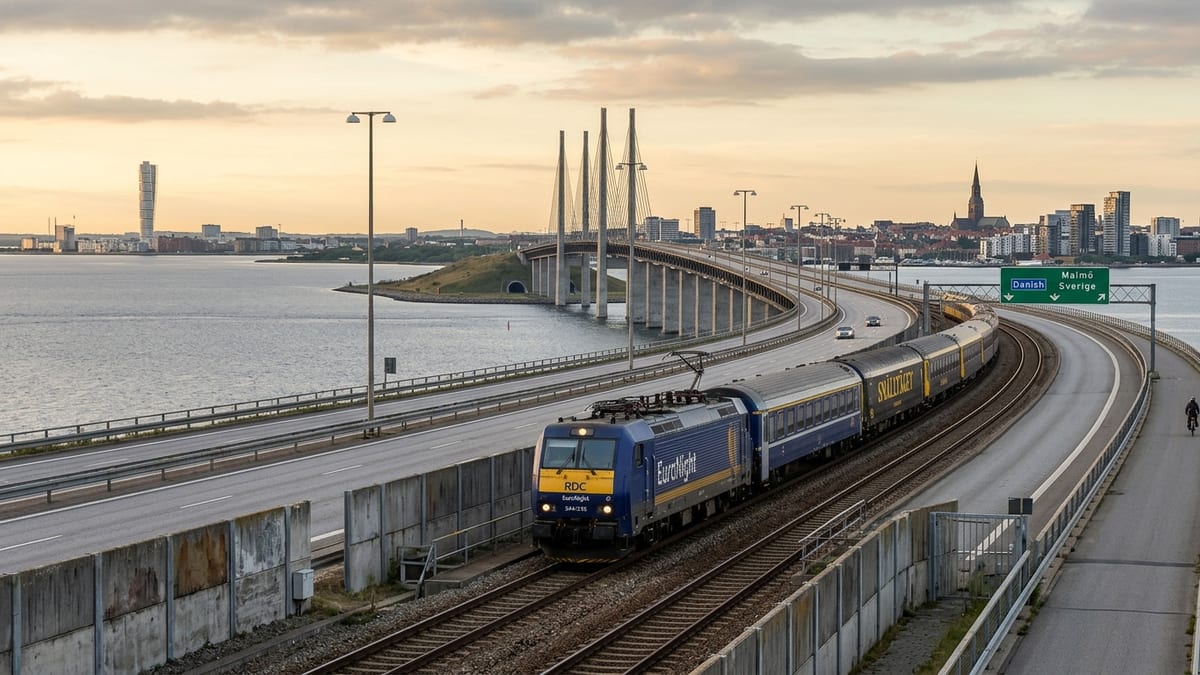
RDC EuroNight vs Snälltåget: understanding the operators
Since 1 September 2026, the year‑round night train on the Berlin–Hamburg–Stockholm route is marketed as RDC EuroNight and operated by German open‑access company RDC Deutschland. The train uses the long‑standing EuroNight 344/345 number series between Berlin, Hamburg, Copenhagen and Stockholm, and effectively continues the former SJ EuroNight, but without Swedish state subsidy and with its own commercial pricing and conditions.
Timetable information published by RDC shows that RDC EuroNight runs three times per week in each direction. Southbound, departures leave Stockholm Central for Germany on Thursdays, Saturdays and an additional weekday pattern that alternates between Berlin and Hamburg terminus. Northbound, trains leave Berlin and Hamburg for Stockholm on Mondays and Fridays, with a mid‑week departure starting in Hamburg that does not continue to or from Berlin. This pattern continues in the December 2026 to January 2027 timetable, so travelers must treat RDC EuroNight as a limited‑days service rather than a nightly train.
Snälltåget is a separate Swedish private operator owned by Transdev. It runs its own overnight trains between Sweden and Germany on seasonal schedules, typically branded as night trains to Berlin and to Alpine or ski destinations. These trains may run several nights per week in summer or around the ski season but do not generally operate every night year‑round. Snälltåget also markets a daytime Hamburg–Copenhagen–Malmö–Stockholm service that began in May 2026, which is distinct from any overnight service and bookable under separate timetables and fares.
For booking purposes, you should think of RDC EuroNight as the default year‑round overnight connection between Hamburg and Stockholm, with specific traffic days, and Snälltåget as an additional, usually seasonal option. It is unwise to assume that “the night train” exists every night: you must search by exact date and operator, and be prepared for gaps in service on certain weekdays or outside peak seasons.
Routes, boarding stations and key intermediate stops
RDC’s official timetable for autumn and winter 2026 confirms that EuroNight 344/345 runs between Berlin, Hamburg, Copenhagen and Stockholm via Denmark. Northbound trains typically depart Berlin Lichtenberg in the early evening, reach Hamburg for a late‑evening stop, continue overnight via Padborg and across Denmark, then cross to Sweden via Copenhagen and Malmö, arriving at Stockholm Central around late morning or midday. The exact times and stopping pattern vary slightly between the September–December and December–January timetables that RDC publishes, especially around the annual European timetable change in mid‑December.
For passengers boarding in Hamburg, the practical question is which station is used. Timetable documents and transport maps for the 2026 night network indicate that Hamburg Hauptbahnhof remains the principal boarding stop for the EuroNight, although selected departures in the post‑December 2026 timetable are planned to use Hamburg Altona for operational reasons on specific days. When searching close to your travel date, always check whether your departure is shown from Hamburg Hbf or Altona and allow time to reach the correct station, as they are not adjacent platforms but different complexes on opposite sides of the city center.
The core list of intermediate stops on the German–Danish–Swedish section broadly reflects the old SJ EuroNight pattern: Hamburg, Padborg at the German–Danish border, then through Denmark to Copenhagen area, followed by Malmö, Lund, Hässleholm, Alvesta, Nässjö, Linköping and Norrköping before Stockholm Central. Some departures may skip smaller Swedish stops, especially in the shoulder season, while the December 2026 timetable introduces an explicit stop at Copenhagen South, which acts as a through station for cross‑border trains. Because RDC operates commercially, it can adjust stops mid‑season for operational reasons, so treat any intermediate stop list as indicative until you check your exact date.
Snälltåget’s Hamburg–Stockholm day train runs a similar geographic corridor but calls at a wider range of intermediate cities. Published 2026 schedules show departures from Hamburg that serve Neumünster and Padborg in Germany, then Kolding and Odense in Denmark, Copenhagen Syd, Malmö, Lund, Hässleholm, Alvesta, Nässjö, Linköping, Norrköping, Södertälje and finally Stockholm Central. The overnight Snälltåget services typically combine or split in Malmö, with some coaches continuing to or from Berlin. This is why a timetable may advertise “Berlin–Stockholm” even though the specific coach you occupy between Hamburg and Stockholm is branded differently and may be attached or detached during the night.
Service days, seasonal patterns and why dates matter
One of the most important booking realities on this corridor is that both RDC EuroNight and Snälltåget tailor their services to demand and infrastructure capacity, meaning that the train you see in a general route description may not run on your intended day. RDC’s published “traffic days 2026” make it clear that EuroNight 344/345 runs only three times weekly. For example, in autumn 2026, northbound trains leave Berlin for Stockholm on Monday and Friday evenings, while a mid‑week departure from Hamburg alone does not continue all the way to Berlin. In the opposite direction, some southbound trains terminate in Hamburg instead of running through to Berlin. A traveler who assumes a nightly Berlin–Stockholm connection risks finding no train at all on a random Tuesday.
Snälltåget’s overnight services add an extra layer of complexity. Its Hamburg and Berlin night trains are marketed primarily as seasonal offerings, with specific calendars for summer holidays and for the winter ski season. For instance, Visit Sweden’s winter 2026–27 information highlights a weekly Snälltåget train from Sweden towards German connections for the Sälen ski region, operating on Saturdays between December and April, not on weekdays. In previous years, Snälltåget’s Berlin–Stockholm sleepers have also run mainly on selected days, often skipping nights from Sunday to Monday even in peak season. As a result, two different operators can each be present on some nights, yet neither might run on others.
Engineering work across Denmark and southern Sweden further complicates matters. Long‑distance lines north of Hamburg are heavily used and regularly subject to weekend closures, speed restrictions and diversions, especially around the annual timetable change in December and during major infrastructure projects such as bridge or tunnel upgrades. Operators may change departure times by up to an hour, add a replacement bus on a partial section or route the train via alternative lines that skip smaller intermediate stations. In practice, this means timetables published months in advance should be treated as provisional, particularly for travel around public holidays and long summer weekends.
Because of these variations, all travelers should plan night‑train journeys on this route by searching specific dates on the relevant operator’s website or booking platform, rather than relying on printed PDFs or third‑party blogs. If you are combining an Interrail pass with a sleeper reservation, check that your intended train is actually running on that day before you fix your pass dates, and consider having a fallback daytime combination (for example, Hamburg–Copenhagen–Stockholm using day trains) in case night services are heavily altered by maintenance.
Cabins and seats: what you actually get on board
RDC EuroNight and Snälltåget both offer a hierarchy of accommodation types, but the details differ and not every option is available on every departure. Traditional reclining seats are generally the cheapest category. On RDC EuroNight, these are standard second‑class open coaches with seats that recline but do not convert into bunk beds. They are adequate for budget travelers comfortable sleeping upright, but lighting, noise and foot traffic can be significant, especially at border checks or during shunting in Malmö or Copenhagen.
Shared couchettes occupy the middle ground. In the former SJ EuroNight configuration that RDC largely continues, couchette cars have six bunks per compartment arranged as three tiers on each side of a central aisle. By day, lower bunks convert into seating; by night, an attendant prepares the compartment with mattresses, sheets, pillow and blanket. These compartments are gender‑mixed unless you book a women‑only option where offered. On Snälltåget’s Germany services, couchette compartments are also typically four or six berths, with slightly simpler bedding and less insulation than full sleepers, but at noticeably lower prices than deluxe cabins.
Private couchette compartments are a popular choice for small groups. Both RDC and Snälltåget allow you to reserve an entire couchette compartment for your party by paying for the unused berths. On RDC EuroNight, the price for “private couchette” can be competitive for couples or families compared with buying individual sleeper berths, especially outside peak summer weeks. Compartment dimensions are modest, and with all berths folded down there is limited floor space; big suitcases generally need to go under the lower bunks or in overhead racks, so packing soft bags makes life much easier.
Proper sleeping‑car cabins represent the top tier, with two to three berths per compartment in classic European sleeper cars. On the RDC EuroNight, sleepers are organized in one‑, two‑ and three‑berth configurations, sometimes marketed as “Single, Double, Triple.” Cabins feature real beds with thicker mattresses and better sound insulation than couchettes. An increasing share of cabins has a private washbasin, while some cars offer en‑suite toilets and showers in the more expensive categories, especially those used previously on other international services. Snälltåget’s night trains on this route emphasize couchettes and do not generally advertise classic deluxe sleepers with private bathrooms; instead, their selling point is a combination of couchette comfort and the presence of a full dining car, Krogen, where seated meals are served even late in the evening.
On‑board facilities, luggage, pets and bikes
Toilets on both operators’ night trains are shared, located at the end of each coach. Refurbished couchette cars usually have at least one modern vacuum toilet, while older cars may still have traditional gravity systems. Showers are more limited. RDC’s sleeper cars on the Hamburg–Stockholm route include a small number of shared showers, available either in the corridor or inside selected deluxe cabins. Access policies vary; some trains provide them free for sleeper passengers and for a modest fee for couchette passengers, while others restrict them to the highest fare classes. Snälltåget’s overnight trains are more basic in this respect and passengers should not expect guaranteed shower access in standard couchette accommodation.
Bedding quality reflects the fare paid. Sleeper cabins come with made‑up beds, fresh linen, pillows and duvets, and often a small welcome kit with water and an amenity pack. Couchettes provide a mattress, sheet, blanket and pillow that you may need to arrange yourself based on instructions from the attendant. In reclining‑seat coaches, there is usually no bedding, so many experienced travelers bring a travel pillow, light blanket or sleeping bag liner and an eye mask to make overnight travel more tolerable.
Both RDC and Snälltåget advertise breakfast for higher‑end accommodations. On RDC EuroNight, a simple continental breakfast is usually included in sleeper fares and served either in your cabin or from a buffet trolley, while couchette passengers may be able to buy coffee and pastries. Snälltåget’s strength is its Krogen restaurant car, which runs on both its day and night services between Germany and Sweden. There you can order hot meals such as Swedish meatballs and purchase breakfast items in the morning. Because Krogen has limited seating, advance meal or table reservations are sometimes recommended for peak travel days.
Luggage security is a key concern overnight. Neither operator requires you to check baggage; instead, bags stay in the cabin, under bunks or in open luggage racks at the end of the coach. Compartments lock from the inside and typically from the outside with the cabin key, though attendants can override them in emergencies. For peace of mind, many travelers use small cable locks to attach backpacks to fixed points. Bicycles and pets are permitted only on selected departures and in designated coaches. Snälltåget explicitly markets bike spaces and pet‑friendly compartments on some seasonal trains, whereas RDC’s EuroNight offers more limited bike carriage and tends to restrict pets to specific couchettes or seats, bookable through customer service. Conditions change by season and rolling‑stock allocation, so it is important to confirm pet and bike rules on your chosen date before buying a non‑refundable ticket.
Booking channels, fares and real‑world price examples
RDC EuroNight tickets can be booked via RDC’s own Nachtexpress platform, through some national rail operators and with major international retailers. RDC has announced seasonal booking windows tied to timetable periods. For the 2026–27 winter timetable beginning in mid‑December, ticket sales opened in September 2026, illustrating a lead time of roughly three months. This means that if you search further ahead, you may not see the train at all yet, even though it is expected to run; the booking window has simply not opened.
Snälltåget sells its Hamburg–Stockholm services through its own website and app, occasionally via partner platforms. Transdev press material describes a yield‑managed system with advance‑purchase promotions, and separate products for day and night trains. Snälltåget’s daytime Hamburg–Copenhagen–Stockholm service that began on 4 May 2026 is bookable as a regular intercity‑style train with optional seat reservations and restaurant access. Overnight trains usually require a mandatory reservation for any berth, even if you hold a rail pass.
Because fares fluctuate dynamically, it is impossible to quote universally valid prices. However, booking simulations for autumn 2026 on representative dates show some patterns. On RDC EuroNight, a second‑class reclining seat between Hamburg and Stockholm can often be found from roughly the equivalent of a modest low‑cost airline fare when booked several weeks in advance. Upgrading to a shared six‑berth couchette typically adds a moderate supplement, while a berth in a three‑person sleeper cabin costs more but includes breakfast and significantly improves comfort. Reserving an entire sleeper compartment for two adults, effectively buying out the third berth, usually costs less per person than booking separate single cabins but more than standard doubles.
Snälltåget’s day train Hamburg–Stockholm has entry‑level fares that compare favorably with budget airlines once you account for checked baggage and airport transfers. Night‑train couchette prices sit between daytime fares and the cost of a private sleeper on RDC. Family discounts and child fares are a significant factor: children often pay reduced rates or travel free under a certain age when sharing existing berths. When comparing, always check what is included in each fare: refundable or not, breakfast, bed linen, and whether you are guaranteed a private compartment or might share with strangers. For a family of four, booking a private six‑berth couchette on RDC or Snälltåget can be cost‑effective, leaving two bunks free while still being cheaper than two separate sleeper cabins.
Border crossings, diversions and night vs day alternatives
The route between Hamburg and Stockholm crosses two national borders and several infrastructure bottlenecks. Border formalities between Germany, Denmark and Sweden are mostly handled on board. Schengen rules mean there are generally no routine passport checks, but spot inspections do occur, especially on night trains. Police or border officers may walk through the train at or after Padborg or in southern Sweden near Malmö, waking passengers briefly to verify identity documents. This is another reason why light sleepers often favor private sleeper cabins over shared couchettes or open seats, where door openings and corridor activity are more noticeable.
Infrastructure works can trigger temporary diversions. When main lines in Denmark are closed for engineering, night trains may be rerouted along slower secondary routes or partially replaced by buses, sometimes in the middle of the night. Arrival times at Stockholm or Hamburg may shift by 30 to 60 minutes on affected days, and intermediate stops like Odense or Kolding may be dropped. Operators usually reflect these changes in journey planners once final paths are agreed, but notices can appear only a few weeks before departure. If you have a tight onward connection, it is wise to build in extra buffer or book a later domestic train that you can still use with a flexible ticket in case of delay.
The new Snälltåget daytime Hamburg–Copenhagen–Stockholm train introduced from 4 May 2026 offers a valuable alternative when night services do not run or are fully booked. Leaving in the morning from Hamburg, you travel through Denmark in daylight, cross to Malmö and reach Stockholm later the same day, with restaurant‑car meals and normal daytime scenery. Total journey time is significantly longer than a direct flight, but when you factor in travel to and from airports, security time and possible overnight hotel costs at either end, the door‑to‑door comparison is closer than the raw timings suggest.
Flying between Hamburg and Stockholm remains faster in pure travel hours, even once airport transfers are included, but can become less attractive when you need checked baggage, sports equipment or a flexible fare. Air tickets that include luggage and reasonable change conditions can cost substantially more than the cheapest night‑train couchette, especially booked at short notice. By contrast, a night train can combine transport and accommodation: sleeping in a couchette or sleeper instead of paying for a Hamburg or Stockholm hotel, and arriving downtown already in the city center at Stockholm Central or Hamburg Hauptbahnhof.
Planning a sample travel day and onward connections
Consider a sample journey from Hamburg to Stockholm using RDC EuroNight on a day when the train starts in Berlin and calls at Hamburg late in the evening. You might arrive in Hamburg in the afternoon on a domestic train, store your luggage in station lockers and explore the city or have an early dinner near the Hauptbahnhof. Aim to be back on the concourse at least 30 to 40 minutes before scheduled departure, as night‑train platforms can be busy and coaches may be split or joined. Check the departure board carefully for the train number and the coach section heading for Stockholm rather than Berlin or Malmö.
Boarding usually begins 20 to 30 minutes before departure. Sleeper and couchette attendants stand by the doors to check your ticket and direct you to the correct compartment. If you have reserved an entire compartment, verify that all berths in your cabin are labeled with your name or reservation code. After departure, there is typically time for a drink or snack before quiet hours. Border crossings during the night are handled discreetly; you may notice a stop at Padborg or hear announcements approaching Denmark. In the morning, attendants bring breakfast to sleeper passengers and advise couchette travelers of the expected arrival time into Stockholm.
On arrival at Stockholm Central around mid‑morning or midday, plan at least 30 to 45 minutes before any tight onward connection within Sweden, especially if your ticket does not include delay protection. Domestic services from Stockholm to cities like Uppsala, Örebro or Sundsvall leave frequently, but some cheaper advance fares are tied to specific departures with limited flexibility. If the night train is delayed due to engineering works or border checks, a comfortable buffer lets you rebook or board a later service without stress. For longer onward trips to northern Sweden, many travelers schedule a leisurely midday connection, have lunch in Stockholm and then continue north on an afternoon InterCity or night train.
Accessibility on these night trains is improving but still imperfect. Older sleeper and couchette cars have narrow corridors and steps at the doors, which can be challenging for passengers with reduced mobility. RDC and Snälltåget publish information about which departures carry more accessible coaches, and in some cases you can request staff assistance for boarding via station services. Late‑night boarding at Hamburg or Malmö is generally safe, with staffed stations and other travelers around, but standard urban precautions apply: keep valuables close, lock your compartment and be mindful when opening doors late at night. For extra cancellation protection, consider booking fully or partially refundable fares where available, or using travel insurance that covers missed connections due to delays on previous legs.
Choosing the right option: who should book what
Budget travelers and backpackers are often best served by a reclining seat or a spot in a shared couchette on either operator. The cheapest RDC EuroNight seats may undercut many last‑minute flight options while dropping you in central Stockholm. Snälltåget’s seasonal night services can be especially good value in shoulder periods when demand is lower, though their limited operating days require some flexibility. If you are using a rail pass, factor in any compulsory reservation fees on top of the pass, as these can narrow the price gap between second‑class seats and couchettes.
Couples prioritizing privacy and sleep usually gravitate to double sleeper cabins on RDC EuroNight. The extra cost compared with a shared couchette brings a lockable private space, made‑up beds and breakfast, which can make a 13‑hour overnight journey far more pleasant. When deluxe cabins with showers are available, they provide a hotel‑like experience at a price that is often competitive with flying plus a night in a mid‑range hotel. On nights when Snälltåget offers overnight couchettes with access to Krogen, couples who enjoy a social dining‑car experience may value that atmosphere over maximum privacy.
Families with children should look closely at private couchette compartments. A six‑berth couchette reserved entirely for a family of four provides enough beds and lets children spread out toys or luggage without disturbing strangers. Child discounts or family packages can reduce the overall fare, and having your own compartment simplifies bedtime routines, changing clothes and night‑time trips to the toilet. Snälltåget’s daytime train is also family‑friendly, with restaurant‑car meals and opportunities for children to move around, though the long daytime duration may be tiring for younger kids.
For passengers placing a premium on comfort, predictable sleep and arrival in good shape for work or meetings, the choice is generally between a private sleeper on RDC EuroNight and a full‑service flight with a hotel at one end. Night trains offer the advantage of continuous sleep and arrival in the city center, but only if you invest in a quiet cabin and accept the possibility of occasional disturbances from border checks or track works. Travelers with rigid schedules should ensure that their tickets include delay protection and may want to avoid nights flagged for major engineering works when diversions are likely.
Cabin comparison and final recommendations
At the time of writing, a simplified comparison of available accommodation looks like this: RDC EuroNight offers reclining seats, shared and private couchettes, and classic sleeper cabins in several comfort levels, some with shared showers and breakfast included. Snälltåget’s night trains focus on couchettes in four‑ and six‑berth configurations, with an emphasis on the on‑board Krogen restaurant rather than luxury sleepers. Both operators allow families and small groups to reserve entire compartments, though the precise rules, prices and availability differ by date and season.
For budget travelers, aim first for RDC EuroNight reclining seats or shared couchettes on nights when it runs, and back this up with Snälltåget’s seasonal couchettes or the daytime Hamburg–Stockholm service if your dates do not match. Couples should prioritize double sleepers on RDC EuroNight or, where not available, a private couchette compartment. Families of four are usually best off reserving a whole six‑berth couchette compartment on whichever operator matches their dates, ensuring both privacy and value. Travelers who care most about proper sleep should target the highest category of sleeper cabin they can justify, ideally one with inclusive breakfast and access to showers, and avoid nights with known heavy engineering works if their schedule allows.
Across all categories, the essential rules remain the same: check which operator runs on your exact date, confirm whether the train serves Hamburg Hauptbahnhof or Altona, verify intermediate stops if you plan to board or alight away from the endpoints, and read the fare conditions carefully before buying. The Hamburg–Stockholm overnight route in 2026–27 rewards those who plan ahead. With the right choice of operator and cabin, it can still deliver one of Europe’s most enjoyable long‑distance rail journeys, combining a full night’s sleep with a low‑carbon arrival in the heart of the Swedish capital.