


More news on this day
The UK government has introduced significantly tougher travel advice for Saudi Arabia, with new guidance urging Britons to avoid all but essential trips and to review any existing plans in light of mounting security threats, including recent missile and drone attacks.
Get the latest news straight to your inbox!
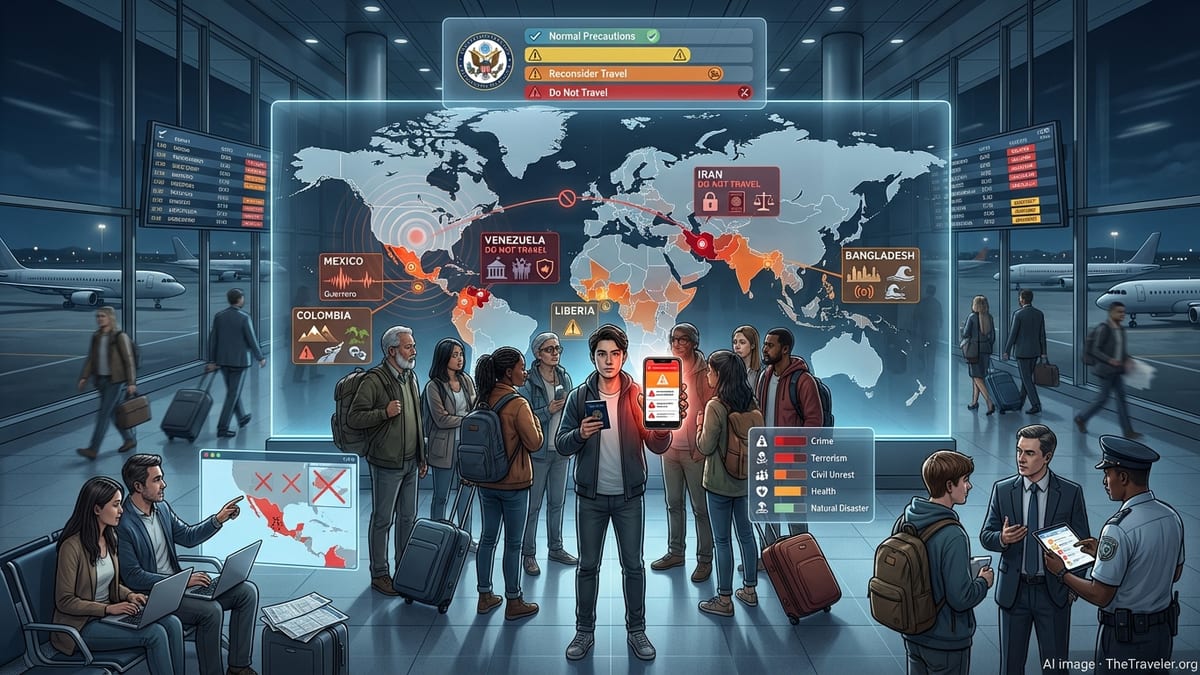
What has changed in the UK’s Saudi Arabia advice
Updated Foreign, Commonwealth & Development Office (FCDO) guidance in late October and early November 2026 advises against all travel to parts of Saudi Arabia and against all but essential travel to the rest of the country, citing an elevated risk from regional conflict and renewed attacks linked to Yemen-based Houthi forces.
Publicly available information on the UK travel advice page shows that the strongest warning applies to areas near the Yemeni border and parts of the eastern and southern regions, while major cities such as Riyadh, Jeddah and Dammam now fall under an “all but essential travel” designation. This represents a marked tightening compared with earlier in 2026, when restrictions were largely limited to border zones.
The FCDO update follows a series of missile and drone incidents in 2026 targeting Saudi infrastructure, including airports and energy facilities. Travel-industry reporting notes that the shift in language has been framed in the context of “regional tensions,” with officials highlighting the potential for further escalation and the possibility of attacks occurring with little warning.
Alongside the security warning, the UK advisory draws attention to the impact on travel insurance, stating that policies may be invalidated if travellers choose to visit areas that the government has flagged as unsafe. Britons are urged to check the exact wording of both the FCDO advice and their insurance documentation before travelling.
Heightened concern over airports, airspace and Red Sea routes
The latest UK guidance places particular emphasis on risks associated with air travel in and out of Saudi Arabia. Recent coverage of the situation notes that the FCDO advice now explicitly references attacks on Riyadh’s King Khalid International Airport, where an incident in October 2026 involving missiles caused fatalities and widespread disruption to flights.
Reports tracking government advisories indicate that Houthis have publicly threatened to target Saudi airports and airspace, as well as commercial shipping in the Red Sea and approaches to key ports. The UK advisory highlights that further attacks cannot be ruled out at airports and along important maritime corridors, including routes serving Jeddah and other Red Sea hubs.
In response, the FCDO guidance suggests that some British nationals may wish to consider leaving Saudi Arabia by land, using crossings into neighbouring states and then flying onward from airports outside the country. Industry bulletins show that several travel management companies are already rerouting corporate travellers via hubs in nearby states to avoid Saudi airports when feasible.
For those who remain in or transit through Saudi Arabia, the official advice urges close monitoring of local and international media, preparedness for sudden flight cancellations, and strict adherence to any security instructions issued by local authorities and transport operators.
Implications for Britons with holidays, business trips or pilgrimages
The tougher stance has immediate consequences for a wide range of UK travellers, from business visitors to those heading for religious pilgrimages. Saudi Arabia is a key gateway for Hajj and Umrah, and online discussion among UK-based pilgrims in October and November 2026 shows growing uncertainty over whether to proceed with trips booked before the latest escalation.
Travel forums and advisory trackers report that many standard UK travel insurance policies now exclude cover for journeys that go ahead against FCDO advice, leaving some travellers reliant only on the mandatory Saudi visa-linked health insurance, which is designed to cover local medical treatment but not costly emergency evacuation or long-term intensive care.
Specialist insurance providers are advertising policies that will still cover Saudi Arabia despite the heightened warning, but travellers are being urged to scrutinise terms related to security incidents, cancellations, and repatriation. Consumer advocates emphasise that anyone considering travel for non-essential reasons should obtain written confirmation of cover before departure.
For employers sending staff to Saudi Arabia, publicly available commentary from legal and human-resources specialists in the UK points to a growing focus on duty of care. Companies are being encouraged to carry out formal risk assessments, consider whether travel is genuinely essential, and ensure there are clear plans for emergency support and evacuation if conditions deteriorate.
Security, social media and legal considerations on the ground
Beyond the direct impact of missile and drone threats, the FCDO’s Saudi Arabia advice reiterates a series of existing security and legal cautions that take on added importance under the new warning level. The safety section of the guidance underscores the continuing threat from terrorism and states that attacks could target public places, religious sites, transport hubs and Western interests.
The UK advisory also flags strict rules around photography and information-sharing. It is illegal in Saudi Arabia to film or photograph government buildings, diplomatic premises, military installations and palaces, and travellers are warned that security forces may take firm action if they suspect people are documenting sensitive locations or security incidents.
Publicly available information additionally stresses that statements made on social media, even years earlier or posted outside Saudi Arabia, can be taken into account by the authorities. This has led travel commentators to urge Britons to review their public online profiles and avoid posting or forwarding material that could be viewed as political, critical of Saudi institutions or supportive of groups involved in regional conflicts while they are in the country.
Visitors are also reminded that Saudi Arabia maintains conservative social laws, including strict rules on public behaviour, alcohol, and relationships, as well as prohibitions affecting LGBTQ+ travellers. While these provisions are not new, analysts say the combination of tighter security and elevated political tensions may increase the likelihood that infractions attract attention.
Balancing new warnings with long-term travel links
The latest FCDO move comes at a time when Saudi Arabia and the UK have been deepening travel and economic ties. In June 2026, Saudi authorities launched an electronic travel authorisation scheme for UK citizens that allows multiple entries and stays of up to 180 days within a year, reflecting a broader policy of opening up the kingdom to tourism and investment.
Despite the current security climate, advisory trackers comparing different countries’ positions show that the UK is not alone in hardening its stance. Government bulletins from Australia, Canada and the United States have similarly warned of increased risks from regional conflict, missile and drone activity and potential targeting of Western interests in Saudi Arabia.
Travel-industry briefings suggest that many business and government-linked visits are continuing, but often with enhanced security protocols, contingency planning and, where possible, the use of remote participation instead of physical travel. Analysts expect that leisure and pilgrimage travel from the UK is likely to slow in the short term as potential visitors weigh spiritual or personal priorities against the sharper official warnings.
With the security outlook described in public advisories as volatile and unpredictable, Britons are being encouraged to keep plans under constant review, register contact details with consular services where relevant, and treat the FCDO’s Saudi Arabia page as a live reference point rather than a one-off pre-departure check.