


More news on this day
Americans planning overseas trips for the 2026 holiday season are being urged to reassess itineraries and step up precautions, as the U.S. Department of State sharpens its worldwide caution and country-by-country travel advisories in response to elevated global security risks.
Get the latest news straight to your inbox!
Worldwide Caution Sets the Tone for Holiday Trips
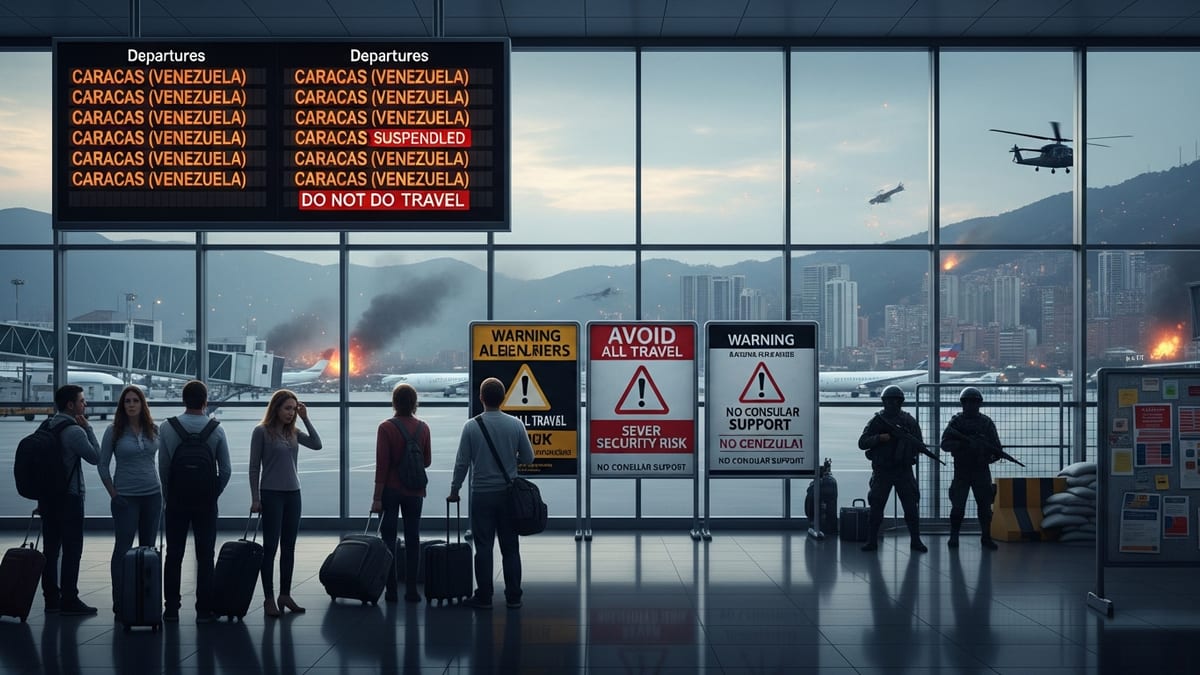
A global security alert updated in 2026 is expected to frame international travel decisions through the end of the year. The State Department’s Worldwide Caution notice advises U.S. citizens to exercise increased caution in countries around the world, citing the potential for terrorist attacks, demonstrations and violence targeting U.S. interests and locations associated with Americans. The notice, which predates the peak holiday period, remains in effect as Thanksgiving, Christmas and New Year travel plans ramp up.
Publicly available State Department guidance describes the Worldwide Caution as part of a broader effort to inform travelers about universal risks such as terrorism, civil unrest and the potential for rapidly changing security conditions. The advisory urges U.S. citizens to remain alert in locations frequented by tourists, monitor local and international media and be prepared for heightened security measures at transportation hubs and major public events.
The Worldwide Caution is layered on top of the regular four-level country advisory system that runs from Level 1, “Exercise normal precautions,” to Level 4, “Do not travel.” As a result, even destinations that are not classified at the highest levels of risk may carry specific notes about terrorism concerns, unrest or other security factors that holidaymakers are encouraged to weigh carefully before departure.
Country Advisories Highlight Regional Flashpoints
The tightened tone of holiday guidance is especially visible in several regional hotspots. Travel.state.gov shows that Gaza remains under a “Do Not Travel” advisory, with updated guidance in October 2026 emphasizing that the U.S. government is unable to provide routine or emergency consular services there and recommending that U.S. citizens avoid the territory entirely. The related pages for Israel and the West Bank underscore the risk of terrorism, rocket fire and civil unrest, urging travelers who proceed to maintain a high level of situational awareness and to have contingency plans that do not rely on U.S. government assistance.
Elsewhere in the Middle East, destinations such as Lebanon and Jordan are listed at elevated advisory levels that reflect concerns about terrorism, kidnapping and instability. The notices warn that security conditions can deteriorate quickly, potentially leading to roadblocks, airport disruptions or short-notice changes to local regulations that could affect visitors. Similar language appears in advisories for parts of East Africa and other conflict-affected regions where U.S. citizens have faced increased risks in recent years.
By contrast, some popular holiday destinations remain at Level 1 or Level 2, but with explicit references to terrorism or unrest that may not have appeared as prominently in earlier years. France and Italy, for example, are categorized as locations where travelers are urged to exercise increased caution due in part to concerns about possible attacks and large-scale demonstrations. Published guidance encourages visitors to avoid protest areas, follow instructions from local authorities, and allow extra time at airports and train stations where security screening may be intensified.
What Tighter Guidance Means for Individual Travelers
The refined advisories do not amount to a blanket prohibition on travel, but they do signal a higher bar for preparation. Publicly available guidance from the State Department and USA.gov encourages U.S. citizens to review the detailed advisory for each planned destination, including any regional notes or restrictions that may differ within the same country. Travelers are urged to consider how factors such as terrorism risks, crime, health concerns and local emergency services might affect their specific itinerary, lodging choices and transportation plans.
Another key component of the tightened holiday guidance is the recommendation that U.S. travelers enroll in the Smart Traveler Enrollment Program, or STEP. According to official program descriptions, STEP allows citizens to register trips with the nearest U.S. embassy or consulate, receive security alerts by email or text message, and make it easier for consular staff to contact them in an emergency. During a period of worldwide caution, this enrollment is framed as a way to stay ahead of developments such as sudden airspace closures, new restrictions on movement or changes in demonstration activity.
The emphasis on preparation extends to travel planning basics that can be critical during a fast-changing situation. Travelers are advised in public materials to maintain backup copies of important documents, share itineraries with family or friends in the United States, and identify local hospitals and emergency numbers in advance. Guidance also highlights the value of flexible bookings and comprehensive travel insurance policies that do not exclude coverage for countries with higher advisory levels, noting that some standard policies may limit benefits in Level 4 destinations.
Security, Aviation and Potential Disruptions Abroad
The tightened holiday advice also reflects broader concerns about civil aviation and transportation security. Federal rulemaking documents and performance reports describe an environment in which threat actors continue to view air travel and crowded transit hubs as attractive targets. Recent regulatory notices point to conflicts in the Middle East and other regions as drivers of a renewed focus on potential attacks against civil aviation and associated infrastructure, a factor that can translate into more visible security measures during peak travel weeks.
These conditions have practical implications for U.S. travelers. Security alerts and advisories note that periodic airspace closures, flight diversions and airport lockdowns are possible in regions experiencing conflict or political tension. Holiday travelers transiting through hubs in Europe, the Middle East or other sensitive regions may face last-minute gate changes, extended layovers or re-routings as airlines and aviation authorities respond to evolving risk assessments.
Beyond aviation, the Worldwide Caution and country advisories flag other potential disruptions, from checkpoints and road closures to curfews or restrictions on public gatherings. Travelers planning to attend seasonal markets, religious celebrations or major sporting events abroad are encouraged to monitor local announcements and to be prepared for bag checks, controlled entry points and restrictions on vehicles near venues. Public information from security and tourism bodies indicates that these measures are intended both to deter attacks and to manage crowd safety in environments where risk levels are considered elevated.
Planning a Holiday Trip Under Tighter Advisories
For Americans still eager to travel abroad over the holidays, the sharper tone of State Department guidance does not eliminate the possibility of a successful trip, but it does change the planning calculus. Travel experts and consumer advocates who track government advisories note that U.S. citizens can reduce exposure to risk by selecting destinations with lower advisory levels, avoiding border regions or areas known for unrest, and building in extra time between flights to accommodate enhanced screening or last-minute schedule changes.
Publicly available government and industry materials also highlight the importance of coordination between travelers and service providers. Airlines, tour operators and hotels often adopt their own security protocols in response to official advisories, which can result in modified itineraries, earlier check in cutoffs or restrictions on excursions. U.S. travelers are encouraged to review the fine print of booking conditions carefully, especially when traveling to or through countries with Level 3 or Level 4 advisories, to understand how potential disruptions will be handled.
Ultimately, the tightened holiday travel advice abroad reflects an effort to balance strong demand for international trips with a recognition that global security threats remain fluid. By engaging closely with the Worldwide Caution notice and destination specific advisories, enrolling in STEP and planning for contingencies, U.S. travelers can make more informed decisions about where and how to travel during the 2026 festive season.