


More news on this day
The UK has tightened its travel warning for Saudi Arabia, urging British nationals to avoid non-essential trips and to review evacuation and insurance plans as regional tensions, missile activity and airport disruptions increase security risks across the kingdom.
Get the latest news straight to your inbox!
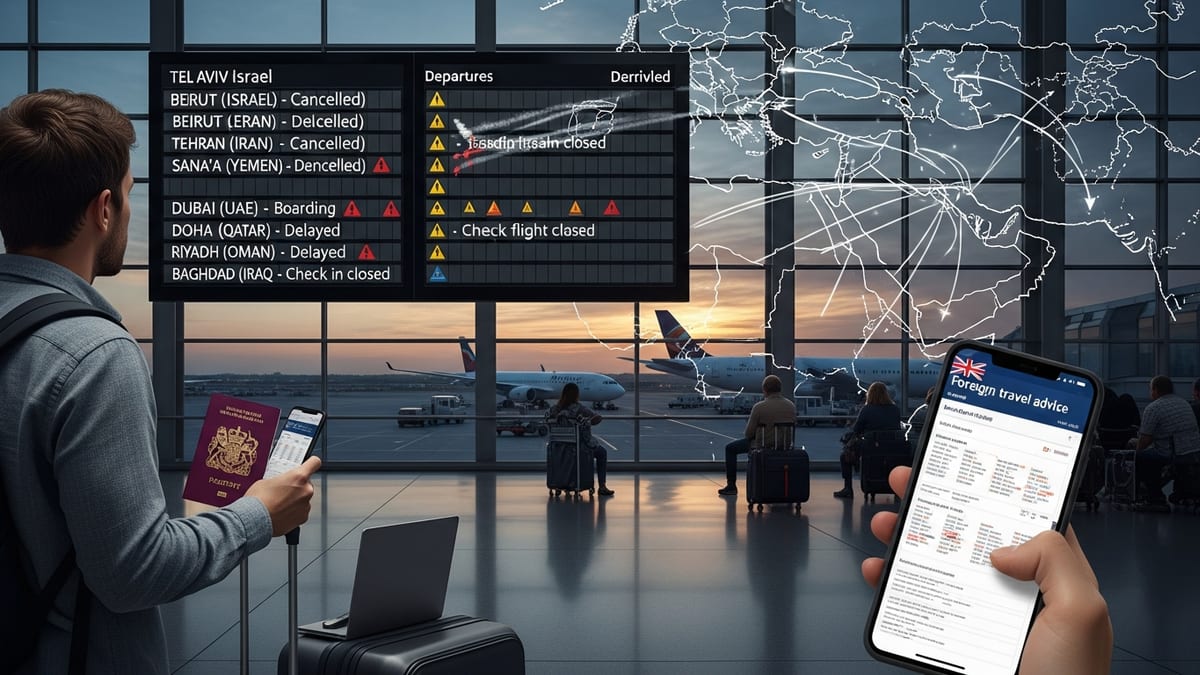
FCDO shifts to stricter stance on Saudi travel
Updated Foreign, Commonwealth & Development Office (FCDO) guidance now advises against non-essential travel to Saudi Arabia, expanding earlier restrictions that had focused mainly on areas near the Yemen border and parts of the Eastern and Southern provinces. The latest changes, reflected in advisories updated in late October and further refined on 12 November 2026, place the entire country under significantly tighter scrutiny for UK travellers.
The advice is framed against what official material describes as a high global threat of terrorism affecting UK interests and nationals, as well as the resumption of direct military conflict involving Houthi forces and Saudi targets. Publicly available FCDO material highlights a risk of missile and drone attacks on airports and critical infrastructure, including previous strikes affecting King Khalid International Airport in Riyadh and facilities in the south of the country.
The UK government states that its travel advice is kept under constant review to reflect the latest assessment of risk to British nationals. Recent changes for Saudi Arabia follow several months of escalating regional tensions, with increased missile activity, drone incidents and warnings from multiple governments about potential spillover effects on civil aviation and tourism.
While the FCDO does not impose bans on private travel, the upgraded advisory is a strong signal that leisure trips, business visits and religious travel such as Umrah and non-mandatory pilgrimages should be carefully reconsidered in light of the current security picture.
Regional tensions and security incidents drive the warning
Reports from government advisories and specialist risk briefings indicate that the security environment in and around Saudi Arabia has become more volatile in 2026. Missile and drone activity linked to the conflict in Yemen has resumed at scale, with attacks recorded against civilian, economic and military sites in southern cities including Abha, Jizan, Najran and Khamis Mushait, as well as high-profile incidents involving the capital’s main airport.
Open-source reporting on the country in 2026 notes that attacks have injured civilians and disrupted aviation operations in affected areas. Risk consultancies tracking the region also point to periods of heightened alert at major airports, additional checkpoints on roads, and temporary closures or diversions introduced at short notice across parts of the kingdom.
In addition to cross-border threats, Saudi Arabia maintains strict internal security controls. Publicly available guidance for foreign visitors underlines that protests and demonstrations are prohibited and that public commentary on political or social issues can be treated as a national security matter. The FCDO and other foreign ministries advise foreign nationals to avoid any gatherings that could be perceived as political and to follow local instructions if an incident occurs nearby.
This combination of external conflict risk and firm internal security measures underpins the UK’s decision to tighten its advisory, bringing it closer in tone to the warnings already issued by countries such as Australia, Canada and New Zealand, which have also urged their citizens to postpone non-essential travel to Saudi Arabia.
Practical impact on flights, routes and insurance
The shift in UK guidance is already affecting air travel options and booking terms for Britons heading to or transiting through Saudi Arabia. Travel trade coverage and traveller reports describe cancellations or schedule changes on some routes into Riyadh and other major airports after recent attacks and security alerts, with airlines rerouting passengers via alternative hubs in the Gulf and beyond.
Current FCDO text notes that British nationals wishing to leave Saudi Arabia may need to consider travelling overland to neighbouring countries and flying onwards from there, particularly if flights from certain airports are disrupted or suspended at short notice. Travellers are advised to reconfirm departure times directly with airlines before leaving their accommodation for the airport and to build in flexibility for last-minute operational changes.
The tightened UK advisory has important implications for travel insurance. Industry updates and consumer guidance highlight that many policies exclude cover if a traveller chooses to visit a destination against FCDO advice. For British nationals already in Saudi Arabia, insurers may still provide emergency medical assistance, but new claims related to non-essential future trips could be denied if travel proceeds while the current warning remains in force.
Prospective visitors are being encouraged by travel industry sources to review policy wording carefully, speak to insurers before finalising plans, and obtain written confirmation of what is and is not covered while the FCDO advice remains at its current level.
Considerations for business travellers and pilgrims
The tightened UK stance is creating difficult decisions for business travellers assigned to projects in Saudi Arabia and for those planning religious journeys. Online discussions among UK workers and pilgrims reflect concerns over employer expectations, refund rights and the safety of continuing with scheduled trips as the security situation evolves.
For business travel, publicly available legal and employment commentary suggests that companies operating in higher-risk destinations are reassessing duty-of-care obligations. Where FCDO guidance advises against all but essential travel, organisations are under pressure to justify trips, update internal risk assessments and confirm that appropriate security measures, evacuation plans and insurance coverage are in place for deployed staff.
Religious travellers planning Umrah or other non-mandatory visits face a separate set of challenges. With the advisory tightening only weeks before peak travel dates for some groups, reports indicate that agencies and airlines are applying standard contract terms, which can make refunds or changes difficult unless flights are formally cancelled. British pilgrims are being urged by consumer advocates to document all communications with agents, check whether package travel regulations apply and seek advice from recognised ombuds and consumer bodies where disputes arise.
Given the fluid situation, many religious and leisure travellers are reported to be postponing journeys until there is greater clarity on security risks, aviation stability and insurance protection.
What British travellers should do now
For British nationals currently in Saudi Arabia, the FCDO recommends closely monitoring official travel advice channels and local media for updates, ensuring travel documents remain valid for at least six months, and keeping a flexible plan in case a rapid departure becomes advisable. Travellers are urged to register for FCDO email alerts or similar notification services to receive real-time changes to the advisory.
Those with imminent departures from the UK are being advised by travel trade bodies and risk consultants to undertake a fresh, evidence-based assessment before travelling. This includes checking the latest FCDO page for Saudi Arabia on the day of departure, confirming flight status directly with airlines, and discussing contingency plans with employers or family members, such as alternative exit routes through neighbouring states.
For trips further in the future, the current warning signals that plans may need to remain provisional. Travellers considering new bookings to Saudi Arabia are encouraged to choose flexible fares and accommodation with clear cancellation options, and to avoid committing large, non-refundable sums while the advisory remains at an elevated level.
While the tightened UK warning does not legally prevent Britons from entering Saudi Arabia, it significantly raises the threshold for what is considered a justified trip. For many travellers, the combination of security concerns, potential flight disruption and reduced insurance protection will be central factors in deciding whether to proceed, postpone or cancel.