


The best Bosphorus cruise in Istanbul often is not a tour boat at all, but an ordinary city ferry. By using the public Şehir Hatları services with an Istanbulkart, you can turn everyday commuter routes into cheap, scenic cruises that glide past palaces, mosques, and waterfront mansions for a fraction of the price of private tours. This guide explains how to do exactly that, with practical examples for short and long Bosphorus trips from Eminönü, Beşiktaş, Üsküdar, and Kadıköy.
Get the latest updates straight to your inbox!
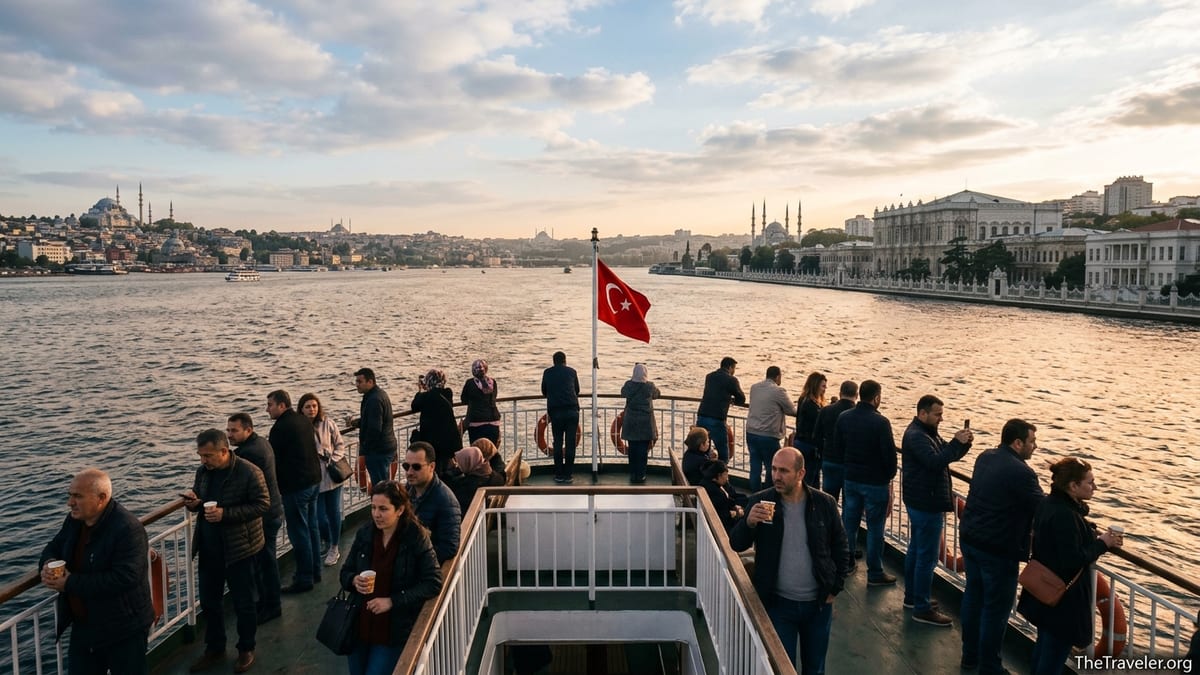
How Bosphorus Ferries Work for Budget Sightseeing
Şehir Hatları is the municipal ferry company that runs Istanbul’s classic white boats across the Bosphorus and along the Golden Horn. These are not tourist cruises in the formal sense, but regular public transport used by commuters. For visitors, the advantage is clear: you pay standard public transport fares yet enjoy the same Bosphorus views that commercial cruises sell at several times the price. Boats are spacious, usually with open decks, simple kiosks selling tea and simit, and a relaxed mix of office workers, students, and camera-toting visitors.
On most city lines within the central area, a one way ferry ride in 2026 costs in the region of 45 to 65 Turkish lira with an Istanbulkart, depending on the exact route and distance. For example, a typical cross Bosphorus ride such as Kadıköy to Eminönü or Kadıköy to Beşiktaş is priced in the high 50s, while shorter hops like Beşiktaş to Üsküdar sit in the mid 40s. Longer, more scenic services along the strait and to the outer suburbs cost more, but still remain affordable compared with organized sightseeing cruises.
The city also operates dedicated Bosphorus tour services branded as Short Bosphorus Tour and Long Bosphorus Tour. These depart mainly from Eminönü and stop at a series of piers on both shores, eventually reaching the fishing village of Anadolu Kavağı on the Black Sea side for the long version. Even these official “tours” are priced closer to public transport than to private cruises, making them one of the most budget friendly ways to see the full length of the Bosphorus.
Because ferries are part of the public network, schedules and prices can change seasonally. There is typically a winter timetable and a summer timetable with extra departures. Before you plan a specific route, it is worth checking the latest times on the Şehir Hatları timetable search or on noticeboards at major piers like Eminönü, Beşiktaş, Üsküdar, and Kadıköy. As a rough rule, central lines run from early morning until late evening, while Bosphorus tours and longer lines may offer just a handful of departures per day.
Using the Istanbulkart on Bosphorus Ferries
The Istanbulkart is the city’s contactless transport card used on metros, trams, buses, funiculars, and all municipal ferries. As a visitor you can buy an anonymous Istanbulkart from yellow vending machines at the airport, at big ferry piers such as Eminönü and Kadıköy, or at some small kiosks displaying the logo. The card itself costs a modest one time fee, then you load credit in lira. Machines can be switched to English and usually accept Turkish banknotes and sometimes contactless cards for topping up.
When boarding a Şehir Hatları ferry, you pass through turnstiles and tap your Istanbulkart on the reader. The appropriate fare for that route is deducted automatically. For central inner city lines such as Kadıköy to Eminönü, Kadıköy to Karaköy, or Beşiktaş to Üsküdar, the standard adult fare in early 2026 falls roughly in the 45 to 60 lira range. Fares are distance based, so routes that cross further or run along the Bosphorus for several stops can cost more, but they still represent excellent value compared with private tour boats that may charge several hundred lira for a one hour loop.
If you do not have an Istanbulkart, many ferry piers also sell single use tickets. These are typically more expensive than using the card and sometimes are limited to certain lines. As an example, at Kadıköy you might see a booth selling paper tokens for a set price that exceeds what a local would pay with the card. For a short stay of even two or three days, buying an Istanbulkart and loading around 500 to 700 lira per person usually covers multiple days of metro and ferry use at 2026 prices, assuming you take several rides daily.
There are a few special services where the Istanbulkart is not valid and a separate ticket is required, such as some private operators to the Princes’ Islands from Karaköy or touristic dinner cruises. For Bosphorus sightseeing with a budget focus, aim specifically for Şehir Hatları piers and boats, which clearly display the municipal logo and use the standard turnstile system. When in doubt, ask staff if Istanbulkart is accepted before boarding. They are used to tourists and will usually gesture to the turnstiles or ticket booth you need.
Best Short Bosphorus Routes from the Historic Peninsula
For many visitors staying in Sultanahmet or around the Grand Bazaar, the easiest starting point is Eminönü, the busy waterfront square at the base of the Galata Bridge. From here you can create short, cheap Bosphorus cruises that combine sightseeing with practical transport. A classic example is to take a morning ferry from Eminönü to Üsküdar, wander through the neighborhood mosques and market streets, then continue by ferry to Beşiktaş or back to Karaköy, effectively forming a scenic loop for a few standard fares.
The dedicated Short Bosphorus Tour from Eminönü is particularly attractive if you want a focused cruise without worrying about where to get off. On this route, the ferry typically leaves Eminönü, sails under the Bosphorus bridges, and stops at several piers such as Üsküdar and Ortaköy before returning. The trip lasts around two hours including a brief stop, and gives you views of Dolmabahçe Palace, the Çırağan Palace Kempinski, and the waterfront mansions of Arnavutköy. Prices are set somewhat higher than a basic cross strait commute but remain well below private tour offerings, giving good value for a dedicated sightseeing excursion.
A more flexible, hyper budget option is to chain together ordinary lines. For example, you might ride from Eminönü to Kadıköy in around 20 minutes, enjoy coffee at Kadıköy’s waterfront cafes, then continue up the Asian shore to Üsküdar by another ferry. From Üsküdar, a short ferry hop takes you across to Beşiktaş on the European side, where you can walk to Dolmabahçe Palace or wander up to Ortaköy by the water. Each leg costs a standard fare, so you build your own mini Bosphorus cruise by sequencing two to four rides in one afternoon.
If you are short on time, even a single out and back ride from Eminönü to Üsküdar or Kadıköy offers strong Bosphorus views. Position yourself on the open deck at the back of the boat leaving Eminönü in late afternoon to capture the skyline of Suleymaniye Mosque, the Galata Tower, and the minarets of Sultanahmet glowing in low light. Many locals buy a glass of Turkish tea on board and stand at the rail for the entire crossing, which is a simple and authentic experience that costs no more than a normal tram journey.
Scenic Cross Bosphorus Links from Beşiktaş, Üsküdar and Kadıköy
Beşiktaş, Üsküdar, and Kadıköy are key ferry hubs that allow you to crisscross the Bosphorus cheaply while enjoying some of the most photogenic stretches of water. The Beşiktaş to Üsküdar ferry is one of the shortest and most atmospheric crossings. It takes around ten minutes yet passes in front of Dolmabahçe Palace and the hillside mosques of Asiatic Üsküdar. In early 2026 this route is priced in the mid 40 lira range for a full adult Istanbulkart fare, making it a repeatable ride if you want to photograph the skyline in different lights.
Kadıköy, on the Asian side, offers several routes to the European shore. Ferries from Kadıköy to Eminönü or Karaköy give you excellent views of the historic peninsula as you approach. Meanwhile, the Kadıköy to Beşiktaş and Kadıköy to Kabataş lines sail closer to the Dolmabahçe and Bosphorus bridge area, ideal if you plan to continue by tram toward Taksim or by foot along the waterfront. These are among the busiest lines in the system, so boats depart regularly throughout the day and into the late evening, useful if you are returning after dinner in Kadıköy’s restaurant streets.
Üsküdar is another strategic base, especially if you are staying on the Asian side. From Üsküdar you can reach Eminönü, Karaköy, Kabataş, and Beşiktaş by different ferries, all offering slightly different angles on the Bosphorus. For example, the Üsküdar to Eminönü line glides close to the Galata Bridge and gives you a straight on view of the mosques of the historic peninsula, while Üsküdar to Beşiktaş runs more directly across under the first Bosphorus Bridge. Using Üsküdar as a pivot, you can design a loop such as Beşiktaş to Üsküdar, Üsküdar to Kadıköy, then Kadıköy back to Karaköy or Eminönü.
These routes are ideal if you want to intersperse sightseeing with neighborhood exploration. A common pattern for visitors is to head from Karaköy or Eminönü to Kadıköy for lunch at the famous fish market area, then travel on to Moda on foot before returning by ferry at sunset. Alternatively, you could start in Beşiktaş, explore the Çırağan and Yıldız area, then hop a ferry to Üsküdar to watch the sunset near the Maiden’s Tower promenade and return after dark. All of this is achievable with a single Istanbulkart and a handful of inexpensive ferry taps.
Long Bosphorus Routes and Anadolu Kavağı on a Budget
To see the full drama of the Bosphorus, many travelers aim for the Long Bosphorus Tour, which normally departs from Eminönü in the morning and travels nearly the entire length of the strait to Anadolu Kavağı, a small fishing village near the Black Sea. Along the way the ferry calls at piers such as Beşiktaş, Üsküdar, Kanlıca, Sarıyer, and Rumeli Kavağı, providing sweeping views of both European and Asian shorelines, including fortress ruins, hillside neighborhoods, and forested headlands. The one way sailing time to Anadolu Kavağı is roughly an hour and a half, after which there is usually a lunch break before the return trip.
Compared with private long cruises, the Şehir Hatları long tour is typically priced at an accessible level for budget travelers. While exact figures vary by season and may change year to year, you can often expect to pay something in the low hundreds of lira for a round trip ticket in the mid 2020s. That is significantly cheaper than many commercial tours departing from Kabataş or private docks, which may charge several times as much while following similar routes. Tickets for the long tour are usually purchased at the dedicated Bosphorus ticket office next to the Eminönü pier rather than through the standard Istanbulkart turnstiles.
If the scheduled long tour times do not suit you, or if some long tour departures are temporarily canceled, another option is to string together regular “to Bosphorus / from Bosphorus” lines. For example, you can ride from Eminönü to Sarıyer or Rumeli Kavağı using ordinary services that call at multiple intermediate piers like Bebek, Emirgan, and Kanlıca. From there, you may be able to connect onward to Anadolu Kavağı on another ferry. This approach can take more planning and may not always align perfectly in terms of departures, but it lets you experience the variety of neighborhoods along the way while paying standard per segment fares.
Once in Anadolu Kavağı, budget travelers usually spend one to two hours walking up to the Yoros Castle ruins for a view toward the Black Sea, then returning to the village for a simple seafood lunch or a tea on the harbor before catching the ferry back. Because the village economy partly depends on day trippers, restaurant menus can feel higher than elsewhere, but it is still possible to find reasonably priced grilled fish or gözleme if you avoid the flashiest waterfront terraces. Always double check ferry return times when you arrive so that you do not miss the last boat, as a taxi back to central Istanbul from this distance would be significantly more expensive than your day’s worth of ferry rides.
Tickets, Practical Tips and Avoiding Tourist Traps
For central Şehir Hatları ferries, the most economical and straightforward method is always to use an Istanbulkart through the turnstiles. At busy piers like Eminönü and Kadıköy, look for the official turnstile area and electronic signs displaying destinations and departure times. If someone approaches you on the promenade offering a “Bosphorus tour” and pointing to a small boat, know that these are private operators; some provide fine experiences, but prices are usually far higher than the public ferries and may not deliver better views.
Timing can influence both your experience and your photographs. Early morning crossings between 7:30 and 9:00 tend to be busy with commuters but offer calm light and a clear, local atmosphere. Late afternoon and just before sunset are ideal for photography as the sun illuminates the mosques and palaces at a low angle. Night crossings between Kadıköy, Karaköy, and Beşiktaş provide sparkling skyline views for the same fare as daytime rides, and boats may be less crowded outside of peak hours. In winter, winds off the Bosphorus can be strong and chilly on deck, so bring a scarf or light jacket even if the daytime air felt mild on land.
On board, most Şehir Hatları ferries have a small cafeteria counter selling tea, instant coffee, simple sandwiches, simit, and packaged snacks at controlled city prices. Ordering a tulip shaped glass of Turkish tea and sipping it on the open deck is a beloved local ritual and costs only a modest amount. Toilets are available on almost all boats and at major piers, usually for a small fee or included with your fare. Seating is unassigned; locals often head directly to favorite spots, such as the right hand side when leaving Kadıköy toward Eminönü for better views of the historic peninsula.
Avoid relying on exact boats or routes operating every single day of the year. Occasionally, high winds, fog, or maintenance works lead to cancellations or reduced frequency, especially for the long Bosphorus and outer suburban lines. Electronic boards at the piers and announcements in Turkish will usually indicate disruptions. If you cannot understand the announcement, watch the behavior of the crowd; if commuters begin leaving the pier, there may be a cancellation. In such cases, central cross Bosphorus routes are often the last to be suspended and sometimes keep running when longer routes are paused.
The Takeaway
Istanbul’s Bosphorus is one of the world’s classic urban waterways, and you do not need an expensive tourist cruise to enjoy it fully. By understanding how Şehir Hatları ferries work and using an Istanbulkart, you can turn everyday commuter routes into your own custom sightseeing cruises. Simple combinations such as Eminönü to Kadıköy to Üsküdar to Beşiktaş create loops with constant skyline views for the price of a few metro rides, while the Short and Long Bosphorus Tours extend your reach to palaces, fortresses, and fishing villages near the Black Sea.
For budget focused travelers, the key is to stick to official municipal ferries, pay with Istanbulkart whenever possible, and remain flexible with routes and times. The reward is not only saving money but sharing the boats with Istanbul residents going about their day, from students revising notes over tea to retirees feeding seagulls from the rail. Plan your crossings around sunrise or sunset if you can, dress for the breeze, and bring an extra camera battery. The rest is as simple as tapping your card, finding a spot on deck, and letting the Bosphorus carry you between continents.
FAQ
Q1. Do I need to book Şehir Hatları Bosphorus ferries in advance?
For regular city ferries and most Short Bosphorus Tours you do not need reservations; you simply tap your Istanbulkart at the turnstile and board. For the Long Bosphorus Tour in high season, it is wise to arrive early at the Eminönü Bosphorus ticket office to buy your ticket for the same day, especially on weekends.
Q2. How much should I load on my Istanbulkart for a day of ferry sightseeing?
In early 2026, loading around 300 to 400 lira per person usually covers several ferry rides plus metro or tram transfers in a single intensive sightseeing day. If you plan to take a Long Bosphorus Tour or many additional rides, consider topping up to around 500 or 600 lira to avoid running out of balance mid route.
Q3. Can two people share one Istanbulkart on the ferries?
Technically you can tap the same anonymous Istanbulkart twice at the turnstile for two people, and many short term visitors do this. However, if you are traveling frequently it is often more convenient for each person to have their own card so that you can pass through turnstiles faster and avoid confusion in busy crowds.
Q4. What is the difference between a public ferry and a private Bosphorus cruise boat?
Public Şehir Hatları ferries are part of the transport network, with fixed routes, modest prices, and a mix of locals and tourists. Private cruise boats typically depart from touristic piers, charge significantly higher fares, and may include commentary, dinner, or music. For pure views on a budget, public ferries are usually sufficient.
Q5. Which side of the boat should I sit on for the best Bosphorus views?
It depends on your direction. Leaving Eminönü or Karaköy toward Kadıköy or Üsküdar, sit on the right hand side to see the historic peninsula and mosques. Traveling from Kadıköy toward Beşiktaş or Kabataş, sit on the left to face Dolmabahçe Palace and the European shore.
Q6. Are Bosphorus ferries accessible for travelers with limited mobility?
Most major Şehir Hatları piers like Eminönü, Beşiktaş, Üsküdar, and Kadıköy have ramp access and relatively level boarding, and newer boats feature accessible interiors. However, older piers and steep gangways at very low or high tide can pose challenges, so travelers using wheelchairs may want to avoid smaller, less central piers.
Q7. Do the ferries run late at night?
Core cross Bosphorus routes such as Kadıköy to Karaköy or Kadıköy to Beşiktaş usually operate until late evening, with reduced frequency after around 22:00. Truly late night or after midnight services are limited and may vary by season, so always check current timetables posted at the pier if you plan to return late.
Q8. Can I use contactless bank cards instead of an Istanbulkart?
On some parts of Istanbul’s transport network, certain turnstiles accept contactless bank cards, but coverage is still inconsistent and can change. For ferries, relying on an Istanbulkart remains the most reliable and economical option, especially for visitors planning multiple rides over several days.
Q9. What should I wear on deck during a Bosphorus ferry trip?
Even on warm days, the breeze on the Bosphorus can feel significantly cooler than on land, especially when the boat is moving. A light jacket, scarf, or sweater is recommended, and in summer a hat and sunscreen are useful if you plan to stay on the open deck for the entire crossing.
Q10. Are food and drinks on the ferries expensive?
Prices at the on board kiosks on Şehir Hatları ferries are generally moderate and regulated, often cheaper than tourist cafes on the shore. A glass of tea, a simit, or a simple sandwich will not add much to your budget and can make your short crossing or long Bosphorus ride more enjoyable.