


The Bosphorus is where Istanbul comes to the table. From raki-soaked seafood feasts in Arnavutköy to sleepy breakfast spreads in Üsküdar and rooftop cocktails above the strait, this narrow waterway shapes some of the city’s most memorable meals. This guide focuses specifically on Bosphorus-side dining: where to go for fresh fish, long breakfasts, rooftop views, romantic dinners, and how to enjoy it all without falling into the priciest tourist traps.
Get the latest updates straight to your inbox!
Understanding the Bosphorus Dining Scene
The Bosphorus cuts through Istanbul like a glittering, tidal boulevard. On the European side, Ortaköy, Kuruçeşme, Arnavutköy and Bebek string together like waterfront villages. On the Asian side, Üsküdar, Kuzguncuk, Çengelköy and Beylerbeyi offer calmer promenades and family-oriented cafes. Each stretch has a distinct personality, crowd and price level, and knowing the differences will shape both your bill and your experience.
European-side neighborhoods like Ortaköy and Bebek are where many first-time visitors look for a table, and they deliver big bridge views, polished service and wine lists to match. You can expect to pay a premium here, especially for waterfront fish restaurants. It is not unusual in 2026 for a sit-down seafood dinner with meze, a shared grilled sea bass and a bottle of mid-range wine to reach the equivalent of 1,500 to 2,500 Turkish lira per person in prime spots.
The more local-feeling parts of the Bosphorus, including Arnavutköy on the European shore and Üsküdar and Beylerbeyi on the Asian shore, offer better value and a calmer atmosphere while still placing you right on the water. In Arnavutköy, a simple lunch of fresh fish sandwich, salad and a soft drink can still come in under 500 to 700 lira at modest places, especially at midday, while white-tablecloth seafood meyhane start to fill later in the evening.
Because so many Istanbulites treat waterfront dining as a regular pleasure rather than a rare luxury, there is a real range of options. You can sit at a sleek hotel rooftop that feels like it could be in any major capital, or at a no-frills fish house where the menu is written on a whiteboard and the view is the same strait, just from a different angle. The key is matching your expectations and budget to the right neighborhood and style of place.
Waterfront Seafood: From Arnavutköy to Bebek and Üsküdar
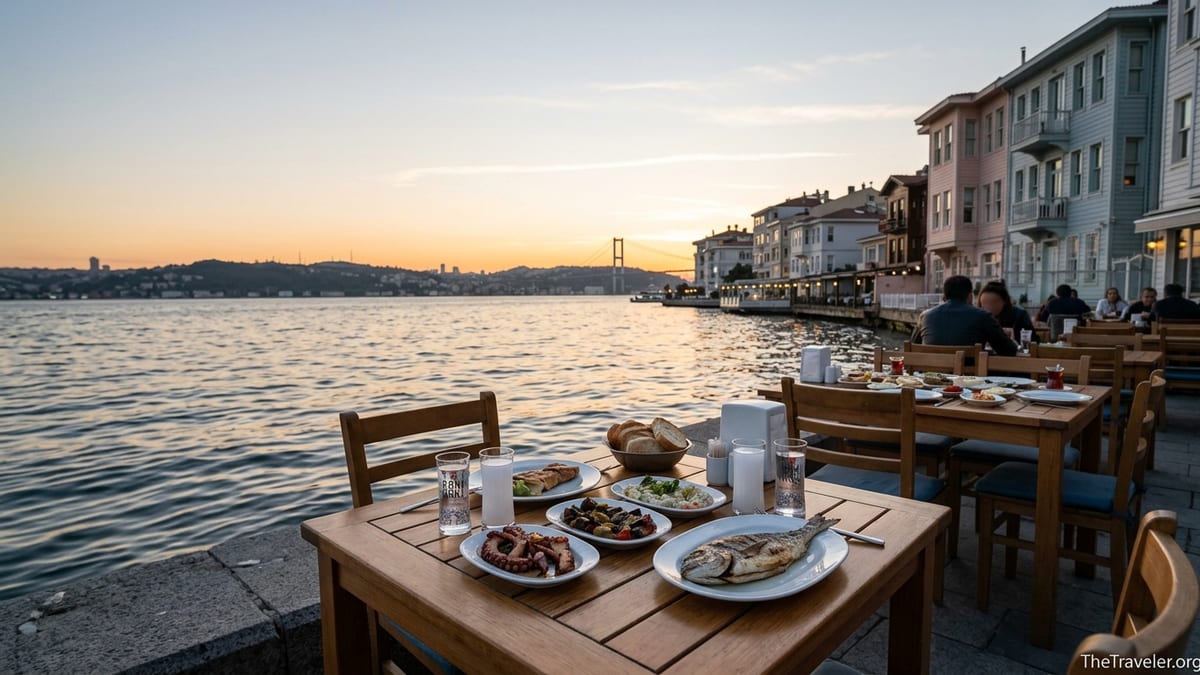
The classic Bosphorus meal is seafood with raki, the anise-flavored spirit locals often call “lion’s milk.” For that experience, Arnavutköy is one of the strongest bases. This historic neighborhood between Ortaköy and Bebek is known for a tight row of fish restaurants facing the water, set against elegant late 19th and early 20th century wooden houses. The atmosphere is lively without being chaotic, and many Istanbullus head here when they want serious seafood without the heaviest Bebek markup.
Among Arnavutköy’s better-known addresses are places like Akıntıburnu, which pairs white-tablecloth service with a long Bosphorus frontage, and smaller multi-story fish houses such as Livar Balık Evi tucked into narrow waterfront buildings. Inside, you will typically find glass cases full of meze like fava bean puree, sea beans, pickled vegetables and stuffed mussels; fish is often priced by weight and grilled simply with olive oil and lemon. A typical raki-and-fish dinner in this strip can range from mid-market to high, depending on the bottle you choose and whether you add shellfish or premium species.
Bebek, just up the road, is more polished and fashion-conscious, with a bay dotted with small boats and a front row of chic cafes and restaurants. Waterfront restaurants here often skew toward an upscale international menu, combining seafood with Mediterranean and modern Turkish cooking. You are paying both for the address and for the crowd you share the view with, so be prepared for prices that can easily exceed similar meals in less famous neighborhoods. For many visitors, Bebek is ideal for a sunset drink and a snack before or after a walk along the shore, rather than the place for every night’s dinner.
On the Asian side, Üsküdar offers a different tempo. The district’s seaside promenade looks back across the water to the historic peninsula and the Galata skyline, and local guides often single out Villa Bosphorus as one of the stand-out seafood addresses here, thanks to its outdoor tables that feel almost level with the water. In this part of the city, you are more likely to be surrounded by local families and groups of friends than large tour groups, and that usually translates into more consistent quality and less aggressive upselling. A generous seafood meal in Üsküdar may still be expensive by local standards but often feels fair for what you get.
Breakfast by the Bosphorus: Slow Mornings With a View
While many visitors think of the Bosphorus for dinner, Istanbulites know it as a prime breakfast territory. On weekend mornings, tables along the waterfront and on hilltop terraces fill with families ordering sprawling Turkish breakfast spreads: multiple cheeses, olives, tomatoes, cucumbers, honey and clotted cream, menemen scrambled eggs with peppers, fried sucuk sausage and baskets of bread. With tea refilled constantly, breakfasts can stretch for hours.
In Bosphorus-facing parts of Üsküdar and neighboring districts, waterfront cafes and restaurants open early to catch the morning light. Places like Dilruba, frequently recommended by locals for group breakfasts with a Bosphorus view, combine large indoor halls and garden terraces, making them practical if you are several people. A full breakfast spread here or at similar venues will usually be priced per person or per couple, with set menus that start around the price of a mid-range lunch in the city center and go up depending on extras like sucuk or fresh-squeezed juices.
On the European side, Ortaköy and Arnavutköy also offer appealing breakfasts. In Arnavutköy, many fish restaurants sit quiet first thing in the morning, but side-street cafes and bakeries come alive with simit, poğaça pastries and simple plates of eggs and sucuk. Ortaköy, especially just back from the main square, has cafes that do both a la carte breakfast plates and more elaborate “serpme kahvaltı” family-style spreads. Prices in these central, tourist-facing neighborhoods are higher than in residential districts inland, but the sight of ferries moving down the strait as you eat can feel worth the difference for a one-off experience.
For the most relaxed Bosphorus breakfast, consider going slightly outside the busiest clusters, to smaller neighborhoods like Kuzguncuk or Beylerbeyi on the Asian side. Here you can often combine a late breakfast with a walk through narrow streets and along the waterfront, then move on to other districts by bus or ferry. Using public ferries as your morning commute to breakfast is not only scenic, it also keeps transportation costs low.
Rooftop & Panoramic Views Over the Strait
Not every Bosphorus-view meal happens at water level. Istanbul’s hills make rooftop restaurants powerful contenders for memorable views, especially if you want to see both the strait and the wider city skyline at once. Rooftops in Beyoğlu and around the historic peninsula are particularly sought after, with panoramic views taking in the Bosphorus, Golden Horn and landmarks like Hagia Sophia and the Blue Mosque.
High-profile rooftops such as Mikla and 360 Istanbul in Beyoğlu regularly appear in 2026 roundups of the city’s best rooftop restaurants, with prices to match their reputation. At Mikla, for example, multi-course tasting menus for special occasions may cost several thousand lira per person, plus drinks. In exchange, you get a 360-degree panorama that sweeps from the historic peninsula across the Bosphorus and out toward the modern high-rise districts, along with contemporary Turkish-fusion cuisine framed as a full-night experience.
More moderately priced rooftops, including newer places highlighted by Istanbul-focused guides, offer simpler menus and slightly less formal service while still delivering strong views. Sirkeci and Sultanahmet rooftops that look toward the Bosphorus and Marmara Sea often serve a mix of Turkish and international dishes and allow you to order just a main course and a drink instead of committing to a tasting menu. In these spots, a main dish and a glass of wine can still be around what you might pay for a full seafood dinner in a non-view neighborhood, but the overhead for the view is lower than at the highest-profile venues.
Booking ahead is essential for sunset and weekend evenings at any popular rooftop with Bosphorus views. Guides updated in mid-2026 note that in summer, window or terrace tables at the most coveted places can be booked one to two weeks in advance, especially on Fridays and Saturdays. If your visit is short and you have a specific rooftop in mind, reserving as soon as you know your dates is wiser than hoping to walk in.
Ortaköy, Bebek & Arnavutköy: Choosing the Right Waterfront Vibe
Ortaköy is one of the first names that comes up when travelers picture dining by the Bosphorus, thanks largely to its postcard view of the mosque and the Bosphorus Bridge. The square is full of kumpir baked potato stands and waffle shops, and waterfront cafes line up shoulder to shoulder. However, frequent visitors and local residents often caution that the restaurants directly on the main square are now largely tourist-facing, with higher prices and more average food than you can find just a short walk away.
This does not mean you should skip Ortaköy entirely. Treat its core as a place for a quick snack, a glass of tea or a photo stop, then move a few blocks inland or along the coast road for a proper meal. Local commentary often recommends bypassing the immediate waterfront fish houses here for better-value seafood in nearby Arnavutköy or more polished dining in Kuruçeşme and Bebek. The walk along the Bosphorus between these neighborhoods is flat, scenic and busy with locals, and you can combine several in a single outing.
Bebek, as mentioned earlier, is chic and expensive, but also one of the most atmospheric bays in the city, especially late in the day when yachts bob close to the shore. Bebek’s cafes are excellent for coffee and dessert with a view, and there are a few notable fish and Mediterranean restaurants along the bay that cater to a well-heeled crowd. Expect menus to lean toward modern presentations and global touches rather than purely traditional meyhane fare.
Arnavutköy, sandwiched between the two, is often the sweet spot. With its cluster of fish restaurants along the water and a parallel backstreet scene of small bars and casual eateries, it feels like a self-contained Bosphorus village. Here you can start with a drink at a waterfront bar as the lights come on across the strait, then move upstairs or next door for a full seafood dinner. Because the neighborhood remains popular with locals, reservations are crucial on Friday and Saturday nights, but there is usually more variety of price points than in the immediate squares of Ortaköy and Bebek.
Üsküdar, Kuzguncuk & the Asian Side: Calmer Shores
On the Asian shore, Üsküdar is a major transit hub and residential district that still manages to feel more local than the busiest European-side spots. Its long promenade looks across the water to the old city and Galata, and on clear evenings residents gather here with tea glasses to watch the sunset behind the domes and towers. Waterfront restaurants and cafes pick up on this rhythm, offering everything from simple tea gardens to full-service fish restaurants with terraces just above the waves.
One recurring recommendation from Istanbul food writers is to consider Üsküdar for seafood if you want a romantic setting without the feeling of being in an entirely tourist-oriented bubble. The presence of established, family-run restaurants and fewer aggressive touts reduces the risk of unpleasant surprises on the bill. Even here, though, checking the menu before ordering and confirming how fish is priced can avoid misunderstandings later.
Just north of Üsküdar, smaller neighborhoods like Kuzguncuk and Beylerbeyi extend this calmer, local-oriented atmosphere. Kuzguncuk’s narrow streets are lined with wooden houses and small cafes, and the waterfront has a handful of spots that make excellent settings for late breakfasts or early dinners without the noise and crowds of more central districts. Beylerbeyi, near the base of the bridge, is known among locals for its fish restaurants and for its small palace on the shore, which adds a historic backdrop to any meal in the area.
For travelers staying mostly on the European side, crossing to Üsküdar by ferry for an evening can be a memorable change of scene. The crossing itself takes only a few minutes from Eminönü or Karaköy, and you step out into a district where the pace is slower and menus often reflect the tastes of Istanbulites who live and work nearby rather than those of transient bus tours.
Tourist Traps & How to Avoid Them Along the Bosphorus
Because the Bosphorus is such a powerful draw, it is also one of the easiest places in Istanbul to spend far more than you planned on a mediocre meal. Common warning signs of tourist traps include aggressive staff calling you in from the street, menus without clear prices, and heavily decorated dining rooms that seem designed more for social media than for locals’ regular use. Online discussions in 2025 and 2026 are full of travelers who felt disappointed after paying premium prices in such venues near big landmarks and main squares.
To avoid that experience, it helps to separate the view from the meal. One strategy is to enjoy your Bosphorus view from public spaces and ferries, then step a street or two inland to eat. In Ortaköy, for example, you can take photos by the mosque and the bridge, then walk away from the main square for dinner. Similarly, in highly touristic corners of Sultanahmet or around the Spice Bazaar, you can use the tram or ferry to reach neighborhoods like Arnavutköy, Karaköy or Üsküdar where restaurants rely less on one-time visitors.
Another safeguard is to take a moment to read recent reviews from a mix of sources before committing, paying attention to comments about pricing transparency and service attitude rather than just star ratings. When you sit down, ask to see a full menu with prices before ordering, and do not hesitate to clarify how whole fish is priced or whether bread and small starters are complimentary or charged separately. Some seasoned visitors also take a quick photo of the menu when they order, which makes it easier to challenge any surprise items later.
Finally, be cautious about all-inclusive “Bosphorus dinner cruises” sold around major tourist sites. Locals on travel forums frequently describe these as offering weak food and generic entertainment at high prices, with very little time actually enjoying the scenery in good light. If you want a boat experience, you might do better combining an inexpensive public ferry cruise in daylight with a carefully chosen waterfront or rooftop restaurant on land for dinner.
Romantic Dinners & Special Occasions
For many travelers, a romantic Bosphorus dinner is the centerpiece of their time in Istanbul. The good news is that you have options at almost every budget level. At the top end, palace-based restaurants and famous rooftops like those at luxury hotels or at Mikla and Sunset Grill in Ulus offer refined tasting menus and curated wine lists. Here, you are paying as much for polished service and a sense of occasion as for the view. Booking a window table around sunset and lingering into the evening as the city lights come on can feel like a once-in-a-decade experience.
Mid-range romantic options cluster in neighborhoods like Arnavutköy, Bebek and Üsküdar. In Arnavutköy, a candlelit table at a waterfront fish restaurant, with a shared spread of meze and a grilled fish to split, can feel every bit as special as a hotel rooftop. In Üsküdar and Beylerbeyi, waterfront terraces framed by historic buildings and the silhouette of the old city create a softer, more local mood that many couples prefer. You are more likely to hear Turkish conversations at neighboring tables than a half-dozen different tour groups, which can make it easier to feel briefly woven into the city’s everyday life.
If your budget is tighter, you can still create a romantic Bosphorus evening without booking one of the big-name spots. One popular approach among locals is to time a public ferry ride for golden hour, then disembark in a quieter district and have dinner at a modest restaurant with partial views or even just on a side street. A table at a simple grill house in Kuzguncuk followed by tea on the waterfront, for instance, may not appear in glossy magazines, but it can linger in your memory long after a forgettable, overpriced “view restaurant” meal would have faded.
Regardless of where you choose, signal that you are celebrating when you book or when you arrive. Many Istanbul restaurants will make an effort to find you a slightly better table, bring dessert with a candle, or at least pace the meal so you can linger. In a city where hospitality is still a point of pride, those small touches can transform a good dinner into a great one.
The Takeaway
Dining along the Bosphorus is not just about securing the best bridge shot for your photos. It is a chance to understand how Istanbulites themselves live with the water: lingering over breakfast as ferries crisscross the strait, meeting friends at fish restaurants that their parents and grandparents frequented, or finding a quiet corner of the Asian shore far from the busiest squares.
If you focus only on the most obvious waterfront restaurants in Ortaköy and Bebek, you may leave with thin wallets and mixed memories. But by branching into Arnavutköy for seafood, Üsküdar and Beylerbeyi for quieter views, and a considered rooftop for a single blowout night, you can experience the Bosphorus from multiple angles without feeling like you have fallen into every tourist trap. Combine public ferries, short walks between neighborhoods and a bit of research before you sit down, and the strait becomes both your main sightseeing route and your dining room.
Ultimately, the best Bosphorus restaurant is less a single address than the combination of place, time of day and company. Whether you are toasting with raki in Arnavutköy, sharing honey and clotted cream at breakfast in Üsküdar, or watching the lights of the bridges flicker from a rooftop, let the water dictate the rhythm of your meal and you will have tapped into one of Istanbul’s greatest pleasures.
FAQ
Q1. What is a reasonable budget for a Bosphorus seafood dinner in 2026?
For a mid-range waterfront fish restaurant, many visitors now report paying roughly the equivalent of 1,000 to 2,000 Turkish lira per person, including shared meze, a main course and a drink. Top-end palace and rooftop venues can cost significantly more, while simpler inland fish houses will be cheaper.
Q2. Which Bosphorus neighborhood is best for avoiding tourist traps?
Arnavutköy on the European side and Üsküdar, Kuzguncuk and Beylerbeyi on the Asian side tend to feel more local and less aggressive than the immediate squares of Ortaköy and the most central parts of Sultanahmet. You still need to check menus, but restaurants here rely more on repeat local customers.
Q3. Do I need to reserve Bosphorus restaurants in advance?
For popular waterfront and rooftop restaurants, especially in summer and on weekends, advance reservations are strongly recommended. Sunset terrace tables at high-profile spots may book out one to two weeks ahead, while smaller neighborhood places can often fit you in with a few days’ notice or even same-day for early or late seatings.
Q4. Are Bosphorus dinner cruises worth it?
Experiences vary widely. Many locals and repeat visitors describe mass-market dinner cruises as offering average food and entertainment at high prices, with limited time enjoying the view in good light. A better strategy can be to take a daytime or sunset public ferry for the scenery, then dine at a carefully chosen waterfront or rooftop restaurant on land.
Q5. Where should I go for a romantic Bosphorus dinner?
For a classic romantic setting, consider a palace-side restaurant, a panoramic rooftop like Mikla or Sunset Grill, or a waterfront fish restaurant in Arnavutköy, Bebek or Üsküdar. Your choice depends on budget and whether you prefer polished formality or a more relaxed, local-feeling atmosphere with the same water view.
Q6. Is breakfast by the Bosphorus expensive?
Waterfront Turkish breakfast spreads are usually pricier than simple neighborhood bakeries, but many travelers find at least one such experience worthwhile. Expect set breakfast menus with multiple small dishes and unlimited tea to be priced similarly to or slightly higher than a mid-range lunch elsewhere in the city.
Q7. How can I tell if a Bosphorus restaurant is a tourist trap?
Warning signs include staff calling you in from the street, menus without clear prices, heavily themed decor aimed at photos more than comfort, and a dining room where almost no one seems local. If you feel rushed, cannot see a full menu or are not given straightforward answers about pricing, it is wise to move on.
Q8. Are there good vegetarian options at Bosphorus restaurants?
Yes, especially at places that serve traditional meze. Many waterfront restaurants offer a wide range of vegetable-based dishes like stuffed vine leaves, eggplant salads, beans and seasonal greens. Rooftops and more modern venues often add vegetarian mains such as grilled halloumi salads, vegetable casseroles or pasta.
Q9. What time of day offers the best Bosphorus views during a meal?
Late afternoon into sunset is generally considered the most beautiful, especially in clear weather, because you can see the city in daylight, watch the sky change color, and then experience the illuminated skyline and bridges after dark. For breakfast, early morning light can be especially atmospheric on the Asian side, facing the old city.
Q10. Is it better to stay on the European or Asian side for Bosphorus dining?
Most famous view restaurants and tourist-oriented waterfront spots are on the European side, but the Asian side offers calmer, more local choices and often better value. Because ferries are frequent and inexpensive, many visitors stay wherever is convenient and plan specific evenings or mornings on the opposite shore for the restaurants and views they most want to experience.