


More news on this day
Brazil’s already stretched aviation network faced fresh turmoil as disruption at São Paulo’s main airports triggered 177 flight delays and 26 cancellations in a single day, causing widespread knock-on effects across the country’s domestic and international routes.
Get the latest news straight to your inbox!
São Paulo Bottleneck Sends Shockwaves Through Brazil’s Skies
The latest disruption centered on São Paulo’s congested airspace, where Guarulhos International and Congonhas Airport serve as the country’s most critical aviation hubs. Publicly available operational data and media coverage indicate that on the affected day more than a hundred flights departed late from the São Paulo region, while over two dozen were canceled outright, rapidly cascading into schedule chaos nationwide.
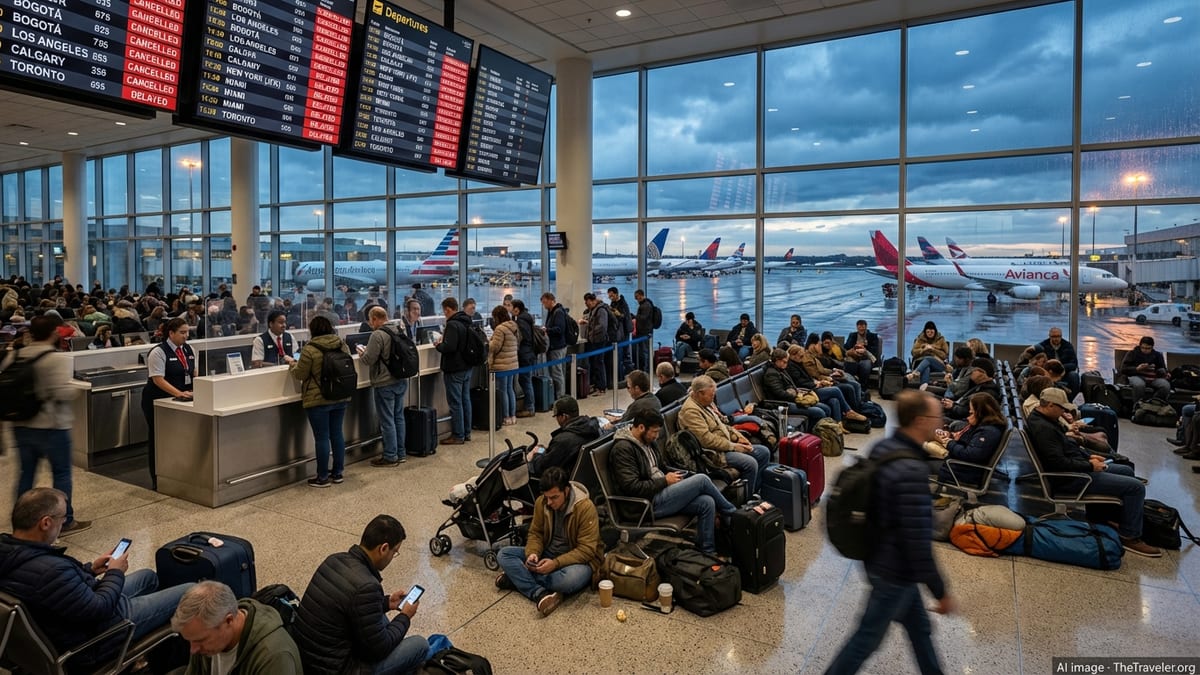
Passenger reports from both airports described long queues at check-in counters, heavily crowded boarding areas and screens filled with red delay notices as airlines struggled to re-time aircraft and crew. With São Paulo sitting at the heart of Brazil’s air network, even a relatively contained incident translated into missed connections and last-minute rebookings at airports as far apart as Recife, Porto Alegre and Manaus.
Industry trackers note that Guarulhos remains Brazil’s principal international gateway, while Congonhas has recorded rising passenger volumes in 2026, reinforcing São Paulo’s status as a pressure point whenever disruptions occur. The combination of high traffic density and tight turnaround times has left airlines and airport operators with little buffer when irregular operations hit.
Operational Strains, Weather and Air Traffic Constraints
The precise mix of triggers behind the 177 delays and 26 cancellations reflects a familiar blend of operational fragility. Publicly available information points to a combination of adverse weather in the wider Southeast region, temporary air traffic flow restrictions in the busy São Paulo approach corridors and aircraft rotations running behind schedule on earlier legs.
Brazil’s aviation infrastructure has been under increasing pressure as demand continues to rebound in 2026. Data published by airport operators show that passenger volumes at Congonhas in the first quarter of the year rose compared with 2025, underlining how quickly traffic has returned relative to pre-pandemic levels. While airports have expanded commercial offerings and upgraded some facilities, runway capacity and approach procedures remain persistent constraints in peak periods.
Analysts following the sector highlight that congestion in São Paulo is magnified by the structure of domestic networks, with carriers concentrating aircraft and crew in the metropolis to optimize connectivity. When storms, visibility reductions or temporary spacing measures imposed by air traffic control reduce the rate of arrivals and departures, backlogs form rapidly and can take hours to unwind, even after conditions normalize.
Airlines Scramble With Rebookings and Limited Spare Capacity
The latest disruption tested the resilience of Brazil’s leading airlines, which entered 2026 with leaner fleets and tighter crew rosters after several rounds of restructuring. Publicly available airline schedules show limited spare capacity in the São Paulo market, limiting the ability to absorb cancellations by adding extra sections or swapping in larger aircraft.
Travelers at Guarulhos and Congonhas described a familiar pattern of rolling delay estimates turning into confirmed cancellations, followed by long waits at service desks for rebooking and vouchers. With many evening departures already near capacity, some passengers reportedly faced re-accommodation on flights departing the following day or indirect routings via secondary hubs.
Sector specialists point out that Brazil’s airlines are operating in a cost-sensitive environment marked by high fuel prices, currency volatility and continued pressure to keep fares competitive. This encourages tight daily utilization of aircraft and limited operational slack, factors that can intensify the impact of any disruption concentrated at a major hub like São Paulo.
Nationwide Ripple Effects for Domestic and International Travelers
The immediate impact of the São Paulo disruption was felt by passengers departing or arriving in the city, but the consequences quickly spread across Brazil’s extensive domestic network. As aircraft and crew missed scheduled rotations out of Guarulhos and Congonhas, knock-on delays emerged on routes linking São Paulo with Brasília, Belo Horizonte, Salvador and other major centers.
International travelers were also swept up in the turmoil. Guarulhos handles a significant share of Brazil’s long haul traffic to Europe and North America, and operational records show that several outbound and inbound services departed behind schedule as airlines waited for connecting passengers and crews arriving on late domestic legs. In a few cases, missed connections forced travelers to spend the night in São Paulo and continue their journeys the next day.
Travel platforms monitoring day-of-travel performance indicated that average delay times for affected services stretched into hours on some routes. While most flights ultimately operated, the uneven recovery across the network meant that passengers arriving at regional airports often encountered further late departures or gate changes, adding to the sense of uncertainty.
Regulatory Context and What Passengers Can Expect
The disruption once again shines a spotlight on Brazil’s evolving regulatory framework for flight delays and cancellations. Publicly available legal and regulatory analyses note that recent court decisions in the country have refined how responsibility is assessed when airlines cite weather, air traffic restrictions or airport infrastructure issues as causes of irregular operations.
Consumer advocates emphasize that responsibility and compensation can vary depending on whether a disruption is attributed to factors within the airline’s control, such as crew allocation or maintenance planning, or to external causes such as severe weather or mandatory air traffic restrictions. As a result, affected passengers frequently turn to airline contract-of-carriage provisions and civil aviation rules to understand what assistance they are entitled to request.
Travel analysts advise that, in practical terms, passengers facing large-scale disruption in hubs like São Paulo should expect priority to be given to safety-related spacing and sequencing decisions in the congested airspace, even when that means extended ground holds. With the peak Southern Hemisphere holiday season on the horizon, observers say the latest episode of travel chaos highlights both the resilience gains made since the pandemic and the structural limits that still define air travel in Brazil’s busiest city.