


More news on this day
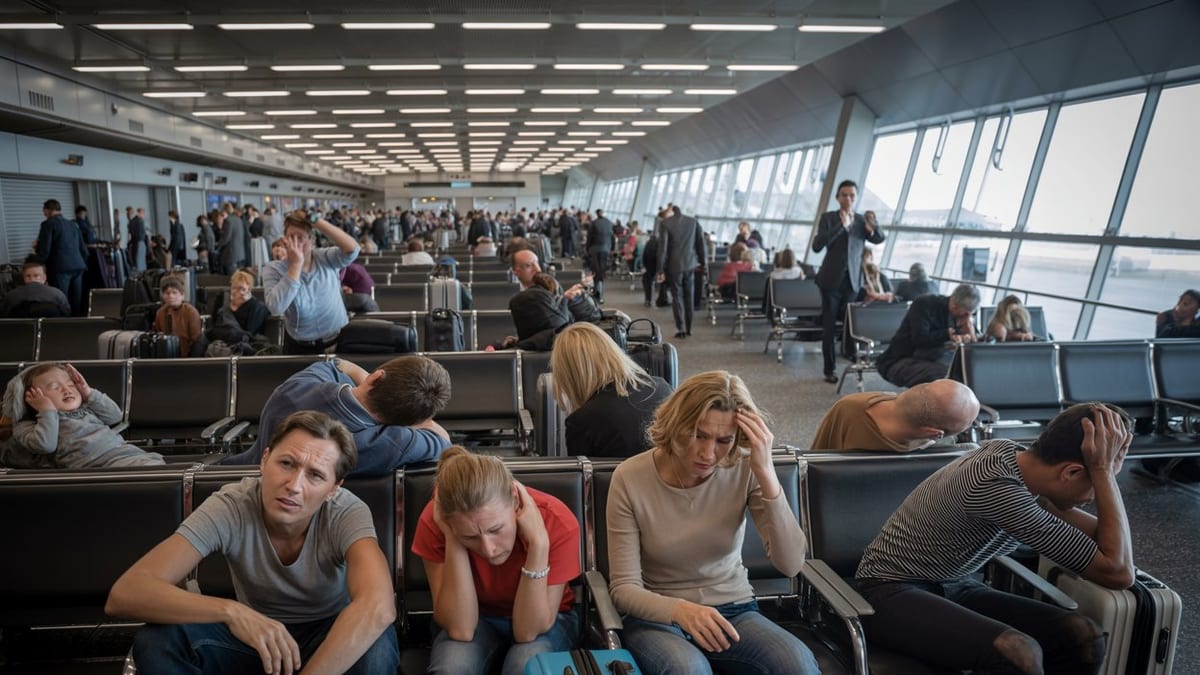
Travelers at Vermont’s Patrick Leahy Burlington International Airport are facing a day of localized disruption after a string of flight cancellations left would-be passengers scrambling for replacement itineraries, overnight stays and alternative ways out of the state.
Get the latest news straight to your inbox!
Five Cancellations Create Outsized Impact at Small Hub
Publicly available flight-tracking data and airline status boards on Friday show at least five departing and arriving services at Burlington International scrubbed over the course of the day, affecting connections to major hubs that Vermont travelers rely on. While the number may appear modest compared with disruptions at large coastal airports, the cancellations represent a significant share of Burlington’s daily schedule and have an outsized effect on passengers with limited backup options.
The affected flights include a mix of early-morning and midday departures, which are critical for making same-day connections to larger networks. With several routes from Burlington typically operating only once or twice daily, a single cancellation can mean an entire day’s worth of lost connectivity to cities such as New York, Washington and major Midwest hubs. For travelers with weddings, medical appointments or international departures onward, reports indicate that rebooking windows quickly shrank as remaining seats filled.
Social media posts from stranded passengers describe long lines at customer-service counters and difficulty securing same-day alternatives, with some travelers opting to drive to larger airports in Boston or Montreal in search of seats. Others have reported being offered next-day departures or connections that add extra stops and many hours to their journeys, illustrating how even a localized disruption in Burlington can ripple across individual travel plans.
Weather, Crew Positioning and Tight Schedules Contribute
The cluster of cancellations appears to stem from a familiar combination of factors that have plagued U.S. air travel in recent seasons. Regional carriers serving Burlington operate on tight aircraft and crew rotations, meaning that storms, air-traffic restrictions or maintenance issues at distant airports can cascade quickly into scrubbed flights in Vermont. Industry data for June indicates that thunderstorms and congestion along the East Coast corridor have periodically constrained operations, with airlines proactively canceling smaller-market flights when recovery options are limited.
In addition, several major U.S. airlines continue to run lean after years of pandemic-era staffing reductions. While carriers have hired aggressively, pilot and crew availability on regional fleets remains constrained, particularly for early and late-bank flights that feed into national networks. When a crew times out due to duty limits or is delayed inbound from another city, a Burlington flight may be among the first to be removed from the schedule to preserve higher-volume routes elsewhere.
Operational resilience at small airports is further tested during peak travel months. June typically marks the start of Vermont’s busy summer season, with leisure travelers joining business and university-related traffic. As load factors rise, there is less spare capacity on alternate flights. For passengers at Burlington, that can mean rebooking not just to a different time but to a different day, especially when cancellations hit multiple carriers on the same morning.
Passenger Frustrations Highlight Limited Alternatives
The latest disruptions have revived an ongoing conversation among Vermont travelers about the vulnerabilities of depending on a small but growing regional airport. Burlington’s schedule has expanded in recent years, supported by tourism, university demand and steady population growth in the region. However, the airport still depends on a relatively small number of daily departures operated by just a handful of major brands and their regional partners.
When several of those flights are pulled, options thin out quickly. Some passengers have recounted arriving at Burlington to discover their flight already canceled, leaving little time to improvise. With rental-car inventories tight and same-day intercity bus connections limited, the decision to pivot to ground transport toward larger hubs such as Boston Logan or Montreal–Trudeau can be difficult and costly.
Others have expressed concern about the predictability of travel from Vermont, particularly for time-sensitive trips. Frequent flyers using Burlington often build in long connection buffers at hubs in anticipation of delays or cancellations. The latest episode, in which five flights were abruptly removed from the board on a single day, is reinforcing habits such as booking first flights of the day, avoiding tight international connections and considering refundable fares where possible.
Airport Expansion Meets Operational Challenges
The disruption comes at a moment when Burlington International is in the midst of a period of investment and transition. Recent planning documents and local economic reports describe ongoing and upcoming work to expand terminal facilities, refurbish infrastructure and position the airport for sustained passenger growth over the next several years. The airport has been highlighted as a key economic engine for the Burlington region, supporting tourism, higher education and local business development.
Improved facilities, however, do not fully insulate travelers from the operational realities of modern air travel. While expanded gate areas, streamlined security and upgraded baggage systems can reduce some friction, flight reliability is heavily influenced by airline scheduling strategies, national airspace constraints and the performance of regional partners. For passengers, the juxtaposition of construction cranes and cancellation notices underscores the difference between long-term capacity planning and the immediate-day experience at the departure board.
Local travel advocates note that investments in airport infrastructure can still play a role in attracting additional routes and carriers over time. A broader route map and more daily frequencies to key hubs could, in theory, provide greater resilience when weather or operational challenges arise. For now, though, Burlington passengers remain highly dependent on a compact schedule in which the loss of just a few flights can feel like a systemic shock.
What Stranded Passengers Can Do Next
For travelers already affected by Friday’s cancellations, airline policies and federal consumer protections will determine what remedies are available. Passengers whose flights have been canceled are typically entitled to a refund if they choose not to travel, even on nonrefundable tickets, and may in some cases be eligible for meal vouchers, hotel accommodations or rebooking at no additional fare under carrier-specific rules. These options vary widely between airlines and often depend on whether the disruption is attributed to weather or to controllable operational issues.
Travel experts advise that stranded passengers begin by checking their carrier’s mobile app or website, where rebooking options sometimes appear before information is updated on airport displays. When phone and in-person queues grow long, some travelers find faster help through direct messages on airline social-media channels or by calling international customer-service numbers that feed into the same reservation system. Sharing flexible dates, acceptable alternate airports and a willingness to accept connecting itineraries can improve the chances of securing a workable replacement journey.
Looking ahead, the events at Burlington illustrate the value of trip-planning strategies that anticipate disruption. Purchasing travel insurance that covers missed connections, building longer layovers into itineraries, and considering schedules with multiple daily frequencies to key hubs can all reduce the risk of being stranded. For Vermont residents and visitors alike, Friday’s wave of cancellations serves as a reminder that in a tightly stretched U.S. aviation system, even a localized pocket of travel chaos can quickly reshape a carefully planned trip.