


More news on this day
Air travelers across Brazil are encountering scattered delays and cancellations today, as weather disruptions in the North, strategic schedule cuts and lingering operational strains continue to ripple through the country’s busiest routes.
Get the latest news straight to your inbox!
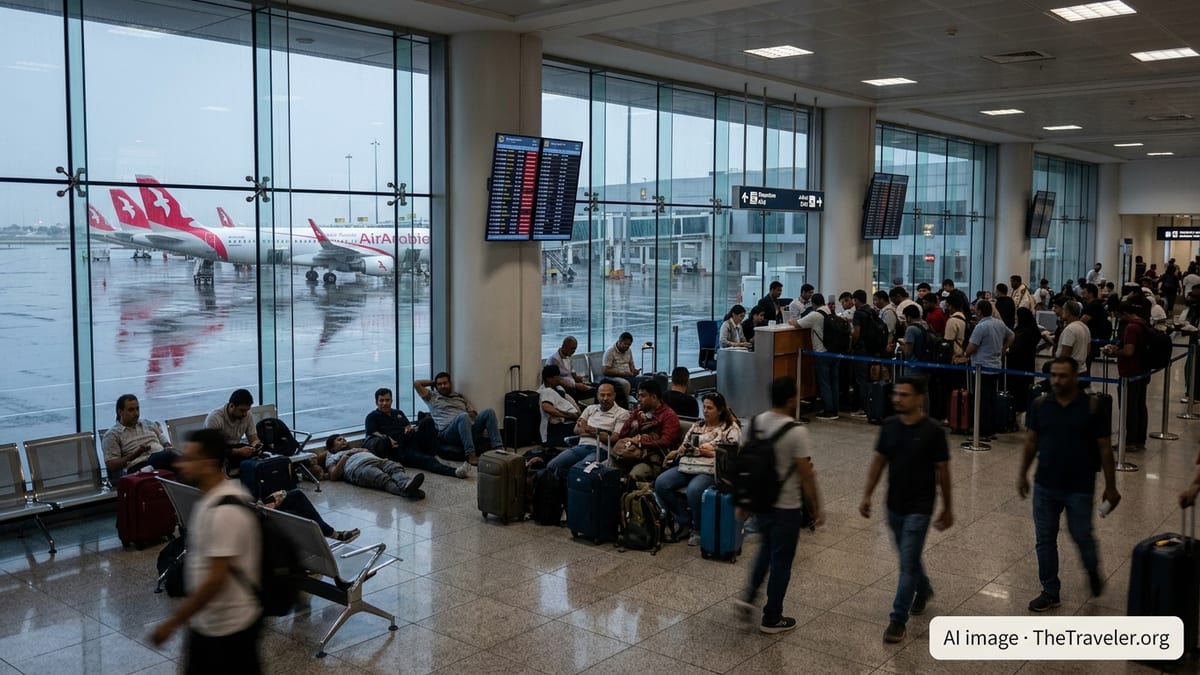
Weather Disruptions Hit Manaus and Northern Corridors
Conditions in the Amazon region are once again weighing on flight reliability. Recent reports from Manaus indicate that poor visibility and unstable weather have prompted alterations to multiple flights at Eduardo Gomes International Airport since Monday, including delays, diversions and selected cancellations. With the rainy season still active and thunderstorms moving through the area, airlines remain cautious about operations, particularly during early-morning and late-evening banks of flights.
The Northern region has been especially sensitive to interruptions this month. Publicly available industry data and local coverage point to a combination of longer flight sectors, limited alternate airports and thinner schedules, which leave carriers with less flexibility when bad weather affects a single hub. When services in Manaus or nearby regional fields are disrupted, knock-on delays can quickly spread along routes to Brasília, São Paulo and other major cities.
Travelers booked on flights touching the Amazon region today are being advised, in widely shared consumer guidance, to monitor real-time status and remain prepared for same-day schedule changes. The pattern emerging this week suggests that even brief windows of severe weather can translate into multi-hour delays where airport infrastructure and spare aircraft are already stretched.
While the current disruptions are localized, they come on top of a broader perception among passengers that Northern routes are more vulnerable to cancellations than those in Brazil’s Southeast. Today’s operations appear to reinforce that view, with weather once again acting as a key trigger for schedule instability.
System Glitches and Earlier Operational Shocks Still Felt
Today’s uneven performance follows a series of technology and infrastructure shocks that have tested Brazil’s air transport network in recent weeks. A major system failure reported last week affected digital services at two of the country’s largest carriers, disrupting check-in, boarding and rebooking processes and forcing manual workarounds at busy terminals. Although the underlying issue has since been resolved, residual scheduling adjustments and aircraft repositioning continued into this week.
Earlier this year, concentrated operational disruptions at key hubs such as São Paulo and Brasília highlighted how fragile the system can become when a single point falters. Episodes involving technical problems in regional air traffic management and dense morning fog at Brasília, for example, led to clusters of delays and dozens of cancellations in a matter of hours. Today’s flight program reflects some of that accumulated volatility, with airlines still fine-tuning rotations and recovery plans to minimize the risk of cascading delays.
Publicly accessible flight tracking boards this morning show generally stable operations at major Southeast hubs, but with pockets of late departures on longer-haul sectors and some lingering schedule irregularities tied to previous days’ disruptions. Industry analysts note that while today does not resemble a full-scale operational crisis, the system remains in a fragile equilibrium where modest shocks can quickly tip individual airports into congestion.
For passengers, that translates into an elevated need to build slack into itineraries, especially for same-day connections. Today’s pattern of isolated, yet disruptive, issues mirrors the broader trend of Brazilian aviation in 2026, in which the network is trying to absorb strong travel demand with limited spare capacity.
Fuel Costs Drive Structural Flight Cuts Through May
Complicating today’s travel picture is a strategic contraction in Brazil’s domestic flight supply that has been unfolding through May. According to recent economic coverage focused on the aviation sector, higher jet fuel prices have compelled Brazilian airlines to reduce their schedules, particularly on thinner and less profitable routes. Industry monitoring suggests that roughly four to five percent of daily flights have been trimmed compared with early April, equivalent to dozens of cancellations baked into the timetable each day rather than announced at the last minute.
These structural cuts are most visible in the North and interior regions, where some states have seen double-digit percentage reductions in available flights this month. In practice, that means fewer options for travelers today, longer gaps between departures and fuller aircraft on the routes that remain. While these cancellations are largely pre-planned and reflected in current booking systems, their impact is felt as reduced connectivity and higher stakes when weather or technical issues affect the remaining services.
Reports on the domestic market indicate that airlines are reallocating scarce aircraft to preserve core trunk routes linking São Paulo, Rio de Janeiro and Brasília, while trimming frequencies to smaller cities. For passengers flying today, this translates into relatively robust schedules on flagship city pairs, but more fragile connectivity in regional markets where a single cancellation can leave travelers stranded for many hours or even until the next day.
Observers note that these network adjustments are likely to continue into June, suggesting that today’s pattern of fewer flights and heavier loads could become the new normal for many domestic travelers. With demand still strong, particularly for business and essential travel, the balance between cost control and service reliability remains a central tension in Brazil’s airline industry.
Historical Punctuality and Today’s Reliability Outlook
Government data on punctuality for recent years provide useful context for assessing today’s flight reliability. Official statistics compiled up to 2025 show that Brazilian domestic operations have generally achieved on-time performance in the low to mid-90 percent range, with fewer than 10 percent of flights arriving more than 30 minutes late in most months. These figures indicate a system that, on average, runs relatively smoothly, even while specific days and airports can experience heavy turbulence in performance.
Against that backdrop, today’s scattered disruptions appear to fit the pattern of localized problems rather than a nationwide breakdown. Airports in the Southeast corridor, including São Paulo and Rio de Janeiro, are reporting mostly regular activity this morning, with only routine levels of delay. By contrast, Northern and Amazonian gateways are facing more visible interruption, driven primarily by meteorological conditions and constrained backup options.
Consumer advocacy groups and travel platforms emphasize that even on days when the overall network is performing within historical norms, the impact on individual passengers whose flights are canceled or significantly delayed can be severe. Social media posts and recent first-hand accounts shared online reflect frustration over rebooking challenges, long lines at service desks and limited information when disruptions occur. Today’s operations appear to be generating a similar spectrum of experiences, from smooth journeys for many travelers to stressful, drawn-out trips for those caught in problem hotspots.
Analysts point out that as airlines run tighter schedules with lean staffing and fewer spare aircraft, the margin for error shrinks. This dynamic is clearly visible in Brazil today, where many flights are operating close to plan, yet the system as a whole remains highly sensitive to local shocks, leaving passengers exposed to sudden changes even on seemingly routine travel days.
What Passengers in Brazil Should Expect for the Rest of the Day
For the remainder of today, Brazil’s air travel landscape appears set to continue with a mix of broadly normal operations and localized trouble spots. Weather forecasts for the Amazon region and parts of the interior suggest that additional thunderstorms and periods of low visibility are possible during the late afternoon and evening peaks, which could trigger fresh rounds of delays at airports already coping with constrained schedules.
At the same time, the structural reduction in daily flights means there is less slack in the system to absorb irregularities. Flights departing major hubs such as São Paulo and Brasília are expected to remain relatively resilient, but connections onward to secondary and tertiary destinations may face tighter turnaround times and a higher risk of missed links. Publicly available airline guidance continues to urge passengers to arrive early, keep contact details updated and check flight status repeatedly on the day of travel.
Given the interplay of weather, fuel-driven schedule cuts and recent system issues, travel experts anticipate that today will remain a challenging, if not extraordinary, day for Brazilian aviation. The situation underscores how a combination of global cost pressures and local operational constraints is reshaping the passenger experience, particularly away from the country’s busiest corridors.
For travelers, the practical takeaway today is clear: flexibility and real-time information are critical. Those who build extra time into travel plans, remain ready to adjust itineraries and stay alert to updates from airlines and airports are likely to navigate the current wave of delays and cancellations more smoothly, even as Brazil’s aviation system continues to search for a more stable footing.