


More news on this day
Budget travelers stunned by Spirit Airlines’ sudden shutdown in early May are already seeing new options emerge, as upstart Breeze Airways races to capture demand on U.S.–Mexico and Florida beach routes heading into the peak 2026 vacation season.
Get the latest news straight to your inbox!
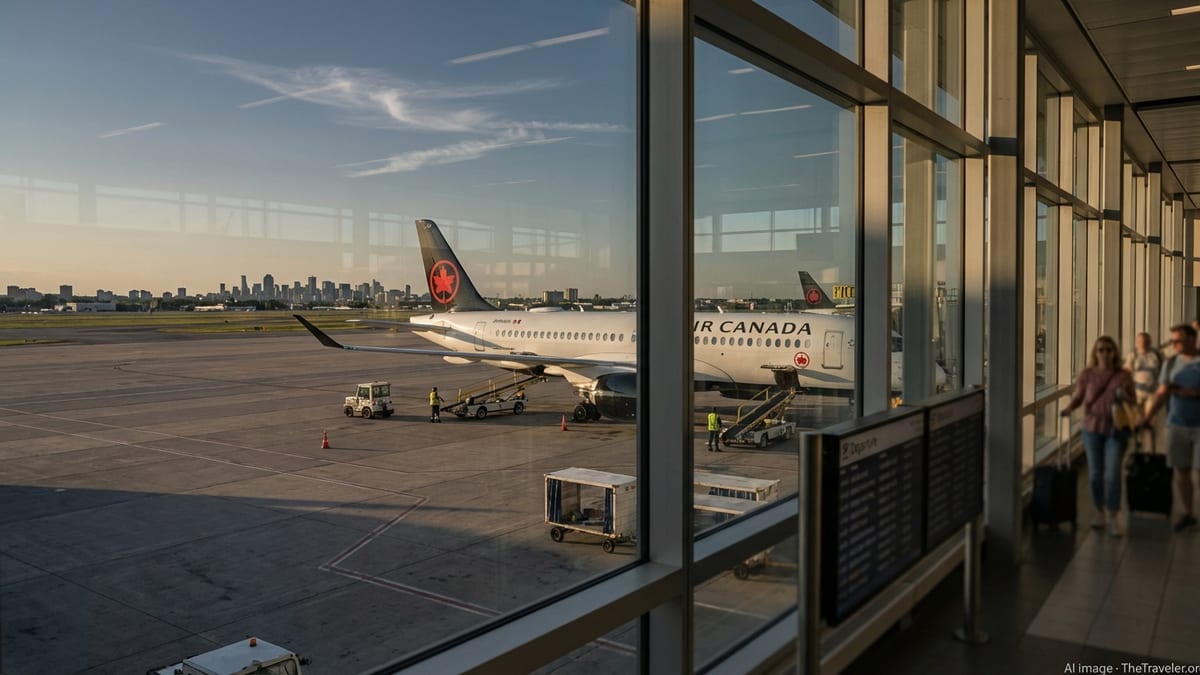
Spirit’s Exit Creates a Vacuum in Low-Cost Leisure Travel
Spirit Airlines halted operations on May 2, 2026 after years of financial strain and rising fuel costs, removing one of the largest ultra low cost carriers from the U.S. market. Publicly available information shows that the airline, long associated with bright yellow jets and rock-bottom fares, has begun an orderly wind down, with its extensive domestic and near-international network now up for grabs.
Analysts tracking the industry note that Spirit’s disappearance is most acutely felt in leisure-heavy markets such as Las Vegas, Orlando and Fort Lauderdale, as well as sun destinations in Mexico and the Caribbean that relied on high volumes of price-sensitive travelers. Prior to its shutdown, Spirit operated hundreds of daily flights and carried a meaningful share of domestic passengers, putting consistent downward pressure on fares, particularly on routes to resort cities and secondary airports.
Travel industry coverage indicates that the end of Spirit’s operations initially sparked fears of higher prices and fewer options for budget flyers. In Florida, the loss was visible almost overnight, with concourse space and gates vacated in airports where Spirit had been an anchor tenant, including major gateways serving the state’s Atlantic and Gulf Coast beaches.
Into that gap, a mix of low cost and ultra low cost competitors has moved quickly. Among them, Breeze Airways, which launched in 2021 with a focus on underserved city pairs, has emerged as one of the most aggressive in repositioning capacity toward former Spirit markets.
Breeze Accelerates Expansion on Former Spirit Corridors
Even before Spirit’s collapse, Breeze Airways had been steadily building its footprint, concentrating on medium-size cities and leisure routes with little nonstop competition. By late 2025 and early 2026, route filings and schedule data showed Breeze adding dozens of new domestic services and preparing for its first international flights, including to Cancun in Mexico.
Coverage from aviation industry outlets in recent months details a notable wave of Breeze expansion coinciding with Spirit’s financial troubles. As Spirit cut back service and then ceased operations, Breeze added new point-to-point routes, often linking secondary U.S. cities with popular leisure destinations where Spirit once offered cheap nonstops. In several cases, these additions mirrored or closely paralleled Spirit corridors, particularly out of Florida and Gulf Coast airports.
In Florida, airport updates and local news reports highlight Breeze as one of several carriers stepping into Spirit’s former space, alongside Frontier, JetBlue and Allegiant. At airports such as Fort Lauderdale, Tampa and Orlando, Breeze has secured additional gate access and announced fresh links to both in-state beaches and out-of-state feeder markets, positioning itself as a new budget option for travelers who previously relied on Spirit.
While Breeze’s network size still trails that of Spirit at its peak, the pace of announcements since late winter and early spring 2026 signals a deliberate strategy to capture displaced passengers. Aviation schedule trackers show that, route by route, Breeze is stitching together a broader map that encompasses many of the same leisure flows that once underpinned Spirit’s business model.
New U.S.–Mexico Links and a Surge in Beach Demand
The timing of Breeze’s international push is particularly significant for U.S.–Mexico leisure travel. Industry publications reported in 2025 that Breeze had secured clearance to operate beyond the U.S. and planned its first Mexican services for early 2026, with Cancun as a flagship destination. Those plans have now come online just as Spirit’s network to Mexico has disappeared.
Schedule data and airline announcements show Breeze offering nonstop flights from select U.S. cities, including mid-sized markets in the Southeast and Mid-Atlantic, to Cancun and other resort gateways. Some of these routes overlap with former Spirit city pairs, while others tap into new combinations where demand for warm-weather getaways remains strong but nonstop options were limited.
At the same time, tourism agencies in Mexican beach regions continue to report robust interest from U.S. travelers for spring and summer 2026, despite higher fuel prices and broader economic uncertainty. With Spirit out of the picture, Breeze’s relatively low base fares and simplified fee structure are emerging as an attractive replacement for travelers who prize price over frills but still want nonstop access to sun-and-sand destinations.
In practical terms, this means more nonstop choices to Mexican beaches from airports that previously depended heavily on Spirit’s model. Early booking patterns, as reflected in online travel agency listings and fare data, indicate that capacity is being rebuilt quickly, helping to prevent the dramatic fare spikes some observers initially feared.
Florida Beach Airports Rebalance After Spirit’s Collapse
Nowhere is the reshuffling more visible than in Florida, where Spirit once had a significant presence at Fort Lauderdale, Orlando and several regional airports serving popular beaches. Local media coverage from South Florida describes terminals that briefly felt emptier in the immediate aftermath of the shutdown, only to see new signage, check-in counters and route announcements appear within days.
Airport communications and schedule updates show Breeze adding service from Florida gateways to both in-state and out-of-state cities, often on leisure-heavy days and times designed to appeal to weekend and holiday travelers. Examples include new links from Gulf Coast airports to Midwestern and Northeastern cities, helping maintain the flow of budget-conscious visitors to beach communities that rely on air travel.
The shift is part of a broader capacity reshuffle among discount carriers. Frontier and Allegiant have also announced added flights from Florida, while traditional network airlines are selectively increasing frequencies on routes where Spirit had been a strong competitor. Within this mix, Breeze stands out for its focus on point-to-point leisure routes that replicate the kind of nonstop access many Spirit customers had come to expect.
For Florida beach towns, the rapid arrival of replacement capacity is crucial. Tourism boards and local businesses depend heavily on affordable nonstop flights that enable quick getaways from northern cities. Early evidence from online search trends and booking tools suggests that travelers are responding to the new options, with interest in Florida beach vacations for late 2026 remaining elevated compared with pre-pandemic norms.
What Budget Travelers Can Expect for the Rest of 2026
For individual travelers, the immediate aftermath of Spirit’s shutdown involved significant disruption, with canceled flights and refund questions dominating early coverage. As the dust settles, the larger story for the rest of 2026 appears to be one of rapid rebalancing, with Breeze and other carriers working to rebuild low fare capacity on key leisure routes.
Fare comparisons on popular search engines show a mixed picture. On routes where multiple low cost carriers, including Breeze, have stepped in, prices remain relatively close to what travelers were paying before Spirit’s collapse, especially to major Florida and Mexico resorts. On thinner routes where no strong replacement has emerged, analysts caution that fares may trend higher until additional entrants arrive or demand adjusts.
Breeze’s strategy of connecting secondary and midsize cities to beach destinations positions it as a central player in this new landscape. While it does not yet match Spirit’s former scale or ultra stripped-down pricing, the airline is marketing a blend of lower base fares, optional add-ons and newer aircraft that appeals to travelers looking to trade some of Spirit’s rock-bottom prices for more flexible service.
Looking ahead to the peak holiday periods later in 2026, schedule filings and industry commentary suggest that the competitive environment on U.S.–Mexico and Florida beach routes will remain dynamic. For budget travelers, the key takeaway is that new low cost options, led in part by Breeze Airways, are rapidly replacing many of the gaps left by Spirit, helping keep sun-focused travel within reach even amid a reshaped airline market.