


More news on this day
Bristol Airport passengers experienced flight disruption after reports of “connectivity issues” affected airport operations, prompting travelers to double-check departure and arrival information before heading to the terminal.
Get the latest news straight to your inbox!
What happened and when
Published coverage over recent days has described a technology-related disruption at Bristol Airport that the airport characterized as “connectivity issues.” Reports indicate the problem initially affected departing flights before the airport later acknowledged knock-on delays for arriving services as well.
The incident comes during a busy late-summer and early-autumn travel period, when even short operational interruptions can cause missed takeoff slots, aircraft and crew being out of position, and cascading delays across an airline’s network. In practical terms, that can translate into late gate changes, longer waits airside, and rebooking queues both in-person and online.
While the airport’s flight program varies day to day, Bristol’s route mix is heavily weighted toward short-haul leisure and low-cost operators. That scheduling model tends to run tight turnarounds, meaning there is less slack to absorb IT interruptions compared with airports that have wider spacing between wave departures.
How disruptions can affect check-in, security, and flight information
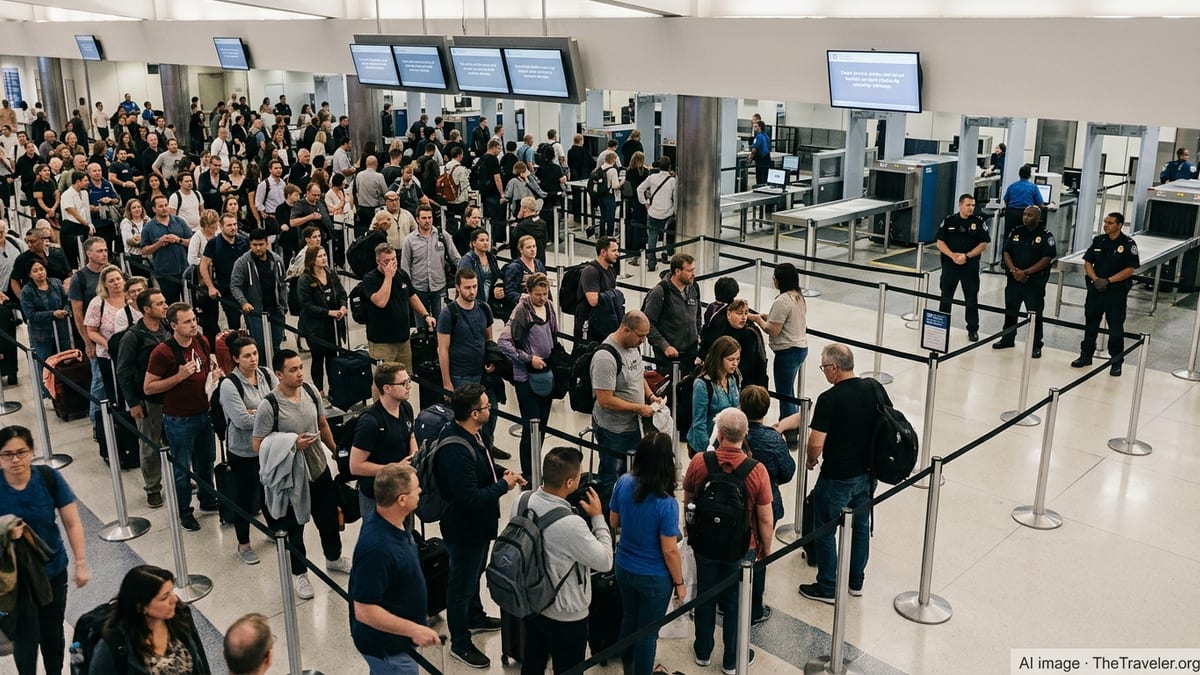
Connectivity problems at an airport can have multiple pressure points. When systems slow or go offline, it can affect check-in and bag-drop processes, the ability to scan boarding passes for access into security, and the reliability of flight information displays that travelers use to confirm gates and timings.
Bristol Airport’s own passenger guidance emphasizes that travelers should follow information screens for the correct check-in desk on arrival, and that boarding passes are scanned to access security. If a boarding pass cannot be read, passengers may need to return to check-in for a replacement, which can become harder during technology disruptions if queues build quickly.
For travelers arriving at the airport, the most immediate impact is often uncertainty: flights may still operate, but status updates can lag while airlines and ground teams work through revised departure times, aircraft rotations, and available gate capacity.
What travelers should do right now
During live disruption, the most reliable next step is to verify your flight directly with your airline and then cross-check with the airport’s live arrivals and departures boards before setting off. Publicly available information from Bristol Airport’s website provides live flight listings that can be useful for spotting delays or cancellations as they appear.
Passengers traveling with checked baggage should allow extra time for bag drop and security, even if they have checked in online. Bristol’s published advice notes that travelers with printed boarding passes and no hold luggage may proceed straight to security, but any disruption that increases security queues or creates scanning issues can reduce that time advantage.
For anyone meeting arriving passengers, delays can also change pick-up plans. Even where aircraft land close to schedule, the downstream process, including stand availability, baggage delivery, and terminal flow, can lengthen during operational interruptions.
Passenger rights and practical costs during delays
When flights are delayed or cancelled, outcomes depend on the cause of the disruption and which party is responsible. Travelers departing from the UK are generally covered by UK261 consumer protections for cancellations and long delays on many itineraries, but eligibility for compensation can hinge on whether the event is considered within an airline’s control.
Regardless of compensation, re-routing and refund options are typically available through the airline. During wider disruption, rebooking can take time, especially when multiple flights are affected and seats on later departures fill quickly. Keeping digital and paper copies of receipts for meals, transport, and overnight stays can help if the airline later requests documentation for allowable expenses.
Bristol Airport’s published general guidance also points travelers toward the Civil Aviation Authority’s rules on delay-related entitlements, and notes that parking FAQs address what to do if a flight is cancelled or severely delayed, a relevant detail for drivers facing extended stays in airport car parks.
Why airport technology issues are getting more attention
Across aviation, operational resilience has become a growing focus as airports and air traffic systems rely on interconnected networks for passenger processing, aircraft turnaround coordination, and real-time flight data. Even when a disruption is localized, the broader effects can be amplified by tight schedules and high demand.
In the UK, recent coverage has also highlighted how technology failures at different parts of the aviation system can create widespread disruption, with NATS recently publishing a preliminary report into a separate national air traffic technical incident earlier in September 2026. Although that event was distinct from Bristol Airport’s connectivity-related disruption, it has added context to passenger concerns about reliability and recovery planning.
For Bristol specifically, the airport has been progressing a wider terminal transformation program intended to support higher passenger volumes over time. As airports modernize and add capacity, disruptions linked to connectivity and system dependencies can draw sharper scrutiny from travelers who increasingly expect real-time, accurate updates across airport screens, airline apps, and web-based flight status tools.