


More news on this day
Belgium is sharpening Brussels Airport’s role as a global gateway, strengthening cargo and passenger connectivity with the United States, Canada, China, Japan and India in ways that directly affect how travelers and shippers move across continents.
Get the latest news straight to your inbox!
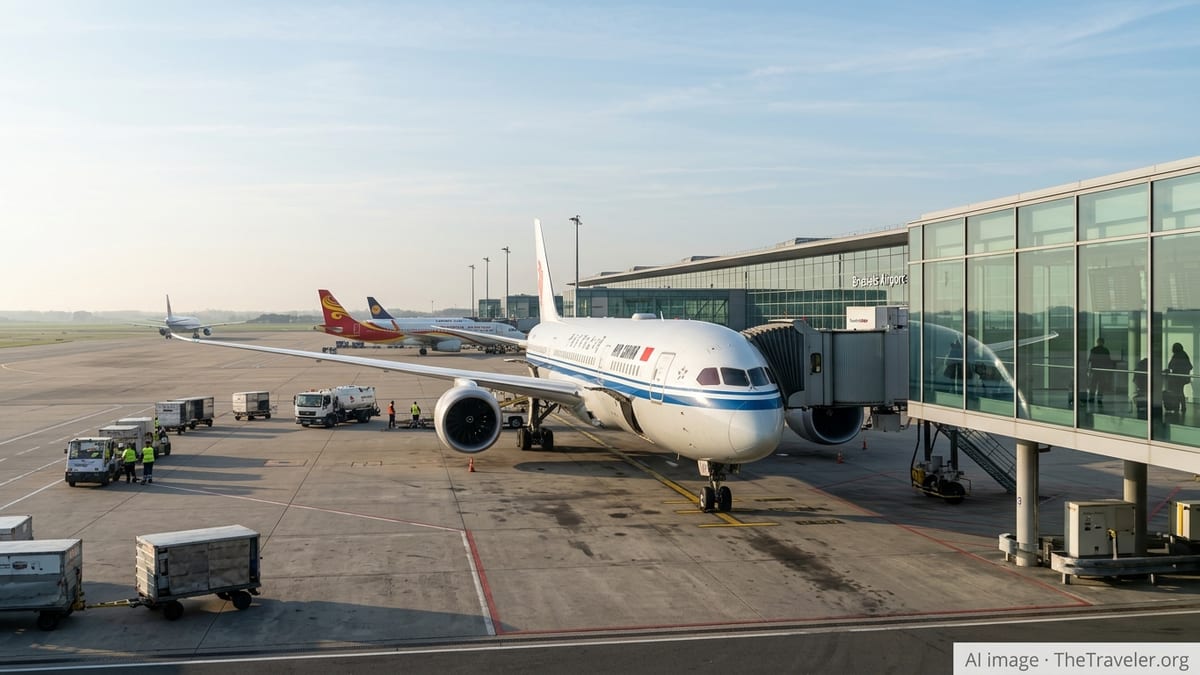
A Strategic Push To Elevate Brussels as a Global Hub
Publicly available information shows that Belgium is positioning Brussels Airport as a central node in long haul networks linking Europe with leading markets in North America and Asia. Recent network and cargo developments are aligning with a broader aviation strategy that seeks to raise Belgium’s international connectivity ranking and make Brussels more competitive with larger hubs in neighboring countries.
Industry data for 2025 from the International Air Transport Association lists Belgium among the top countries globally for international air connectivity, alongside the United States, China, Japan, India and Canada. This momentum is reflected in Brussels Airport’s expanding list of long haul routes, dedicated cargo activities and new logistics facilities tailored to high value sectors such as pharmaceuticals.
Brussels Airport’s aviation development plans highlight a growing portfolio of intercontinental destinations and a cargo community that includes integrators, freighter operators and specialist handling companies. These elements are central to Belgium’s efforts to keep more traffic flowing through its home hub instead of being routed via competing airports in nearby countries.
North American Growth: United States and Canada in Focus
For travelers, the most visible sign of the strategy is Brussels Airport’s North American network. The airport promotes non stop services to major United States gateways such as New York, Washington and key hub cities served by transatlantic carriers. Route maps published by airlines and Brussels Airport indicate direct links from Brussels to large U.S. hubs, providing both point to point travel and smooth onward connections across North America.
On the Canadian side, schedules and destination overviews show Brussels connected to Toronto and other major Canadian cities through a mix of nonstop and one stop itineraries. Carriers in the transatlantic market increasingly use Brussels as an entry point into continental Europe, which can offer travelers an alternative to more congested hubs while still providing rail and air links onward to major European capitals.
These passenger routes support a sizeable flow of bellyhold cargo between Belgium and North America. Trade publications report that Brussels handled more than 700,000 tonnes of cargo in 2024 and continued to grow in 2025, with North American lanes contributing significantly. For shippers, the combination of freighter operations and cargo capacity on passenger flights offers flexible options for time sensitive goods such as pharmaceuticals, automotive parts and express shipments.
Strengthening Asia Connectivity: China and Japan
Connectivity with China and Japan is another pillar of Brussels Airport’s strategy. Destination lists from Brussels Airport and airline schedules confirm direct flights from Brussels to major Chinese cities including Shanghai and Beijing, operated by Asian and European carriers. These routes serve both business travelers and tourists while also supporting sizeable volumes of e commerce, electronics and industrial cargo.
Japan is linked through long haul services between Brussels and Tokyo. Flight data indicates that the Tokyo route ranks among the longest nonstop services from Brussels, underlining its importance as a strategic bridge between Belgium and East Asia. The presence of Japanese logistics firms at the airport, including a large new facility for a leading Japanese forwarder within the Brucargo zone, further consolidates Brussels as a European gateway for Japanese trade.
Reports from air cargo industry outlets describe how Brussels Airport and Japanese logistics partners are investing in temperature controlled warehouses and digital cargo platforms to handle sensitive pharmaceutical and technology shipments. These initiatives are designed to improve reliability and transparency along the supply chain, elements that are increasingly critical for customers in Asia and Europe.
Deepening Ties With India and Emerging Asian Trade Lanes
India features prominently in Belgium’s cargo and connectivity ambitions. Air cargo coverage from trade media points to regular flows between Belgium and Indian airports, including perishable exports, pharmaceuticals and industrial components. While many services are operated via partner hubs in the Gulf or other European gateways, Brussels is steadily building its role as a consolidation and distribution point for India related traffic.
Participation by Brussels Airport’s cargo team in Indian aviation and logistics events has been highlighted in industry reports, indicating an effort to forge closer relationships with Indian airlines, freight forwarders and airport operators. These engagements are aimed at growing volumes on existing lanes and preparing the ground for potential future direct services between Brussels and major Indian metros.
Travelers between Belgium and India currently rely on a mix of one stop connections through hubs in the Middle East, Europe or Türkiye, along with occasional direct offerings by partner airlines. For cargo stakeholders, the developing network offers alternative routings to traditional hubs, which can be attractive when capacity is tight or when specialized handling capabilities at Brussels, particularly for pharmaceuticals, provide a competitive advantage.
What Global Travelers and Shippers Should Watch Next
For passengers, the key takeaway is that Brussels Airport is becoming a stronger option for long haul itineraries linking Europe with the United States, Canada, China, Japan and India. Route maps from Brussels Airport and airline partners show a growing number of nonstop and one stop combinations that can shorten travel times, reduce the need to backtrack through distant hubs and offer more convenient connections by rail and air within Europe.
Shippers and logistics planners are watching capacity and infrastructure developments at the airport’s Brucargo zone, where new warehouses, specialized pharma facilities and digital cargo platforms are being rolled out. Industry publications report that investments in sustainability, such as energy efficient buildings and expanded use of solar power, are being combined with process digitalization to support faster and more predictable cargo flows.
Global travelers should also pay attention to seasonal schedule changes, as airlines adjust frequencies on transatlantic and Asia routes according to demand. Public schedules and airport notices indicate that some long haul services from Brussels are operated primarily during peak seasons, which can affect both seat availability and cargo capacity.
Belgium’s push to elevate Brussels Airport in partnership with carriers from the United States, Canada, China, Japan and India signals that the competition among hubs is intensifying. For travelers and shippers willing to look beyond the largest airports, Brussels is emerging as a practical, increasingly well connected alternative at the heart of Europe.