


More news on this day
Mumbai’s Chhatrapati Shivaji Maharaj International Airport has been named Asia-Pacific’s Best Airport for Departures in the over 40-million passenger category, highlighting how India and the wider Asia-Pacific region are using smart technology and biometric systems to redefine what international travelers experience from check in to take off.
Get the latest news straight to your inbox!
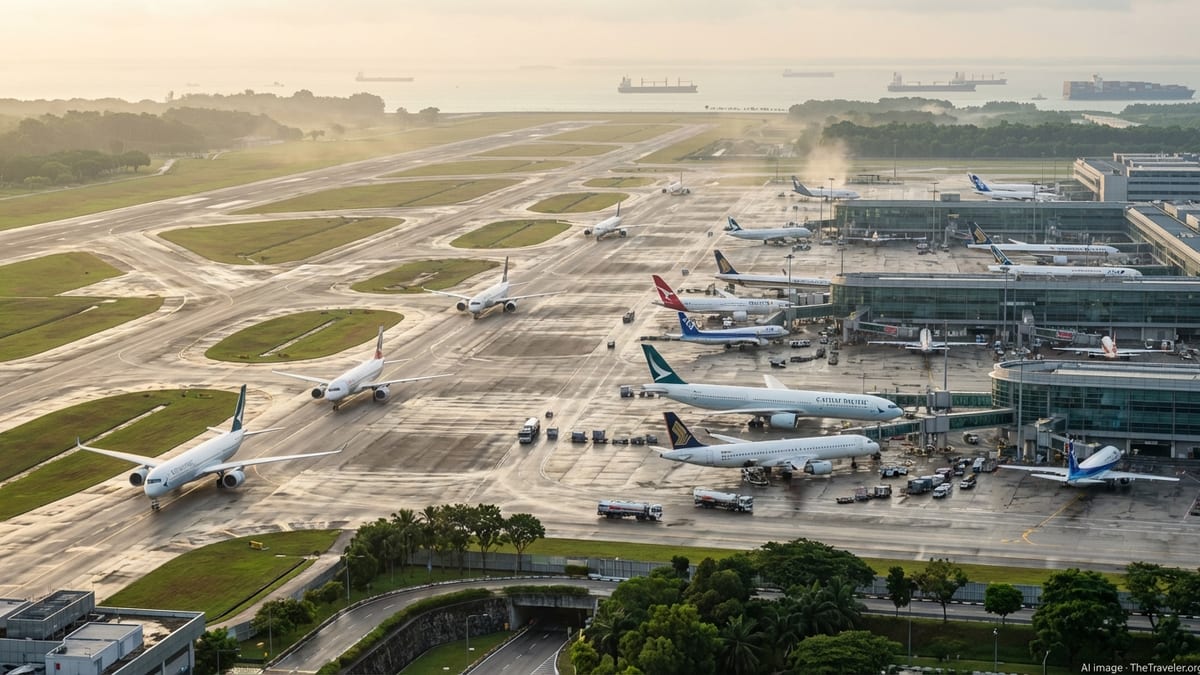
Mumbai’s Departure Win Signals India’s Aviation Ambitions
Chhatrapati Shivaji Maharaj International Airport in Mumbai was recently recognized as Asia-Pacific’s Best Airport for Departures in the over 40-million passengers category at the 2025 Airport Service Quality Customer Experience Awards, a program run by Airports Council International that tracks satisfaction scores across hundreds of airports worldwide. The award places Mumbai alongside some of the region’s most competitive hubs and reinforces India’s push to upgrade infrastructure as passenger volumes surge.
Publicly available information on the awards indicates that Mumbai’s performance is evaluated on measures such as queuing times, terminal cleanliness, airport staff service, and the overall ease of the departure journey. The recognition comes as the airport handles tens of millions of passengers annually, many of them on long haul and regional international routes connecting India with the Middle East, Europe, North America, and the broader Asia-Pacific.
For departing passengers, the accolade reflects a visible shift in how Mumbai’s terminals operate. Investments in automated processes, clearer wayfinding, and expanded processing capacity at security and immigration are intended to reduce the pressure points that travelers most often cite, particularly at peak hours. The award also suggests that these upgrades are delivering improvements even as traffic rebounds past pre pandemic levels.
Mumbai’s success fits into a wider national story. Other Indian airports, including hubs in Delhi, Bengaluru, Hyderabad, and Pune, have also posted strong results in recent Airport Service Quality surveys and regional rankings, signaling that India’s major gateways are competing more directly with leading airports in East Asia and the Gulf on service quality as well as connectivity.
Biometrics and DigiYatra: How India’s Smart Airport Push Works
A central factor in India’s changing airport experience is the rapid expansion of DigiYatra, the country’s biometric boarding initiative. Government and industry documentation describe DigiYatra as a system that allows passengers to use a facial scan as a single token for airport entry, security screening, and boarding, with their identity linked to their boarding pass via a mobile app rather than repeated document checks.
The Airports Authority of India notes that the first phase of DigiYatra launched in December 2022 at Delhi, Bengaluru, and Varanasi, and has since expanded to a growing network of airports. By late 2025 and early 2026, reports indicated that more than a dozen major Indian hubs, including Mumbai, were offering DigiYatra processing for domestic departures, with further rollouts planned across the country.
Technical case studies published by technology partners state that DigiYatra has significantly reduced wait times at key checkpoints. At some airports, average processing at entry gates has reportedly dropped from roughly 15 seconds per passenger to about 5 seconds when travelers use the biometric corridor. While international departures from India still require conventional passport and visa checks, the underlying infrastructure for biometric identity verification is being scaled nationwide.
For international travelers connecting through India, this matters in several ways. Even if an overseas visitor cannot yet use DigiYatra for an outbound long haul flight, the same investments in cameras, e gates, and digital identity platforms are often tied to broader terminal redesigns. The result is a smoother flow of people through common bottlenecks and more consistent queuing patterns, especially at busy hubs such as Mumbai and Delhi.
Asia-Pacific Airports Race Toward Fully Digital Journeys
Across the wider Asia-Pacific region, airports are converging on a similar vision of a largely touchless, document light journey from curb to gate. Industry analyses of the airport automation market forecast strong growth through the next decade, driven by self check in, biometric border controls, and real time baggage tracking. Surveys of travelers in Asia-Pacific show particularly strong interest in fast track security, digital boarding passes, and eventually fully biometric travel.
Recent trials coordinated by the International Air Transport Association in Europe and Asia-Pacific have tested how digital identity wallets and national biometric programs can work together in real passenger journeys. One proof of concept involving India’s IndiGo airline at Bengaluru demonstrated that credentials from different providers, including DigiYatra and airline managed digital IDs, could operate on a single trip, from airport entry through boarding, without repeated manual document checks.
Technology providers report that thousands of biometric touchpoints are already deployed at airports from India to China, Japan, and Southeast Asia. In some hubs, facial recognition is now in place end to end for security, boarding, and immigration, while others are layering biometrics on top of existing self service bag drops and e gates.
For global travelers, this means that the Asia-Pacific region is becoming a test bed for the next generation of airport journeys. Connecting through cities such as Singapore, Seoul, Tokyo, or Mumbai increasingly involves a mix of mobile apps, QR codes, and facial recognition, supported by cloud based systems that share data between airports, airlines, and border agencies under defined privacy frameworks.
What International Flyers Should Expect at Mumbai and Beyond
For visitors transiting India or beginning their trip in Mumbai, the new departure ranking offers a guide to what they may encounter on the ground. Departing from Mumbai’s main international terminal, travelers can generally expect more structured queuing at check in and immigration, improved signage, and a heavier presence of self service touchpoints compared with just a few years ago, particularly at airline counters and security lanes.
International passengers should be prepared for a hybrid experience in which traditional document checks coexist with digital tools. While most biometric corridors currently focus on domestic departures, the same infrastructure often supports automated boarding gates, digital boarding pass validation, and smarter queue management at security for all passengers. Travelers familiar with smart gates in hubs such as Singapore or Dubai will recognize many of the features, though processes remain aligned with India’s specific visa and border requirements.
Industry commentary also points out that capacity constraints are still a reality at busy Indian hubs, especially at peak times and during holiday seasons. Even with awards recognizing improved departure quality, travelers are advised to allow sufficient time for check in, baggage drop, and immigration. Access to the airport, traffic congestion, and ongoing construction in fast growing metropolitan regions can still influence how long it takes to reach the terminal.
At the same time, the broader expansion of India’s airport network, including new facilities at Navi Mumbai and Noida and terminal upgrades in several regional cities, is intended to spread demand more evenly and deliver more consistent standards. As these projects come online and integrate with national initiatives such as DigiYatra, international flyers are likely to see more predictable service levels across multiple Indian gateways.
Navigating the Smart Airport Era: Tips for Global Travelers
The rapid adoption of smart airport technology across Asia-Pacific carries practical implications for anyone planning an international trip through the region. First, travelers should expect a growing reliance on mobile devices. Many airports and airlines now encourage passengers to store boarding passes in digital wallets, pre register for biometric programs where eligible, and monitor flight and gate information through official apps rather than static displays alone.
Second, identity and privacy considerations are becoming more prominent. Publicly available reports on biometric schemes such as DigiYatra emphasize that facial templates are often stored on personal devices rather than centralized databases, and that participation is optional for most domestic passengers. Even so, travelers should review program terms, understand how their data is used, and decide individually whether to opt in when they encounter biometric enrollment points.
Third, the quality of the departure experience can vary within the same city or country, depending on airline, terminal, and time of day. Mumbai’s recognition for its departure experience reflects average performance across many routes and carriers, but individual journeys can still be affected by airline staffing, last minute schedule changes, or local infrastructure works. Travelers connecting between domestic and international terminals should pay particular attention to minimum connection times and ground transfer options.
Finally, as airports from India to Northeast Asia intensify their competition for transfer traffic, the traveler experience is becoming a key differentiator alongside route networks and airfares. Awards such as the Asia-Pacific Best Airport for Departures are one signal that airports like Mumbai are closing the gap with long established global hubs. For international flyers, this translates into more choice over which cities to route through and a gradual shift toward faster, more predictable, and more digital journeys across the region.