


More news on this day
Malaysia is aligning with regional heavyweights including Singapore, China, Thailand, Indonesia, Brunei, Germany and Türkiye in powering a fresh tourism surge, as Kuala Lumpur prepares an ambitious Visit Malaysia 2026 campaign aimed at surpassing pre-pandemic visitor records and cementing its role as a key hub in Asia’s travel rebound.
Get the latest news straight to your inbox!
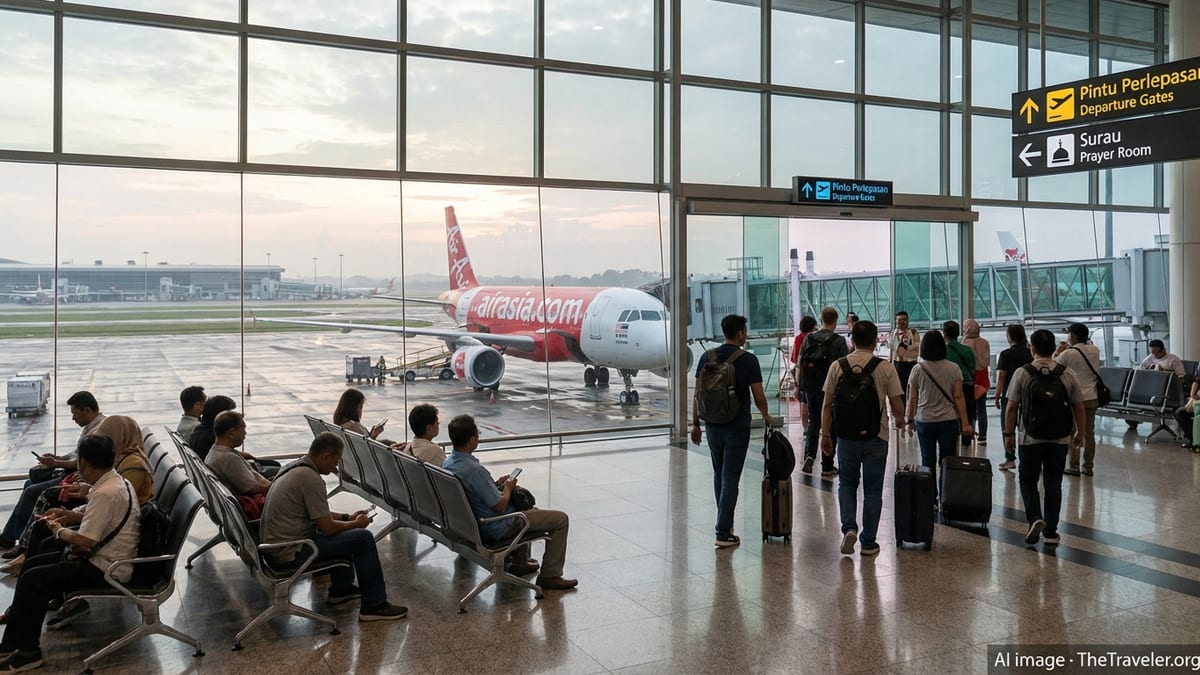
Kuala Lumpur Sets Record-Breaking Ambitions for 2026
Malaysia’s tourism authorities have positioned Visit Malaysia 2026 as a national showpiece, with the goal of converting the country’s rapid post-pandemic recovery into sustained, high-value growth. Publicly available information on the campaign describes it as a multi-year push focused on experience-driven tourism, major events and renewed global branding anchored in Kuala Lumpur.
The capital is being highlighted as a gateway for culture, shopping, food and major events, supported by new and upgraded attractions, integrated public transport and a growing calendar of international festivals and sports tournaments. Promotional material for Visit Malaysia 2026 and associated Kuala Lumpur offers points to bundled city experiences, including heritage districts, contemporary arts venues and new retail and entertainment developments.
Reports on the campaign rollout indicate that the 2026 drive is designed not only to reclaim pre-2019 visitor levels but to push beyond them, leveraging strong air connectivity and Malaysia’s position between Singapore, Thailand and Indonesia. The approach reflects a wider regional trend, in which leading destinations across Southeast Asia and key long-haul markets in Europe are racing to capture resurgent demand.
With the campaign’s formal countdown already underway, industry observers are watching to see whether Kuala Lumpur can translate rising arrivals into higher per-visitor spending and longer stays, positioning Visit Malaysia 2026 as one of Asia’s most significant tourism pushes of the decade.
Tourism Numbers Surge Past Pre-Pandemic Benchmarks
Recent statistics from Malaysia’s Department of Statistics and Tourism Malaysia show that visitor numbers and tourism receipts have rebounded sharply. Tourism satellite account figures for 2024 indicate that travel and tourism generated around 15 percent of national GDP, with total tourism value exceeding 290 billion ringgit, surpassing 2023 levels and edging ahead of some pre-pandemic benchmarks.
International arrivals have also climbed. Tourism Malaysia data for January to December 2024 shows nearly 38 million visitor arrivals, an increase of more than 30 percent compared with 2023 and a level that is reported to be slightly above the equivalent 2019 period. Separate tourism highlights for the first half of 2024 describe double-digit growth in arrivals compared with the previous year, underlining the scale of the rebound.
Domestic tourism has reinforced this momentum. Quarterly releases from the Department of Statistics detail successive increases in domestic visitors and spending through 2024, with more than 260 million domestic trips recorded for the year and strong growth in travel-related expenditure. Analysts note that this robust domestic base is helping to stabilize the sector as international markets continue to normalize.
The combined domestic and international figures place Malaysia among the best-performing tourism economies in Southeast Asia, a position that supports the country’s bid to stage a record-breaking Visit Malaysia 2026 and to compete directly with regional leaders such as Thailand and Indonesia for both short-haul and long-haul travelers.
Visa Policies and Regional Connectivity Drive Growth
Policy changes and improved connectivity across Asia and beyond are playing a central role in Malaysia’s tourism surge. A key development has been Malaysia’s decision to offer 30-day visa-free entry for visitors from China and India, introduced from December 2023 as part of a broader strategy to tap two of the world’s fastest-growing outbound markets. Public statements around the measure describe it as a targeted move to stimulate arrivals and tourism spending.
At the same time, Malaysia has benefited from reciprocal and unilateral easing of travel rules by partners. China introduced visa-free access for short stays for citizens of several countries, including Malaysia and Germany, which has supported two-way travel flows and strengthened Malaysia’s position in itineraries that combine East and Southeast Asia. Regional carriers have added capacity on routes linking Kuala Lumpur with major cities in China, India and ASEAN neighbors, improving accessibility.
Within Southeast Asia, Malaysia’s traditional reliance on Singapore, Thailand, Indonesia and Brunei as top source markets continues to prove resilient. Official tourism statistics for 2023 and 2024 show that Singapore remains the largest contributor of visitors, with Indonesia, China, Thailand and Brunei also ranking among the leading markets. Short-haul land and air links, including high-frequency flights and busy road corridors, are supporting strong cross-border leisure and shopping travel.
Beyond Asia, long-haul markets such as Germany and Türkiye are being targeted through airline partnerships and joint promotions. Industry reporting highlights increased marketing in Europe and the Middle East, aligned with a broader regional push as destinations from Singapore to Thailand seek to diversify away from over-reliance on any single market.
Major Events, City Branding and Niche Segments in Focus
Kuala Lumpur’s strategy for Visit Malaysia 2026 places considerable emphasis on high-profile events and urban branding. Publicly available campaign materials highlight flagship happenings, from countdown festivals and cultural showcases around the Petronas Twin Towers to regional sports tournaments scheduled in the capital throughout 2025 and 2026. These events are intended to generate global media exposure and attract repeat visitation.
Authorities are also highlighting niche segments such as eco-tourism, food and heritage, and city breaks pairing Kuala Lumpur with nearby destinations like Langkawi, Penang and the highlands. Recently published statistics from Langkawi’s tourism board, for example, indicate continued increases in arrivals in 2024, aligning with efforts to promote island and nature experiences as extensions of an urban stay in Kuala Lumpur.
Travel industry analysis points to growing demand for themed experiences, from music and lifestyle runs that incorporate traditional dress to curated food trails in Kuala Lumpur’s historic neighborhoods. These initiatives are being packaged for both regional visitors from Singapore, Thailand, Indonesia and Brunei and for long-haul travelers from China, Germany, Türkiye and other markets looking for multi-country itineraries across Asia.
By blending mega-events with more localized cultural and culinary offerings, Kuala Lumpur aims to differentiate Visit Malaysia 2026 from earlier national campaigns, which were often built around broad branding without as much emphasis on specific experiences and niches.
Malaysia’s Position in a Competitive Regional Tourism Landscape
Malaysia’s current tourism surge is unfolding against a backdrop of intense regional competition. Singapore has reported strong inbound growth and record tourism receipts, driven by premium urban attractions and integrated resorts. Thailand has launched its own extended campaigns to attract longer-stay visitors, while Indonesia is promoting new destinations beyond Bali. Brunei is leveraging its proximity to Malaysian Borneo to attract nature and culture enthusiasts.
In this environment, Malaysia’s mix of visa easing, aggressive event programming and broad-based tourism products positions Kuala Lumpur as a central hub where travelers can begin or end wider regional journeys. Travel trend reporting suggests that multi-stop trips combining Singapore, Malaysia and Thailand, as well as combinations that include China or Türkiye, are becoming more common as airlines restore and expand networks.
Analysts note that the key challenge for Malaysia will be to maintain service quality and sustainable development while managing visitor growth. Public policy documents linked to Visit Malaysia 2026 reference aims to increase tourism’s economic contribution while safeguarding environmental and cultural assets, in line with global moves toward more responsible travel.
If current growth rates in arrivals and receipts continue, Malaysia is on track to enter 2026 with tourism performance already exceeding pre-pandemic levels, giving Kuala Lumpur a strong platform as it joins Singapore, China, Thailand, Indonesia, Brunei, Germany and Türkiye in shaping the next phase of the global tourism upswing.