


More news on this day
Swiss International Air Lines has extended the suspension of its flights from Zurich to Dubai and Beirut until 13 September and 24 October 2026 respectively, as the carrier continues to navigate operational constraints linked to ongoing instability in the Middle East.
Get the latest news straight to your inbox!
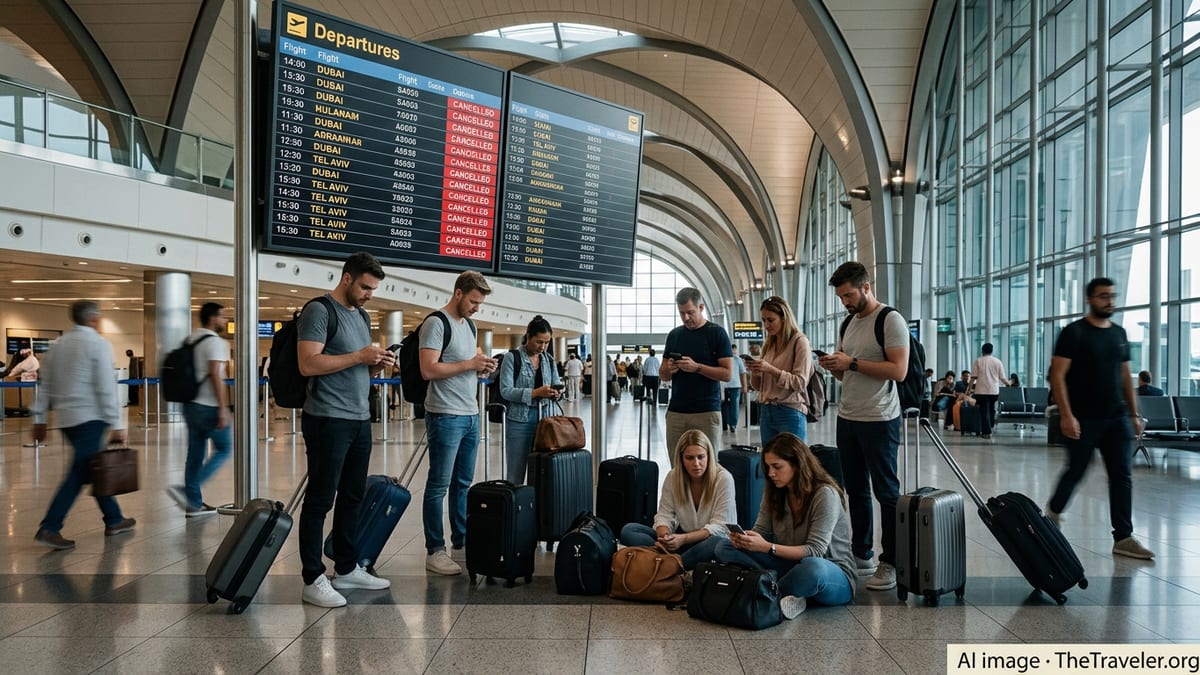
Longer Grounding for Two Key Middle East Routes
Publicly available information shows that SWISS has pushed back the earliest restart date for its Dubai route to 13 September 2026. The airline had already halted services to the Gulf hub in early 2026 after regional airspace closures and capacity limits at Dubai’s airports triggered widespread disruption across international carriers.
Coverage in industry publications indicates that the Beirut service will remain suspended even longer, with flights now off the schedule until at least 24 October 2026. The route had faced recurring cancellations as conflict-related risks and operational constraints around Lebanese airspace intensified throughout late 2025 and early 2026.
The extended suspensions shift what began as short-term timetable adjustments into a full summer and early autumn season without nonstop SWISS links from Zurich to two historically important markets. Travel analysts note that both Dubai and Beirut have served as key points for visiting‑friends‑and‑relatives traffic, tourism and business travel from Switzerland and Europe.
According to published coverage, the airline continues to review conditions on both routes, but the latest timetable update signals that a meaningful return of capacity is unlikely before the end of the northern-hemisphere summer holiday period.
Operational Challenges and Regional Instability
Reports from aviation outlets trace the latest timetable change back to a combination of operational and security-related factors. Airspace restrictions over parts of the Gulf region and the eastern Mediterranean have complicated flight planning, demanding longer routings, additional fuel reserves and tighter crew scheduling, all of which weigh on reliability and costs.
For Dubai, earlier notices highlighted the impact of reduced flight movements at the city’s airports as they worked through congestion and capacity constraints following regional military tensions. These limitations, combined with evolving risk assessments, left SWISS and other European carriers with little room to maintain a predictable schedule on the Zurich to Dubai corridor.
In Beirut’s case, published reports point to the volatility of Lebanese airspace and the prospect of sudden airport closures. Industry data has shown elevated cancellation and diversion rates for flights involving Beirut, prompting many airlines to reassess their operations on what was already a complex market.
By framing the latest move as driven by “operational reasons” and ongoing challenges rather than a single trigger, the airline is signaling that a durable resumption of flights will depend on a broader normalization of regional conditions as well as internal resource planning.
Impact on Passengers and Booking Flexibility
Travel advisories and airline updates emphasize that passengers booked on affected Zurich to Dubai and Zurich to Beirut flights are being offered options to adjust their plans. According to information made public by SWISS and summarized by travel media, customers can rebook to alternative dates without change fees or request a refund if their flight is cancelled.
Some travellers have looked to reroute via other hubs in the Lufthansa Group or through partner carriers that continue to operate to the Gulf and eastern Mediterranean. However, tighter capacity and shifting schedules across the region mean that seats can be limited, particularly around peak summer travel periods.
Consumer advocates note that passengers should monitor their booking status closely and check for schedule changes well ahead of departure days. Given the long lead time of the suspensions, many travellers planning autumn trips to Dubai or Beirut from Switzerland may choose to switch to other airlines that still serve those destinations, or to alternative cities such as Doha or Istanbul.
Reports also underline the importance for affected customers to review the applicable fare rules and local passenger rights regimes, which can differ depending on the point of departure and ticket type. While published policies provide for rebooking and refunds, compensation rules may vary in cases where cancellations are attributed to external operational or security factors.
Network and Market Implications for SWISS
Dubai has traditionally been a high-profile long-haul route in the SWISS portfolio, connecting Zurich with one of the world’s busiest international hubs. Aviation analysts quoted in specialist outlets have previously described the service as commercially important, supplying both point-to-point traffic and onward connections via local and partner networks.
The prolonged absence of the Dubai route is prompting the airline to redeploy aircraft and crews to more stable long-haul markets. Reports indicate that SWISS has focused additional capacity on North American and selected Asian destinations where demand remains strong and operational predictability is higher.
Beirut, while smaller in absolute numbers, plays a significant role for diaspora and family traffic between Switzerland, Europe and Lebanon. The continued suspension through late October 2026 may open space for competitors that maintain a presence in the market or serve it through connecting hubs, reshaping passenger flows in the region.
For SWISS, the current strategy reflects a broader pattern seen across many European and Gulf carriers, which are prioritizing resilience and operational reliability over maintaining a full pre-crisis network. Industry observers suggest that route economics will be reassessed before any eventual return to Dubai and Beirut, particularly if fuel prices, insurance costs and security requirements remain elevated.
What Travelers Should Expect in the Coming Months
With the Dubai route now suspended until mid-September and Beirut until late October 2026, travellers can expect a reduced set of nonstop options from Zurich to the Middle East and eastern Mediterranean for most of this year’s peak travel season. Connections through third-country hubs are likely to dominate itineraries for passengers who still need to reach the United Arab Emirates or Lebanon from Switzerland.
Public information from airports and airlines across the region suggests that schedules remain fluid and subject to relatively short-notice changes. Travel planners recommend building in longer connection times and remaining flexible on dates and routings when booking trips that depend on sensitive airspace or airports with recent disruption.
The extended suspensions also highlight how quickly “temporary” operational decisions can evolve into long-term shifts in airline networks. For now, SWISS appears to be signaling a cautious approach, waiting for clearer signs of stability before committing to firm restart dates beyond 13 September for Dubai and 24 October for Beirut.
Until then, passengers are being urged through various public channels to rely on real-time flight status tools and official airline communications rather than historical schedules when planning journeys that would previously have relied on the Zurich to Dubai or Zurich to Beirut nonstops.