


More news on this day
A busy rail crossing in Bucyrus, Ohio, remains shut to traffic following a July 5 freight train derailment that prompted evacuations, shelter operations and an ongoing cleanup effort around the Whetstone Street and Auto Avenue area.
Get the latest news straight to your inbox!
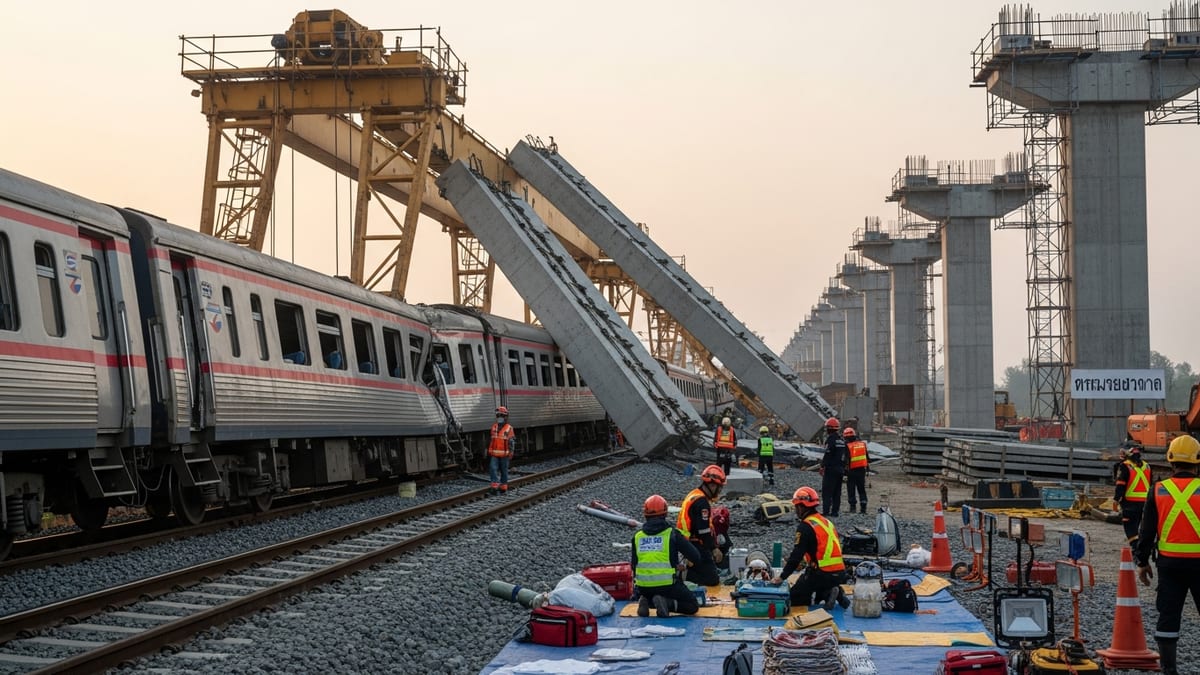
Derailment Near Residential Streets Keeps Crossing Closed
Publicly available information shows that the derailment occurred on the evening of July 5 near the intersection of Whetstone Street and Auto Avenue in Bucyrus, a small city in Crawford County in north central Ohio. Freight cars left the tracks close to a neighborhood street grid, forcing emergency managers to quickly restrict access and close the at-grade rail crossing used by local drivers.
Initial reporting indicated that one of the railcars in the consist was carrying hydrochloric acid, a corrosive substance that can irritate the respiratory system and pose an explosion risk if released in confined areas. As a precaution, residents living within roughly one quarter to one third of a mile of the site were asked to leave their homes while air monitoring and car inspections were carried out around the crossing.
Local outlets have documented how Bucyrus High School was opened as a temporary shelter for evacuees, while surrounding streets were blocked to keep people away from the scene. By late July 6, emergency management updates cited in regional coverage stated that air monitoring did not detect any hazardous releases and that none of the derailed cars were leaking, but the rail corridor and its road crossing remain limited to railroad and cleanup traffic.
With the evacuation zone lifted and residents cleared to return, attention in Bucyrus has shifted from immediate safety concerns to the slower work of stabilizing cars, repairing track and reopening the Whetstone Street rail crossing, a process that continues to affect daily routines for those who live and work nearby.
Traffic Detours Disrupt Daily Life and Local Access
Even after residents were allowed back into their homes, the continued closure of the Bucyrus rail crossing has meant persistent detours for drivers, delivery services and emergency responders. Similar to other recent derailments that have blocked streets in communities across the Midwest, the shutdown of a single grade crossing can significantly lengthen trip times in a small city with limited alternative routes.
Satellite imagery and city maps show that Whetstone Street and neighboring roads serve as connectors between residential areas and key services in Bucyrus. With railcars, heavy equipment and track crews occupying the right of way, drivers have been routed around the site, in some cases adding several minutes to commutes for school staff, health care workers and employees of local businesses.
For residents with limited mobility, the longer routes can be particularly challenging. Detoured paratransit vehicles, school buses and ride-share services must navigate around construction equipment and temporary barricades, while cyclists and pedestrians are left to negotiate unfamiliar side streets. These patterns mirror disruptions seen after other rail incidents in Ohio and neighboring states, where partial closures have remained in place long after emergency evacuations were lifted.
Emergency planning documents from state transportation and rail agencies emphasize that grade crossing outages can also complicate response times for fire and medical services. When a major crossing is blocked, dispatchers may need to send units from different directions to guarantee at least one clear route, which can add complexity during high call volumes or severe weather.
Health, Safety and Environmental Monitoring Around the Site
Reports from regional broadcasters and local newsrooms note that air quality monitoring was carried out around the Bucyrus derailment site due to concern over the tanker reported to be carrying hydrochloric acid. Hydrochloric acid, while common in industrial use, can cause throat and lung irritation at high concentrations and requires careful handling in the event of a spill or vapor release.
According to published coverage summarizing updates from emergency management, air readings in the affected quarter-mile radius remained within acceptable ranges, and no ongoing release of hazardous material has been identified. Those accounts state that, by July 6, the incident was classified as posing no immediate threat to the broader community, and residents were allowed to reoccupy homes near the crossing.
Even when monitoring results are reassuring, residents often experience lingering anxiety about long-term environmental impacts after a derailment involving chemical cargo. The East Palestine incident in eastern Ohio in 2023 raised national awareness of potential soil and water contamination from derailments, and many Bucyrus residents are likely following cleanup progress closely, even with no leak reported at this site.
Rail safety advocates point out that thorough documentation of car contents, monitoring data and cleanup procedures can help rebuild public trust in the wake of such incidents. In Bucyrus, further updates on track repair, soil testing if needed and final clearance for reopening the rail crossing are expected to be central concerns for neighbors who live closest to the line.
Where Impacted Residents Can Seek Assistance
Disruptions from the Bucyrus derailment range from hotel or shelter stays during the evacuation to lost work hours, transportation costs and stress-related health impacts. Experiences from other communities suggest that affected households may be eligible for a mix of private and public assistance, though the options and timelines often differ by incident and carrier.
Railroads involved in significant derailments sometimes establish family assistance or community support centers, providing reimbursement for temporary lodging, food, mileage and other documented expenses. After prior incidents in Ohio and Pennsylvania, publicly available records show that carriers have offered claim processes for residents living within defined impact zones, often requiring proof of address and receipts.
Residents of Bucyrus who were displaced or who incurred costs during the July 5 evacuation can typically start by gathering documentation such as hotel invoices, fuel receipts and records of missed work hours. Community legal aid organizations, local bar association referral services and state consumer protection offices may provide guidance on how to submit claims to the rail operator’s claims department and how to track responses over time.
For those experiencing stress, sleep disruption or other health concerns they believe are connected to the derailment, local health departments and primary care providers can be a first point of contact. Public health agencies sometimes coordinate information sessions or distribute fact sheets after rail incidents to help residents understand potential exposures, even when monitoring has not identified a leak. Keeping personal notes on symptoms and medical visits can be useful if additional support programs open later.
Community Recovery and Ongoing Rail Safety Debate
The Bucyrus derailment has unfolded against a broader national conversation about rail safety, hazardous materials transport and the balance between freight efficiency and community risk. High-profile incidents in recent years have prompted federal agencies and lawmakers to consider stricter rules on train length, tank car design and track inspection technology.
Local leaders in small cities along major freight corridors often face the immediate reality of those debates when derailments close crossings or force evacuations. For Bucyrus, the combination of a neighborhood-adjacent derailment, an initial hazardous cargo concern and a rail crossing that remains closed has underscored the city’s dependence on a single corridor for both commerce and everyday travel.
Community organizations and neighborhood groups sometimes respond to such events by pressing for improved emergency planning, clearer public communication and infrastructure upgrades such as alternative access routes or bridge projects that reduce dependence on individual crossings. Planning documents from state rail agencies show that some jurisdictions have explored grade separation or new connector roads to ensure that emergency vehicles can bypass blocked crossings.
As cleanup and reconstruction progress at the Bucyrus site, residents will be watching for information on when the Whetstone Street rail crossing can safely reopen and what, if any, long-term changes will be made to reduce the impact of future disruptions. For many, the experience of detours, shelter stays and unanswered questions about assistance has been a reminder that the movement of freight through small communities can have immediate, personal consequences when something goes wrong.