


More news on this day
Travelers moving through Washington’s Ronald Reagan National Airport this week faced hourslong delays and widespread cancellations after a high-security visit prompted an extensive ground stop across one of the country’s most restricted airspaces.
Get the latest news straight to your inbox!
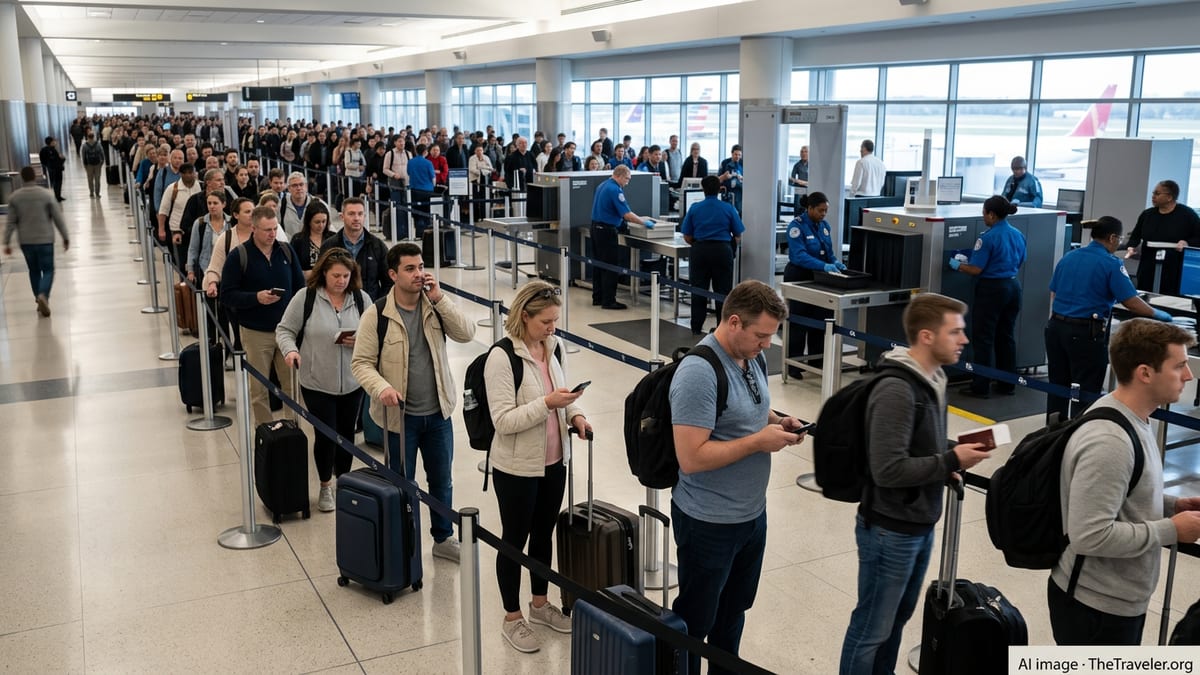
Ground stop at Reagan National upends travel plans
According to multiple news reports, the Federal Aviation Administration halted arrivals and departures at Ronald Reagan Washington National Airport on Tuesday, July 14, as security measures were tightened for a visiting Iraqi delegation in the capital. The pause in operations, which lasted several hours in the middle of the day, resulted in more cancellations at Reagan National than at any other airport worldwide that day.
Published coverage indicates that more than 100 flights were canceled at the Washington airport, with many more delayed as the airfield came to a standstill during the visit. Because Reagan National operates near its maximum capacity on a typical weekday, even a brief halt in movements can quickly snowball into missed connections and late-night arrivals throughout the domestic network.
Tracking data from aviation analytics firms showed cascading disruption on major U.S. carriers that rely on the airport for high-frequency shuttle services along the East Coast. Travelers on social media described departure boards filled with red “canceled” and “delayed” messages, and airport concourses packed with passengers trying to rebook or reroute through other hubs.
The ground stop unfolded against the backdrop of already heightened scrutiny on safety and routing in the Washington region, where a midair collision near Reagan National in 2025 led to revised procedures and tighter helicopter rules in the crowded airspace.
Security visit tightens one of America’s most sensitive airspaces
Reagan National’s location directly across the Potomac River from downtown Washington means it operates inside some of the most sensitive airspace in the United States. Publicly available FAA advisories classify movements tied to presidential trips, visiting heads of government and other so-called “VIP” movements as events that can temporarily reshape operations at the airport.
In this case, reports indicate that motorcades between central Washington and the Pentagon, combined with security aircraft and protection protocols, intersected key arrival and departure corridors used by commercial traffic into Reagan National. With limited room to reroute planes away from those paths, regulators opted to suspend movements for a period of time rather than allow regular operations to continue under heavy restriction.
Aviation briefings and local coverage in recent months have documented a growing list of temporary flight restrictions and closures imposed on the airport for high-profile events, including the State of the Union and the upcoming America 250 celebrations. The latest disruption fits within that pattern, but its timing on a busy summer weekday and its duration made its impact particularly severe for travelers.
Analysts note that while VIP-related restrictions are not new in Washington, the combination of frequent special events, construction work and strong seasonal demand is testing the resilience of the region’s air travel system.
Ripple effects for airlines and connecting passengers
The sudden halt in departures and arrivals at Reagan National had quick knock-on effects across airline networks. With aircraft and crews stranded out of position, delays spread from Washington to major connecting hubs, including airports in the Northeast, the Midwest and the Sun Belt, as planes scheduled to operate onward legs never arrived.
Operational data reviewed by travel industry analysts show that American Airlines and its regional affiliate PSA Airlines, which have a heavy presence at Reagan National, recorded some of the highest numbers of cancellations tied to the event. Other carriers with smaller schedules at the airport also reported disruptions as limited gate space and crowded airspace complicated recovery once operations resumed.
Passengers found themselves rebooked on later flights or shifted to Washington Dulles International or Baltimore/Washington International, the capital region’s two other major airports. While those facilities continued to operate normally, reaching them on short notice required time-consuming ground transfers across congested highways, adding hours to journeys that were already delayed.
For travelers with tight connections, the timing proved especially punishing. Some flyers reported missing last departures of the night from their onward hubs, forcing unexpected overnight stays and additional expenses. Airlines activated standard irregular-operations procedures, waiving some change fees and working to reposition aircraft, but the backlog extended late into the evening.
Travelers confront a summer of heightened disruption in D.C.
The latest ground stop lands in the middle of an unusually complicated summer for visitors to the nation’s capital. Separate from the Iraqi leader’s visit, officials have already scheduled repeated temporary closures and airspace restrictions at Reagan National around major events tied to the 250th anniversary of U.S. independence, including July 4 festivities, aerial demonstrations and downtown ceremonies.
Airport authorities previously announced that Reagan National would halt most operations for substantial portions of July 3 and July 4 to accommodate military flyovers and fireworks, with passengers urged to consider using Dulles or Baltimore/Washington on those dates. Additional federal notices outline security zones and flight advisory areas for large gatherings on the National Mall through late July.
On the ground, visitors have also encountered detours and barricades around the city’s major monuments as security perimeters expand for overlapping summertime events. Reports from local outlets describe fenced-off sections near the Lincoln Memorial and Washington Monument, longer walks between Metro stations and attractions, and intermittent road closures that can lengthen taxi and ride-hail journeys to and from the airports.
The result is a travel environment in which even minor weather issues or routine delays can compound quickly when layered onto security measures and infrastructure projects. Tourism organizations and travel advisers have begun warning visitors to build extra time into airport transfers and city movements through the rest of the peak season.
What travelers should know before flying through D.C. this season
For those with upcoming trips to or through Washington, publicly available advisories suggest several practical steps in light of the recent ground stop. Travelers are encouraged to monitor their flight status closely in the days and hours before departure, paying special attention to any mention of airspace restrictions or temporary closures at Reagan National.
Experts in air travel planning highlight the importance of flexible itineraries in periods of heightened security activity. Whenever possible, they recommend avoiding the tightest possible connections through Reagan National and considering slightly longer layovers to provide a buffer against delays. Booking earlier flights in the day, when there is more opportunity to rebook onto later departures, can also reduce the risk of being stranded overnight.
Some travel analysts note that choosing Washington Dulles or Baltimore/Washington, particularly for long-haul or discretionary trips, may offer additional resilience while Reagan National weathers a crowded calendar of events. Both airports have more runway capacity and are less constrained by the complex security footprint around central Washington.
For now, the episode underscores how a single high-security visit can temporarily reshape air travel across an entire region. With more large-scale events on the calendar through late July, passengers heading for the capital are likely to face a season where contingency planning becomes part of every itinerary.