


More news on this day
Playing cards occupy almost no space in a carry on bag, yet recent travel reports suggest these small decks can create disproportionately large delays at airport security checkpoints.
Get the latest news straight to your inbox!
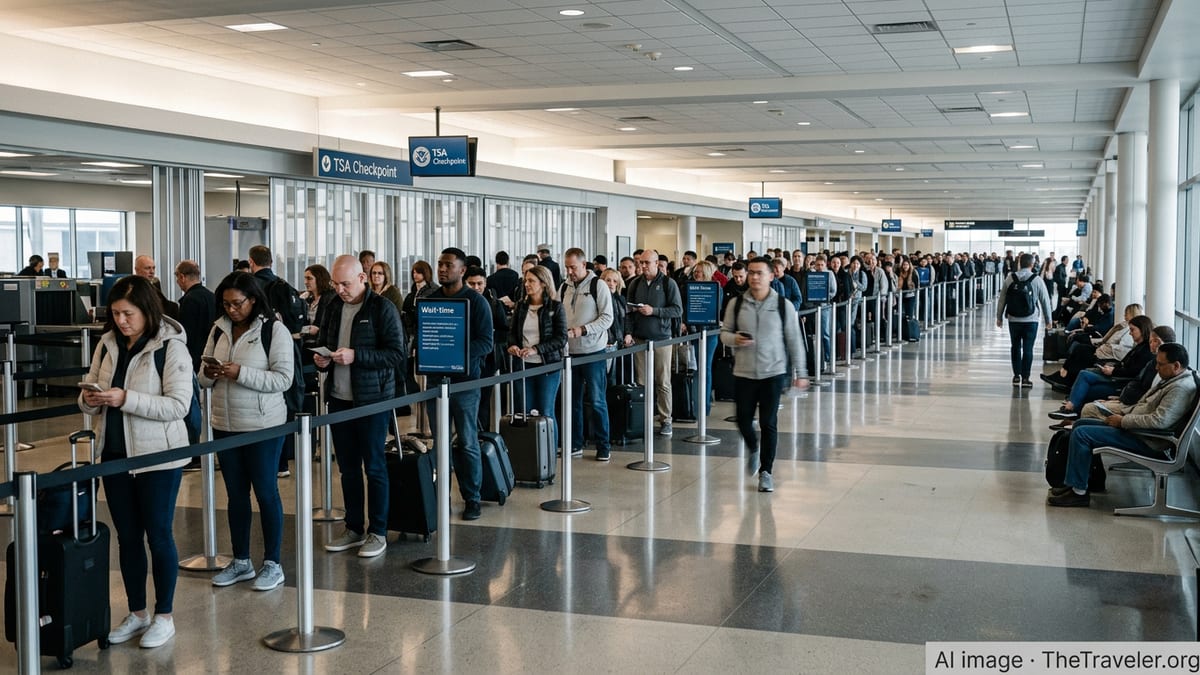
How Playing Cards Look on Airport X-Ray Screens
Airport checkpoints rely on X-ray systems to identify dense or ambiguous objects inside bags as quickly as possible. Security imaging technology highlights shapes, layers and material density rather than familiar consumer products, which means something as ordinary as a tightly packed deck of cards may not appear immediately recognizable on a monitor.
When 52 cards are stacked together in a compact brick, they form a uniform, high-density block of paper and coatings. Travel coverage and passenger anecdotes describe how this can resemble other compact items when seen from certain angles, particularly if the cards are wrapped in foil, stored in a metal tin or combined with electronics and cables nearby. To a screener working at speed, that block may require a closer look.
Publicly available descriptions of security procedures explain that any item that cannot be clearly identified on first pass is likely to prompt additional inspection. Playing cards are not classified as a prohibited item, but the opaque block they create can make it difficult for staff to rule out that something is concealed inside the deck or its packaging. That is often enough to justify pulling the bag off the conveyor belt.
Guidance documents on security screening practices emphasize that screeners are trained to react whenever the image is unclear or inconsistent, even if the item itself is perfectly legal. In practical terms, travelers who pack multiple decks together, or who travel with collectible or trading card game sets, increase the chance that their bag will be diverted to a secondary search station.
From Curiosity to Secondary Search: Why Delays Happen
Once an X-ray image raises a question, the process moves into what security manuals describe as secondary screening. At this stage, a staff member typically removes the bag from the conveyor, opens it and isolates the object that produced the ambiguous image. For the traveler, this is the moment when an innocuous box of cards suddenly becomes the focus of attention.
Travel forums and consumer reports frequently recount situations in which stacks of gaming or trading cards triggered extra screening, sometimes adding several minutes to the checkpoint experience. In many of these accounts, nothing more happens than a visual check of the card box and a quick reshuffle of items in the bag. However, when there are several such unclear items in succession, or when security lanes are already stressed by high passenger volume, those individual checks can combine into noticeable delays.
Published guidance from transport and security agencies describes secondary screening as a necessary step whenever an item might obscure another object. Large piles of paper, books and stacks of cards all fall into this category, since they can hide smaller items inside. Officers may also swab the cards or their container for traces associated with explosives or other contraband. Each added step lengthens the time a traveler spends at the checkpoint.
Experts who analyze airport queuing patterns note that uncertainty in X-ray images is one of several factors that can ripple through lines. Even a brief hand search can slow the tray flow, causing more bags to back up behind the scanner. When multiple passengers are traveling with similar items that create dense blocks on screen, such as card collections, the effect can be amplified, especially during peak holiday or convention travel periods.
Why Collectible and Gaming Cards Draw Extra Attention
The risk of delays appears highest for travelers carrying more than a standard pocket deck. Reports from passengers who travel with trading card games, casino chips or boxed party games frequently mention being pulled aside for extra inspection. Boxes containing multiple decks, sleeved cards or thick rulebooks can appear particularly dense on X-ray images.
Some card enthusiasts use rigid deck boxes, metal tins or protective cases to shield their collections from bending. While these protect the cards, they can also contribute to confusing images. When a solid outer casing encloses a uniform stack inside, an X-ray operator may see very little internal detail at first glance. Without a clear view, procedure generally favors caution, prompting closer inspection.
Travel coverage on gaming conventions and tournaments notes that airports near major event venues sometimes see a spike in passengers transporting card-based games at the same time. This clustering effect can strain checkpoints as multiple dense, game-related items pass through in rapid succession. The result is a pattern of short, repeated slowdowns that can lengthen waiting times for everyone in line.
Some travelers also highlight a different concern: damage or loss. Once a bag is pulled off the line for manual inspection, cards may be unpacked or reshuffled, and rare or high-value items risk being bent, misplaced or exposed. Consumer complaint summaries describe cases in which boxes were opened and repacked in a hurry, leaving contents scattered or less protected than before the search.
TSA Rules, Misconceptions and What Is Actually Allowed
Publicly available information from security agencies makes clear that standard playing cards are permitted in both carry-on and checked luggage. They do not appear on core prohibited-items lists that focus on weapons, explosives and substances considered dangerous on board an aircraft. The issue is not the cards themselves but how they appear on imaging systems when packed in dense or unusual ways.
Despite this, misconceptions circulate widely among travelers. Social media posts and forum discussions sometimes interpret repeated searches as evidence that cards are semi-banned or automatically suspicious. In reality, published policies state that items may be examined whenever they interfere with clear screening, regardless of whether they are allowed. Playing cards happen to share characteristics with other layered paper goods that can temporarily confuse scanners.
Security guidance also stresses that final decisions about items at checkpoints are made case by case. This discretionary element means that experiences can vary between airports, or even between different lanes on the same day. A single, loosely packed deck may pass without comment in one line while a cluster of tightly bound decks in another line earns a manual inspection.
Legal-analysis pieces on airport screening rules note that passengers who decline to cooperate with additional inspection of their bags can face missed flights or, in some situations, civil penalties if prohibited items are discovered. While standard decks of cards do not fall into that category, the same secondary search that uncovers them could also reveal other objects packed nearby, which is one reason most travelers opt to comply quickly to minimize disruption.
How Travelers Can Pack Smart to Avoid Card-Related Delays
Travel experts and frequent flyers suggest a range of practical steps to reduce the chance that playing cards will slow a journey through security. One simple tactic is to distribute decks rather than stack them tightly together. Separating card boxes into different parts of a carry on bag, with some clothing or other soft items between them, can reduce the appearance of a single dense block on the X-ray image.
Another strategy is to place card decks in a transparent pouch or small fabric bag, making them easy to remove from luggage if a tray is flagged. When screeners can quickly identify and inspect a clearly labeled bundle of cards, the secondary search often proceeds more efficiently. Some travelers also choose to keep only one deck in their carry-on and place additional boxes in checked baggage, accepting that checked bags may still be opened but without immediate impact on their time in the security line.
Travel commentary also points out the value of planning for a few extra minutes at security when carrying unusual quantities of cards or other game components. Arriving at the airport earlier than the minimum suggested time gives a buffer if a bag is diverted to a search table. For those transporting high-value collectible cards, some specialists recommend keeping an inventory and using protective cases that can be reopened and closed without damaging the contents during inspection.
Ultimately, the pattern emerging from recent reports is that playing cards can act as a small but real friction point in modern airport security. While they remain allowed items, the way they interact with imaging technology means they are more likely than many travelers expect to trigger secondary checks. Smart packing and realistic expectations can help turn a potential delay into a minor detour instead of a missed flight.