


More news on this day
Thick wildfire smoke drifting across northern Michigan has sharply reduced visibility around Traverse City’s Cherry Capital Airport on Thursday, prompting warnings of possible flight delays and cancellations as airlines monitor rapidly changing conditions.
Get the latest news straight to your inbox!
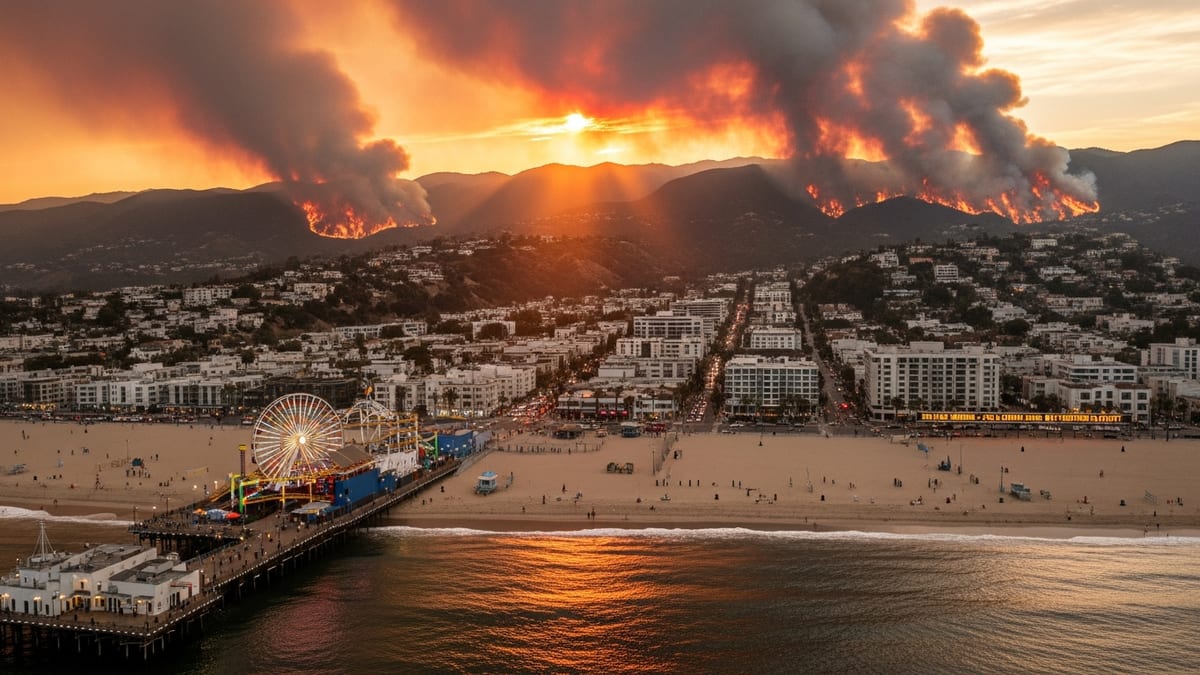
Smoke lowers visibility around Traverse City
Weather observations from the Cherry Capital Airport area on Thursday show widespread smoke over the region, with visibility at times falling to less than one mile as a stagnant air mass traps particulate pollution near the surface. Publicly available data from the National Weather Service describe conditions simply as “smoke,” with light winds limiting dispersion and allowing the haze to linger through the day.
Forecast discussions for the corridor south and east of Traverse City indicate that smoke is expected to remain widespread at least into Friday, with periods of partly sunny skies obscured by a persistent veil of suspended particles. While temperatures are running near seasonal norms, the combination of humidity and reduced visibility is creating challenging conditions for both ground transportation and aviation activities.
The reduced visibility is especially significant in the vicinity of Cherry Capital Airport’s runways, where pilots rely on a combination of visual references and instrument guidance to land and depart safely. When visibility drops below certain thresholds, arriving and departing flights can face additional spacing, diversions, or temporary ground holds while conditions stabilize.
Local forecasts emphasize that the smoke is part of a broader regional pattern tied to ongoing wildfire activity in North America, with upper-level winds steering plumes across the Great Lakes. As a result, airport conditions can change quickly over the course of a few hours, even without any noticeable change in surface weather such as wind or precipitation.
How wildfire smoke can delay or cancel flights
Wildfire smoke affects aviation primarily by degrading visibility and, in some cases, ceiling height, the distance between the ground and the lowest cloud or obscuring layer. Even when skies appear relatively clear from the ground, a dense layer of smoke in the approach or departure path can limit how far pilots and air traffic controllers can see, triggering more conservative operating procedures.
Industry guidance and previous events at major hubs such as Boston, New York, Philadelphia, and Toronto show that when smoke concentrations increase, controllers may reduce the number of aircraft allowed to arrive and depart each hour. This traffic management approach helps maintain safe spacing between planes but can cascade into delays, missed connections, and, if the visibility remains low for an extended period, cancellations of some flights.
Wildfire smoke can also interfere with on-the-ground operations. Ground crews may need additional time to marshal aircraft, load baggage, and move equipment when visibility on the ramp is significantly reduced. In some cases, airport operators may limit certain activities outdoors to protect workers from prolonged exposure to fine particulate pollution, further slowing the pace of operations.
Published coverage and technical studies note that modern jet engines are generally capable of functioning safely in moderate smoke, as long as ash content is low and visibility standards are met. The primary constraint tends to be the strict visibility and approach minima built into aviation regulations and airline operating manuals, which are designed to keep risk within acceptable bounds even when environmental conditions deteriorate.
Current status at Cherry Capital Airport
Available federal aviation data for Thursday do not list any formal closures or nationwide air traffic management programs specific to Cherry Capital Airport, indicating that the facility remains open for operations. However, the presence of smoke and fluctuating visibility near Traverse City means that conditions are marginal and may change with little notice, particularly during early morning and late evening hours when temperature inversions can intensify the haze.
The airport serves as a key regional gateway for northern Michigan, with a schedule that mixes mainline jets and regional aircraft on routes that include Detroit, Chicago, Minneapolis, and leisure destinations. Even modest reductions in arrival and departure rates can ripple through this network, leading to rolling delays if flights arrive out of sequence or if aircraft and crews are held at their origin airports to avoid congestion.
In similar smoke events at other North American airports over the past several years, airlines have typically responded by slowing operations rather than suspending them outright. That pattern suggests that travelers using Cherry Capital Airport are more likely to encounter schedule adjustments, gate changes, or minor delays than widespread cancellations, as long as visibility stays near the lower end of allowable thresholds rather than dropping well below them.
Because many flights serving Traverse City rely on tight connections through larger hubs, even short disruptions can have outsized effects for passengers. A late arrival from a smoke-affected airport can cause travelers to miss onward flights, while a departure delay from Cherry Capital can cascade into the rest of an aircraft’s daily schedule.
What travelers should expect in the coming days
Forecasts around Traverse City call for widespread smoke to persist at least into Friday, with some improvement possible if winds increase or a change in air mass arrives over the weekend. Short-term outlooks suggest that visibility could continue to vary by the hour, with brief windows of clearer air followed by renewed haziness as smoke layers shift across the region.
Travel industry reports from previous wildfire smoke incidents emphasize that the most significant impacts tend to occur early in the day and around peak travel periods, when schedules are already tight and any loss of capacity stresses airport infrastructure. Passengers with early morning or late evening departures from Cherry Capital Airport may want to allow extra time at the terminal and be prepared for gate holds if visibility drops unexpectedly.
Publicly available guidance from major airports affected by smoke in past seasons highlights several recurring recommendations. Travelers are advised to monitor their flight status frequently, since airlines may adjust departure and arrival times in response to evolving visibility readings. In addition, those with tight connections at larger hubs may wish to explore backup options if their initial flight from Traverse City incurs a delay.
While aviation regulators and airlines treat smoke-related disruptions as weather events, which typically limits compensation obligations, carriers often provide rebooking options when schedules are significantly disrupted. Passengers flying through Cherry Capital Airport during this smoke episode may benefit from reviewing their carrier’s policies on same-day changes and weather waivers, especially if forecasts point to continuing visibility problems over the next 24 to 48 hours.
Wildfire smoke as an emerging aviation challenge
Researchers examining wildfire trends in North America have documented a clear increase in the frequency and duration of large fires in recent decades, attributing much of the change to warmer temperatures and drier conditions. This shift has made prolonged smoke events more common, extending hazy conditions over cities and transportation corridors that were historically less affected.
Airport planning documents and climate risk assessments now routinely flag wildfire smoke as a growing operational concern, alongside more familiar hazards such as snowstorms and thunderstorms. These analyses point to a future in which airports, including regional facilities such as Cherry Capital, may need to contend more often with degraded visibility, elevated particulate levels, and the associated health and safety considerations for both passengers and staff.
Some larger airports have begun refining communication protocols and investing in improved air quality monitoring to better anticipate smoke impacts and coordinate responses among airlines, air traffic controllers, and emergency planners. Lessons from major smoke episodes on the East Coast and in Canada in recent years suggest that early warnings and clear messaging can help reduce disruptions by allowing airlines and passengers to adjust their plans before conditions deteriorate sharply.
For travelers in northern Michigan this week, the latest smoke episode serves as a reminder that wildfire activity far from Traverse City can still influence local air quality and flight operations. As climate patterns continue to evolve, regional airports such as Cherry Capital are expected to play a central role in adapting aviation networks to a future in which smoke-related delays and cancellations may become a more routine part of the travel landscape.