


More news on this day
Summer storms across the Houston area are again disrupting operations at George Bush Intercontinental Airport, with ground delays slowing departures and rippling through airline schedules at one of the nation’s busiest hubs.
Get the latest news straight to your inbox!
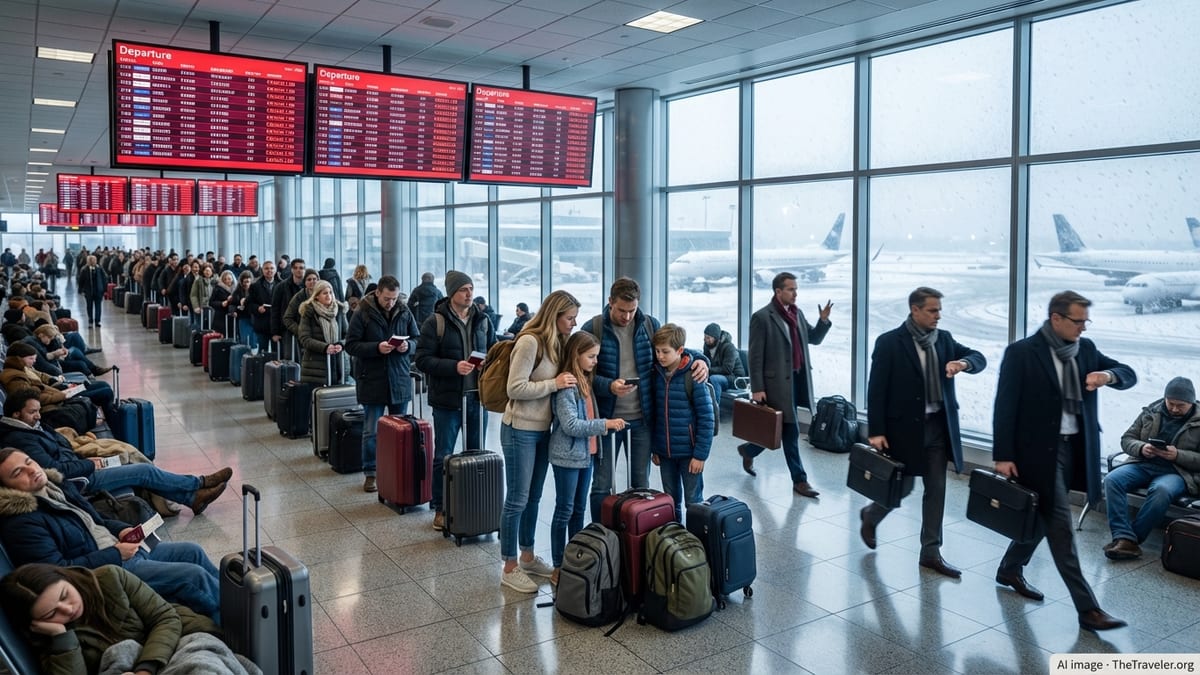
Thunderstorms Trigger New Round of Ground Delays
Thunderstorm activity around Houston has prompted fresh operational constraints at George Bush Intercontinental Airport, leading to ground delays for departing flights as air traffic managers slow the rate of takeoffs for safety. Federal aviation data for Thursday indicates periods of gate hold and taxi delays, with departures experiencing extended time on the ground while convective cells move through the region.
Recent weeks have seen repeated rounds of severe weather in southeast Texas, and publicly available information shows that Bush Intercontinental has been placed under several temporary ground stops and ground delay programs since early summer. Local media coverage describes thunderstorms forcing short-term halts to departures and creating delays that can quickly stack up for midafternoon and evening departures as storms build and weaken over the metro area.
Ground delay programs are a standard tool used by air traffic managers when weather reduces the amount of traffic that can safely arrive or depart an airport. Instead of allowing a full schedule of flights to push back and queue on taxiways, managers assign controlled departure times, effectively holding aircraft at gates or on the ramp until conditions improve or airspace capacity increases.
For travelers at Bush Intercontinental, that means many flights are still operating but at a slower pace, with departures pushed back in 15 to 30 minute increments and some itineraries facing much longer waits when thunderstorms are slow to clear.
Operational Data Points to Repeated Weather Constraints
Federal Air Traffic Control System advisories over the past month outline several weather-related programs affecting Houston. On some days, planning documents describe full ground delay programs for Bush Intercontinental, where arrival and departure slots are rationed throughout the day to match reduced capacity. On other days, shorter targeted measures have been used, including brief ground stops for inbound flights and departure metering when storm cells sit over the airport or key arrival routes.
Local coverage from early July notes that thunderstorms moving over the Houston area led to temporary ground stops at both Bush Intercontinental and nearby William P. Hobby Airport, causing delays to climb as midafternoon storms triggered cascading schedule impacts into the evening. Reports from mid-June similarly point to a coordinated ground delay program for Houston, with planners adjusting flights into and out of Bush Intercontinental over several hours to manage the impact of convective weather.
Meteorological summaries from the National Weather Service office serving Houston highlight frequent thunderstorm development near the airport corridor during the current warm season pattern. Those storms can bring heavy rain, low visibility, gusty winds and lightning in a short window, all of which can limit runway availability and slow ramp operations as ground crews pause work for safety.
Combined, these data points suggest that the latest delays at Bush Intercontinental are part of a broader summer pattern in which repeated storm systems periodically strain the airport’s capacity and the surrounding Houston terminal airspace.
Passenger Impact: Missed Connections, Longer Travel Days
For passengers, the practical impact of ground delays is most apparent in the form of missed connections and unexpectedly long travel days. When departures from Bush Intercontinental are held, even by less than an hour, tightly timed connections to domestic or international flights can become difficult to make, especially at a major hub where some itineraries rely on short transfer windows.
Publicly available flight-tracking and status tools show clusters of delayed flights whenever thunderstorms move through the region, with some departures pushed back repeatedly as air traffic managers update departure times based on changing radar imagery. Summer schedules, which already run with high load factors, provide limited slack to rebook affected travelers quickly.
Travel industry guidance consistently recommends that passengers transiting through storm-prone hubs build in extra time, especially during afternoon and evening banks when convective weather is most likely. For Bush Intercontinental, where delays can ripple between domestic banks and long-haul departures, this may mean favoring earlier flights, allowing longer connection times and monitoring flight status frequently on days when storms are forecast.
Carriers operating at Bush Intercontinental typically encourage travelers to use mobile applications or airport kiosks to track gate changes and rebooking options when ground delays lengthen. While many flights ultimately depart on the same day, rolling weather disruptions can turn a routine connection into an overnight stay if crews reach duty limits or if onward flights depart before delayed inbound aircraft arrive.
Why Bush Intercontinental Is Especially Vulnerable in Summer
Houston’s geographic position and climate help explain why Bush Intercontinental can be particularly susceptible to storm-driven delays during the warm season. The airport sits north of downtown Houston in an area where sea-breeze boundaries from the Gulf of Mexico frequently collide with inland heating, a pattern that can generate slow-moving thunderstorms on many summer afternoons.
Airport planning documents and historical storm analyses highlight that heavy rainfall, frequent lightning and low cloud ceilings are recurring features for the region. Even when severe weather is limited to a relatively small area, storms that track directly over the airport or along its arrival and departure corridors can sharply curtail the number of aircraft that can safely operate at any given time.
The airport’s role as a major connecting hub also amplifies the effect of each disruption. When inbound flights from multiple regions are delayed by weather in Houston, outbound departures must wait for connecting passengers and aircraft, while late arrivals may compress turnaround times at already-busy gates. The result is a network effect in which a single thunderstorm event can propagate delays throughout the day and, in some cases, into the following morning.
Infrastructure initiatives currently under way at Bush Intercontinental, including drainage improvements and modernization of airfield systems, are expected to support more resilient operations over time. However, aviation planners acknowledge that even with upgraded facilities, the fundamental challenge of managing thunderstorms in a humid Gulf Coast environment will continue to shape summer operations at the airport.
What Travelers Can Expect in the Days Ahead
Short-term forecasts call for continued chances of showers and thunderstorms around the Houston area, suggesting that intermittent ground delays at Bush Intercontinental remain possible during peak heating hours. Flight-status dashboards for the airport already show that, even when widespread ground delay programs are not in effect, clusters of flights can experience localized holds during brief storms.
Travelers scheduled to pass through Bush Intercontinental in the near term are likely to see a mix of on-time departures and weather-induced delays that vary by time of day and route. Morning flights often benefit from calmer weather and fewer knock-on disruptions, while afternoon and evening services face higher risk as thunderstorms develop and as earlier delays accumulate.
Publicly available data from federal aviation systems and commercial trackers indicate that delays at Bush Intercontinental during recent storm events have ranged from short gate holds of 15 minutes to extended waits of more than an hour for some departures. On days when more organized storm systems affect the wider Houston region, additional congestion can be expected as traffic managers slow arrival rates and meter departures across multiple airports.
As the peak summer travel season continues, Bush Intercontinental is likely to remain under close watch by both aviation planners and travelers, with each new storm system bringing the potential for another round of ground delays at the Houston hub.