


More news on this day
Business class and other premium seats are becoming increasingly visible at Birmingham Airport, as airlines reconfigure cabins and deploy larger aircraft to capture a growing pool of high-yield travelers in the UK’s Midlands region.
Get the latest news straight to your inbox!
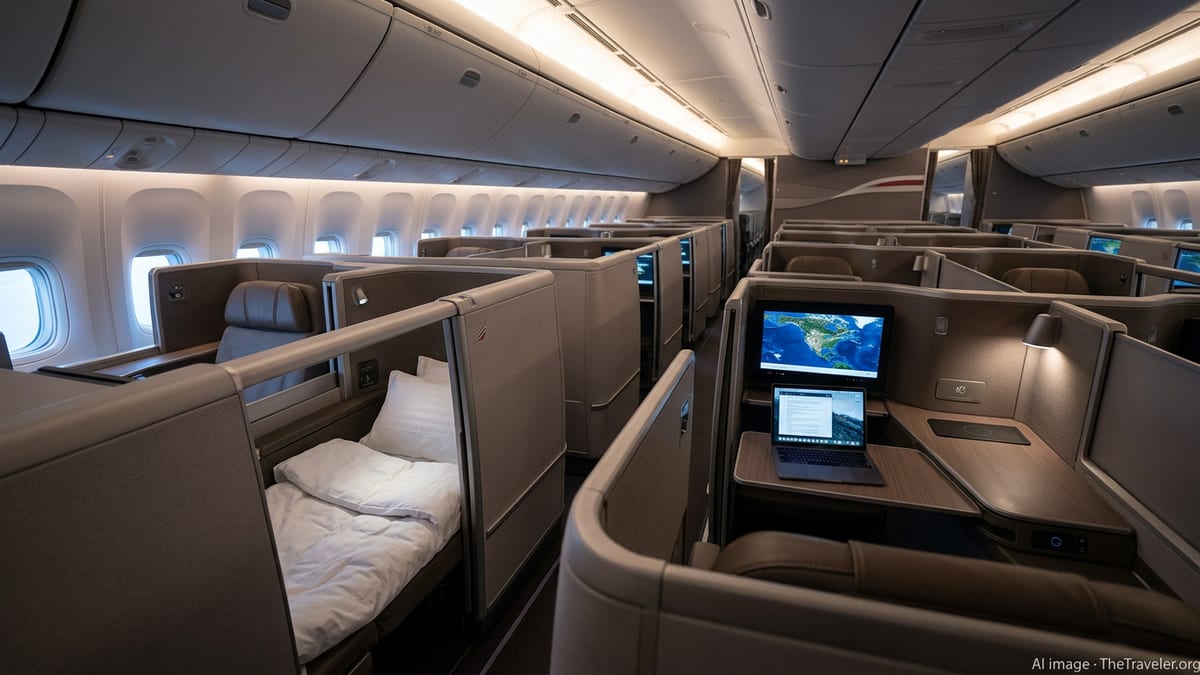
Airlines Add More Premium Seats On Key Long Haul Routes
The most visible shift in Birmingham’s premium offering is coming from long haul operators that see fresh revenue potential beyond London. Publicly available information shows that Emirates has been at the forefront of this strategy, using its Airbus A380 widebody to serve the Birmingham to Dubai market and progressively upgrading the onboard product. Recent coverage of the carrier’s retrofit program highlights that the latest two class A380 layout removes around 120 economy seats to free space for an expanded mix of Premium Economy and Business Class, increasing the share of higher yielding cabins on select routes.
Reports focused on Emirates’ UK deployment indicate that Birmingham has been a beneficiary of this wider cabin reconfiguration plan, with the airport positioned as a gateway for both business travelers and affluent leisure passengers heading to the Middle East, Asia and Australasia. The emphasis is shifting from pure volume to yield, as airlines look to maximize the revenue contribution of each departure through a denser concentration of premium seating at the front of the aircraft.
Other full service airlines are pursuing similar tactics on European and transatlantic links, building out business class capacity and, in some cases, introducing dedicated Premium Economy cabins. Travel industry analysis notes that these intermediate products are increasingly seen as a stepping stone to full business class, helping to cultivate a pool of customers who may later trade up further, reinforcing the premium mix on routes that can support it.
For Birmingham Airport, this pattern translates into more flat bed seats and enhanced service standards on flights that once offered only standard economy or basic recliner style business class. The visible growth in premium cabins signals a structural shift in how carriers view the airport’s catchment and its ability to sustain higher fare products.
Premium Demand Outpaces Overall Traffic Recovery
Industry data suggests that the rise in business class capacity at Birmingham is part of a broader realignment in air travel demand, where premium cabins are recovering faster than overall passenger numbers. Analysis from aviation consultancies points to premium seats contributing a disproportionate share of airline revenue growth since the pandemic, with higher yields helping to offset lingering weakness in some corporate travel segments.
European and UK focused travel reports indicate that a growing share of passengers are choosing to pay for business class or adjacent premium products, even on relatively short sectors, as travelers place higher value on space, flexibility and the end to end experience. One assessment of UK ticketing patterns in 2024 and 2025 found that business class now accounts for a noticeably larger percentage of bookings than before the pandemic, though economy remains dominant in absolute terms.
At airports such as Birmingham, this has created a powerful incentive for airlines to tilt cabins toward premium customers. While total seat capacity may still be below historic peaks on some routes, the mix is shifting in favor of higher yielding classes, supporting route viability and encouraging carriers to maintain or add frequencies. In effect, airlines are using premium cabins as a buffer against cost pressures, including higher fuel prices and rising airport charges.
Publicly available industry outlooks from groups such as IATA underline that premium yields in Europe are expected to remain resilient, even as competition intensifies. For Birmingham, which operates in the shadow of London’s larger hubs, success increasingly depends on offering sufficient premium capacity to attract both business travelers and higher spending leisure passengers who might otherwise route via Heathrow, Gatwick or Manchester.
Leisure Upgraders Help Fill Front Cabins
A notable feature of the current premium boom is that it is no longer driven solely by traditional corporate travel. According to recent coverage of UK airline trends, carriers such as British Airways have reported record demand for short haul business class products, driven in part by holidaymakers and so called “premium leisure” travelers who are willing to pay for additional comfort and services.
Reports examining post pandemic behavior suggest that many travelers now treat the journey as part of the holiday experience, placing a higher value on lounge access, priority security and extra personal space. Industry commentary links this shift to a combination of pent up demand, larger household savings in some segments, and the normalization of hybrid work patterns that allow passengers to travel outside traditional corporate schedules while still needing a productive onboard environment.
For Birmingham, whose catchment includes a growing number of high income professionals and internationally mobile workers, this trend is particularly relevant. Airlines adding business class seats at the airport are not only targeting executives on contractually mandated premium tickets, but also self funded leisure travelers, small business owners and remote workers who can justify the cost of an upgrade on selected trips.
Travel trade analysis highlights that this blend of demand sources makes premium cabins more resilient to economic fluctuations than in previous cycles. Even if large corporate travel budgets tighten, airlines serving Birmingham can still rely on a diversified base of customers willing to pay for front cabin seats, supporting the recent surge in business class capacity.
Midlands Connectivity Fuels Strategic Bet On Birmingham
The decision by airlines to expand premium cabins at Birmingham also reflects the airport’s evolving role in the UK network. Reference data on passenger volumes and route maps shows that while Birmingham is smaller than the main London hubs, it serves a large and economically significant hinterland that stretches across the West Midlands and into parts of central England.
Regional economic studies and airport rankings consistently describe the Birmingham area as one of the country’s key business and financial centers outside the capital, with strong automotive, manufacturing, technology and professional services sectors. This concentration of corporate activity, combined with ongoing investment in transport links and urban regeneration, has strengthened the case for airlines to offer more sophisticated premium products from the airport.
Recent route developments across the UK indicate that airlines are increasingly willing to base premium heavy aircraft at secondary and regional airports when the local economy and demographics support higher fares. Examples at other mid sized UK airports show that once a critical mass of premium routes is established, it can attract additional services and justify dedicated lounge and ground product upgrades, creating a virtuous circle that further entrenches premium demand.
Birmingham appears to be moving along a similar trajectory. The visible increase in business class seating, complemented by investments in lounge space and priority processing, suggests that airlines are betting on the Midlands as a long term source of high yielding traffic, rather than treating the airport solely as a feeder to larger hubs.
Competitive Pressures And Policy Headwinds Remain
Despite the current momentum, the push toward more business class capacity at Birmingham is not without risks. Airlines face intense competition from nearby airports that are also vying for premium travelers, as well as from rail on shorter domestic and near European routes. Published rankings of UK airports for business travelers frequently highlight London Heathrow and Manchester as benchmarks for premium connectivity, setting a high bar for Birmingham to match.
At the same time, government policy presents mixed signals for the premium segment. Public commentary around UK Air Passenger Duty has drawn attention to higher tax rates applied to premium economy, business and first class tickets compared with standard economy. Any further increases in these charges could weigh on demand for front cabin travel from regional airports, especially on price sensitive routes.
Environmental considerations are another complicating factor. Wider public debates about aviation emissions and the role of discretionary air travel have led some investors and policymakers to scrutinize premium cabins, which occupy more space per passenger and therefore have a larger per capita carbon footprint. Airlines at Birmingham seeking to grow business class capacity may need to balance this with visible investment in newer, more efficient aircraft and carbon reduction initiatives to maintain social and regulatory support.
Even with these headwinds, industry forecasts continue to see a durable role for premium cabins in airline business models. For Birmingham Airport, the recent surge in business class seats signals that carriers believe the Midlands market can sustain more high yield traffic, turning the airport into a more prominent player in the UK’s evolving premium travel landscape.