


Crossing the Arctic Circle still feels like stepping over an invisible frontier. On the map it is just a latitude line at 66 degrees 33 minutes north, but in reality it marks a region where everyday rules loosen: the sun forgets to set in summer, darkness becomes almost absolute in winter, and wildlife that most people only ever see in documentaries wanders past small coastal towns. For modern travelers, the Arctic Circle is a place where science, climate change, Indigenous cultures, and sheer adventure all meet in one of the planet’s most dramatic landscapes.
Get the latest updates straight to your inbox!
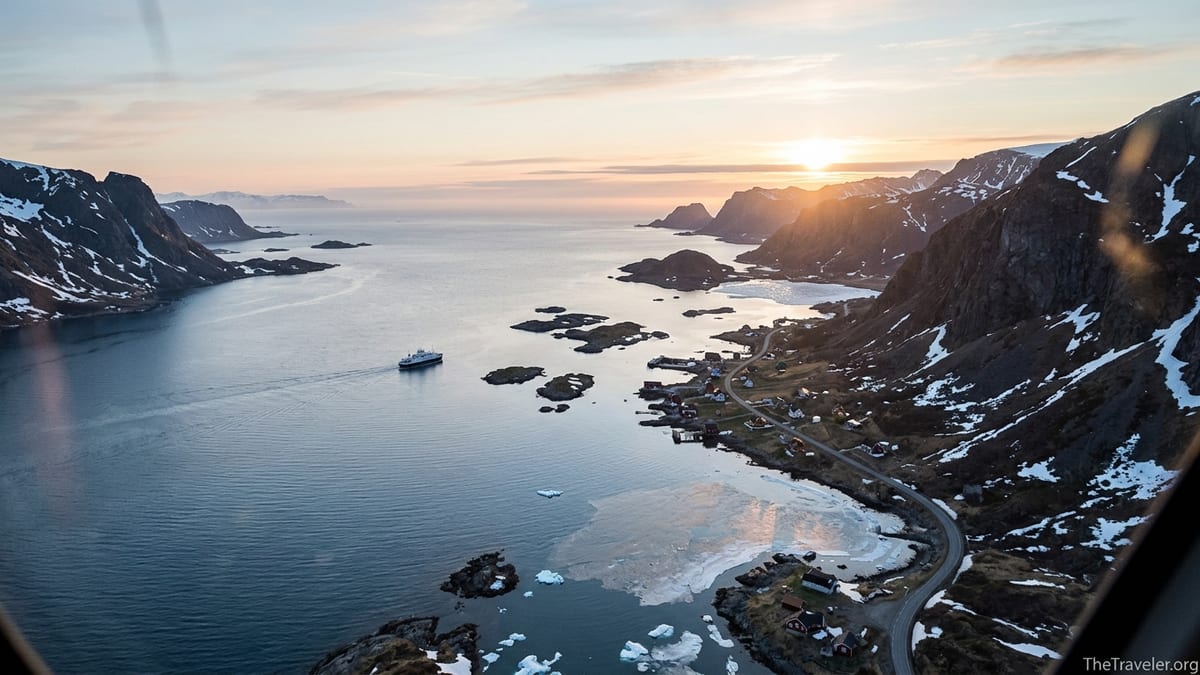
A Circle That Redraws Your Sense of Day, Night, and Distance
The Arctic Circle is not a border with passport checks or fences. It is a line of latitude that currently sits at about 66.5 degrees north, slowly shifting over time as Earth’s axial tilt changes. What makes this line so compelling is what happens to the sky above it. At least once a year, every point inside the Arctic Circle experiences 24 hours of daylight in summer and 24 hours of darkness in winter. For travelers, that means days when the sun simply loops around the horizon without setting and winters where the midday light never quite becomes full daylight.
You feel this most vividly in places like Tromsø in northern Norway or Rovaniemi in Finnish Lapland. Visit Tromsø in late June and you can stand on the waterfront at midnight with the harbor still lit as if it were early evening, locals walking dogs and children playing in parks long after conventional bedtime. In Rovaniemi, which markets itself as the “official” hometown of Santa Claus, the summer sun hangs low but bright over the Kemijoki River well past 11 p.m., turning an ordinary walk into something quietly surreal.
Distances and remoteness bend your expectations as well. A flight from Oslo to Longyearbyen on the Svalbard archipelago takes just under three hours, yet when you land you are less than 1,300 kilometers from the North Pole and surrounded by permafrost, glaciers, and signs warning of polar bears. Similarly, hopping on the coastal Hurtigruten or Havila Voyages ships in Bergen and riding them all the way to Kirkenes takes you from relatively temperate fjords to the stark, treeless Arctic in less than a week. That sudden transition is part of the region’s enduring pull.
Where Ice, Ocean, and Climate Collide in Real Time
Few places on Earth show climate change as visibly as the Arctic Circle. Scientific assessments from agencies such as NOAA and the European Environment Agency report that summer sea ice extent is now roughly half of what it was just a few decades ago, and late-winter sea ice in the Arctic has hit record or near-record lows in recent years. For travelers, this does not show up as graphs and datasets but as open water where there used to be solid ice, and as cruise ships following routes that would have been impossible for passenger vessels in the 1980s.
If you sail from Iceland to Greenland’s Ilulissat Icefjord in late summer, the changes appear in the patterns of the icebergs themselves. Local guides, many of them from Inuit communities, point out how the massive bergs calving off Sermeq Kujalleq glacier break earlier in the year and drift differently because of shifting ocean currents and thinner sea ice. A small-group boat tour from Ilulissat, which might cost the equivalent of a few hundred US dollars for several hours, becomes an impromptu climate seminar as you weave through ice formations while listening to stories about how seal hunting routes and fishing grounds have changed within a single lifetime.
In Svalbard, expedition leaders who have worked in the region for decades compare photographs from the early 2000s with present-day views of the same glaciers. Travelers might hike to viewpoints over fjords like Kongsfjorden and see bare rock where maps still show ice tongues. Onboard briefings on many Arctic expedition cruises now routinely include climate scientists or naturalists who explain why a winter with record-low sea ice in 2025 and 2026 matters for weather patterns far away in Europe, North America, and Asia.
Wildlife Encounters You Never Forget
The Arctic Circle is one of the few remaining regions where major apex predators roam across landscapes that are still largely shaped by natural forces. For many travelers, seeing a polar bear on drifting sea ice is a defining life moment. Expedition cruises out of Longyearbyen or Greenland’s west coast will often spend days scanning ice floes with binoculars. When a bear is spotted at a safe distance, the ship may slow and hold position while guides explain the complex relationship between polar bears, diminishing summer sea ice, and the communities that share their habitat.
Responsible operators follow guidelines inspired by organizations such as Polar Bears International and national wildlife agencies, which stress keeping significant distance, avoiding food conditioning, and never approaching bears on foot. In Svalbard, independent travelers are even required to carry appropriate protection outside settlements because polar bears can appear almost anywhere along the coast. That legal obligation, unusual for modern tourism, drives home that humans are guests here in a predator’s realm.
Other wildlife encounters feel less dramatic but no less memorable. In northern Norway, small whale-watching outfits out of towns like Andenes and Tromsø take visitors into deep fjords where orcas and humpback whales follow winter herring runs. Tours usually last several hours and involve cold, choppy seas, but when a humpback surfaces close to the boat or a pod of orcas slices through the water under low pink polar light, the discomfort evaporates. On tundra excursions near Churchill in northern Manitoba, travelers ride in specialized vehicles across frozen ground to watch polar bears waiting for Hudson Bay to freeze, while Arctic foxes trot along in the distance.
Indigenous Cultures at the Heart of the North
Another reason the Arctic Circle remains so fascinating is that it is not an empty wilderness. It is home to Indigenous peoples who have lived here for thousands of years, including the Sámi across northern Scandinavia and Russia’s Kola Peninsula, Inuit communities in Greenland and Canada, and many others. Visiting Arctic towns and settlements today often involves meeting people whose lives are shaped both by modern technology and by traditions tied to land, sea, and ice.
In northern Finland, travelers might spend a night in Inari and visit the Sámi Museum and Nature Center, where exhibits explain how reindeer herding, handicrafts, and seasonal migration routes are intertwined with Arctic ecosystems. Some Sámi-owned tourism companies offer small-scale experiences such as joining a herder for a day on the winter grazing grounds or listening to joik, a traditional form of chanting, around a campfire. These visits can be far more meaningful than simply staying at a glass igloo hotel, even though those accommodations have become popular for Northern Lights seekers.
Greenland presents a different picture. In towns like Nuuk or Sisimiut, brightly colored houses dot hillsides above the water, and supermarkets sell both imported goods and local staples like dried fish and seal. Many visitors join local guides on fishing trips in Disko Bay or sled dog excursions near Kangerlussuaq. When guides talk about how thinner sea ice has shortened the reliable sledding season or made traditional hunting routes riskier, the climate story becomes personal rather than abstract.
Remote Journeys That Still Feel Possible
Part of the Arctic Circle’s allure lies in the balance it strikes between remoteness and accessibility. This is not a region only reachable by scientists and explorers, yet it still retains a sense of the frontier. From North America, travelers can fly to Anchorage or Fairbanks and then continue by road or small plane into Alaska’s Arctic, visiting communities like Utqiaġvik on the shore of the Chukchi Sea. In Scandinavia, an overnight train from Stockholm to Kiruna or from Helsinki to Rovaniemi puts you within easy reach of the Arctic Circle without ever boarding a plane once you are in Europe.
Coastal voyages along Norway’s length provide another practical example. The classic Bergen to Kirkenes route on the Hurtigruten Coastal Express or newer Havila ships runs daily year-round, with prices varying by season but often starting in the low to mid four-figure range in US dollars per person for a full 11 or 12 day voyage, including cabin and most meals. As the ship crosses the Arctic Circle just south of the island of Vikingen, crew members sometimes mark the moment with a playful deck ceremony that might involve a ladle of icy water or a taste of cod liver oil. It is a small ritual that underscores the psychological weight of that invisible line.
For travelers with more time than budget, overland road trips along Norway’s E6 or Finland’s Route 4 let you cross and re-cross the Arctic Circle by car or campervan. Gas stations, simple cabins, and small grocery stores dot the route, so while you are traveling in remote terrain, you are never on a true expedition. The feeling is closer to an extended road trip in the American West, but with reindeer on the shoulder and Northern Lights over the windshield.
The Magical Extremes of Arctic Light
Few natural displays capture travelers’ imaginations like the aurora borealis, and the Arctic Circle is one of the world’s prime stages for this phenomenon. The long polar nights of winter create dark skies even at midday in places such as Tromsø, Abisko in Swedish Lapland, or Yellowknife just below the Arctic Circle in Canada. When conditions are right, green and sometimes purple curtains of light ripple across the sky, often visible from the edge of town or a nearby hill without elaborate equipment.
In practice, this means visitors book four or five night stays in winter to increase their chances of catching at least one clear, active aurora display. Local operators offer minibus “chase” tours that leave after dinner and drive for hours in search of breaks in the clouds, with hot drinks, tripods, and thermal suits included. Some lodges and guesthouses offer simple aurora alarms that ring when activity spikes, so guests can rush outside from warm cabins to cold, snow-blanketed yards where the sky suddenly appears alive.
At the other extreme, the midnight sun offers a brightness that can be just as disorienting. In places such as Alta in Norway or Ilulissat in Greenland, early summer hikes can start at 10 p.m., with birds still calling and the sun hovering just above the horizon. Photographers relish the long “golden hour,” when the low angle of the sun washes mountain ridges and icebergs in soft, warm light for hours instead of minutes. For many travelers, this endless daylight is as memorable as the aurora, because it changes how time feels and how days are structured.
Risk, Responsibility, and the Ethics of Visiting the Arctic
The Arctic Circle is not just beautiful; it is inherently risky. Weather can shift quickly from calm sunshine to driving snow. Wild animals, from polar bears to musk oxen, are powerful and unpredictable. Search and rescue resources are limited. These realities make preparation and responsible behavior essential. Tour operators emphasize layers of insulated clothing, waterproof outerwear, and sturdy boots, because hypothermia can become a threat in minutes if someone falls into icy water or faces strong wind on an exposed ridge.
Safety briefings often include specific advice about polar bear encounters: travel in groups, make noise in low-visibility terrain, avoid approaching carcasses where bears may be feeding, and follow the instructions of armed guides, who are trained to use deterrents before resorting to lethal force. Guidelines from wildlife agencies and conservation groups repeatedly stress that preventing close encounters is better for both humans and bears, and that leaving no food waste is a surprisingly important part of staying safe.
There is also an ethical dimension to Arctic travel. The region is warming faster than the global average, and every long-haul flight or cruise ship visit adds emissions to an already stressed system. Many operators now highlight efforts to reduce fuel consumption, treat wastewater on board, and support local conservation or community projects. Travelers can make tangible choices, such as favoring smaller ships that spend more money in local ports, choosing itineraries that include visits to museums and cultural centers, and buying locally made handicrafts directly from artisans instead of imported souvenirs.
On a personal level, visitors often describe leaving the Arctic with a heightened sense of responsibility. Standing at the edge of a retreating glacier in Svalbard or listening to a Greenlandic hunter explain why sea ice thickness predictions have become harder makes it difficult to see climate change as a distant problem affecting someone else. That emotional connection is one reason scientists and Indigenous leaders often support carefully managed tourism: it creates advocates who have seen what is at stake.
The Takeaway
The Arctic Circle endures as one of the most fascinating places on Earth because it compresses so many of our era’s big themes into a single region. It is a place where you can watch the midnight sun skim the horizon above a Norwegian fjord, hear ancient stories from Sámi or Inuit hosts, gaze at auroras that seem almost sentient, and witness glaciers and sea ice responding visibly to a warming planet. The line on the map may be arbitrary, but the experiences it gathers are anything but.
For travelers, visiting the Arctic is less about ticking off another destination and more about expanding the way you understand time, distance, and human connection to the environment. It is remote yet reachable, harsh yet fragile, and increasingly central to conversations about our shared future. That layered reality is what keeps drawing people north, across the Arctic Circle, to see for themselves what is happening at the top of the world.
FAQ
Q1. When is the best time to visit the Arctic Circle? The best time depends on your priorities. For Northern Lights and snow-based activities, many travelers aim for late September to March. For milder weather, hiking, and the midnight sun, June to early August is ideal. Shoulder seasons in May and late August can offer fewer crowds but more variable conditions.
Q2. Is it still possible to see sea ice and glaciers despite climate change? Yes, but the patterns are changing. Summer sea ice has declined significantly compared with past decades, yet areas of multi-year ice and large tidewater glaciers still exist in places such as Svalbard, Greenland, and parts of Arctic Canada. Travelers today often see both impressive ice and visible signs of retreat.
Q3. Do I need special gear to travel in the Arctic Circle? You do not usually need technical expedition equipment, but high-quality cold-weather clothing is essential. That typically means a windproof, waterproof outer shell, insulated layers such as down or synthetic jackets, thermal base layers, warm gloves, a hat, and sturdy waterproof boots. Many cruise and tour operators provide specialized outerwear or boots for activities like Zodiac landings.
Q4. How expensive is an Arctic trip? Costs vary widely. A simple winter getaway to northern Finland or Norway with guesthouse lodging and a few guided activities might be comparable to a mid-range ski holiday. Expedition cruises to Greenland or Svalbard, which include accommodation, meals, and guided excursions, usually cost significantly more and can run into the several-thousand-dollar range per person.
Q5. Is Arctic tourism safe for wildlife and local communities? Well-managed tourism can support conservation and local economies, but it also brings risks if visitor numbers grow too quickly or guidelines are ignored. Choosing operators that work closely with Indigenous communities, limit group sizes, and follow strict wildlife viewing protocols helps reduce negative impacts and direct more benefits to residents.
Q6. Can I visit Arctic communities, or is tourism mostly ship-based? Both options exist. Many travelers visit Arctic towns and villages by road, rail, or scheduled flights, especially in Scandinavia, Iceland, and Alaska. Expedition cruises also make shore landings in remote communities where local guides often lead walking tours, cultural performances, or small-boat excursions, giving visitors a chance to see daily life beyond the port.
Q7. Will I definitely see the Northern Lights if I go in winter? There is never a guarantee. Aurora activity depends on solar conditions and clear skies. Staying several nights in an area under the auroral oval, such as Tromsø, Abisko, or parts of Finnish Lapland, improves your chances. Many travelers plan four or more nights and treat the aurora as a bonus rather than a certainty.
Q8. How cold does it really get above the Arctic Circle? Winter temperatures vary by location and coastal influence. In coastal Norway, temperatures can hover around freezing, while inland or high Arctic areas such as interior Greenland or northern Canada can drop well below minus 20 degrees Celsius. Wind chill often makes it feel colder, so planning for harsher conditions than the forecast suggests is wise.
Q9. Are there ways to travel more sustainably in the Arctic? Yes. You can favor overland or rail routes once in Europe, choose smaller ships or land-based itineraries that spend money in local communities, support Indigenous-owned businesses, and offset or reduce flights where possible. Simple choices like bringing reusable bottles and avoiding single-use plastics also matter in fragile environments.
Q10. Do I need travel insurance for an Arctic trip? Comprehensive travel insurance is strongly recommended. Policies that cover emergency medical evacuation are particularly important, as many Arctic destinations are far from major hospitals and rescue operations can be complex and costly. Some expedition cruise companies require proof of such coverage before you embark.