


More news on this day
A truck driver in Lebanon County escaped a potentially deadly collision with a freight train after bystanders and firefighters pulled the individual from a stranded vehicle stuck on the tracks just moments before impact, according to early local reports.
Get the latest news straight to your inbox!
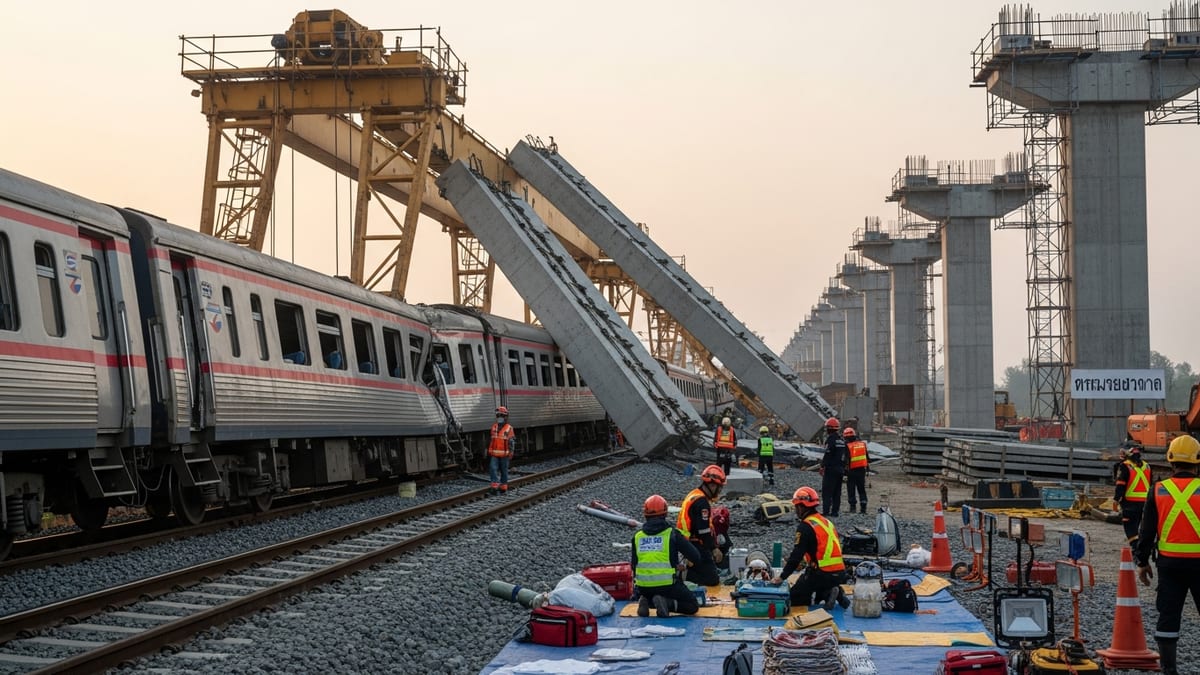
Seconds to Spare at a Lebanon County Rail Crossing
Reports from Lebanon County indicate that the incident unfolded at a railroad grade crossing where a truck became immobilized on the tracks as a freight train approached. Witness accounts collected in local coverage describe a brief but intense window of time in which motorists and nearby residents noticed the danger and rushed toward the vehicle.
Initial information suggests that the driver was either unable to restart or move the truck clear of the rails before the crossing gates and warning signals activated. As the situation escalated, several bystanders attempted to reach the cab, while emergency calls brought firefighters and other responders to the scene.
Publicly available descriptions of the crash note that the train continued through the crossing and struck the truck after the driver had been removed, severely damaging the vehicle but sparing the occupant from the direct force of the impact. No fatalities were reported in early summaries of the event.
The collision itself underscores the limited reaction time in grade-crossing emergencies, where long, heavy freight trains require significant distance to slow and often cannot stop, even when engineers see an obstruction ahead.
Bystanders and Firefighters Coordinate a High‑Risk Rescue
Coverage of the Lebanon County incident highlights how ordinary motorists and local residents played a critical early role, quickly recognizing that the driver needed help and moving toward the truck despite the imminent arrival of the train. Some accounts describe individuals working together to open a door and assist the driver in climbing out.
Firefighters arriving on scene then joined the effort, helping guide the driver away from the track area and creating space as the train closed in. The brief interval between the rescue and the collision has been described in local reporting as a matter of seconds, with the truck left behind to absorb the full impact.
Such rescues are considered particularly high risk because of the unpredictable dynamics of a train strike. Debris can travel significant distances, and responders must balance the imperative to save an occupant with the need to clear the danger zone before rail cars reach the crossing.
In this case, publicly available information so far indicates that the coordinated actions of bystanders and firefighters prevented serious injury or worse to the truck’s driver, turning a near‑catastrophe into a powerful example of rapid community response.
Impact on Rail Traffic and Local Travel
Following the collision, rail traffic through the affected Lebanon County corridor experienced delays as railroad personnel and local responders assessed damage, cleared debris and inspected the tracks. Freight trains often require inspections after striking a vehicle, and rail operators typically hold subsequent movements while safety checks are completed.
Motorists in the surrounding area also faced detours as emergency crews shut down the crossing and adjacent road segments. In similar incidents, closures can last from several hours to more than half a day depending on the complexity of the cleanup, the extent of track or signal damage and the need for specialized equipment.
Travel disruptions of this kind ripple outward, affecting commercial truck routes, commuter traffic and, in some cases, the movement of hazardous materials shipments that must be handled under strict safety protocols. While early reports from Lebanon County did not indicate a hazardous cargo release, responders typically stage cautiously until the contents of both the rail cars and struck vehicle are confirmed.
For local residents and travelers, the visible presence of fire trucks, police vehicles and rail maintenance crews at the crossing served as a reminder of the infrastructure risks that exist wherever highways intersect active rail lines.
Grade‑Crossing Risks Highlighted for Drivers
The Lebanon County near‑miss is drawing renewed attention to the hazards of railroad grade crossings, which remain a persistent safety concern in many parts of the United States. National transportation data and safety campaigns emphasize that trains can require up to a mile or more to stop, making it essential for drivers to avoid stalling or hesitating on the tracks.
Safety guidance widely circulated by transportation agencies advises motorists to never stop on a crossing, to ensure there is space on the far side before proceeding and to treat warning lights, gates and bells as clear instructions to stay back. Drivers of larger or heavier vehicles, including trucks and buses, are urged to take extra care because of their slower acceleration and longer stopping distances.
In the Lebanon County incident, published accounts suggest that once the truck became stuck, the remaining options narrowed quickly, leaving escape and rescue as the only viable paths to survival. The outcome illustrates how rapidly routine travel can transform into an emergency when a vehicle becomes disabled on or near the rails.
Traffic‑safety advocates often point to such cases as powerful real‑world examples for public education efforts, underscoring that even experienced drivers can be caught in dangerous situations if they misjudge train speeds, ignore warning devices or attempt to cross when conditions are uncertain.
Community Response and Ongoing Review
In the days following the crash, local coverage indicates that transportation and emergency management officials are reviewing the Lebanon County crossing, including signal timing, visibility and traffic patterns, to determine whether any engineering or signage adjustments could reduce risk.
Reviews after such incidents frequently examine whether vegetation, roadway alignment or nearby development affects sightlines and driver behavior. Agencies may also look at recent traffic volumes and train schedules to decide if additional measures such as upgraded warning systems or redesigned approaches are warranted.
Within the community, the rescue has prompted discussion about bystander readiness and the importance of recognizing when it is safe to intervene. Public safety messaging generally encourages individuals to call emergency services immediately, approach cautiously and withdraw early if conditions deteriorate, particularly when trains or other large vehicles are involved.
For Lebanon County residents, the episode has quickly become a vivid local reference point: a moment when everyday travelers and trained firefighters converged at a familiar crossing, and decisive action in a matter of seconds turned what could have been a tragic rail‑truck disaster into a story of survival.