


London and Edinburgh are linked by one of Britain’s busiest travel corridors, with fast daytime trains, frequent flights and the romantic Caledonian Sleeper all competing for your booking. The sleeper’s headline promise is tempting: go to bed in London, wake up in Edinburgh, and save a hotel night. But when you look closely at timetables, fares and door-to-door realities, does an overnight cabin genuinely save time and money compared with a daytime LNER train or a short flight?
Get the latest updates straight to your inbox!
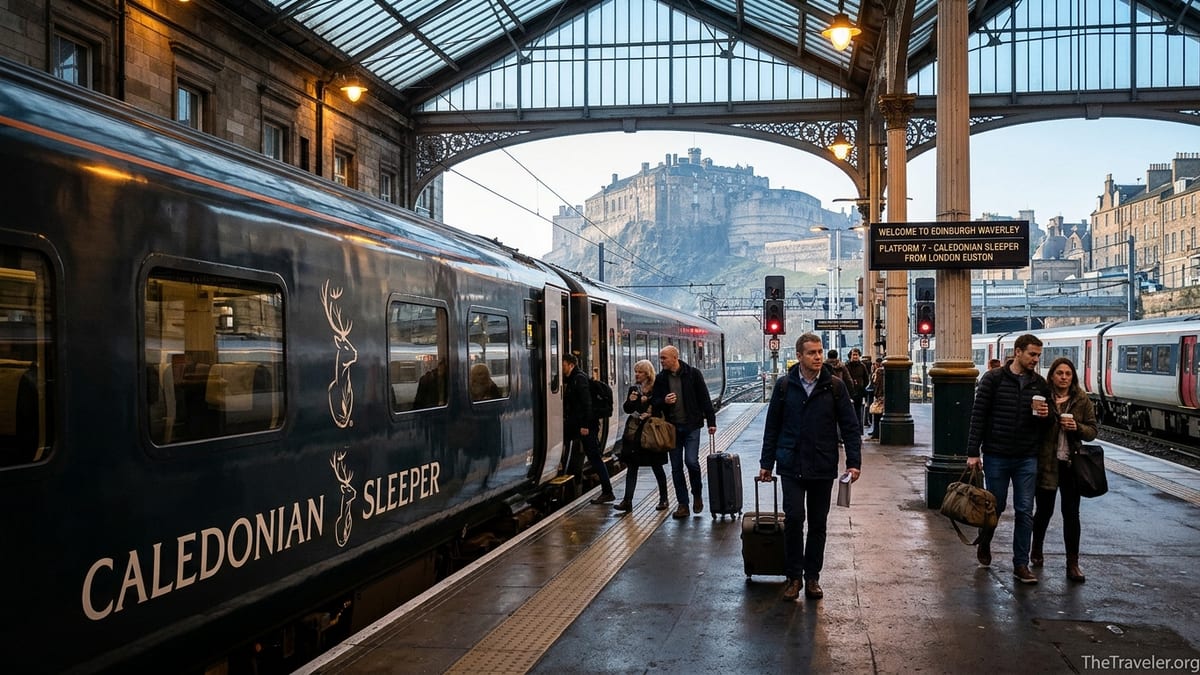
Understanding the Lowlander Sleeper Route and Timetable
The Caledonian Sleeper operates two main overnight services from London: the Lowlander and the Highlander. For Edinburgh, it is the Lowlander that matters. The Lowlander runs between London Euston and both Edinburgh Waverley and Glasgow Central, with the train dividing in Scotland. The separate Highlander services run from London Euston to Inverness, Fort William and Aberdeen, so travelers heading specifically to Edinburgh should always look for the Lowlander, London Euston to Edinburgh Waverley timetable.
For the current timetable period running from 17 May to 12 December 2026, the northbound Lowlander is scheduled to leave London Euston at 23:45 and arrive in Edinburgh Waverley at 07:30 most weekdays, with the Glasgow portion also scheduled into Glasgow Central around 07:30. This aligns with the national timetable tables for the West Coast Main Line sleepers and contemporary journey planners that show a daily 23:45 Caledonian Sleeper departure from Euston with a scheduled 07:30 arrival in Edinburgh.
The pattern changes slightly on Sundays, when the northbound Lowlander leaves earlier in the evening. Journey planners for late 2026 show a Sunday departure around 23:30, reflecting the traditional earlier Sunday timing. In addition, the sleeper does not operate every night of the year. Engineering works and seasonal timetable changes can mean certain dates, typically some Saturday nights and holiday periods, have no service. Anyone treating the sleeper as a fixed part of an itinerary should confirm exact running days for their specific date rather than relying on the generic weekday pattern.
Southbound, the Lowlander leaves Edinburgh late in the evening and arrives into London Euston early the next morning, again generally aiming for around a 07:00 arrival. The total scheduled journey time between London and Edinburgh on the Lowlander is therefore roughly seven hours and forty-five minutes overnight, compared with just over four hours for the fastest daytime LNER services.
Boarding, Lounges and What Happens On Arrival
Boarding arrangements are a key part of the sleeper experience, because they influence how much usable evening time you have in London and how rushed you feel before bed. Caledonian Sleeper typically allows boarding around 45 minutes before departure at London Euston, sometimes earlier once platforming is confirmed. In practice, travelers often find they can settle into their cabin between roughly 23:00 and 23:15 for the 23:45 departure, though exact boarding times can vary with station operations.
Guests in Caledonian Double and Club En Suite rooms receive priority access to the Club Car and are entitled to use partner lounges at London Euston and Edinburgh Waverley before or after their journey. Official information lists lounge access at Euston and key Scottish stations for sleeper passengers holding eligible tickets, with en suite room guests specifically highlighted for lounge access. Classic Room and seated passengers may have more limited lounge access depending on ticket type and any railcards or loyalty schemes, so it is sensible to check at the time of booking whether your fare includes lounge use.
On arrival in Edinburgh around 07:30, the train usually remains in the platform for a short dwell period so that guests can wake up, shower if they have an en suite cabin, and leave the train without undue haste. While the exact time you can remain in your cabin can vary by day and operational needs, it is commonly in the range of 20 to 30 minutes after arrival before staff start preparing the train for servicing or onward movements. Travelers should be prepared to vacate promptly when asked, but in most cases there is enough time to dress, have a quick in-room coffee and be off the train by about 07:45 or slightly later.
At both ends, mobility assistance can be arranged in advance through Caledonian Sleeper’s accessibility support, which coordinates with station staff to provide boarding ramps, guidance from station entrances and help with luggage. Anyone who needs this support is strongly encouraged to request it at the time of booking, especially for late-night departures when staffing patterns differ from daytime services.
Cabin Types, Comfort and Who They Suit
Caledonian Sleeper offers four main types of accommodation between London and Edinburgh. At the most basic, there is the seated coach, branded as Comfort Seats. These offer a reclining seat with at-seat food and drink ordering, individual reading lights, power and USB sockets and a complimentary sleep kit. They are the lowest-priced option, with published example starting fares from around £45 on some dates between London and Scotland, according to recent media material about the refurbished trains. Seated accommodation is best for budget-conscious travelers who can tolerate a disrupted night’s sleep.
Next are the Classic Rooms. These contain bunk beds that can be configured for solo or shared use, with a lower and upper berth and a small washbasin. Toilets are shared and located in the corridor. Official accommodation information highlights Classic Rooms as the simplest private cabins, with the same bed base as Club rooms but no en suite shower or toilet. Bedding, towels and sleep kits are provided. Classic Rooms work well for solo travelers who want a private space at a mid-range price, or for friends or older children who do not mind sharing bunks and using the corridor bathrooms.
Club En Suite Rooms add an in-room shower and toilet to the same basic bunk-bed layout. Caledonian Sleeper’s accessibility and guest-experience information confirms that Club and Caledonian Double room guests receive breakfast included in the fare and enjoy priority access to the Club Car, as well as lounge access at key stations. The en suite makes these cabins significantly more convenient, especially for business travelers or anyone who wants a hot shower before stepping straight into a working day in Edinburgh.
At the top of the range are Caledonian Double Rooms, which feature a fixed double bed and an en suite shower and toilet. Official descriptions emphasise the double bed, luxury toiletries, station lounge access and inclusive breakfast. Independent reviews and photos show a compact but hotel-like space, with a full-sized double mattress scross the width of the cabin, making this option particularly attractive for couples or solo travelers seeking maximum comfort. Families can request interconnecting rooms in some parts of the train, for example pairs of Classic or Club cabins that share a private doorway, allowing parents and children to move between rooms while still having doors to the corridor.
Fares in Practice: Sleeper vs LNER Daytime Trains
To understand how pricing compares in reality, it helps to look at concrete dates. In November 2026, sample searches for a midweek northbound Caledonian Sleeper from London Euston to Edinburgh Waverley show Comfort Seat fares starting in the region of £70 to £90 one way booked a few weeks in advance, with some cheaper fares available on less popular dates and higher fares closer to departure. Classic Rooms on the same dates often price from around £150 to £200 for solo use, or around £180 to £230 when booked as a shared cabin for two people, reflecting the fact that cabin prices are primarily per room, not per person.
For the same nights, Club En Suite Rooms on the Lowlander typically appear from roughly £230 to £300 per room northbound London to Edinburgh, with Caledonian Double Rooms above that, often somewhere around £300 to £380 for two people on popular dates when checked a few weeks in advance. These numbers fluctuate significantly based on demand, how far ahead you book and whether you travel midweek or at weekends, but the pattern is consistent: moving from a seat to a Classic Room easily doubles the price, and moving up to Club En Suite or Caledonian Double roughly doubles it again.
On daytime LNER services between London King’s Cross and Edinburgh Waverley, independent booking engines and LNER’s own fares guidance show Advance single fares starting from around £24.90 on certain off-peak trains, with a more typical advance range between about £40 and £80 for bookings made several weeks ahead. The LNER timetable and news releases note that the fastest services now complete the London to Edinburgh run in around 4 hours 10 minutes. Walk-up Anytime singles can be dramatically higher, often above £180 one way, but most leisure travelers with fixed dates can avoid those by booking earlier or selecting less busy departures.
The crucial difference is that LNER fares are per person, not per room. A couple who secure two LNER Advance singles at £50 each has spent £100 for the journey, whereas the same couple taking a Caledonian Double for £340 has spent well over three times as much on travel alone. However, the sleeper fare substitutes for one night’s accommodation. If that couple would otherwise have paid £180 for a central London hotel and £120 for a mid-range Edinburgh hotel on two separate nights, the sleeper becomes more competitive, as discussed below.
Flights, Transfers and Door-to-Door Time
Flying between London and Edinburgh is often advertised as a one-hour hop, but door-to-door it rarely feels that brief. Major carriers typically operate from London Heathrow, London Gatwick or London Luton to Edinburgh Airport, with checked-bag economy fares in November 2026 sample searches commonly ranging from about £60 to £150 one way, depending on date, airline and baggage. Cheaper basic-economy tickets often exclude hold luggage, seat selection and sometimes even cabin bags, which can add substantial fees for travelers with more than a small backpack.
Door-to-door, a London-based traveler staying near King’s Cross might need 60 to 90 minutes to reach Heathrow or Gatwick by public transport, at a cost of around £6 to £28 depending on Underground, rail or express train options. At the airport, allowing a conservative two hours for check-in and security on a domestic flight is sensible. After the roughly one-hour flight to Edinburgh, you then factor in disembarkation, baggage claim if needed, and the 30-minute tram or bus ride from Edinburgh Airport to the city centre at a cost of roughly £7 to £10. In realistic terms, the total journey from London city-centre hotel to Edinburgh city-centre hotel often takes four to five hours, not far off a non-stop LNER train.
For the sleeper, door-to-door time works differently. A traveler with a hotel near Euston can have dinner in central London, walk to the station around 22:45, board after the platform is announced and be in bed soon after departure at 23:45. In Edinburgh, that traveler steps off the train at around 07:30 directly into the city centre, potentially walking to an Old Town or New Town hotel in 10 to 20 minutes or taking a short taxi ride. The clock time from leaving a London evening engagement to arriving in central Edinburgh is roughly eight to nine hours, but most of that is spent sleeping rather than actively traveling.
Comparing usable sightseeing time, the sleeper can deliver a full afternoon and evening in London plus a full following day in Edinburgh without “losing” daytime to travel. A daytime LNER departure at 09:30 arriving around 13:45 sacrifices most of the morning; an afternoon departure at 14:00 arriving around 18:15 eats into your first Edinburgh evening. Flights can eat time at both ends due to airport transfers and security. The key trade-off is whether the premium for a sleeper cabin is worth reclaiming that daytime for work or sightseeing.
Sleep Quality, Showers and Realistic Onboard Experience
Even in the best cabins, the Caledonian Sleeper is still a moving train subject to noise, motion and occasional shunting. Independent trip reports and reviews describe sleep quality ranging from excellent to quite poor depending on track conditions, sensitivity to movement and whether there are overnight stops or coupling operations. The refurbished rolling stock is quieter than older sleepers, but you will still feel curves, braking and acceleration, and you may be woken early as the train slows on approach to Edinburgh or during overnight crew activity.
In Classic Rooms, guests share toilets in the corridor and have a washbasin in the cabin, which is adequate for a quick freshen-up but not a full shower. Club En Suite and Caledonian Double rooms have compact showers that allow a proper wash before arrival. Caledonian Sleeper’s own guidance encourages guests to conserve water, but the en suite facilities are designed for a short, functional shower. For many business travelers, having a shower and breakfast included in the cabin or in the lounge is a major benefit, allowing them to go straight to a morning meeting.
Noise can also come from fellow passengers opening doors, talking in the corridor or using the Club Car late into the evening. Earplugs supplied in the sleep kit help, but very light sleepers may still find daytime LNER First Class with a hotel bed at each end more restful overall. Seated coach passengers in particular should not expect a full night’s sleep. Even with recline and headrests, the upright position, occasional announcements and lighting from neighboring seats mean that many people arrive somewhat groggy and may need a nap later that day.
On LNER daytime trains, the experience is very different. You have no bed or shower but the seats are designed for working and daytime comfort, with Wi-Fi, power sockets and catering. Four hours sitting at a table with a laptop can be more productive for some travelers than attempting to sleep on a moving train. The trade-off is that this four hours takes place during potential sightseeing or working time instead of being hidden overnight.
Luggage, Bikes, Pets and Accessibility
Caledonian Sleeper’s guest guidance states that small and medium-sized luggage can be stored in your compartment, typically under the lower bunk or on the floor, with additional large items placed in dedicated luggage racks or the guard’s van. In Club and Caledonian Double rooms, guests are asked not to leave luggage in the en suite area because it can fall and block the door. In practice, a standard suitcase and cabin bag per person fit comfortably in most rooms, but very large hard-shell cases can make the cabin feel cramped.
Bicycles can be carried, but reservations are usually required and space is limited. The booking process includes an option to add a bike, and it is wise to do this as early as possible, especially in summer when demand is higher. Pets are welcome in sleeping cabins for an additional cleaning fee per room, as confirmed by Caledonian Sleeper’s pet travel information, although pets are not allowed in the Club Car. Dogs and cats are common, and the operator’s partnership with a pet nutrition brand highlights how normal pet travel has become on this route. Travelers with allergies who would prefer a pet-free environment may wish to request cabins away from designated pet areas.
Accessibility has been built into the modern sleeper rolling stock. There are accessible rooms designed for wheelchair users, usually with adjacent accessible toilets. Booking guidance notes that travelers who require an accessible cabin should tick the accessible room option during the purchase process or contact the company directly to ensure availability. Staff can arrange ramps, assistance to and from platforms and help with luggage for those who request it.
LNER daytime trains between King’s Cross and Edinburgh also accept luggage, bikes and pets, with cycle reservations often mandatory and dog policies broadly similar to the sleeper. For flights, baggage dimensions and weights are strictly enforced and bikes typically require special arrangements and higher fees, which can quickly erode the apparent cheapness of a low-cost airfare for travelers carrying more than hand luggage.
Sample Itineraries and Costed Examples
Consider a solo traveler visiting Edinburgh midweek in late November 2026, staying two nights and returning to London. One option is to take the Lowlander northbound and a daytime LNER service southbound. The traveler finishes meetings in London at 20:00, has dinner near Euston and boards the sleeper at around 23:00 for the 23:45 departure. They have booked a Classic Room for solo occupancy at a sample fare of £180. Breakfast is purchased from the room service menu for about £10. On arrival at 07:30 in Edinburgh, they walk to a New Town hotel and leave their luggage, starting sightseeing by about 09:00. For the return, they buy an LNER Advance single for £60 on an early evening train that leaves Edinburgh around 17:00 and arrives in King’s Cross around 21:15.
Door-to-door, this solo traveler’s rail cost is roughly £250 plus a London hotel for the night before departure and Edinburgh accommodation for one or two nights. If their Edinburgh hotel is £150 per night, and they stay two nights, total core spending is around £550 excluding meals. If instead they skip the sleeper and take a daytime LNER train, say a 10:00 departure from London at £60 and a £70 return from Edinburgh, total rail cost drops to about £130. They then need three hotel nights, one in London and two in Edinburgh. If each is £150, accommodation totals £450 and the combined cost is about £580, slightly higher overall but with better sleep.
Now take a couple planning a long weekend, leaving London on a Thursday night and returning Sunday evening. They book a Caledonian Double northbound at a sample fare of £340 and an LNER daytime train southbound at £60 per person. Rail costs total about £460. By using the sleeper, they avoid one hotel night; if they value a central London hotel at £220 and Edinburgh at £200 per night, missing just one of those nights effectively offsets much of the premium for the double cabin. They also gain a full Friday in Edinburgh, arriving rested, showered and fed by mid-morning.
For a family of four with two school-age children, the arithmetic can tilt differently. Suppose they need two Classic Rooms (interconnecting), priced around £210 each on a busy summer date, for a total of £420 northbound, and then buy four LNER Advance singles southbound at £60 each, or £240. Total rail cost is about £660, compared with a theoretical minimum of around £320 if they secured four daytime LNER Advance singles at £40 each each way. Even once a saved hotel night is factored in, the sleeper can still come out more expensive for families, although the excitement of the overnight train and the convenience of arriving early may justify the premium for some.
When comparing with flights, a solo traveler might find a November 2026 London to Edinburgh flight at £80 one way including a checked bag, plus similar for the return, totaling £160. After adding about £40 in airport transfers at each end over the round trip, the cost rises to around £200. This is still less than a Classic Room sleeper fare plus a daytime rail return but can be more than two well-chosen LNER Advance singles for flexible dates. The key variables are baggage, flexibility and the value placed on avoiding airports in bad weather or during busy school holiday periods.
When the Sleeper, Daytime Rail or Flying Makes Sense
Putting all of this together, the Caledonian Sleeper offers its best value in specific scenarios. Travelers who would otherwise pay high city-centre hotel rates in both London and Edinburgh, and who value maximizing daylight hours for work or sightseeing, gain the most. For example, a consultant billing by the day in Edinburgh, who can work in London all day, dine with clients, then sleep on the train and walk straight into a 09:00 meeting from Waverley after a shower and breakfast, may find the additional fare more than pays for itself in productivity and reduced hotel spending.
Couples on a special weekend away can also find the sleeper worthwhile, especially in a Caledonian Double. The romance of a private double-bed cabin, included breakfast and lounge access can be part of the holiday itself. If they time their trip around off-peak dates and secure a reasonable cabin fare, the saved hotel night brings the cost gap with daytime rail down to a level many consider acceptable for the experience.
For budget-focused solo travelers, families and those highly sensitive to sleep disruption, daytime LNER or alternative operators from King’s Cross or Euston generally offer better value. Advance fares can be extremely competitive, journey times are around four to four-and-a-half hours, and you arrive having slept in a fixed bed at each end rather than in a moving train. If you enjoy watching the countryside unfold by daylight, a daytime train at a window table can be more rewarding than darkness outside a sleeper cabin.
Flying makes most sense for travelers starting or ending near an airport, those with tight connections to international flights, or those for whom speed from plane door to plane door is paramount. An international traveler connecting through Heathrow to Edinburgh, for instance, may reach Scotland faster by staying airside and taking a through domestic flight than by clearing immigration, collecting bags, crossing London and catching a train. However, once city-centre to city-centre travel and baggage fees are factored in, flying is often no cheaper than daytime rail for leisure travelers, and sometimes more stressful.
In practical terms, the Caledonian Sleeper between London and Edinburgh is worth its premium when a saved hotel night and reclaimed daylight hours are genuinely valuable to you, when you want the journey to be part of the trip, and when you can book far enough ahead to secure reasonable cabin fares. Daytime LNER and other rail services are the default choice for most travelers on cost, comfort and simplicity. Flying remains a useful option for specific connection-led itineraries or when rail fares are unusually high. For many visitors, the decision ultimately comes down to whether they prefer a solid night’s sleep in a stationary bed or the romance and efficiency of waking up to the sound of the train brakes as Edinburgh’s platforms come into view.