


More news on this day
Arctic cruise itineraries in Canadian waters are expanding for 2026, and operators are increasingly focused on how ships navigate bergy water, the hazardous mix of sea ice and fractured icebergs now common along these rapidly warming routes.
Get the latest news straight to your inbox!
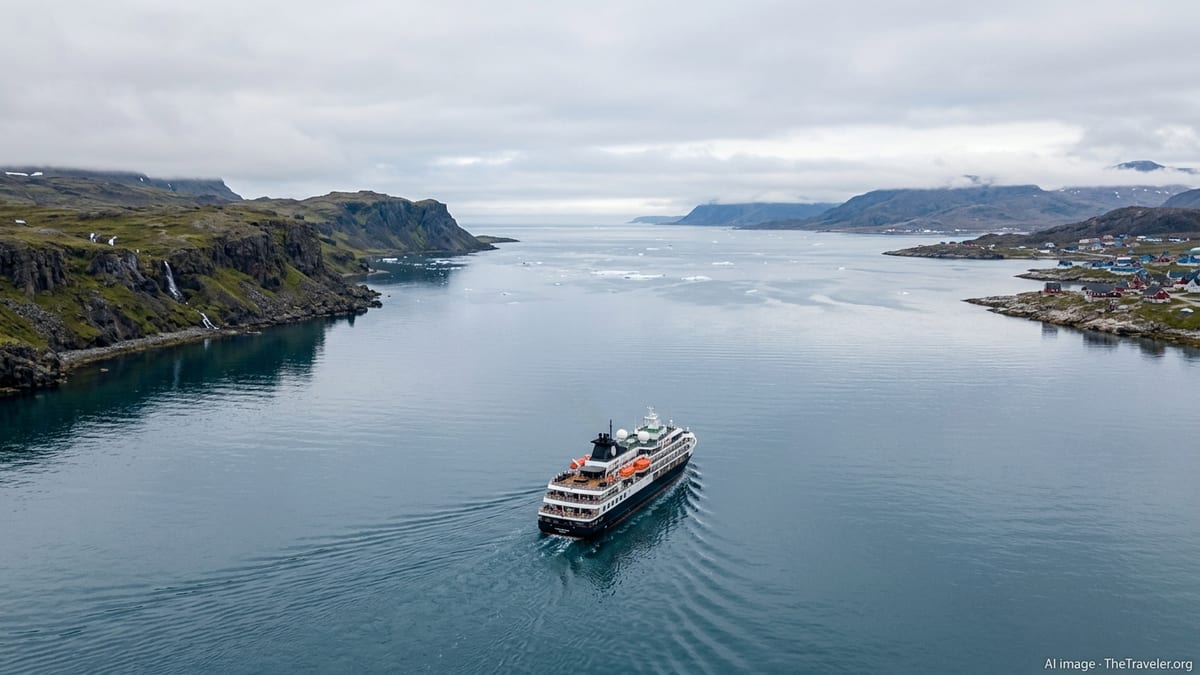
More Ships Head for Canada’s High Arctic
Recent deployment announcements show a steady rise in expedition voyages into the Canadian Arctic, including Baffin Bay, Lancaster Sound and the labyrinth of channels that form the Northwest Passage. Large-ship and small-ship operators alike have placed new or expanded programs on sale for 2026 that link Greenland to Nunavut communities and historic sites along Canada’s Arctic archipelago.
Luxury and high-end expedition brands are marketing longer, more remote cruises that combine Iceland, Greenland and the Canadian Arctic, often positioning these sailings as once-in-a-lifetime journeys tied to seasonal events. One example is a 2026 itinerary that times its route across the Arctic to coincide with a total solar eclipse, highlighting how operators now weave celestial phenomena into already ambitious polar plans.
Smaller Canadian-focused operators are also continuing to promote Northwest Passage–style sailings that thread between Greenland and the Arctic coast of Nunavut and the Northwest Territories. Itineraries marketed for September 2026 show ships tracing routes from Kangerlussuaq in western Greenland through Baffin Bay and the central Arctic channels to communities such as Kugluktuk on the mainland coast, mirroring the classic transit pattern between Greenland and Canada’s western Arctic.
The increased choice of sailings reflects a broader trend in polar tourism rather than a spike in megaship traffic. Most of the vessels scheduled for these Canadian Arctic itineraries are purpose-built expedition ships or refitted research-style vessels operating with relatively low passenger capacities, often below 300 guests, which allows them to maneuver more easily in bergy water conditions.
Defining and Detecting Bergy Water
In Canadian and international ice terminology, “bergy water” describes sea conditions in which glacial ice fragments and small icebergs, including bergy bits and growlers, are scattered through largely open water. These fragments can be difficult to detect, especially in low light or choppy seas, but are capable of damaging a ship’s hull if struck at speed.
Canadian guidance material and ice navigation references emphasize that bergy water is not free of hazards simply because pack ice is absent. Instead, it signals a transition zone between consolidated ice and fully open water, where glacial fragments and remnants of sea ice drift with currents and winds. In popular Northwest Passage cruising areas such as Lancaster Sound, Barrow Strait and adjacent channels, bergy water is common at the height of the summer season when landfast and pack ice break up.
Navigation in bergy water relies on a combination of onboard technology and visual watchkeeping. Modern expedition ships typically carry ice-strengthened hulls, enhanced radar and ice-detecting sensors, along with forward-looking sonar in some cases, to help identify submerged or low-lying ice. However, many operators continue to highlight the importance of slow speeds, daylight transits and additional lookouts on the bridge wings when crossing zones where growlers and bergy bits are expected.
For cruise planners charting routes through Canadian Arctic channels, bergy water is now treated as a predictable seasonal feature rather than an anomaly. Schedules are drafted with flexible sailing windows, allowing captains to adjust timing through known choke points if ice charts and daily ice reconnaissance indicate denser concentrations of glacial fragments along the intended track.
Regulatory Framework Tightens Around Arctic Operations
Passenger ships entering Canada’s Arctic fall under a web of international and national rules that have evolved in response to both safety and environmental concerns. The International Maritime Organization’s Polar Code, which entered into force in 2017, sets baseline requirements for vessels operating in Arctic waters, including standards for hull strength, lifesaving gear, navigation equipment and crew training specific to polar hazards.
Canada layers additional expectations on top of that framework through customized guidance for passenger ships in Arctic waters. Transport Canada’s guidelines for passenger vessels in the Canadian Arctic outline best practices that address route planning, ice navigation and environmental protection, including strong recommendations on managing greywater and other discharges in sensitive northern ecosystems. The documents encourage operators to plan conservatively for search and rescue limitations and to avoid overreliance on any single ice information source.
Within this policy environment, cruise lines seeking to transit bergy waters in the Canadian Arctic are encouraged to work with Canadian ice services, adopt robust voyage planning procedures and ensure that officers meet recognized ice-navigator competence standards. Publicly available material on these guidelines notes that the remote nature of Canada’s Arctic means assistance can be delayed, reinforcing the need for self-reliance and prudent risk management when setting itineraries through zones known for glacial ice debris.
Environmental regulations are also tightening as attention grows on the cumulative impact of Arctic tourism. Pollution prevention rules applying to Arctic waters address the handling of sewage and greywater, garbage and oily residues, with guidance documents urging operators to exceed minimum standards where possible. For cruise companies, this adds another layer of planning when selecting ships, fuels and operating practices for bergy water voyages in Canada’s North.
Historic Voyages Inform Today’s Risk Calculus
Modern itineraries across the Canadian Arctic build on earlier cruise experiments that demonstrated both the possibilities and the risks of sailing in bergy conditions. In the mid-2010s, a large luxury ship drew global attention by completing a full Northwest Passage transit from Alaska to New York, at the time becoming the largest cruise vessel to navigate the route. That voyage and a follow-up season relied on detailed ice reconnaissance, conservative speeds and icebreaker support in sections where bergy water and remaining pack ice overlapped.
Smaller expedition vessels have a longer history in these waters, often chartered by Canadian and international operators for science-focused or cultural itineraries. Some of these ships have visited remote historic locations such as the site of HMS Erebus, one of the ships of the 19th-century Franklin expedition that searched for a navigable Northwest Passage. Their voyages illustrate how modern navigation tools and ice-strengthened hulls have opened routes that were once synonymous with risk and uncertainty.
Lessons drawn from these historic and recent transits influence current planning for voyages that will inevitably encounter bergy water. Cruise companies and policymakers reference the logistical complexity of coordinating icebreaker escorts, aerial ice surveys and community visits in remote regions, using those experiences to refine contingency plans and ship selection for future seasons.
The evolution from occasional experimental voyages to regular seasonal deployments has also changed how risk is perceived. Instead of treating the Northwest Passage and adjacent Canadian channels as singular achievements, many operators now frame them as part of a broader portfolio of Arctic itineraries that range from Greenland coastal cruises to trans-Arctic repositioning voyages, all of which must be evaluated through the lens of ice conditions and bergy water exposure.
Balancing Growth, Climate Change and Community Expectations
Climate-driven changes are reshaping the context in which bergy water is encountered in the Canadian Arctic. Research on the Arctic system describes a region in rapid transition, with thinner sea ice, longer ice-free seasons and shifting oceanographic patterns that influence where and when glacial ice fragments appear. For cruise operators, this can mean wider seasonal windows for navigation but also more uncertainty about ice distribution and weather volatility.
The same changes that create openings for navigation can increase risks tied to drifting glacial ice and uncharted shoals exposed by retreating ice cover. Expedition planners now routinely incorporate climate and ice projections into multi-year deployment plans, recognizing that itineraries that were viable a decade ago may require new timing, alternate routes or stricter operational limits in the years ahead.
At the community level, the growth of Arctic cruise traffic raises questions about local capacity, cultural integrity and environmental footprint. Municipal and territorial planning documents, as well as coverage by northern media, point to a desire for carefully managed tourism that brings economic opportunities while minimizing stress on wildlife and infrastructure. For voyages that pass through bergy waters near key community harbors or wildlife aggregation areas, this often translates into speed restrictions, controlled landing numbers and close coordination with local organizations.
As bookings open for 2026 Canadian Arctic cruises, the navigational term “bergy water” has become shorthand for a broader conversation about responsible polar tourism. Ships increasingly designed for ice operations, a maturing regulatory framework and closer attention to Indigenous and scientific perspectives are shaping how cruise lines chart courses through Canada’s evolving Arctic seascape.
Transport Canada – Guidelines for Passenger Vessels Operating in the Canadian Arctic
Lindblad Expeditions – Arctic Odyssey: Iceland, Greenland and Canada
Atlas Ocean Voyages – Canadian Arctic Discovery 2026 announcement