


More news on this day
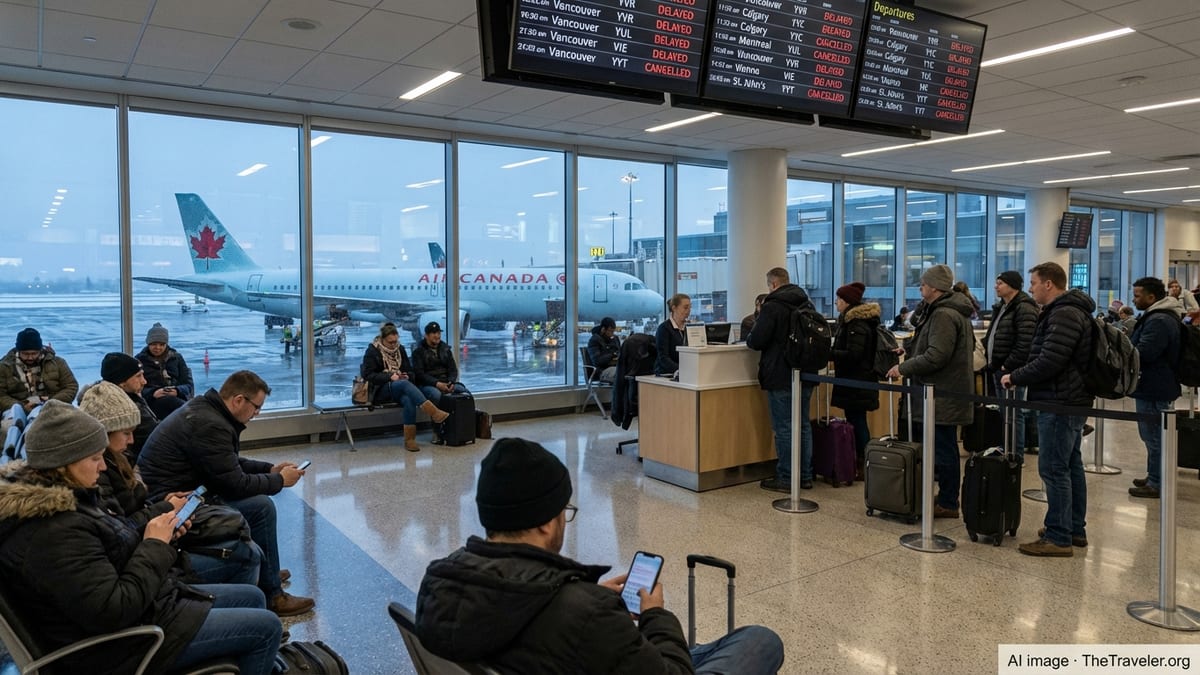
Air travelers across Canada faced another day of disruption on June 11, 2026, as publicly available flight-tracking data indicated at least 62 cancellations and 176 delays affecting services operated by Air Canada, Jazz, WestJet and Encore, Air Inuit, PAL Airlines and several smaller regional carriers, with impacts stretching from the country’s largest hubs to remote northern communities.
Get the latest news straight to your inbox!
Major Hubs in Toronto, Montreal, Vancouver and Calgary Struggle With Congestion
Published coverage and live tracking boards showed Toronto Pearson, Montreal Trudeau, Vancouver International and Calgary International among the day’s hardest-hit airports, with flight schedules repeatedly revised as operational bottlenecks accumulated. Air Canada and its regional partner Jazz, along with WestJet and WestJet Encore, accounted for a significant share of the disruption as morning delays cascaded into the afternoon.
Reports from aviation data aggregators indicated that large trunk routes between Toronto, Montreal and Vancouver experienced clusters of late departures and arrivals, complicating connections for domestic and transborder passengers. Calgary, a key hub for WestJet, saw a smaller number of outright cancellations but a notable volume of late-running flights, intensifying pressure on turnarounds and crew scheduling.
While some localized weather constraints were reported in parts of the country, industry-focused analysis pointed instead to recurring structural stresses, including aircraft rotation challenges, tight staffing margins in certain work groups and heavy summer demand. These factors combined to reduce schedule resilience, leaving carriers with fewer options when individual flights fell out of sequence.
Airport operations teams at the major hubs relied on standard congestion-management tools such as revised gate assignments and adjusted departure queues, but publicly available status pages showed that recovery remained uneven through the day, particularly for evening bank departures.
Regional and Remote Communities Feel the Impact in Akulivik and Goose Bay
Beyond the big-city hubs, the disruption extended into Canada’s regional and remote air network, affecting airports that depend heavily on a small number of daily flights. Tracking data and independent delay tallies highlighted cancellations and extended delays on services to Akulivik in northern Quebec and Goose Bay in Labrador, where Air Inuit and PAL Airlines play a central role in connectivity.
On these thinner routes, even a single cancellation can have outsized consequences, as alternatives are limited and surface travel is often impractical or impossible. Publicly accessible airport information boards showed arrival and departure gaps in some northern and Atlantic markets, forcing travelers to wait for the next operating day or seek complex rerouting via Montreal, Quebec City or St. John’s.
Analysts who follow regional aviation in Canada note that carriers such as Air Inuit and PAL Airlines operate with relatively small fleets, making it more difficult to substitute aircraft when an earlier delay or maintenance issue ripples through the day’s schedule. This can result in disproportionate disruption for communities where air service is essential for medical travel, education and access to government services.
Travelers booked on affected regional flights were advised in public-facing guidance to verify status directly with airlines and, where possible, to build extra flexibility into itineraries connecting through larger hubs during periods of wider network strain.
Airlines Grapple With Capacity, Crewing and Maintenance Constraints
The day’s disruption followed a pattern that has appeared repeatedly across Canada’s aviation system in recent months, with airlines simultaneously managing surging seasonal demand, higher operating costs and lingering staffing and fleet challenges. Industry reports describe carriers working to optimize aircraft utilization and turnaround times while also contending with maintenance backlogs and global supply-chain constraints for parts.
Air Canada’s publicly available travel outlook pages have frequently highlighted airports where operational risks are elevated, and regional operators linked to its network, including Jazz and PAL Airlines, are often referenced in these notices. WestJet, meanwhile, has previously signaled schedule adjustments and route reductions in some markets, citing cost pressures and the need to consolidate capacity on core routes.
Aviation observers suggest that smaller regional airlines face a particularly complex balancing act. With tight margins and limited spare aircraft, schedule robustness can be compromised when a single aircraft requires unplanned maintenance or when crews reach duty-time limits. This can contribute to short-notice cancellations such as those logged today on routes to northern Quebec and Atlantic Canada.
Public commentary from passenger-rights advocates has continued to focus on how airlines classify disruptions under Canada’s Air Passenger Protection Regulations, noting that the distinction between events within or outside carrier control can determine eligibility for compensation and accommodation. Today’s mix of technical, operational and weather-related factors is likely to renew debate over how those categories are applied in practice.
What Travelers Can Do Amid Widespread Cancellations and Delays
With 62 cancellations and 176 delays spread across multiple carriers, travel advisers emphasized in published guidance that passengers transiting Canadian airports should treat same-day schedules as fluid and plan accordingly. The first step, they note, is to monitor flight status through airline channels and airport displays before departing for the airport, and to enroll in notification tools where available.
For those with critical same-day commitments or tight connections, expert commentary recommends considering earlier departures, longer layovers and, where feasible, non-stop options instead of multi-stop itineraries that rely on several on-time segments. Travelers connecting through Toronto, Montreal, Vancouver and Calgary are encouraged to allow additional buffer time, especially during peak morning and late-afternoon banks when congestion is most likely.
Passengers whose flights are cancelled or heavily delayed are directed by consumer guides to review the terms of Canada’s Air Passenger Protection Regulations and each airline’s own customer service commitments. Depending on the cause of the disruption and the size of the carrier, travelers may be entitled to rebooking on the next available service, meal vouchers, hotel accommodation or monetary compensation.
Travel-industry resources further advise keeping receipts for out-of-pocket expenses, documenting communications with airlines and, where necessary, escalating disputes through formal complaint channels if passengers believe their rights have not been properly applied. Observers expect today’s disruptions to generate another wave of such claims as affected travelers evaluate their options.
Outlook for Canada’s Summer Travel Season
The latest wave of cancellations and delays arrives as Canada heads into the heart of the summer travel season, traditionally one of the busiest and most profitable periods for airlines. Forward-looking commentary in trade publications suggests that carriers are attempting to fine-tune schedules to align capacity with demand while preserving enough operational slack to handle irregular operations.
However, the combination of densely packed schedules, ongoing fleet modernization programs and tight labor markets in key roles such as pilots, maintenance technicians and ground handlers leaves limited room for error. Even modest weather disruptions or localized technical issues can, as seen today, quickly translate into dozens of cancellations and more than a hundred delays across the national network.
Analysts note that any additional shocks, such as fuel-price volatility or prolonged infrastructure constraints at major airports, could further test system resilience. Airlines have signaled an intention to focus on reliability as a competitive differentiator, but the operational data emerging from days like June 11 indicates that this objective remains challenging in practice.
For travelers, the pattern underscores the importance of proactive planning and flexible booking strategies for trips involving Canadian carriers and airports over the coming months. While overall connectivity across the country remains extensive, today’s 62 cancellations and 176 delays serve as another reminder that air travel in Canada continues to operate under significant operational pressure.