


More news on this day
Canada’s latest global travel advisory update is drawing renewed attention to mounting safety concerns in popular destinations and to fast-evolving entry rules in the United Kingdom, where new digital permits and biometric checks are reshaping how international visitors plan and document their trips.
Get the latest news straight to your inbox!
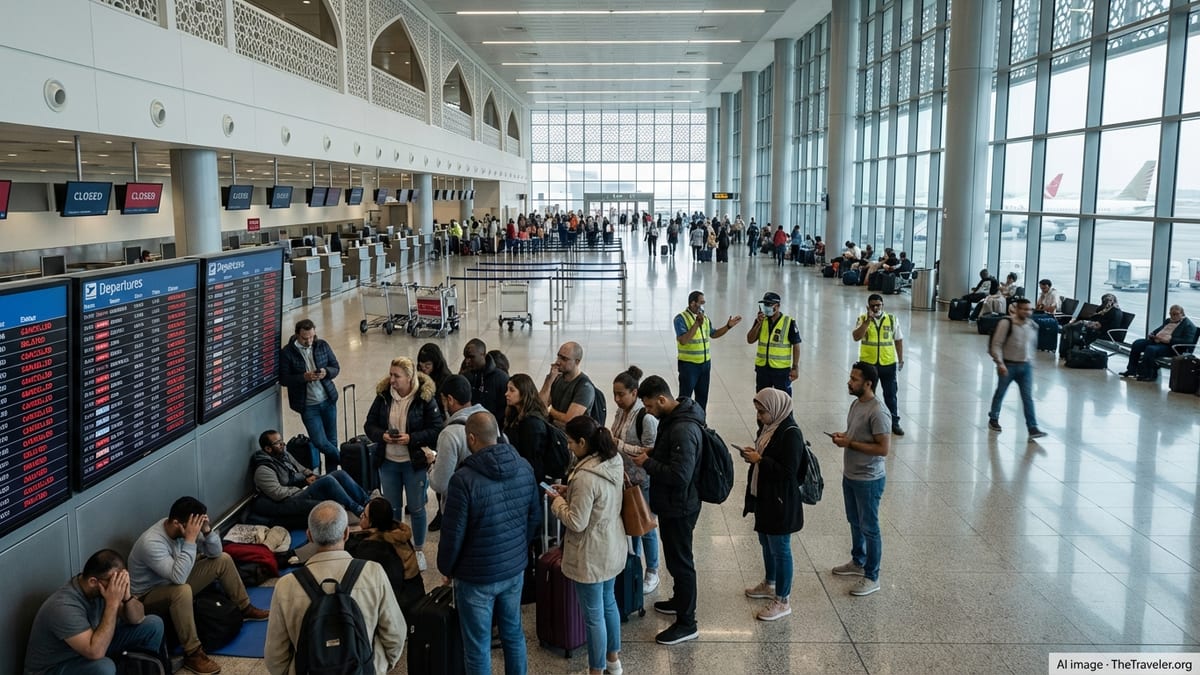
Canada Flags Heightened Global Safety Risks
Canada’s travel advisory system continues to show a widening band of countries where visitors are urged to exercise increased caution, including Brazil, Mexico, Germany, Italy, Spain and the Netherlands. Publicly available information from the official advisory portal indicates that a growing number of destinations now carry safety notes on crime, civil unrest, terrorism or local instability, even when overall risk remains moderate.
Recent updates highlight persistent security concerns in parts of Latin America, especially Brazil and Mexico, where violent and opportunistic crime are recurring themes. Travelers are urged to stay in well-established tourist areas, avoid risky nightlife districts, and monitor local media for changes in the security environment. These warnings are arriving as both countries prepare for major events and increased visitor numbers, adding pressure on local authorities and infrastructure.
In Europe, Canada continues to rate several major tourism markets at a level that calls for increased caution, citing risks linked to terrorism, large public gatherings and petty crime in busy urban centers. Advisories for Germany, Italy, Spain and the Netherlands emphasize crowded transport hubs, major tourist sights and seasonal events as locations where pickpocketing or disruptive incidents are more likely.
Officials in Ottawa have been clear in public guidance that Canadian advisories are not predictions of trouble but indicators that travelers should revisit their risk planning, travel insurance and documentation before departure. The latest messaging reiterates that entry rules and local conditions are ultimately set by the destination country, and that failure to comply with these rules can result in denied boarding or refusal of entry.
UK Entry Becomes More Complex With ETA and eVisa Shift
The United Kingdom has now moved into the front line of destinations tightening their border controls through new technology. Government notices in London confirm that, as of late February 2026, the UK is fully enforcing its Electronic Travel Authorisation system for visa-exempt visitors, including nationals from Canada, the United States and most European states. Eligible travelers who previously entered with only a passport must now obtain a digital permit in advance.
The new UK system mirrors similar pre-clearance schemes used by Canada and other countries, but recent coverage notes that the enforcement phase has significantly raised the stakes for compliant documentation. Airlines are required to verify that passengers have a valid ETA or visa before boarding, and individuals who arrive at the border without the correct approval may be refused entry.
Alongside the ETA rollout, the UK is rapidly transitioning from physical visa vignettes and biometric residence permits to fully digital eVisas linked to an online immigration account. Government policy documents stress that travelers must ensure their eVisa profile is connected to the passport they actually travel with. Reports of disrupted journeys show that mismatched passport details or expired documents can result in delays at check-in or secondary inspections on arrival.
Canada’s advisory on the United Kingdom has incorporated references to these changing requirements, underscoring that travelers are responsible for meeting British entry rules. The advisory points out that Canadian representatives abroad cannot override UK border decisions where documents are incomplete or data in digital systems does not match the passport presented at the airport.
Stricter Visa Scrutiny And Biometric Demands
Beyond the UK’s ETA regime, both Canadian and British immigration systems are now relying more heavily on biometrics and pre-travel vetting, contributing to a perception of stricter visa scrutiny for many travelers. Guidance from Canada’s immigration department states that most applicants for visitor visas, work permits and study permits must submit fingerprints and a photo, unless they fall into defined exemption categories.
These biometric requirements expand the volume of personal data collected prior to travel, and they can add weeks to the planning process if local application centers are busy or distant from an applicant’s home. Travelers from Brazil, Mexico, and other countries that require a Canadian temporary resident visa are being advised by consular information sheets and airline bulletins to begin applications well in advance of intended departure dates to avoid disrupted travel.
The UK, for its part, continues to require biometrics for most visa applications and for many longer-term stays, with detailed policy instructions explaining how applicants must enroll fingerprints and facial images at authorized centers. Published guidance also outlines procedures for cases in which individuals cannot safely travel to a visa application center, underscoring that biometric collection remains central to the UK’s risk-based border strategy.
For travelers, these trends translate into more front-loaded paperwork and less flexibility for last-minute trips, even to popular tourism hubs in Western Europe or the Americas. The combination of visa decisions rooted in security screening and digital pre-clearance tools is changing what used to be simple passport-only travel into a multi-step compliance exercise.
Passport Validity, Document Mismatches And Airport Disruption
Canada’s latest communications echo a broader international message about the importance of passport validity and document consistency in an era of automated border checks. Travelers are being reminded that many destinations require passports to be valid for at least six months beyond the date of entry and that name changes or recent renewals must be correctly reflected in all linked digital permissions.
The UK’s shift to ETAs and eVisas has made these issues more visible. Digital status is tied to a specific passport number, and reports from recent travelers describe boarding problems when they arrived at the airport with a newly issued passport that was not yet linked in the UK system. In such situations, airline agents may be unable to confirm eligibility to travel, even if the individual previously received a visa or ETA on a different document.
Canada’s travel advisory for the UK explicitly notes that its government cannot intervene if travelers are denied entry for failing to meet local passport or visa conditions. Publicly available guidance recommends that visitors double-check all details in their digital travel authorizations and carry proof of application, along with sufficient time before flight departure to resolve any last-minute questions at the check-in counter.
Similar passport and documentation challenges are surfacing elsewhere in Europe and Latin America as countries modernize border systems and experiment with biometric gates and online pre-approval tools. For travelers heading to destinations such as Spain, Italy, Germany or the Netherlands, Canada’s advisory site encourages checking both Canadian guidance and the latest entry requirements published by the destination before committing to non-refundable reservations.
What Travelers Should Do Before Booking
The evolving pattern of Canadian advisories, combined with the UK’s new digital controls and heightened vetting in many other countries, points to a new baseline of preparation for international trips. Travel experts reviewing recent policy changes suggest that visitors treat visa checks, biometrics and digital authorizations as core components of trip planning rather than last-minute formalities.
Canadian travelers are urged to start by consulting the federal advisory page for each destination to understand the current safety rating, specific neighborhood or regional warnings, and any references to crime, civil unrest or terrorism. That same platform provides links to local entry rules, which should then be cross-checked against the most up-to-date information from UK or other national authorities.
In parallel, applicants for Canadian or UK visas are advised in public guidance to factor in processing times, appointment availability for biometrics, and potential document requests that can extend the timeline. Travelers who hold multiple passports or who are renewing their documents should confirm which passport will be used for both the visa application and the actual journey, to keep all digital records aligned.
As Canada reinforces its warnings about global safety concerns and as countries like the UK, Brazil, Mexico, Germany, Italy, Spain and the Netherlands refine screening at their borders, international travel is becoming more predictable for those who prepare meticulously, and more uncertain for those who assume old rules still apply. The latest advisory cycle suggests that understanding security risks is only half the task; mastering complex, digitized entry requirements is now just as critical to a smooth trip.