


More news on this day
Canada is stepping up enforcement and public messaging around document fraud in temporary resident applications, warning that visitors, students and workers who misrepresent information face a higher risk of refusal and a multi‑year ban from entering the country.
Get the latest news straight to your inbox!
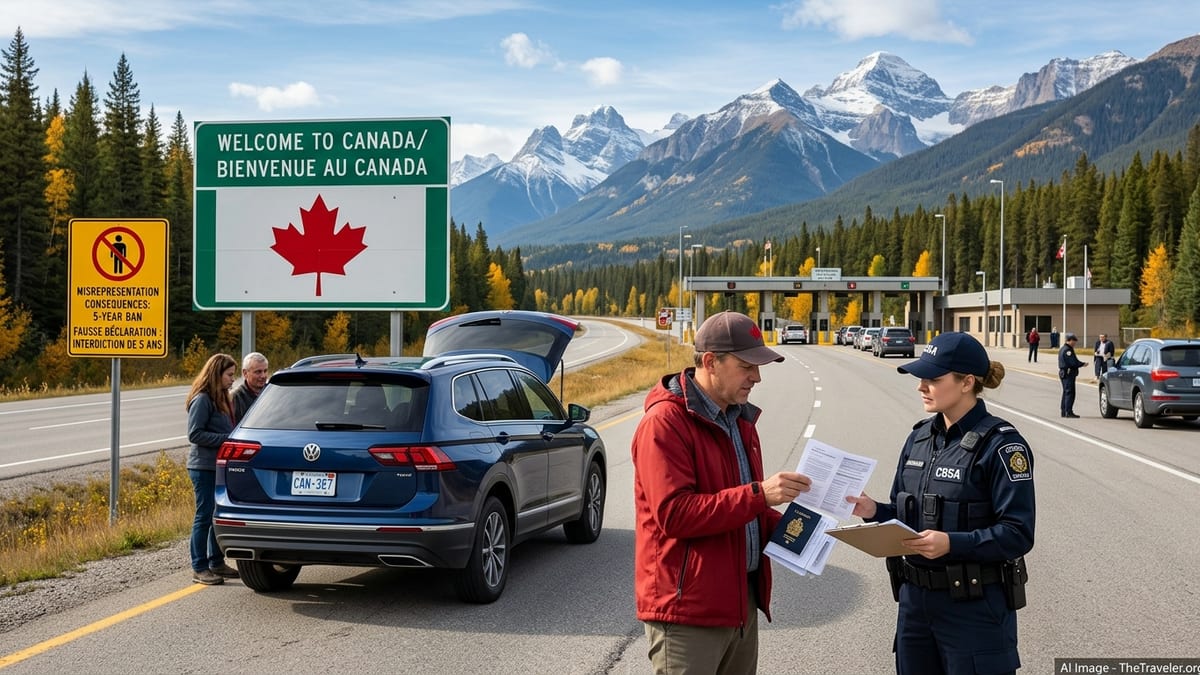
What has changed in Canada’s stance on visa fraud
The core legal rule on misrepresentation has not changed, but Canadian immigration authorities are enforcing it more aggressively and highlighting the consequences more clearly. Under the Immigration and Refugee Protection Act, a finding of misrepresentation can make a person inadmissible to Canada for five years. This consequence is now being emphasized across Immigration, Refugees and Citizenship Canada (IRCC) policy pages, committee briefings and public campaigns rather than being treated as a rarely used provision.
IRCC’s official guidance on the consequences of immigration and citizenship fraud states that if an applicant, their representative or interpreter sends false documents or information, the application will be refused and the individual “could be banned from Canada for at least 5 years,” alongside a permanent fraud record on file and possible removal from Canada for those already in the country.
In parallel, IRCC and the Canada Border Services Agency have been given stronger tools to cancel temporary resident documents such as visas and electronic travel authorizations on a case by case basis where information is false or circumstances have changed, which makes it easier to apply misrepresentation findings in practice.
Evidence of a crackdown: refusals and integrity briefings
Recent internal and parliamentary documents point to a marked rise in the use of misrepresentation findings in visitor visa decisions. A June 9, 2025 “Migration Integrity” briefing to a House of Commons committee reported that visitor visa refusals citing fraud or misrepresentation increased by 251 percent in 2024 compared with 2023, alongside a jump in the overall visitor visa refusal rate from 38 percent to 54 percent over the same period.
Subsequent committee evidence in 2026 shows that integrity work has remained a focus. In materials prepared for the Standing Committee on Citizenship and Immigration in May 2026, officials highlighted concerns about program integrity, particularly in the international student stream, and committed to more proactive verification that people with visas or permits continue to meet their conditions after approval.
Other transparency documents on fraud tabled in late 2025 show IRCC reviewing around 9,000 suspected immigration fraud cases each month in 2024 and describe dedicated migration integrity units tasked with investigating suspect applications and strengthening screening practices worldwide. Taken together, these figures illustrate that misrepresentation is being actively sought, documented and sanctioned, rather than treated as an occasional anomaly.
Public warnings on five-year bans and what counts as misrepresentation
IRCC has paired its internal integrity push with outward-facing communication aimed at prospective travelers. The department’s “consequences of fraud” page highlights that providing false documents, omitting key facts or misrepresenting circumstances in any immigration or citizenship application can lead to refusal and at least a five-year ban from Canada, along with longer bans of up to ten years in certain payment fraud scenarios.
A ministerial statement on 2 March 2026, delivered as part of the “Spot, stop, report” campaign against immigration fraud, specifically warned would-be migrants and visa applicants that submitting false or misleading information can trigger not only the refusal of an application but also a five-year bar on re-entering Canada. Related IRCC materials and public information sessions have stressed that the ban can apply whether the misrepresentation originates with the applicant or with an agent, consultant or fixer acting on their behalf.
For travelers, misrepresentation can include forged or altered bank statements, fabricated employment letters, fake admission or enrollment documents, manipulated travel histories, untrue claims about prior visa refusals or immigration violations in other countries, and incorrect declarations of marital status or family composition. Even if some of these details might seem minor to an applicant, IRCC treats them as material if they could affect an officer’s assessment of eligibility or admissibility.
How a five-year ban affects future travel and applications
A misrepresentation finding does not mean that every refused visa will attract a ban, but when IRCC concludes that false or misleading information was provided, the consequence can attach to the individual across multiple programs. A five-year inadmissibility period can block not only future visitor visas but also study permits, work permits and many pathways to permanent residence during that time.
IRCC guidance notes that a fraud finding creates a permanent record on the applicant’s immigration file. This means that even after the five-year period ends, future applications may receive closer scrutiny, and applicants may be asked to provide more extensive documentation or explanations to show that current information is complete and accurate.
The increased use of misrepresentation bans also intersects with post-arrival enforcement. Recent IRCC advisories on unauthorized work, for example, explain that working in Canada without proper authorization, in breach of visa or permit conditions, can lead to removal and a five-year ban on returning, which may in turn complicate later attempts to visit or immigrate.
What travelers and applicants should do now
Prospective visitors, students and temporary workers considering Canada in 2026 should approach applications with the assumption that inconsistencies and false statements are more likely to be detected than in the past. IRCC has made clear in committee evidence and public documents that it is increasing checks both before and after issuing visas, including document verification, data matching and follow-up investigations where concerns arise.
Applicants should review all forms and supporting documents carefully, ensure that translations and representations by third parties accurately reflect their circumstances, and disclose previous refusals, immigration violations or convictions where required. If an error is discovered after submission, seeking qualified advice and correcting the record as soon as possible may reduce the risk of it being treated as deliberate misrepresentation.
Because policies, campaigns and enforcement priorities can evolve, travelers planning to apply for a Canadian visitor visa, study permit or work permit should consult the latest instructions on the official IRCC website and, where appropriate, obtain professional immigration advice before filing. The current trend points toward more proactive integrity checks and more frequent use of five-year bans in clear cases of fraud, making careful, truthful preparation an essential part of any application.