


More news on this day
China has launched its 2026–27 winter–spring aviation schedule with a sharp increase in international flights, positioning the country ahead of much of Asia’s post‑pandemic recovery and reinforcing air links to nearby tourism markets such as Vietnam.
Get the latest news straight to your inbox!
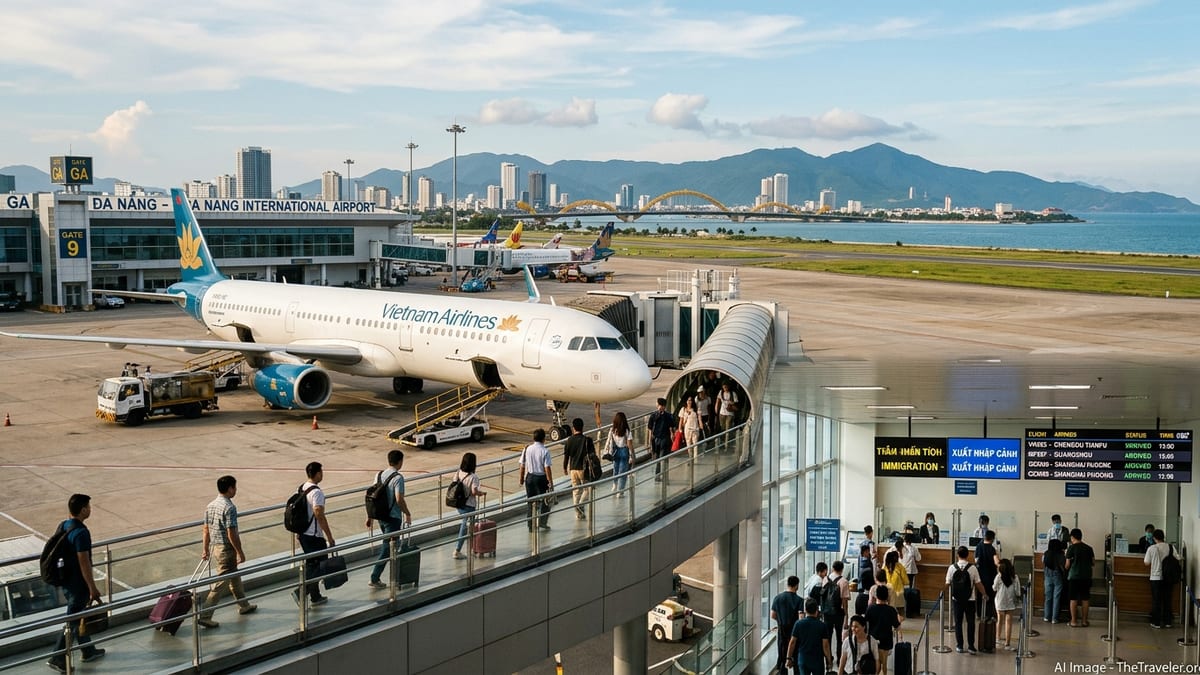
China’s new winter schedule expands international reach
From 25 October 2026 to 27 March 2027, China’s civil aviation sector is operating its 2026–27 winter–spring schedule, with 216 Chinese and foreign airlines planning around 116,000 passenger and cargo flights each week. According to the Civil Aviation Administration of China, 21,812 of these are international services to 85 countries, including 16,654 weekly international passenger flights connecting China with 84 countries.
Regulator data and recent government summaries indicate that China’s overall international air traffic has now recovered to roughly 85 to 90 percent of 2019 levels, a higher rate than the broader Asia Pacific average. Within the new schedule, services linking China to 15 priority inbound tourism markets, including Singapore and Malaysia, are reported to be up by around the mid‑teens in percentage terms compared with the previous year’s winter season.
China’s latest timetable follows a gradual rebuilding of its international network since border restrictions eased, with earlier 2024 summer–autumn schedules already showing tens of thousands of weekly international passenger and cargo flights to about 70 countries. The continued growth into winter 2026 points to a sustained expansion rather than a one‑off increase, although total international capacity still remains below pre‑pandemic peaks.
Vietnam emerges as a key beneficiary of added China capacity
Vietnam is among the regional tourism markets most directly affected by China’s increasing flight activity. Official Vietnamese statistics show that China was the country’s second‑largest source of international visitors in 2024, with around 3.7 million Chinese arrivals for the year, behind only South Korea. Government tourism updates also highlight that Chinese arrivals more than doubled compared with 2023 as air links gradually reopened.
For travelers, this renewed demand is being matched by more air options. Vietnam’s main destinations for Chinese visitors include Hanoi, Ho Chi Minh City, Da Nang, Nha Trang and Phu Quoc, which are served by a mix of Vietnamese and Chinese airlines. As China’s winter schedule increases the total pool of international flights, carriers in both countries have greater scope to add or adjust services on these routes, including more nonstops from secondary Chinese cities into Vietnamese coastal resorts.
Tourism authorities in both countries frame these developments as part of a broader shift in regional travel flows, where short‑haul trips within East and Southeast Asia account for a growing share of outbound Chinese leisure travel. While detailed route‑by‑route breakdowns are not always published, the confirmed visitor statistics and airline announcements point to Vietnam consolidating its role as one of China’s closest outbound beach and city‑break destinations.
New and restored routes strengthen China–Vietnam connectivity
On 25 June 2024, Vietnam Airlines resumed direct flights between Hanoi and Chengdu, a key city in western China, following a pandemic‑era suspension. The national carrier’s notice at the time confirmed four flights per week from Hanoi to Chengdu Tianfu International Airport, operating on Tuesdays, Wednesdays, Fridays and Sundays, with matching returns.
The Hanoi–Chengdu restart added to a broader rebuilding of Vietnam Airlines’ China network, which already included routes such as Hanoi–Beijing, Hanoi–Shanghai and services from Ho Chi Minh City to major Chinese hubs. Meanwhile, other Vietnamese and Chinese airlines have progressively restored and added services linking Da Nang and Nha Trang with cities including Shanghai, Guangzhou and other coastal or inland Chinese centers, although schedules and operators vary by season.
Vietnamese regional authorities are also seeking to tap into the renewed demand. The central province of Thua Thien Hue has outlined plans to secure at least one new direct international service to Northeast or East Asia by 2025, targeting source markets such as China and South Korea. These routes remain proposals until airlines file and confirm schedules, but they indicate how smaller Vietnamese destinations hope to plug into the expanding China‑centered aviation network.
What travelers can expect for the 2026–27 winter season
For travelers flying between China and Vietnam this winter, the main impact of China’s expanded schedule is greater choice of routings and, on many city pairs, more nonstop options. Additional frequencies can shorten overall journey times by reducing the need for intermediate stops in regional hubs, while more seats in the market typically translate into more competitive fares, particularly outside peak holiday periods.
However, flight plans for the 2026–27 winter–spring season are still subject to adjustment. Airlines commonly tweak frequencies, aircraft types and departure times throughout the season in response to demand and operational constraints. Travelers should therefore reconfirm exact dates, times and operating carriers when booking, and again before departure, especially on recently restored or newly announced China–Vietnam routes.
Looking ahead, regulators will publish the next round of schedule data when China switches to its 2027 summer timetable in late March. Until then, the current figures suggest that China is leading Asia’s international aviation recovery in terms of capacity growth, with neighboring tourism destinations such as Vietnam closely aligned to this expansion through an increasingly dense web of cross‑border routes.