


More news on this day
Stalled efforts to revive US–Iran talks are rippling through the Middle East’s tourism economy, with new estimates indicating that Qatar, Egypt, Saudi Arabia, the UAE, Jordan, Israel, Sudan, Bahrain and their neighbors are collectively losing about 600 million dollars a day in visitor spending as travelers reroute away from the region.
Get the latest news straight to your inbox!
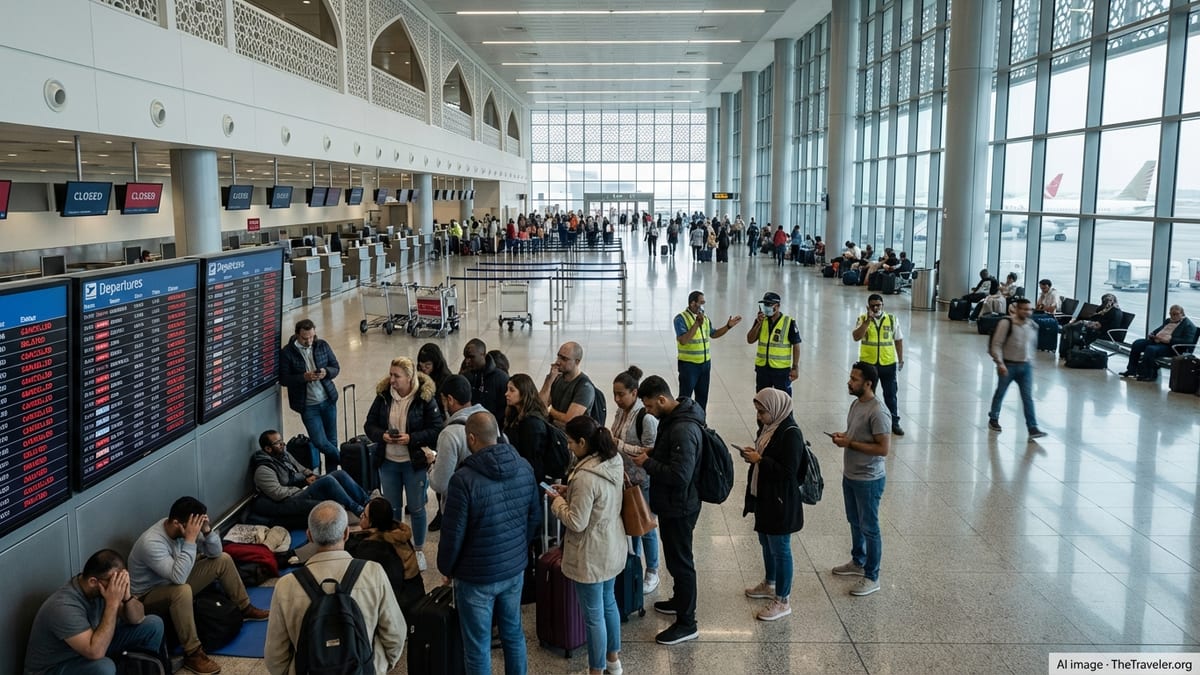
WTTC Data Highlights Scale of Daily Tourism Losses
Recent assessments by the World Travel & Tourism Council and other industry analysts indicate that the ongoing conflict involving Iran and the breakdown of diplomatic momentum with Washington are costing the wider Middle East travel sector at least 600 million dollars per day in lost international visitor expenditure. The figure reflects cancelled trips, weaker forward bookings and the erosion of traveler confidence in a region that had been positioning tourism as a central pillar of economic diversification.
Air hubs such as Doha, Dubai, Abu Dhabi and Manama, which together handled more than half a million passengers a day before the latest escalation, have seen repeated closures of airspace, diversions and tighter security procedures. Publicly available industry data shows that these operational disruptions, even when temporary, compound the financial hit by driving up airline costs and reducing the appeal of using Gulf and Levantine hubs for long-haul connections.
Analysts note that the 600 million dollar figure is an aggregate estimate across the Middle East, but it translates into concrete pressure on fiscal balances, employment and investment plans in individual states. Hotel groups, airlines, tour operators and small travel businesses are reporting sharply lower occupancy and cash flow stress in markets that had only recently recovered from the pandemic shock.
While exact country-by-country breakdowns are still emerging, sector research cited in recent business and tourism press suggests that the six Gulf Cooperation Council economies account for a large share of the immediate revenue shortfall. However, the economic drag is spreading into non-GCC destinations across the eastern Mediterranean and North Africa as travelers associate the wider region with instability.
Qatar and Gulf Hubs Hit by Flight Disruptions and Perception Risk
Qatar’s role as a major transit and events destination means it is acutely exposed to geopolitical turbulence. Following Iranian strikes and wider regional escalation, aviation and travel risk bulletins detail waves of flight cancellations and diversions affecting Doha’s Hamad International Airport, even when core infrastructure remains intact. For an economy that has invested heavily in positioning itself as a seamless global connector, each day of suppressed passenger throughput translates into millions in forgone spending on hotels, retail and hospitality services.
Similar patterns are reported across the UAE and Bahrain, where major carriers have had to adjust routes, add flight time to avoid sensitive airspace and scale back frequencies on certain Middle East and European sectors. Industry coverage describes a sharp decline in new bookings for Gulf city breaks and stopover packages, with some source markets treating the entire Arabian Peninsula as a single high-risk zone despite the absence of direct fighting in most territories.
Tourism analysts stress that the current downturn is driven less by physical damage to airports and hotels than by the perception of heightened strategic risk and the unresolved nature of the US–Iran confrontation. The collapse of momentum in diplomacy means there is no clear timeline for de-escalation, complicating planning for airlines, cruise operators and event organizers who must decide months in advance where to deploy capacity.
Economic commentaries also point out that Gulf states had been counting on tourism growth to offset volatility in hydrocarbon revenues. The longer daily visitor losses remain at current levels, the more likely governments are to revisit or delay flagship projects, from new cultural districts to cruise terminals and theme parks that were intended to draw millions of additional visitors each year.
Egypt, Jordan, Israel and the Wider Region Face a Second-Order Shock
Beyond the Gulf, traditional leisure destinations such as Egypt, Jordan and Israel are facing what regional economic briefings describe as a second-order shock. Many of these countries rely on a mix of religious tourism, Red Sea and Mediterranean beach holidays, and archaeological itineraries that attract visitors from Europe, North America and Asia. Heightened security advisories and media coverage of the Iran-focused conflict are dampening demand even in areas geographically distant from the main military exchanges.
For Egypt, where tourism provides critical foreign currency and employment, a sustained drop in arrivals linked to tensions around Iran and the Gulf threatens to widen balance-of-payments pressures that were already significant. Analysts tracking the region warn that package tour cancellations, weak forward bookings for the 2026–2027 winter season and higher insurance costs for airlines serving Egyptian resorts could complicate the country’s broader economic stabilization efforts.
Jordan, whose economy is more modest in scale but highly dependent on services, is similarly vulnerable. International financial institutions have highlighted tourism as a key growth engine for the kingdom, noting that shocks to visitor flows from regional security crises can quickly spill over into employment and public finances. The latest Iran-related escalation and stalled diplomatic track risk deterring some visitors from iconic sites such as Petra and Wadi Rum, despite the absence of direct hostilities on Jordanian soil.
Israel, already grappling with the economic fallout of previous rounds of conflict, is now contending with the added drag of a broader regional standoff that raises perceived risk for city breaks, pilgrimage tours and conference travel. The combined effect across Egypt, Jordan and Israel is to dampen investor appetite for new tourism infrastructure at the very moment when these countries had sought to capitalize on emerging demand from Gulf and Asian markets.
Knock-On Effects for Sudan, Bahrain and Emerging Tourism Markets
For countries where tourism remains a smaller but strategically important sector, such as Sudan and Bahrain, the latest turmoil threatens to derail early-stage growth trajectories. Sudan has faced overlapping political and security crises in recent years, and regional economic reports suggest that any further deterioration in perceptions of Middle East stability will make it even harder to attract niche adventure, cultural and diaspora tourism that had begun to show tentative signs of recovery.
Bahrain, by contrast, had been leveraging its financial center status and proximity to Saudi Arabia to position itself as a boutique leisure and events destination. Industry coverage indicates that disruptions to Gulf air corridors and caution among regional travelers are weighing on hotel performance and event bookings in Manama, even though day-to-day life continues largely as normal. The island state’s dependence on neighboring markets for visitor inflows magnifies the impact of any slowdown in Saudi and Qatari outbound travel.
Smaller markets across the Levant and North Africa that had hoped to benefit from spillover tourism are also affected. Analysts monitoring booking data note that travelers are increasingly substituting destinations in southern Europe, the Indian Ocean and Southeast Asia for trips that would previously have included Middle Eastern stops. This reallocation of demand may prove difficult to reverse quickly, particularly if peace talks between the United States and Iran remain stalled and periodic flare-ups keep the region in global headlines.
There are additional indirect effects through aviation networks. With key Gulf and Levantine hubs handling fewer transfer passengers, airlines may reduce or suspend marginal routes that connect secondary cities in the Middle East and North Africa to the global system. This, in turn, limits the ability of emerging destinations to market themselves as easily accessible, further entrenching the current slump.
Prospects for Recovery Hinge on Diplomacy and Confidence-Building
Historical comparisons compiled by tourism industry bodies suggest that travel demand can recover relatively quickly from security shocks when clear de-escalation and effective communication restore confidence. However, the present standoff between the United States and Iran, layered on top of existing regional conflicts, is viewed in many economic outlooks as a more complex and prolonged challenge.
Published commentary from multilateral lenders and regional economists emphasizes that meaningful relief for Middle Eastern tourism hinges on a credible diplomatic pathway that reduces the risk of sudden escalations, particularly those that affect airspace and critical energy infrastructure. Without progress on talks, markets may price in a higher baseline level of geopolitical risk, keeping insurance premiums, airline operating costs and traveler caution elevated.
In the meantime, several governments are exploring measures to cushion the sector, including targeted support for airlines and hospitality businesses, domestic tourism campaigns and efforts to diversify source markets. Analysts caution, however, that such policies can only partially offset the estimated 600 million dollars in daily international visitor losses while the underlying diplomatic rift persists.
The coming months are likely to test the resilience of the region’s tourism-led development models. Whether in Qatar’s high-capacity air hub, Egypt’s resort corridors, Jordan’s heritage sites or Bahrain’s boutique leisure offerings, the trajectory of visitor flows now appears tightly bound to the trajectory of US–Iran relations and the broader security architecture of the Middle East.