


More news on this day
Canadian airlines are rolling out one of their largest waves of long-haul route growth in years, positioning hubs in Toronto, Montreal, Calgary and Halifax as alternatives for travelers seeking to avoid mounting bottlenecks at busy United States border crossings and transit airports.
Get the latest news straight to your inbox!
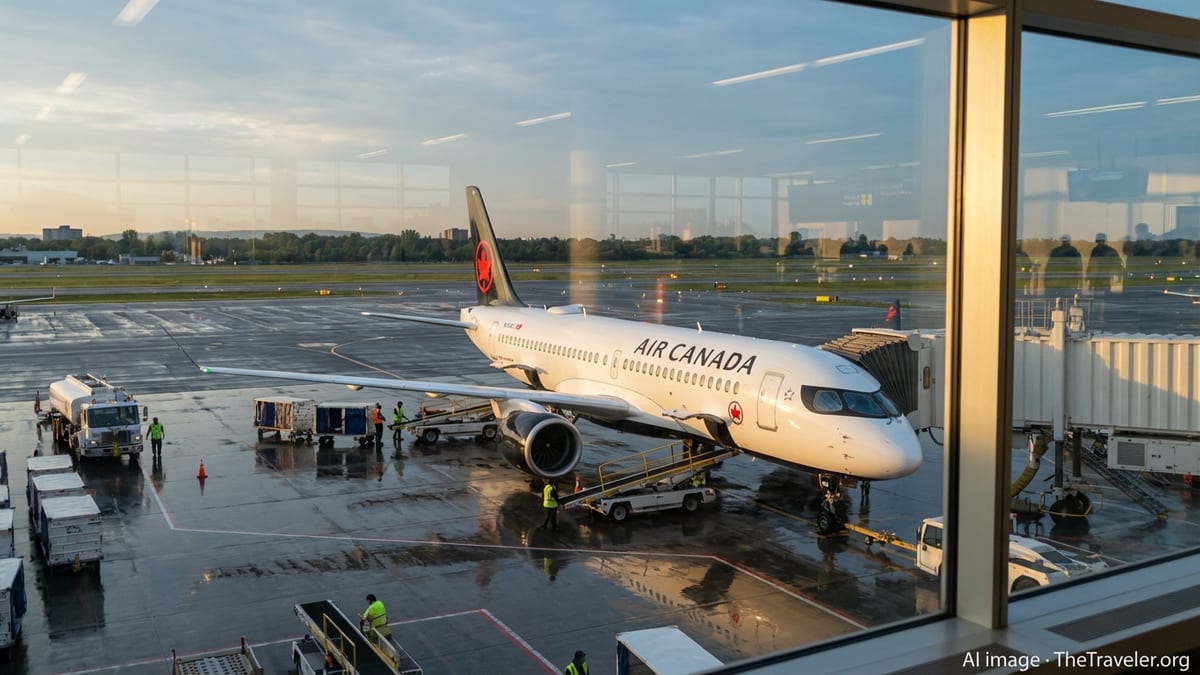
US Border Disruptions Push Travelers to Reroute
Reports from travel industry analysts and trade publications indicate that a combination of tighter screening, staffing constraints and shifting security rules at major US entry points has led to longer queues and increased missed connections for international passengers in early 2026. The disruption has been particularly acute for travelers who rely on US airports as intermediate hubs on journeys between Canada, Europe and Asia.
As cross-border traffic patterns adjust, a growing share of itineraries that once connected through US cities such as New York, Chicago and Los Angeles are now being rebooked over Canadian hubs. Publicly available booking data and airline schedule filings suggest that passengers are increasingly favoring routings that keep them on a single Canadian carrier from origin to final destination, reducing the risk of delays tied to US immigration and customs choke points.
Travel blogs and fare-tracking services highlight a notable rise in searches for nonstop options from Canadian cities to Europe, Asia and Latin America when those flights allow travelers to bypass US transit entirely. This shift in behavior has set the stage for a more aggressive international strategy by Canada’s largest airlines, which are racing to capture demand before it settles into new long-term patterns.
Air Canada Bets on Direct Long-Haul Growth
Air Canada has unveiled one of the most extensive international expansions in its recent history, focused on its main hub at Toronto Pearson and its growing network from Montreal and Vancouver. Company statements and route announcements describe plans for 20 new routes in the summer 2026 season, alongside a double-digit percentage increase in overall capacity compared with the previous year.
The airline is bringing back and adding key long-haul links from Toronto, including nonstops to Shanghai and several Central European capitals, while deepening service to South American and Caribbean destinations. Earlier announcements highlighted new or expanded services from Toronto to Rio de Janeiro, Lima, Cartagena and multiple leisure markets in Mexico and the Caribbean, with more growth planned into winter 2025–2026.
Industry coverage notes that the strategy is designed in part to capture flows that once traveled via US partners. Air Canada’s network planners have signaled that a significant share of US-origin passengers can now connect through Canadian hubs instead of transiting US coastal gateways. By enlarging its long-haul portfolio from Toronto, Montreal and Vancouver, the carrier is giving both Canadian and US travelers more opportunities to avoid a second border crossing on intercontinental trips.
Fare comparison sites also point out that on some new routes out of Toronto, such as services to Central and Eastern Europe, Air Canada has been able to undercut fares that route passengers via traditional European hubs or US cities. That pricing advantage, combined with simplified border formalities, is expected to further strengthen the appeal of Canadian routings.
WestJet Turns Halifax and Toronto into Alternative Gateways
WestJet is pursuing a parallel expansion with a particular emphasis on transatlantic routes and winter sun destinations. The airline has announced new international services from Toronto and Halifax for summer 2026, including multiple European cities and added connectivity to the United States, Central America and the Caribbean.
Company news releases outline plans to transform Halifax into a stronger Atlantic gateway, with new seasonal flights to European destinations and expanded connections for travelers from Western Canada. Additional schedule filings show new links such as Winnipeg to Reykjavik, restoring nonstop transatlantic access for Manitoba and offering another option for travelers looking to avoid US transit stops on trips between Canada and Europe.
For the 2025–2026 winter season, WestJet has also detailed new and increased service to warm-weather destinations including Guadalajara, Havana, Panama City and Tepic in Mexico’s Riviera Nayarit region, along with expanded flying from Western and Central Canada to Central America and the Caribbean. Travel industry commentary notes that these routes make it easier for vacationers to reach resort areas without relying on US southern hubs that have struggled with congestion and operational strain.
While WestJet has trimmed some US transborder routes in response to softer demand and operational complexity, the carrier is redeploying aircraft onto point-to-point international routes that keep passengers within a single jurisdiction from departure to arrival. Analysts suggest this rebalancing is aimed at insulating both the airline and its customers from unpredictable conditions at US border crossings.
Porter and Low-Cost Rivals Join the International Push
Canada’s newer and smaller carriers are also moving to take advantage of shifting travel patterns. Porter Airlines, which has been expanding rapidly since introducing a fleet of Embraer E195-E2 jets, is using the additional range of these aircraft to add more medium-haul routes from Toronto Pearson and regional centers. Company materials describe a strategy of expansion in every direction, with more cross-border and longer domestic services that can feed future international links.
Ultra-low-cost carrier Flair Airlines has undertaken a multi-year transformation centered on an all-Boeing 737 fleet and an expanded network across Canada. Recent fleet and network updates indicate that the airline is preparing for further growth from 2026, including new domestic bases and additional sun routes. While Flair’s long-haul ambitions remain more limited than those of Air Canada or WestJet, its growing footprint within Canada is giving budget-conscious travelers more options to reach a Canadian hub before connecting abroad, rather than connecting through the United States.
Industry newsletters report that these developments coincide with softer leisure demand for some US-bound routes. As a result, capacity that might previously have been deployed on cross-border flying is being redirected into services that either remain wholly within Canada or connect Canada directly to overseas holiday destinations.
Collectively, these moves by second-tier Canadian carriers add competitive pressure on fares and contribute to a broader ecosystem in which Canadian airports become more viable alternatives to US megahubs for international journeys.
What This Means for Travelers Planning 2026 Trips
For passengers planning international travel in late 2025 and 2026, the flurry of Canadian route announcements changes the calculus on where to start and end a trip. Travel advisors now frequently highlight Toronto, Montreal, Vancouver, Calgary and Halifax as strategic connecting points for both Canadian and US residents who wish to avoid potential disruption at crowded US border crossings.
Search data from online booking platforms show that more travelers based in northern US states are considering driving or taking short regional flights to Canadian cities in order to board nonstop long-haul services. In many cases, this approach replaces an itinerary that would previously have involved two separate encounters with US border controls on a round-trip journey.
Analysts caution that the rapid shift of capacity into international markets also carries risk for Canadian airlines, particularly if fuel prices or economic conditions deteriorate. However, the present environment of US border uncertainty, coupled with robust demand for transatlantic and sun destinations, is providing powerful incentives for carriers to continue their current course.
With additional route announcements expected as airlines finalize their 2026 schedules, travelers are likely to see even more options to cross oceans directly from Canada. For many, those choices are being evaluated not just on price and schedule, but also on the growing desire to keep border interactions as simple and predictable as possible.