


More news on this day
A powerful late-spring storm system sent multiple tornadoes spinning through communities outside Chicago this week, shredding homes, toppling power poles and disrupting power and travel across a wide swath of the Midwest.
Get the latest news straight to your inbox!
Communities South and Southeast of Chicago Reel From Destruction
Reports from regional news outlets describe at least three confirmed tornadoes touching down in suburbs and small cities outside Chicago, including areas around Merrillville in northwest Indiana and Streator in central Illinois. The twisters followed an intense band of thunderstorms that swept across northern Illinois and northwest Indiana on Wednesday, June 10, continuing into the early hours of Thursday.
In residential neighborhoods, aerial and ground images show homes with roofs torn away and exterior walls collapsed, while nearby houses appear largely intact, illustrating the narrow but devastating paths carved by the funnels. In some blocks, trees were stripped of branches or uprooted entirely and thrown across streets and yards, complicating early cleanup efforts.
Power poles snapped along roadways and at the edges of subdivisions, leaving long stretches without electricity. Publicly available outage trackers showed hundreds of thousands of customers in the broader Midwest without power at the peak of the event, with northern Illinois and northwest Indiana among the hardest-hit pockets.
Local officials in affected towns reported widespread but uneven damage, with some commercial corridors losing storefront windows and signage while adjacent structures escaped with only minor problems such as missing shingles or scattered debris.
Travel Disruptions Ripple Through the Chicago Hub
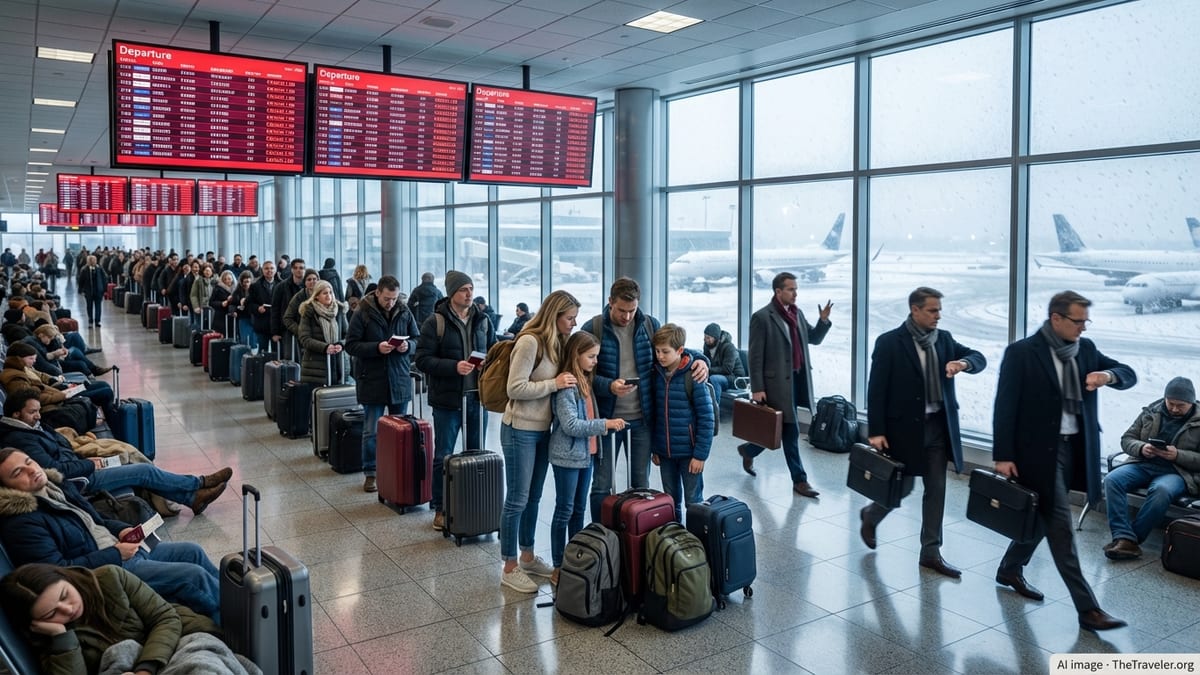
The Chicago region’s role as a major transportation hub meant the storms had an outsized impact on travelers. According to published coverage of airline and airport data, hundreds of flights at Chicago’s two main airports were delayed or canceled as the line of severe weather moved through, with ground stops and rerouting stretching into Thursday.
Passengers reported extended waits on tarmacs and in terminal concourses as operations paused during the most intense cells, particularly while tornado warnings and severe thunderstorm warnings were in effect for portions of Cook, Will and surrounding counties. Some inbound flights diverted to alternate airports in the Upper Midwest to avoid the volatile conditions.
On the ground, heavy rain and localized flooding added to the disruption. Standing water on expressways and toll roads around the metro area slowed traffic, while downed trees and power lines closed secondary roads in communities closer to the tornado tracks. In a few towns, rail crossings were temporarily blocked by debris or by trains halted as dispatchers assessed storm reports.
The storms also intersected with major events, including professional sports and concerts, leading to weather delays and changes in schedules that rippled through hotel bookings and evening travel plans in central Chicago and the nearby suburbs.
Power Outages and Infrastructure Strain Across the Midwest
Energy providers across the region reported large-scale outages as winds, falling trees and tornadic winds combined to tear down distribution lines. Public statements and outage maps from northern Illinois indicated tens of thousands of customers without electricity at various points, while broader Midwest tallies reached several hundred thousand.
Downed wooden poles, snapped in half or leaning at sharp angles, were a common sight along suburban arteries and rural roads outside Chicago. Crews were photographed and filmed working through the night to isolate damaged segments, remove tangled lines and begin restringing conductors in neighborhoods where access was possible.
For travelers, the loss of power created a secondary wave of complications. Gas stations, highway service plazas and roadside restaurants along key routes reported intermittent closures as they waited for service to be restored or relied on limited backup generation. In some affected suburbs, traffic signals went dark, prompting temporary four-way stops and longer-than-usual delays at busy intersections leading to interstates.
Infrastructure agencies also monitored impacts to water and sewer systems, particularly in smaller communities where pumping stations rely on local grids. Early reports indicated that many critical facilities had emergency power in place, but the storm underlined the vulnerability of essential services during extended outages.
Residents, Visitors and the Regional Tourism Economy Affected
For residents in the direct path of the tornadoes, the immediate concern has been shelter and basic needs. According to local government announcements and relief organization updates, community centers and temporary shelters opened in several towns, including the manufacturing and farm city of Streator, to assist people whose homes were damaged or destroyed.
The wider Chicago area also felt the effects through sudden changes in visitor plans. Travelers arriving for conferences, sporting events or city breaks encountered shifting itineraries as flights were rescheduled, suburban hotels dealt with intermittent power and some attractions curtailed hours during storms and cleanup efforts.
Tourism officials and regional business groups highlighted that core visitor districts in downtown Chicago remained largely functional once the worst of the weather passed, but noted that perceptions of severe weather can still influence short-notice trips. The contrast between heavily damaged suburban blocks and relatively undisturbed city neighborhoods underscored how localized severe storm impacts can be, even within a single metro region.
Insurance assessors and construction contractors have begun circulating through affected communities, an early sign of a rebuilding process that could stretch through the summer. For families and small business owners in the path of the tornadoes, that recovery will shape local travel and spending patterns long after power and routine transportation have resumed.
Severe Weather Risks Shape Summer Travel Planning
The tornadoes outside Chicago arrived as the central United States transitions into the busiest part of the severe weather season, a period when thunderstorms capable of producing large hail, damaging winds and occasional tornadoes often track along major interstate corridors and through densely populated regions.
Meteorologists cited in national coverage pointed to a combination of warm, humid air near the surface and stronger winds aloft as key ingredients that allowed rotating storms to develop over northern Illinois and Indiana. While individual tornado tracks were relatively short compared with some historic outbreaks, the timing near a major air and highway hub amplified the disruption.
For travelers planning trips in and around the Midwest over the coming weeks, the episode serves as a reminder to monitor forecasts closely, especially on days when severe weather outlooks highlight the region. Many transportation agencies and tourism boards encourage visitors to sign up for local alert systems, review basic safety guidance for tornado-prone areas and build additional flexibility into itineraries during unsettled weather patterns.
As cleanup continues in the communities south and southeast of Chicago, attention is turning to forecasts for additional storms and heat waves later in June. The combination of infrastructure repair, ongoing travel demand and persistent weather risks will shape how quickly the region’s tourism and transportation networks return to full strength.