


More news on this day
Hamburg Airport saw its operations heavily disrupted on Friday after a mistaken alarm triggered a security-related evacuation of parts of the terminal, leading to hours of delays and multiple flight cancellations across the schedule.
Get the latest news straight to your inbox!
Evacuation after passenger accesses secure area
According to published coverage from German and international outlets, the disruption began late on Friday morning, June 12, when a male traveler gained unauthorised access to a secure zone at Hamburg Airport by pressing an emergency exit button. The action briefly opened an escape route door and allowed the passenger to enter the restricted security area without the standard screening process.
Reports indicate that the individual was quickly located and detained within the terminal. Despite the rapid intervention, security protocols required a full sweep of the affected areas. Federal police and airport security personnel responded by ordering an immediate evacuation of the security zone at the city’s Helmut Schmidt airport.
The incident was treated as a precautionary security situation while teams checked the terminal. Initial information suggested uncertainty over whether the risk was linked to a person or an object, prompting broad measures until the circumstances were clarified.
By late morning, authorities had concluded the search and ended the active operation, but by then the airport’s tightly timed schedule had already been significantly affected.
Passengers cleared from gates and aircraft
Publicly available information shows that all passengers who had already passed through security were required to leave the controlled area and return to the public side of the terminal. Travellers waiting at departure gates were escorted out, and several reports describe people being asked to re-clear the checkpoints once the operation ended.
In addition, multiple outlets report that passengers who had already boarded their aircraft had to disembark and re-enter the terminal. Flight crews and ground handlers were forced to pause departure preparations while the security zones were searched, temporarily halting all outbound operations.
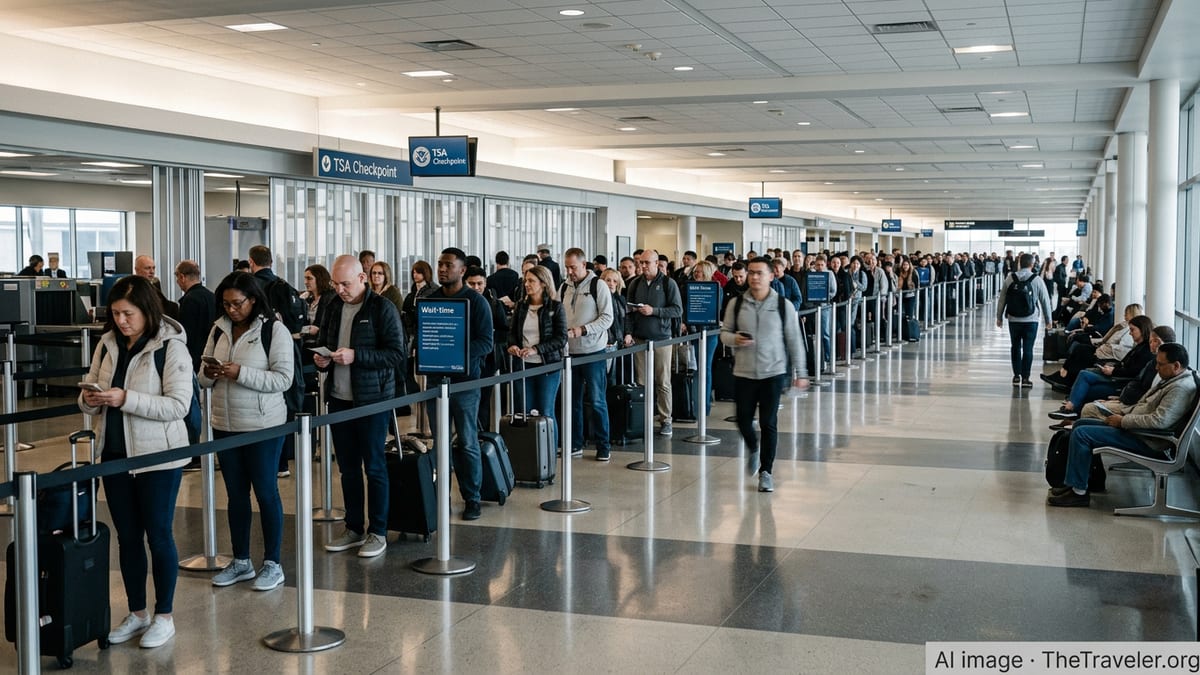
Images and eyewitness accounts shared with local media depict crowded check-in halls and long lines stretching back from the security checkpoints after the evacuation. With aircraft out of position and boarding halted, congestion built rapidly both in the terminal and on the apron as arriving flights continued to land.
The airport’s security area gradually reopened once the sweep was completed, but the need for many travelers to repeat screening procedures added further strain to already busy morning traffic.
Significant delays and cancellations throughout the day
Hamburg Airport has warned of prolonged knock-on effects, with reports from news agencies indicating that significant delays and a number of cancellations are expected to continue throughout Friday. While specific figures on cancelled services were not immediately available, departure boards showed widespread disruptions with delays of up to three hours on some routes.
Because the evacuation came during a peak morning wave, the incident had an outsized impact on later flights. Aircraft and crews scheduled for subsequent legs were delayed on the ground in Hamburg, affecting services to other European hubs and holiday destinations. Some airlines opted to consolidate or cancel selected rotations as they worked to reset their operations.
Travel industry observers note that security-related evacuations can ripple through airline networks for much of the day, as limited runway capacity and crew duty limits hamper efforts to make up lost time. Passengers with onward connections in Frankfurt, Munich and other European hubs faced a heightened risk of missed flights and rebooking challenges.
Published travel advisories have urged affected customers to monitor airline apps and airport information channels closely, expect long lines at service desks and self-service kiosks, and allow additional time for check-in and security when travelling from Hamburg in the aftermath of the incident.
Cause identified as accidental alarm, not targeted threat
Subsequent reporting from regional broadcasters and national media indicates that the incident is now believed to have been accidental rather than linked to any deliberate threat. The passenger who opened the emergency exit is understood to have done so unintentionally, apparently confusing the emergency mechanism with a regular door control while navigating the terminal.
Once this sequence of events became clear, officials treated the case primarily as an operational and security breach rather than a criminal incident related to terrorism or targeted violence. Nevertheless, the requirement to follow established aviation security procedures meant that the response could not be scaled back until the search and verification processes were fully completed.
The event has renewed attention on how clearly emergency doors and alarms are marked in busy terminals, particularly in areas where passengers may be unfamiliar with the layout or under stress to reach their gate. Industry commentators suggest that clearer signage, better physical separation of emergency exits from passenger routes, and enhanced public announcements could help reduce the risk of similar mistaken activations in the future.
Impact on travelers and what to expect next
For passengers, Friday’s disruption at Hamburg Airport translated into long waits, missed appointments and last-minute changes of plan. Families heading off on holidays, business travelers with tight schedules and transfer passengers alike encountered queues for re-screening, reissued boarding passes and, in some cases, hotel vouchers or alternative routings.
Travelers scheduled to depart from Hamburg later in the day were advised by airlines, via public statements, to arrive early, check in online where possible and stay alert for gate and time changes. Some carriers encouraged customers with flexible plans to rebook for another day in order to ease pressure on constrained capacity.
Operational data released in recent years shows that security incidents are a relatively rare cause of large-scale airport disruption compared with weather or air traffic control issues, but when they do occur they often lead to concentrated delays and cancellations over a short period. Friday’s events in Hamburg underline how even a single mistaken action at a critical access point can cascade into a day of upheaval for hundreds or thousands of travelers.
As flight operations gradually normalize, attention is likely to turn to whether any procedural or design changes at Hamburg Airport could reduce the likelihood and impact of similar incidents, and how quickly passengers who experienced cancellations and lengthy delays will be able to complete their journeys or secure compensation where applicable.