


Few travel dilemmas are as pleasant as choosing between the Canadian Rockies and the Swiss Alps. Both regions deliver towering peaks, glacier-fed lakes, legendary hiking and bucket-list train rides. Yet they feel very different on the ground, from how much you spend and how you get around to the style of mountain culture you encounter in the villages. This guide breaks down those differences with real-world examples, so you can decide which mountain adventure fits you better right now.
Get the latest updates straight to your inbox!
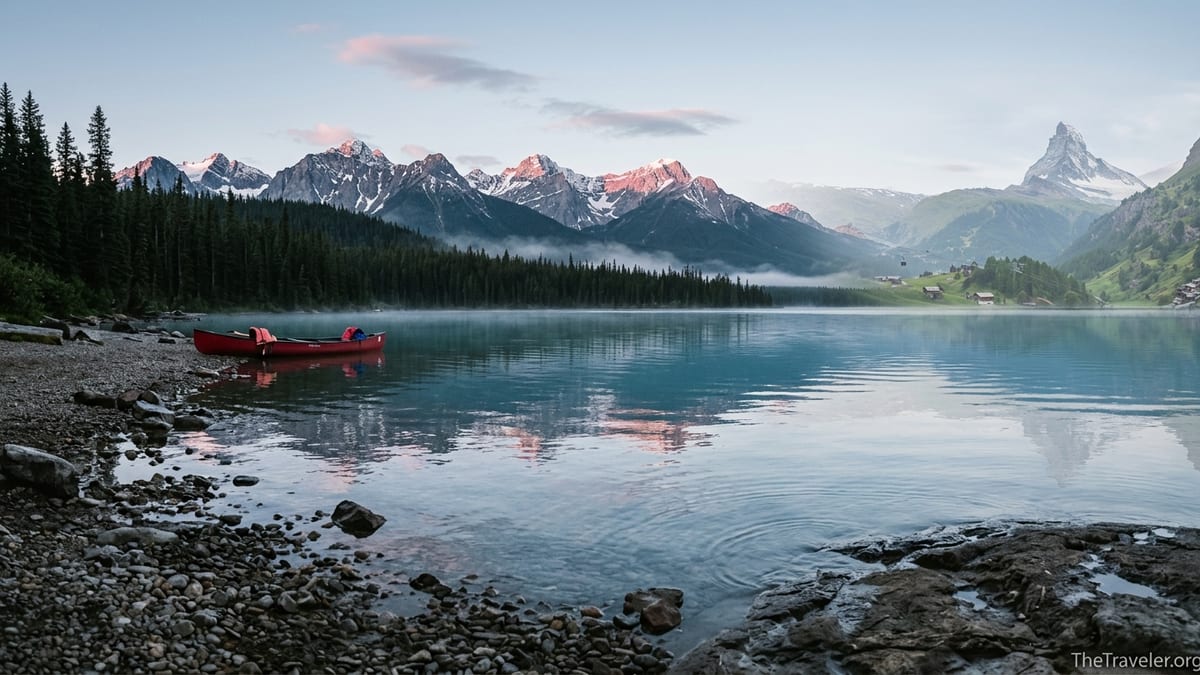
First Impressions: How Each Range Feels When You Arrive
Landing in Calgary and driving into Banff for the first time feels like watching a wall of rock rise straight out of the prairie. Within 90 minutes of leaving the airport, you are cruising past the turquoise Bow River with Mount Rundle and Cascade Mountain looming over the town of Banff. The Canadian Rockies are raw, big-shouldered and a little wild. Even popular spots like Lake Louise still feel like you are on the edge of a huge, sparsely populated wilderness that stretches toward Jasper and beyond.
Arriving in the Swiss Alps usually feels more structured and lived-in. Take the train from Zurich to Interlaken and then up to Lauterbrunnen or Grindelwald and you are immediately in the heart of tidy villages where chalets cling to steep green slopes and cowbells echo under famous peaks like the Eiger and Jungfrau. Mountain railways, gondolas and cogwheel trains form a dense network, so you are almost never far from a station, café or guesthouse, even above treeline.
That contrast matters for travelers. If you like the idea of being in a national park where nights are dark, roads are few and wildlife sightings feel spontaneous, the Canadian Rockies will feel closer to what you imagine as “true wilderness.” If you prefer dramatic mountains combined with easy access to bakeries, punctual trains and high-altitude restaurants with sun terraces, the Swiss Alps deliver that classic European alpine experience.
Both regions are undeniably scenic, but the vibe is different: the Rockies feel spacious and untamed, while the Alps feel vertical and intensely cultivated.
Cost Reality Check: What Your Money Buys
Overall, the Canadian Rockies tend to be slightly easier on the wallet, especially for North American travelers, but they are not a budget destination. In Banff or Jasper, a midrange hotel in July often runs around the equivalent of 250 to 400 Canadian dollars per night for a central room, with basic motels sometimes dipping closer to 200 in shoulder season. A casual dinner for two with a main course and a drink each typically lands in the 70 to 120 dollar range before tip, depending on where you eat.
In the Swiss Alps, overnight costs are usually higher, especially in showpiece villages such as Zermatt, Wengen and Mürren. It is common to see double rooms in a three-star hotel priced around 220 to 350 Swiss francs in high season, with nicer four-star properties well above that. Restaurant mains like rösti or pasta can easily cost 25 to 35 francs each, and a simple mountain-top coffee and cake break for two can approach 20 francs once you add a view of the Matterhorn.
Transport changes the equation. In Canada, you will probably rent a car if you want freedom to explore Banff, Jasper, Yoho and Kootenay. Summer weekly rentals from Calgary for a compact car often start around 500 to 800 Canadian dollars, plus fuel and parking at popular spots. In Switzerland, the Swiss Travel Pass bundles long-distance trains, local buses and many boats into a single ticket, with multi-day passes typically running several hundred francs per person. For example, a 3-day second-class pass for adults is generally in the low to mid-300 franc range, with 8-day passes considerably more but still cheaper than buying many point-to-point tickets.
Attraction pricing also differs. In the Rockies, once you have a Parks Canada pass for entry into Banff and Jasper, many of the best experiences such as hiking the Plain of Six Glaciers trail or strolling the Athabasca River in Jasper are free. Paid add-ons include gondolas like the Banff Gondola to Sulphur Mountain, often in the 60 to 80 dollar per adult range, or guided excursions such as Columbia Icefield tours, usually over 100 dollars per person. In Switzerland, lifts and mountain railways are a bigger piece of the budget. A return ticket to Jungfraujoch, the “Top of Europe” above the Jungfrau region, commonly costs hundreds of francs if you pay full fare, although rail passes and regional tickets such as the Jungfrau Travel Pass can bring that down.
Landscape & Atmosphere: Wild Canada vs Alpine Storybook Switzerland
The scenery in the Canadian Rockies is defined by contrast: powder-blue lakes against gray limestone peaks, dense conifer forests and wide glacial valleys. Classic day trips include Moraine Lake near Lake Louise, whose vivid turquoise water and Valley of the Ten Peaks appear in countless photos, and the Icefields Parkway between Lake Louise and Jasper, where you can pull into viewpoints like Peyto Lake or Sunwapta Falls directly from the highway. Wildlife sightings feel like part of normal life. It is not unusual for visitors driving between Banff and Jasper to encounter bighorn sheep on the roadside or to see elk grazing outside town limits early in the morning.
The Swiss Alps feel more like a patchwork between nature and human culture. In places like the Lauterbrunnen Valley, sheer cliffs plunge into a valley floor dotted with farmhouses and church spires, while waterfalls pour from hanging glaciers above. Around Zermatt, the pyramidal Matterhorn abruptly rises from a ring of car-free streets, upscale shops and chalet-style hotels. Chairlifts pass over pastures where hikers and mountain bikers share trails with cows. Hiking paths often lead from one village to another, with well-kept signs pointing the way and regular mountain huts serving soup, cheese plates and coffee.
Atmosphere is another big difference. The Rockies encourage a slower, outdoorsy rhythm: sunrise at Vermilion Lakes, mid-morning hikes, afternoons at a lakeshore, evenings in a Banff brewpub. You might stay in a cabin outside Jasper where the night sky shows the Milky Way, then wake to frost on your car in early September. In Switzerland, days can feel more structured around train connections and lift operating times. A typical day in the Jungfrau region might start with a 9 a.m. cable car from Grindelwald, a hike along the First Cliff Walk, a lunch stop at a mountaintop restaurant, and a train back to your village, all scheduled to the minute.
If you dream of wide open spaces, dark skies and natural settings where human presence fades into the background, the Canadian Rockies have the edge. If you like your mountains with a side of historic villages, church bells and long alpine traditions, the Swiss Alps fit that picture better.
Getting Around: Rental Cars vs Seamless Rail
In the Canadian Rockies, driving is still the most flexible way to explore. Many travelers fly into Calgary, rent a car at the airport and drive along the Trans-Canada Highway to Banff in about an hour and a half. From there, you can continue to Lake Louise, the Icefields Parkway and Jasper on your own schedule. Scenic routes like the Bow Valley Parkway or Highway 93 North toward the Columbia Icefield are easy to access by car. Parking at famous spots such as Lake Louise and Moraine Lake is tightly controlled in peak season, so many visitors now rely on shuttle buses or guided tours that depart from Banff or Lake Louise.
Public transport does exist in the Rockies, but it is limited compared with Europe. Regional shuttles run between Banff, Canmore, Lake Louise and some key trailheads, and there are tour operators offering day trips from Calgary or Banff to highlights like the Icefields Parkway. However, if you want to spontaneously stop at every roadside viewpoint or visit less-trafficked places such as Yoho National Park’s Emerald Lake or Kootenay’s Marble Canyon, a car makes that much easier.
The Swiss Alps are almost the opposite. Renting a car is not necessary for many itineraries and can even be inconvenient in some car-free resorts. Most travelers rely on the country’s famously punctual rail system, which threads through mountain valleys and up to high-altitude stations. It is absolutely practical to land in Zurich or Geneva, take a train to Interlaken or Visp, change to a mountain railway for Wengen or Zermatt, and never sit behind a steering wheel. Luggage services offered by the national rail company can even transfer your bags between towns while you explore.
Within each alpine region, cable cars, funiculars and cog trains fill the gaps. In the Jungfrau region, for instance, the Wengernalp Railway connects Lauterbrunnen and Wengen to Kleine Scheidegg, while the newer Eiger Express gondola whisks passengers up from Grindelwald to the Eiger Glacier station. Many of these systems integrate directly with passes like the Swiss Travel Pass or regional tickets, giving discounted or free rides. If you like the idea of stepping off one train directly onto a cable car platform, the Alps have the edge for convenience.
Seasons, Weather & Trip Timing
Peak season in the Canadian Rockies runs roughly from late June through early September. July and August bring the warmest temperatures and the fullest menu of activities, but also the biggest crowds at Lake Louise, Moraine Lake and popular Banff viewpoints. Trails at higher elevations often hold snow into June, so iconic hikes such as Sentinel Pass or the Skyline Trail near Jasper may only be reliably clear for a few short months. Winter visits, from December through March, focus on skiing at resorts like Sunshine Village and Lake Louise, along with activities such as ice skating on Lake Louise or walking the frozen canyon in Johnston Canyon.
Spring and fall can be rewarding shoulder seasons in the Rockies. In late September, for example, the larch trees around Lake Louise and Kananaskis turn brilliant gold and draw photographers and hikers who want color without peak-summer crowds. However, weather swings are common. It is entirely possible to get fresh snow, sunshine and cold rain within a few days, so packing layers and being flexible with plans is essential.
The Swiss Alps have a longer structured season thanks to extensive lift networks and snow management. Major winter resorts such as Zermatt, Verbier and St. Moritz often operate ski lifts from late November into April, sometimes longer at higher elevations. Summer hiking season typically runs from late June into October, depending on altitude. In July and August, high trails around places like Grindelwald First or Männlichen are usually snow-free and busy, while lower routes among meadows and villages are already hikeable by late spring.
Weather in the Alps can still change quickly, but mountain infrastructure helps you adapt. If clouds roll in while you are in Grindelwald, you can switch a planned panoramic hike to a museum visit in nearby Interlaken or ride a lower cable car instead of going to the highest station. Rainy days in the Canadian Rockies often mean hunkering down, visiting the Banff Upper Hot Springs or exploring the Whyte Museum instead of attempting big viewpoints that will be socked in.
Adventure & Activities: Trail Time, Snow Sports and Beyond
Both regions are world-class playgrounds, but the style of adventure differs. In the Canadian Rockies, hiking is the main draw for many summer visitors. Classic full-day hikes include the Skyline Trail near Jasper, often done as a multi-day backpacking route, or the Larch Valley and Sentinel Pass combo near Lake Louise, where you climb through golden larches in September to a high pass surrounded by peaks. Wildlife tours, canoe rentals on lakes like Louise or Minnewanka, whitewater rafting on the Kicking Horse River and horseback riding outings in the Bow Valley round out the options.
Winter in the Rockies offers big-mountain skiing at resorts such as Lake Louise Ski Resort, Mount Norquay and Sunshine Village, all accessible from Banff. Locals often pair downhill days with cross-country skiing in areas like the Canmore Nordic Centre or snowshoeing around emerald-colored frozen lakes. Backcountry ski touring exists but usually requires avalanche training and a guide. Ice climbing on frozen waterfalls near Canmore and Jasper attracts specialists, while most visitors stick to more moderate pursuits like guided snowshoe tours and sleigh rides around the lakes.
In the Swiss Alps, activities are woven around lifts and trains. Summer visitors often combine panoramic hikes with iconic rail journeys. In the Jungfrau region, for example, you might ride from Wengen to Kleine Scheidegg, hike a couple of gentle hours with constant views of the Eiger, then continue by cog train to Jungfraujoch and visit the ice palace inside the glacier. Around Zermatt, you can take the Gornergrat Railway for a sweeping view of the Matterhorn and then hike down through alpine meadows. Via ferrata routes, paragliding over Interlaken and downhill mountain biking from lift-served trails are all popular and easy to book through local sports shops.
Winter sports in Switzerland are on a different scale from most Canadian resorts in terms of interconnected terrain. The ski area above Verbier or the linked slopes around Zermatt and Cervinia allow full-day ski safaris between villages, with long on-piste runs and extensive lift networks. Non-skiers still have plenty to do, from winter hiking trails groomed for walking to sledging tracks that begin at cable car stations and end in villages with mulled wine stands.
Culture, Food & Language: What Daily Life Feels Like
Spending time in the Canadian Rockies means slipping into a relaxed, outdoorsy Canadian culture. English is spoken everywhere, and most service staff in Banff, Canmore and Jasper are used to international visitors. Food tends to be hearty and casual: burgers and local craft beer at Banff brewpubs, bison or Alberta beef in steakhouses, generous brunch plates in cafés that serve skiers and hikers from dawn. Indigenous stories and history are increasingly visible in interpretive exhibits and guided walks, though they are not yet as front-and-center as they could be.
Evenings in Rockies towns are social but low-key. Visitors wander Banff Avenue with ice creams, stop into gear shops for last-minute hiking poles or chat with guides finishing their shifts. Nightlife exists in bars and a few clubs, but many travelers are in bed early to catch sunrise at Moraine Lake or to secure parking at popular trailheads. Tipping culture is similar to the rest of North America, with 15 to 20 percent customary in restaurants and for guides.
The Swiss Alps layer multiple cultures into the mountains. In the Bernese Oberland around Interlaken and the Jungfrau region, you will primarily encounter German-speaking Switzerland, while Zermatt is also in the German-speaking part but heavily international. Visit the Engadin valley or areas near the Italian border and you will hear Romansh or Italian. Menus might switch from schnitzel and spaetzli in one region to polenta and risotto in another. Cheese is a constant theme, whether you try fondue in a rustic chalet in Grindelwald or raclette at a small family-run restaurant in Zermatt.
Daily life in alpine villages feels orderly. Trains and lifts run on precise schedules; shops often close on Sundays or for midday breaks; and quiet hours at hotels are generally respected. Service is usually professional rather than effusively friendly, and tipping is modest compared with North America. English is widely spoken in tourist areas, but it helps to learn a few German, French or Italian phrases depending on where you go.
Who Each Destination Fits Best
If you are trying to decide where to go this year, it helps to imagine specific traveler types. A first-time North American visitor who loves road trips, does not mind driving mountain highways, and wants classic postcard views like Lake Louise at sunrise will often get more value from the Canadian Rockies. A 10-day loop from Calgary through Banff, Lake Louise, Jasper and back can pack in canoeing, hiking and wildlife at a pace that still leaves room for slow mornings in mountain cafés.
On the other hand, a couple who prefers train travel, enjoys European culture and food, and wants to pair mountain time with city stops like Zurich, Lucerne or Geneva may lean toward the Swiss Alps. With a Swiss Travel Pass in hand, they can land in Zurich, spend a day in Lucerne, then continue to the Jungfrau region without ever renting a car. Mornings might be devoted to ridge walks and cable cars; afternoons to lakeside strolls and museum visits when the weather turns.
Families can work well in either region, but the style differs. In the Rockies, children who like wildlife and campfires may enjoy staying in cabins near Jasper, spotting elk on evening drives and roasting marshmallows after short day hikes. In Switzerland, kids often love riding cog railways to snowy viewpoints in summer and trying adventure playgrounds at lift stations, where slides, ziplines and themed trails are common. For older teens or young adults focused on skiing, snowboard parks above Laax or the vast slopes in the 4 Vallées might feel more exciting than a smaller Canadian resort, while others will appreciate the more relaxed atmosphere and English-speaking instruction in Banff and Lake Louise.
Budget also plays a role. A tightly controlled budget will generally stretch further in the Canadian Rockies, especially if you are willing to stay in Canmore rather than central Banff, cook some of your meals or visit in shoulder season. The Swiss Alps can be done more economically by basing in towns like Interlaken, using supermarket picnics instead of restaurant lunches and traveling in May, June or September, but daily costs typically remain higher than in Canada.
The Takeaway
The Canadian Rockies and the Swiss Alps are both unforgettable, but they offer different flavors of mountain travel. The Rockies lean into big wilderness, road-trip freedom and national park culture, where your biggest planning decisions are often which trail to hike or which lake to paddle at sunrise. The Swiss Alps lean into precision, cultural variety and a finely tuned network of trains and lifts that bring dramatic viewpoints within reach of almost every visitor.
If you picture yourself behind the wheel, pulling off at random viewpoints along the Icefields Parkway and watching elk wander through a misty meadow at dusk, the Canadian Rockies likely fit you better. If your ideal day involves stepping off a train onto a cog railway platform, riding to a high-altitude ridge for a fondue lunch with a view of the Matterhorn, then rolling back to a lakeside promenade at sunset, the Swiss Alps are probably your match.
Ultimately, there is no wrong choice. Many travelers fall in love with one range on their first big mountain trip and use the other as a reason to plan the next adventure. Knowing your travel style, budget and appetite for independence versus structure will help you decide whether Canada or Switzerland should be your next great mountain chapter.
FAQ
Q1. Which destination is better for a first-time international trip: the Canadian Rockies or the Swiss Alps?
For many North American travelers, the Canadian Rockies feel simpler for a first big mountain trip because the language, tipping customs and currency are familiar, and driving from Calgary to Banff is straightforward. For travelers already comfortable with trains and different languages, the Swiss Alps are equally manageable thanks to excellent rail links and clear signage in English at major stations.
Q2. Is it cheaper to visit the Canadian Rockies than the Swiss Alps?
In general, yes. Accommodation, meals and everyday expenses in Banff, Jasper and surrounding areas are usually somewhat lower than in Swiss resort towns like Zermatt or Wengen. However, costs rise quickly in either destination during peak summer or winter, and high-end hotels, guided activities and lift tickets can be expensive in both regions.
Q3. Do I need to rent a car for the Canadian Rockies?
Renting a car is strongly recommended for the Canadian Rockies if you want maximum flexibility to explore Banff, Lake Louise, the Icefields Parkway and Jasper at your own pace. Shuttle buses and guided tours do exist, so it is possible to visit without driving, but you will need to plan more carefully around schedules and may have to skip some less-accessible viewpoints or trailheads.
Q4. Can I get around the Swiss Alps without a car?
Yes. The Swiss Alps are ideally suited to car-free travel. Trains connect major cities to alpine hubs like Interlaken and Visp, and from there mountain railways and cable cars reach high-altitude villages and viewpoints. Passes such as the Swiss Travel Pass or regional tickets make this both simpler and potentially more cost-effective than renting a car and dealing with parking and mountain roads.
Q5. Which is better for serious hiking: the Canadian Rockies or the Swiss Alps?
Both regions offer outstanding hiking, but the feel is different. The Canadian Rockies tend to offer more remote, wilderness-style routes with fewer facilities, such as multi-day backpacking trips near Jasper or long day hikes around Lake Louise. The Swiss Alps have a denser network of marked trails, mountain huts and lift-accessed hikes, which can make it easier to tackle big elevation gains without committing to overnight backpacking.
Q6. How far in advance should I book accommodation?
In both destinations, peak summer and school holiday periods fill early. For Banff, Lake Louise and Jasper in July or August, aim to book key hotels or campgrounds at least three to six months ahead. In the Swiss Alps, sought-after villages like Zermatt or Mürren for mid-summer hiking or major winter holiday weeks can require similar lead times, especially for smaller family-run hotels and apartments.
Q7. Which destination is better for non-hikers?
Non-hikers often find the Swiss Alps slightly easier, because many viewpoints are accessible by train or cable car with short, paved walks and plenty of cafés. It is still very possible to enjoy the Canadian Rockies through scenic drives, gondola rides and lakeside strolls, but some of the most spectacular vantage points require at least moderate walks on uneven terrain.
Q8. Is one destination better for families with young children?
Both regions can work very well for families. The Canadian Rockies appeal to kids who enjoy wildlife, campfires and easy lakeside walks, and families often appreciate English-speaking services. The Swiss Alps offer many family-friendly features at lift stations, such as adventure playgrounds and themed hiking trails, along with the novelty of trains and cable cars, which younger children usually love.
Q9. How does the weather compare between the Canadian Rockies and the Swiss Alps?
Summer in both regions is generally pleasant, but the Canadian Rockies can see larger swings, with cool mornings, afternoon thunderstorms and early or late-season snow at higher elevations. The Swiss Alps typically have slightly more stable summer weather at hiking elevations, though storms still occur. In winter, both regions have cold mountain conditions, but Swiss resorts benefit from extensive snowmaking and grooming that help keep ski areas open consistently.
Q10. If I only have one week, which should I choose?
With just one week, it is usually best to focus on a compact area in either destination. In the Canadian Rockies, that might mean basing in Banff or Canmore with side trips to Lake Louise and a day along the Icefields Parkway. In the Swiss Alps, a week could be well spent in the Jungfrau region or around Zermatt, using trains and lifts to explore nearby valleys. The better choice depends on whether you value car-based freedom in a more rugged landscape or seamless train-based access in a more structured alpine environment.