


I arrived in Calgary expecting my three-hour layover to feel like a tightrope walk: a Canada-to-U.S. connection in an unfamiliar airport, at peak afternoon rush. Instead, Calgary International Airport, or YYC, delivered one of the smoothest connections I have had in years. Clear signage, sensible terminal design, and better-than-expected amenities turned what could have been a white-knuckle sprint into an unhurried stroll, with time left over for a decent meal and a window seat overlooking the Rockies.
Get the latest updates straight to your inbox!
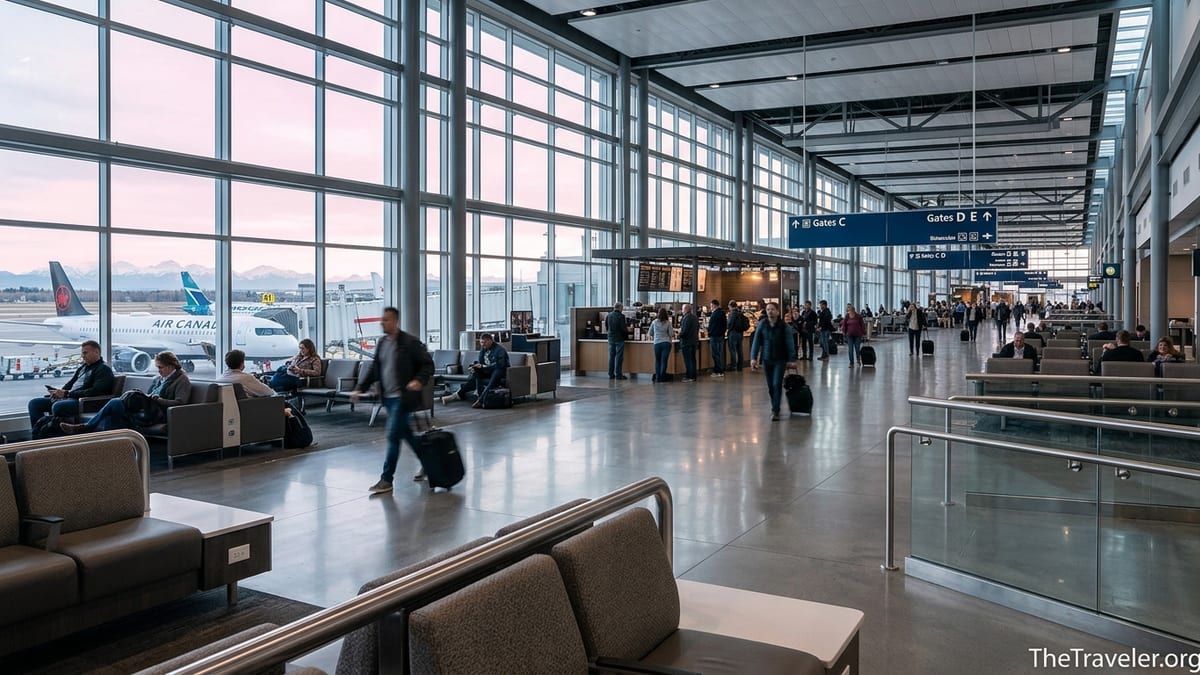
First Impressions: A Compact Hub That Feels Manageable
Calgary International Airport is big enough to be a serious North American hub but compact enough that it rarely feels overwhelming. There is effectively one main terminal divided into five concourses: A, B, and C for domestic Canada flights, and D and E for international and U.S. routes. All are under the same roof and connected airside, which is a relief if you picture yourself having to change buildings in the middle of a tight connection. Walking from one end of the domestic concourses to the far side of the international gates usually takes around 10 to 15 minutes at a normal pace, so a typical two- or three-hour layover feels comfortable rather than rushed.
YYC has quietly become one of Canada’s busiest airports, helped by WestJet’s decision to use it as a main hub and by Air Canada’s growing presence. That translates into plenty of connecting traffic but also into an airport that has been clearly designed with transfers in mind. Information screens are frequent, gate numbers are boldly displayed, and overhead signs color-code areas for domestic, international, and U.S. transborder flights. Within a few minutes of leaving my first flight, I had a clear mental map of where I needed to go.
For anyone used to sprawling hubs where you can easily walk 30 minutes in the wrong direction, Calgary’s layout comes as a surprise. There is no monorail or subway to learn. Instead, there is one continuous terminal spine, moving walkways where they are most needed, and a small electric cart service known locally as YYC LINK that shuttles passengers along the concourses. Many locals say it is actually quicker to walk, but for travelers with mobility issues or heavy bags, just knowing the carts exist reduces stress.
Connecting Flights: From Domestic to U.S. Transborder Without the Panic
My layover involved a classic stress test: arriving on a domestic flight from Vancouver into one of the C gates, then connecting to a U.S. flight out of E. In many airports, that means a confusing sequence of exits, reentries, and queues. At Calgary, the process was far more intuitive than I expected. After stepping off the plane, I simply followed the overhead signs marked with U.S. flags and “E Gates.” These led me along a short corridor toward the U.S. preclearance area, with regular confirmation that I was headed in the right direction.
Because YYC is a U.S. preclearance airport, you complete American customs and immigration in Calgary before boarding your flight. That can sound intimidating, but it is actually an advantage for connections. Once you land in the United States, you can usually walk straight to your next gate like a domestic passenger, with no additional border formalities. In my case, I cleared U.S. customs, went through security, and still reached the E-concourse gate with almost an hour to spare. Travelers on my flight who had NEXUS or Global Entry reported getting through in well under 15 minutes.
Minimum connection guidance can vary by airline and route, but for domestic-to-U.S. transfers many carriers recommend at least 90 minutes. Based on my experience, that feels sensible and not overly conservative. The walking distance from C to E for me was under 10 minutes, and directional signs were frequent enough that I never had to stop to ask for help. The most time-consuming part was security and border control, which surged for about 20 minutes and then eased again. Compared with other preclearance hubs, Calgary’s lines felt shorter and more predictable, especially outside early-morning and late-afternoon peaks.
Even travelers unfamiliar with the airport seem to find their way without too much drama. On my walk toward E, I overheard a family connecting from Halifax to Phoenix marvel at how straightforward the process was compared with their previous experience in Toronto. The key is to start walking as soon as you deplane, follow the bold U.S. signage, and have your documents ready. Once you are through preclearance, the E concourse feels like a self-contained mini-terminal, with cafes, a duty-free store, and a couple of lounges clustered near the gates.
Wayfinding, Staff, and Small Touches That Reduce Stress
One of the reasons my YYC layover went so smoothly was the airport’s approach to wayfinding. Signage is not just abundant; it is sensibly placed. When you emerge from a jet bridge into the main corridor, you immediately see overhead markers pointing toward A, B, C, D, and E. Floor-to-ceiling windows help you maintain a sense of direction, and frequent digital screens show flight numbers with gate changes clearly highlighted. It felt more like walking down a well-marked shopping street than wandering through a maze of anonymous corridors.
In several places along the concourses, there are staffed information desks rather than just touch-screen kiosks. When I paused to confirm I was still headed the right way, the agent not only reassured me but also checked the latest gate assignment for my connecting flight, which had shifted from E72 to E74. That small human interaction saved me from walking past my new gate and doubled as a quick confidence boost in an unfamiliar setting.
Another detail that stood out was how the airport uses lighting and design to gently guide passengers. Domestic concourses with shorter-haul flights feel bright and open, with lower ceilings and abundant natural light. As you move toward the international and U.S. gates, the architecture shifts to higher ceilings, broader corridors, and more seating clusters. It sounds subtle, but these environmental cues make it easier to feel that you are entering a different zone, even before you spot a sign telling you so.
YYC has also leaned into digital tools to complement physical signage. The airport’s interactive map, accessible from its main website and mobile browsers, lets you search for your gate and see nearby amenities. Before my trip, I pulled it up to estimate walking times and locate a coffee option near my departure gate. That small bit of preparation meant that, even when my inbound flight arrived 20 minutes late, I never felt rushed or disoriented.
Food, Coffee, and Quiet Corners: Better Than the Average Layover
I often judge airports by how easy it is to find a decent meal within a 10-minute walk of my gate. On that front, Calgary surprised me in the best way. Along the domestic concourses, particularly around B and C, you will find familiar Canadian and international chains, from grab-and-go sandwich counters to sit-down spots pouring Alberta craft beer. Prices are typical airport fare rather than bargain-level, but portions are generous, and staff are used to working with travelers on a clock.
Near my C-gate arrival, I passed a compact food court area that included a burger outlet, a noodle bar, and a coffee shop pulling proper espresso. Rather than sprinting straight for my connecting gate, I followed the signs toward the D and E concourses and then ducked into a cafe overlooking the apron. There I managed to eat a warm bowl of soup and a fresh pastry while watching WestJet 737s and Air Canada narrow-bodies taxi past, with the faint outline of the Rockies visible on the horizon through clean, floor-to-ceiling glass.
For longer layovers, the international terminal offers a more relaxed selection of restaurants with full menus. Sit-down venues serve everything from salads and grain bowls to Alberta beef, often paired with local beer or Canadian wines. I noticed several passengers making the most of multi-hour waits with proper meals instead of just snacks, helped by server teams that proactively ask about boarding times so they can pace courses accordingly.
If you are not hungry, there are plenty of places simply to sit. Between the concourses are clusters of soft seating, some with power outlets built into tabletops and chair arms. While YYC does not yet have the daybed-style rest zones you find at some Asian hubs, it does offer more comfortable chairs than many North American peers. I found a quiet corner between C and D where the lighting was soft, the noise level low, and the view surprisingly calming for a busy hub.
Lounges, Wi-Fi, and Other Amenities That Make Time Pass Faster
Travelers who prefer a quieter space will find a growing lounge scene at Calgary. Major Canadian carriers operate their own branded lounges in the domestic and international sections, and independent Aspire lounges serve both international and U.S. transborder passengers. A recently expanded garden-themed lounge space near the E gates, used in partnership with a major Canadian airline, offers natural light, greenery, and a more relaxed atmosphere than the main concourse seating.
Even if you are not in a lounge, connectivity at YYC is strong. The airport provides public Wi-Fi throughout the terminal, and during my visit it was consistent enough for video calls and large file downloads. In several seating zones, I noticed travelers streaming movies and working on laptops without interruption. Combined with the abundance of power outlets and USB ports, it makes Calgary a workable layover for business travelers needing to stay productive between flights.
Families are also relatively well catered for. Play areas appear at intervals along the concourses, and many restrooms include family-friendly facilities. Nursing rooms are available in both the domestic and international sections, and signage points them out clearly rather than hiding them away. On my walk between concourses, I saw multiple strollers parked outside these spaces, a good sign that they are known and used.
There is no rail service into the city yet, but if your layover extends overnight, you can take advantage of the on-site hotels attached to the terminal, which include familiar international brands connected by short indoor walks. Several travelers I spoke to about previous trips said they intentionally plan Calgary stopovers just to use the in-terminal hotels, which offer soundproof rooms, runway views, and 24-hour fitness centers, making even a long delay significantly more bearable.
When Layovers Turn Into Stopovers: A Gateway to the Rockies
YYC’s location makes it a natural jumping-off point for trips to Banff, Lake Louise, and the Canadian Rockies, and local tourism groups have started leaning into that. A new initiative encouraging travelers to turn routine layovers into one- or two-night stays speaks to how many people pass through the airport each year without seeing the city or the mountains. Even if you do not leave the terminal, the destination is never far from mind; souvenir shops are stocked with maple treats, mountain-themed gear, and clothing from Canadian outdoor brands.
On my layover, I met a couple from Germany who had deliberately booked a 20-hour connection on their way to Vancouver. They checked into an in-terminal hotel after arriving in the evening, then used the following morning to take a quick shuttle into downtown Calgary before returning for their afternoon flight. They pointed out that having an airport with clear signage, reliable ground transportation, and straightforward security on both ends made their mini-stopover feel refreshing rather than risky.
For travelers who prefer to remain airside, YYC still offers nods to the surrounding region. Large-format photography along the walls showcases the nearby national parks, and many restaurants highlight Alberta-sourced ingredients. Sitting at my cafe table near the windows, watching a late-afternoon pink glow hit the clouds over the runway, I understood why so many passengers talk about Calgary as their preferred Western Canada connection point.
The key takeaway is that this is not just a functional transit point; it is a well-organized gateway with enough character to make a few hours pass quickly. Whether you are continuing on to Toronto, San Francisco, London, or a smaller prairie city, the time you spend at YYC can feel like a calm pause rather than a stressful scramble.
The Takeaway
Going into my trip, I expected my layover at Calgary International Airport to be a test of patience and planning. Instead, it proved how much difference smart terminal design and attentive staff can make. Clear wayfinding, connected concourses, and efficient U.S. preclearance turned what could have been a chaotic dash into a predictable, almost relaxed connection. Even a late inbound flight did not derail my schedule, thanks to manageable walking distances and a security process that moved faster than I am used to at many larger hubs.
Just as importantly, YYC offers enough amenities to make those spare minutes feel like a bonus rather than dead time. Whether you use them to find a quiet corner, enjoy a proper meal, visit a lounge, or simply watch aircraft movements against a Rocky Mountain backdrop, the experience is more polished than its workhorse reputation might suggest. For anyone planning a trip through Western Canada, it is worth knowing that a layover in Calgary can be not only survivable but genuinely pleasant.
FAQ
Q1. Is a 90-minute layover enough to connect at Calgary International Airport?
In many cases, 90 minutes is enough for domestic-to-domestic or domestic-to-U.S. connections, provided your inbound flight is on time and you walk directly to your next checkpoint. For international arrivals connecting onward, two hours or more is generally more comfortable.
Q2. How long does it take to walk between concourses at YYC?
Most passengers can walk from one end of the main concourses to the other in about 10 to 15 minutes at a normal pace. Moving walkways help in the longer stretches, and an electric cart service is available for those who need assistance.
Q3. Do I have to go through security again during a layover in Calgary?
If you are connecting from a domestic flight to another domestic flight and remain airside, you usually do not need to go through security again. However, if you are connecting to or from U.S. or other international flights, you may need to clear security and border control in the appropriate area.
Q4. How does U.S. preclearance work at YYC?
For flights to the United States, you clear U.S. customs and immigration in Calgary before boarding. You follow the signs to the E concourse, pass through security and the U.S. border checkpoint, then board your flight. When you land in the United States, you typically arrive as a domestic passenger.
Q5. Are there good food options during a layover at Calgary airport?
Yes. YYC offers a mix of grab-and-go outlets, cafes, and sit-down restaurants in both the domestic and international sections. You can find full meals, lighter snacks, and coffee within a short walk of most gates.
Q6. Does Calgary International Airport have lounges I can use during a layover?
YYC has several airline-operated lounges and independent Aspire lounges in both international and U.S. transborder areas. Access depends on your ticket class, frequent flyer status, or whether you purchase entry directly, where available.
Q7. Is Wi-Fi reliable at YYC for working during a layover?
The airport provides complimentary Wi-Fi throughout the terminals. Speeds are generally sufficient for email, browsing, and video calls, making YYC a workable place to catch up on tasks between flights.
Q8. What happens if my inbound flight is delayed and my connection is tight?
If you are on a through-ticket with the same airline or alliance, ground staff will usually help you rebook if you miss your connection. If the delay is moderate, staff at information desks and gates can advise on the fastest route to your next departure.
Q9. Can I leave the airport during a long layover in Calgary?
Yes, if your immigration status, visa requirements, and timing allow it. With a layover of six hours or more, some travelers choose to check into an in-terminal hotel or take ground transport into the city for a brief visit before returning to clear security again.
Q10. Is Calgary airport suitable for travelers with mobility challenges?
YYC provides elevators, ramps, accessible restrooms, and wheelchair or electric cart assistance between key points in the terminal. It is advisable to request special assistance through your airline in advance so support is ready when you arrive.