


Planning a Great Smoky Mountains escape often comes down to one big decision: do you base yourself in low-key Cosby or lively Gatlinburg? Both sit on the Tennessee side of America’s most visited national park, both give you quick access to world-class trails and scenery, yet the experiences could not feel more different. Understanding those differences is the key to planning a trip that actually matches how you like to travel, not how a brochure tells you that you should.
Get the latest updates straight to your inbox!
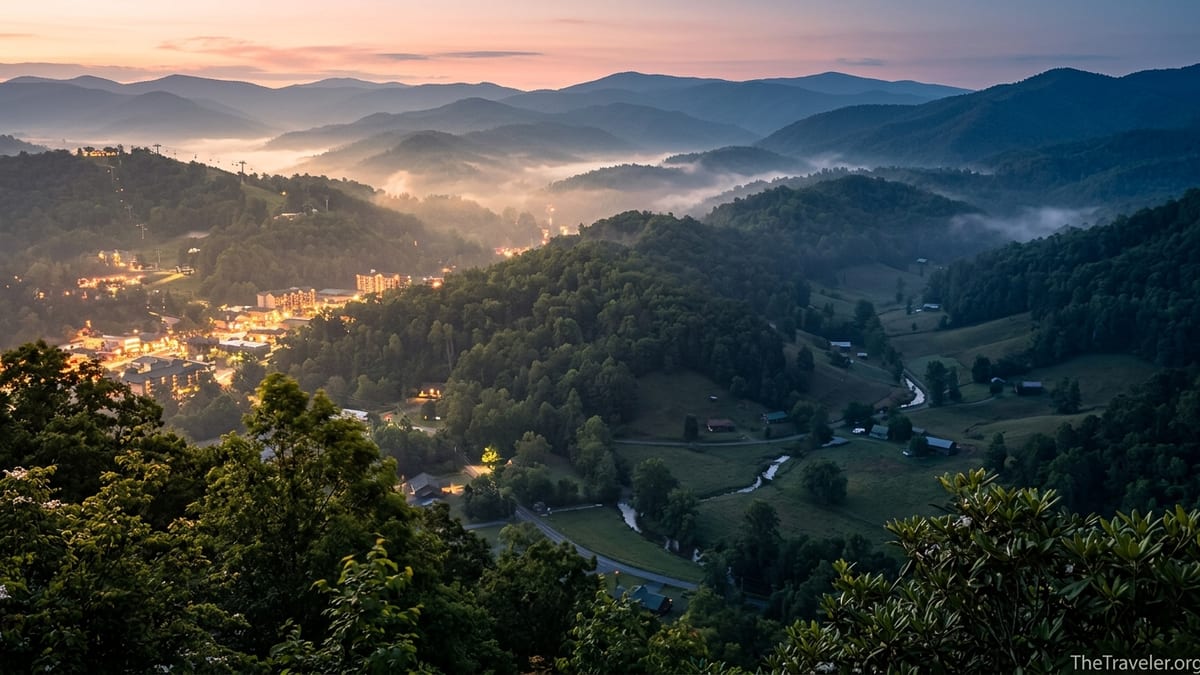
Cosby and Gatlinburg at a Glance
Gatlinburg is the classic Smokies gateway: a compact mountain town pressed up against the park boundary, filled with neon signs, pancake houses, distilleries, attractions like Anakeesta and Gatlinburg SkyPark, and sidewalks packed from spring break through fall foliage. It is the easiest base if you want to mix park time with mini golf, moonshine tastings, and late-night ice cream, but it also comes with traffic, noise, and higher prices for almost everything from lodging to parking.
Cosby, about 20 miles east of Gatlinburg along Route 321, feels like a different world. The valley is rural and wooded, with family-run motels, small cabins, RV parks, and the Cosby Campground tucked into the national park under tall hardwoods. Instead of arcades and glass-blowing shops, you get quiet porches, creek sounds at night, and dark skies full of stars. Services are limited to a handful of convenience stores, gas, and a few low-key eateries in Cosby and nearby Newport.
From a practical standpoint, both are legitimate gateways to the Great Smoky Mountains National Park. Gatlinburg backs directly onto the park’s busiest entrance and the Newfound Gap Road, while Cosby sits just a few miles from a lesser-used park entrance and trailheads that connect to the Appalachian Trail ridge. The question is less about access and more about which overall vibe you want when you come “home” after a day on the trail.
Think of it this way: if your perfect evening involves strolling a lively strip with a drink in hand and choosing between a dozen restaurants, Gatlinburg is the natural fit. If it looks more like grilling at your campsite while kids catch fireflies along a creek, Cosby will feel instantly right.
Access to Trails and Nature: Who Wins for Hikers?
For pure hiking access with fewer crowds, Cosby quietly punches above its weight. The Cosby Campground and picnic area sit inside the national park at roughly 2,400 feet elevation, shaded by mature forest. Trailheads like Low Gap, Snake Den Ridge, and Gabes Mountain start almost from the campground loops, so you can walk from your tent or cabin doorstep straight into the woods without ever touching the main park arteries.
From Cosby, strong hikers can climb via Low Gap to the Appalachian Trail in a few miles, then continue to peaks such as Mount Cammerer, which offers one of the best fire tower views in the Smokies. Gabes Mountain Trail leads to Hen Wallow Falls, a classic moderate waterfall hike that often sees far fewer people than popular falls near Gatlinburg. This side of the park attracts serious hikers, birders, and campers looking for quieter backcountry loops rather than drive-up overlooks.
Gatlinburg, on the other hand, is unmatched if you want quick access to a wide variety of headline sights with short drives. From town you can be at the Sugarlands Visitor Center in minutes, then heading up Newfound Gap Road to major trailheads for Alum Cave, Chimney Tops area trails, and the turnoff to Clingmans Dome. The paved Gatlinburg Trail starts near the edge of town and follows the river into the park, making it one of the few dog- and bike-friendly paths in the Smokies.
The trade-off is congestion. On a sunny October Saturday, the drive from Gatlinburg to the Alum Cave trailhead can involve slow traffic, overflowing parking lots, and a race for a legal space. By contrast, trailhead parking around Cosby is more likely to be available, especially on weekdays or shoulder seasons. If your priority is big-name hikes and iconic viewpoints, Gatlinburg gives you more options. If you value last-minute, low-stress trail access, Cosby often feels more forgiving.
Atmosphere and Pace: Quiet Retreat vs Mountain Carnival
Cosby’s rhythm is slow and largely dictated by the natural environment. Mornings start with mist hanging in the valley and the smell of wood smoke from campfires, not the rumble of tour buses. Even in summer, evenings tend to be calm, with people sitting on cabin decks, chatting around RV picnic tables, or listening to creek water at the Cosby Campground. Quiet hours inside the park campground are enforced, and there is little through-traffic, so nights are notably dark and hushed.
Staying at a place like Hidden Stills RV Campground or one of Cosby’s small cabin clusters, you may find that your “nightlife” consists of star-gazing, board games, and maybe a drive to Newport for groceries or a simple diner dinner. For many visitors, especially families with young kids, writers, or anyone needing a reset, that slow pace is exactly the reason to pick Cosby as a base.
Gatlinburg’s energy is the opposite. The main Parkway is lined with attractions that stay open into the evening: Ripley’s museums, escape rooms, themed mini golf, candy shops, and tasting rooms from Tennessee distilleries. A walk down the strip in July or during winter lights feels like a mountain carnival, with music from restaurants blending into the whir of chairlifts heading up to Anakeesta or Gatlinburg SkyPark.
This buzz can be thrilling or exhausting depending on your mood and tolerance for crowds. If you choose a hotel or condo one or two blocks off the main strip, you can often sleep quietly while still being able to walk into the action. But there is almost always ambient noise, headlights, and the sense that something is going on around the clock. Travelers who recharge in silence may find that a few days of Gatlinburg feels like enough.
Lodging, Camping, and Budget Realities
Cosby generally wins on space and price, especially if you are camping or renting a standalone cabin. The national park’s Cosby Campground offers more than 150 sites for tents and RVs without hookups, with flush toilets and potable water but no showers. Because it is away from the Gatlinburg–Pigeon Forge cluster, it often has availability when other front-country campgrounds are booked up, particularly outside peak fall weekends. Nightly fees are typically modest compared with private RV resorts, which makes it attractive for longer stays.
Around the valley, you will also find small RV parks and camp-and-glamp properties with amenities like full hookups, showers, and sometimes extras such as small camp stores or fire pits by the creek. Nightly cabin rental prices in Cosby and the nearby foothills are often lower than similar-size properties closer to Gatlinburg, especially for basic two-bedroom cabins or older properties without game rooms and theater spaces. For a family looking to spend a week hiking and relaxing, Cosby can keep accommodation costs from consuming the entire budget.
Gatlinburg offers by far the widest range of lodging styles, from national-brand hotels and high-rise condos to luxury cabins perched on ridges above town. You can book a basic motel room walking distance to the Parkway for a moderate nightly rate in shoulder season, or spend substantially more on a multi-bedroom cabin with hot tub, movie theater, and mountain views. During peak times such as Christmas lights, spring break, or October foliage, nightly rates climb quickly and minimum stays become common.
Food and daily costs also tend to be higher in Gatlinburg simply because there are more temptations. A family might grab breakfast at a pancake house, lunch at an attraction cafe, and dinner at a steakhouse, easily spending far more per day than a Cosby-based trip where most meals are cooked at a cabin or campsite. On the flip side, if you dislike cooking on vacation, Gatlinburg’s restaurant density may be worth the premium.
Food, Drink, and Things to Do Off the Trail
If you measure a destination by its restaurant count, Gatlinburg is the clear winner. Within a short walk or drive of most hotels, you can choose from pancake restaurants, barbecue joints, pizza places, breweries, and dessert-focused cafes. Popular distilleries and tasting rooms pour flavored moonshine and whiskey flights, often with live music. Attractions like Anakeesta combine mountaintop gardens, zip lines, and dining decks with Smokies views, while Gatlinburg SkyPark pairs its chairlift and record-setting pedestrian bridge with a mountaintop bar and photo spots.
Families often craft entire days that barely touch the national park. A common itinerary is a morning at an aerial adventure park or mountain coaster in Gatlinburg, lunch at a casual spot on the Parkway, then an afternoon at Ripley’s Aquarium or a themed mini golf course, finishing the day with candy-shop browsing and a ride up a chairlift to watch the sunset.
Cosby’s appeal is quieter and more dispersed. You will not find aquariums or big-brand attractions in the valley, but you will find simple country restaurants, small cafes, and food trucks that cater to hikers and campers. Newport, about a 15-minute drive, has chain supermarkets, fast-food outlets, and several sit-down restaurants if you want a change from camp cooking. Many Cosby visitors plan most of their off-trail time around creeks, campfires, and perhaps a drive to neighboring areas such as Greenbrier, which has picnic spots and riverside wading near the park boundary.
If you want the option of a “day off” from hiking that still feels fun, Gatlinburg makes it easy. If your idea of a great day off is reading in a hammock by the creek while kids explore the campground, Cosby is a better match.
Driving, Crowds, and Convenience
One of the main arguments in favor of Gatlinburg is simple convenience. From many hotels on the Parkway, you can walk to restaurants, attractions, and trolley stops, leaving your car in the garage for the evening. You are minutes from the Sugarlands Visitor Center, where rangers offer maps, programs, and current trail conditions. For visitors who are unfamiliar with mountain driving or who prefer to minimize time behind the wheel, being based in Gatlinburg simplifies logistics.
The drawback is that every peak season brings traffic. On busy weekends and holidays, the stretch of road between Pigeon Forge and downtown Gatlinburg can back up for long stretches, and parking garages in town fill early. Inside the park, Newfound Gap Road feels more like a scenic commuter route on certain days, with slow-moving lines of vehicles between overlooks.
Cosby trades walking convenience for calmer roads. You will drive to almost everything: the Cosby Campground and picnic area, Newport for groceries, and any attractions in Gatlinburg or Pigeon Forge if you choose to visit them. The upside is that local traffic within Cosby itself is light, and the park entrance here sees far fewer vehicles than the main Gatlinburg entrance. Many travelers staying a week in Cosby plan one or two “Gatlinburg days,” accepting a longer drive and heavier traffic in exchange for returning each night to a quieter base.
If you easily get stressed by crowds, waiting in restaurant lines, or searching for parking, Cosby’s slower pace is likely to feel more manageable. If you prefer to park once and walk everywhere in the evening, Gatlinburg fits that style better.
Which Base Fits Different Types of Travelers?
For families with young children, both bases can work, but in different ways. Gatlinburg offers instant entertainment: chairlifts, interactive museums, fudge shops, and light displays keep kids engaged even when hikes need to be short. You can pair a simple waterfall walk in the morning with an afternoon at a mountaintop playground or aquarium without driving far. Cosby demands a bit more planning but rewards you with open spaces for kids to ride bikes around camp loops, splash in creeks beside campsites, and experience the national park in a more low-key, nature-focused way.
Couples on a romantic or anniversary trip may lean toward Gatlinburg if they enjoy dining out, tasting rooms, and evening strolls with city lights below. A higher-end cabin above town with a private hot tub and a view of the park can feel indulgent while still allowing daytime hikes. On the other hand, couples who equate romance with solitude, fireplaces, and starry nights might find a secluded cabin or glamping tent in Cosby much closer to their ideal.
For dedicated hikers and nature photographers, Cosby’s direct access to quieter trail networks and its position away from the busiest roads is a strong advantage. You can be on the trail at dawn with little competition for parking and be back at your site to rest by midday before heading out for sunset shots in the valley. Gatlinburg suits hikers who want to combine serious days on iconic routes like Alum Cave or the Boulevard to Mount Le Conte with creature comforts like post-hike pizza and cold beer on tap.
Budget-conscious travelers, especially those staying a week or more, often find Cosby more affordable overall. Camping or renting a modest cabin, cooking most meals, and focusing on free park activities keeps daily costs predictable. Gatlinburg can certainly be done on a budget, but the dense concentration of ticketed attractions and dining options makes impulse spending more likely. Choosing a hotel with included breakfast and setting a daily food and activities budget can help keep a Gatlinburg-based trip under control.
The Takeaway
Choosing between Cosby and Gatlinburg is less about right and wrong and more about aligning your base with your travel personality. Gatlinburg is the obvious choice if you want vivid, nonstop energy at your doorstep, easy access to headliner attractions, and the ability to dip in and out of the national park between meals, shows, and shopping. It excels for first-time visitors who want a “do it all” introduction to the Smokies with minimal planning.
Cosby, by contrast, is for travelers who see the national park itself as the attraction. Its quieter roads, underused campground, and trailheads leading to waterfalls, towers, and Appalachian Trail ridges create a retreat-like setting. Even if you drive into Gatlinburg once or twice, you return each evening to the sound of creeks instead of crowds.
If you are still undecided, consider splitting your time. Spend a couple of nights in Gatlinburg to experience the lights, lifts, and attractions, then move to Cosby for three or four nights of deeper immersion in the park’s quieter corners. Experiencing both bases on the same trip will not only show you two very different faces of the Smokies, it will help you decide which one truly matches your style for your next visit.
FAQ
Q1. Is Cosby or Gatlinburg better for first-time visitors to the Smokies?
Gatlinburg usually works better for first-timers because it offers easy access to visitor centers, major viewpoints, and a wide range of restaurants and attractions, all packed into a small, walkable area.
Q2. Which base is quieter at night, Cosby or Gatlinburg?
Cosby is generally much quieter. The valley has limited traffic and nightlife, and the Cosby Campground enforces quiet hours, so evenings tend to be peaceful and dark compared with Gatlinburg’s busy strip.
Q3. Can I stay in Cosby and still visit Gatlinburg attractions?
Yes. It is roughly a 30 to 40 minute drive along Route 321 between Cosby and Gatlinburg, so many travelers base in Cosby for the tranquility and plan one or two day or evening trips into Gatlinburg for attractions and dining.
Q4. Which location is better for serious hiking?
Both are strong, but Cosby offers quicker access to quieter trailheads like Low Gap, Snake Den Ridge, and Gabes Mountain, while Gatlinburg is closer to marquee hikes along Newfound Gap Road and the Clingmans Dome area.
Q5. Is Gatlinburg much more expensive than Cosby?
On average, lodging and daily spending tend to be higher in Gatlinburg, especially during peak seasons, because of higher hotel and cabin rates and the many ticketed attractions and dining options that encourage extra spending.
Q6. Do I need a car if I stay in Gatlinburg?
To explore the national park properly, a car is very useful, but if you choose a hotel in central Gatlinburg you can walk to many restaurants and attractions and rely on short drives or tours for some park visits.
Q7. Are there full-service grocery stores near Cosby?
The immediate Cosby area has small markets and convenience stores, while larger supermarkets and more shopping options are found in nearby Newport, which is about a 15-minute drive from many Cosby lodgings.
Q8. Which base is better for families with young kids?
Gatlinburg offers more kid-focused attractions like aquariums, chairlifts, and mini golf, but Cosby can be ideal for families who prefer camping, creeks, and simpler outdoor time without as many distractions.
Q9. Is it hard to find camping space at Cosby Campground?
Cosby Campground can fill on peak weekends and during fall color, but it is often less crowded than the most famous campgrounds closer to Gatlinburg, making it a good option if other areas are fully booked.
Q10. If I only have a long weekend, should I pick Cosby or Gatlinburg?
With a short trip, choose Gatlinburg if you want convenience and a lot of activity in a compact area, or Cosby if your priority is quieter trails, camping, and a slower pace with fewer crowds.