


More news on this day
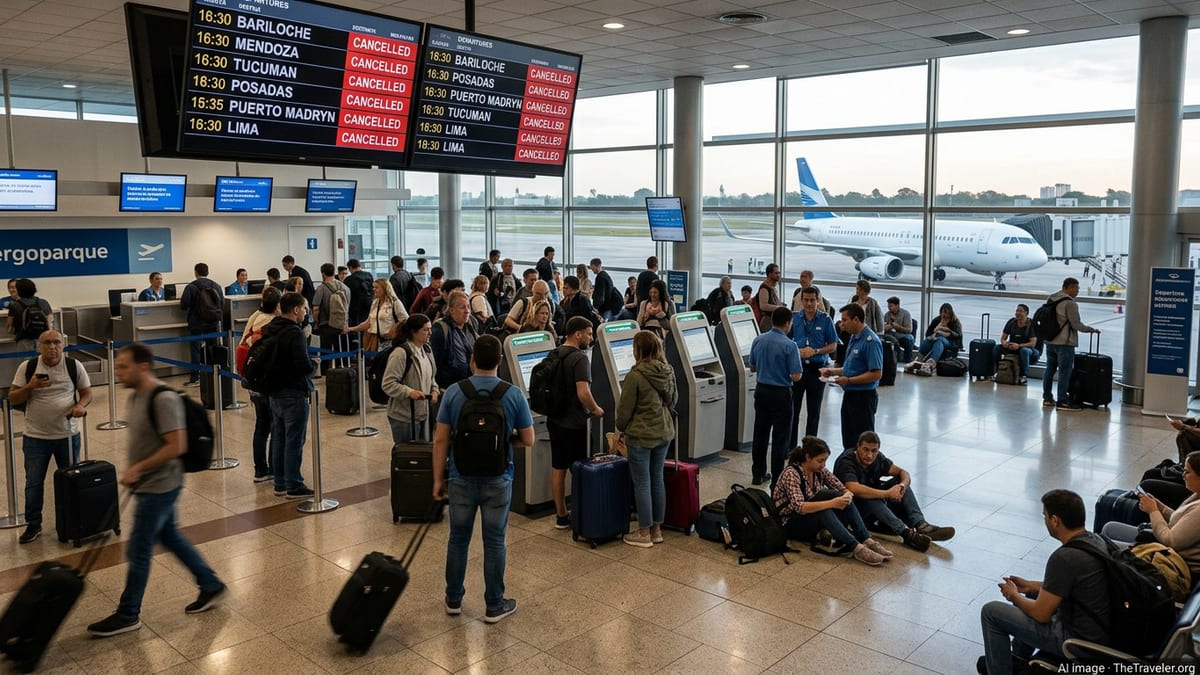
Passengers at Buenos Aires’ Jorge Newbery Airport faced a difficult travel day as seven flights operated by Flybondi and Aerolíneas Argentinas were suspended and several others delayed, disrupting key domestic routes including services to San Juan, Puerto Iguazú, Mendoza, Bahía Blanca and Tucumán.
Get the latest news straight to your inbox!
Chain Disruptions Hit a Busy Domestic Hub
According to local media coverage and airport tracking platforms, a combination of operational and scheduling problems led to the suspension of seven flights linked to Jorge Newbery Airport, one of Argentina’s main domestic gateways. The affected services covered a range of popular leisure and business destinations, amplifying the impact across much of the country’s air network.
Publicly available timetables for Flybondi and Aerolíneas Argentinas show a dense pattern of departures from Jorge Newbery to cities such as San Juan, Mendoza, Bahía Blanca, Puerto Iguazú and Tucumán, many of which operate several times per week or daily during peak periods. When multiple flights are withdrawn from this schedule on the same day, even temporarily, knock-on effects can spread quickly through subsequent rotations and onward connections.
Reports indicate that passengers first became aware of the disruption when departure boards at Jorge Newbery began to show repeated status changes, with flights shifting from delayed to cancelled over the course of the day. As services were removed from the schedule, travelers on later flights to the same destinations also experienced delays, as aircraft and crews were reassigned or held on the ground.
By early evening, the operational picture at the airport reflected a patchwork of on-time departures, rolling delays and outright cancellations, complicating travel plans both for domestic tourists heading into the first weeks of the southern winter and for residents returning home after work trips or family visits.
Key Routes Affected: San Juan, Puerto Iguazú, Mendoza and Bahía Blanca
The suspension and delay pattern concentrated on some of the country’s most heavily used domestic routes from the Buenos Aires region. Flight data and recent schedules show that services linking Jorge Newbery with San Juan, Mendoza and Bahía Blanca are core trunk routes, serving regional capitals and important economic hubs that depend on frequent air links with the national capital.
Puerto Iguazú, gateway to the Iguazú Falls, has also been directly affected. The route between Jorge Newbery and Puerto Iguazú is one of Argentina’s flagship tourism corridors, usually operated by both Aerolíneas Argentinas and Flybondi, along with other carriers on select days. Even a small number of suspensions on this axis can quickly complicate hotel check-ins, tour departures and cross-border connections for visitors who often plan tightly scheduled itineraries.
Passengers reported itinerary changes and last-minute rebookings on routes to and from Mendoza, another key tourism and wine region. Disruptions on this corridor are particularly challenging because travelers often combine domestic flights with fixed-date activities such as vineyard tours or regional events. When flights are pulled from the schedule or suffer extended delays, the scope for same-day alternatives within Argentina’s domestic network can be limited, especially in peak periods.
In Bahía Blanca and San Juan, the impact was felt more on essential connectivity than on tourism. These cities rely on regular air services for business travel, medical transfers and links with national institutions in Buenos Aires. Suspensions on a single day may not permanently alter connectivity, but they create uncertainty for residents and companies that depend on predictable schedules.
Flybondi and Aerolíneas Argentinas Under Scrutiny
Flybondi and Aerolíneas Argentinas have both faced heightened public scrutiny over schedule reliability in recent months, with Flybondi in particular attracting attention for a series of large-scale cancellations and delays across its domestic network. Recent press coverage and user experiences posted on travel forums and social networks describe repeated last-minute changes, partial route withdrawals and route terminations, especially on services linking smaller cities to major hubs.
Flybondi’s role as a low-cost operator has helped open access to budget travel across Argentina, but its operational resilience has been questioned when the system comes under stress. Passengers affected by the latest disruptions at Jorge Newbery encountered familiar patterns reported in earlier incidents, including late notification of cancellations and limited same-day rebooking options. This can be especially problematic on routes to destinations such as Puerto Iguazú or Patagonia, where alternative carriers may have few remaining seats at short notice.
Aerolíneas Argentinas, the national flag carrier, has also repositioned parts of its domestic network in response to shifting demand and financial constraints. Prior adjustments to frequencies and temporary suspensions of some regional routes mean that individual cancellations or delays on busy days can have a more visible impact, particularly when there are fewer backup flights available on the same route.
Publicly available company statements in recent months have emphasized efforts by both airlines to improve punctuality and capacity, yet the latest disruptions at Jorge Newbery provide a reminder of how vulnerable domestic air travel in Argentina can be to concentrated operational challenges at a single major airport.
Passenger Experience: Rebookings, Airport Waits and Rising Costs
Travelers caught up in the suspensions and delays reported a mix of outcomes, ranging from relatively swift rebookings to long overnight waits in terminals. Many passengers attempting to switch to other carriers found that last-minute fares on competing airlines were significantly higher than their original tickets, especially on routes such as Buenos Aires to Puerto Iguazú or Mendoza that attract strong tourism demand.
Publicly shared experiences from previous disruption events in Argentina show that some passengers opt to shift to long-distance buses when flight cancellations become extensive, particularly on routes where road links are well developed. This option can limit immediate costs but requires travelers to accept travel times that are significantly longer than by air, often converting what would have been a two-hour flight into a journey of twelve hours or more.
At the same time, disruption at a key hub like Jorge Newbery reverberates through hotel bookings, car rentals and guided tours at destination cities. Tour operators in Iguazú, Mendoza and other affected regions often have limited flexibility to adjust start times when groups arrive late, which can lead to shortened excursions or missed activities for travelers whose inbound flights are delayed.
For business travelers, the primary cost of disruption is frequently measured in missed meetings, rescheduled presentations and additional nights of accommodation. On thinly served routes where only one or two flights operate each day, the loss of a single service can force a complete reconfiguration of work plans, particularly for those commuting between regional centers and Buenos Aires.
What Travelers Should Watch in the Coming Days
With Jorge Newbery continuing to serve as the country’s busiest domestic airport, observers expect further scrutiny of how airlines manage schedules and communicate changes to passengers. Travel industry reports and public commentary suggest that periods of high demand, including school holidays and long weekends, remain especially vulnerable to cascading disruptions when carriers have little spare capacity.
Travel advisers commonly recommend that passengers flying on routes such as Buenos Aires to Puerto Iguazú, Mendoza, Bahía Blanca, Tucumán and San Juan build extra time into their itineraries, particularly when same-day connections or time-sensitive events are involved. Booking earlier departures, allowing generous connection windows and securing flexible hotel or tour arrangements can help mitigate the impact of unexpected schedule changes.
Passengers are also encouraged to monitor flight status closely on the day of travel through airline channels and independent tracking services. While such tools cannot prevent cancellations, they can provide early warning of emerging delays, giving travelers more time to adjust ground transportation, accommodation check-in times or connecting flights.
For now, the disruptions at Jorge Newbery underscore the importance of resilience within Argentina’s domestic air network. As Flybondi and Aerolíneas Argentinas adjust their operations in response to demand, financial pressures and regulatory requirements, the reliability of key routes linking the capital with major regional cities will remain a focal point for travelers and the wider tourism industry.