


The TD Aeroplan Visa Infinite is one of Canada’s most popular travel credit cards, thanks to its mix of Aeroplan points, Air Canada perks, and strong travel insurance. Used strategically, it can reduce the real cost of flights, checked bags, and even airport security lines for frequent travelers. Used casually, it still helps turn everyday spending into meaningful Aeroplan rewards. This guide walks through how the card works in practice, with concrete examples of what you can actually do with the points and benefits in 2026.
Get the latest updates straight to your inbox!
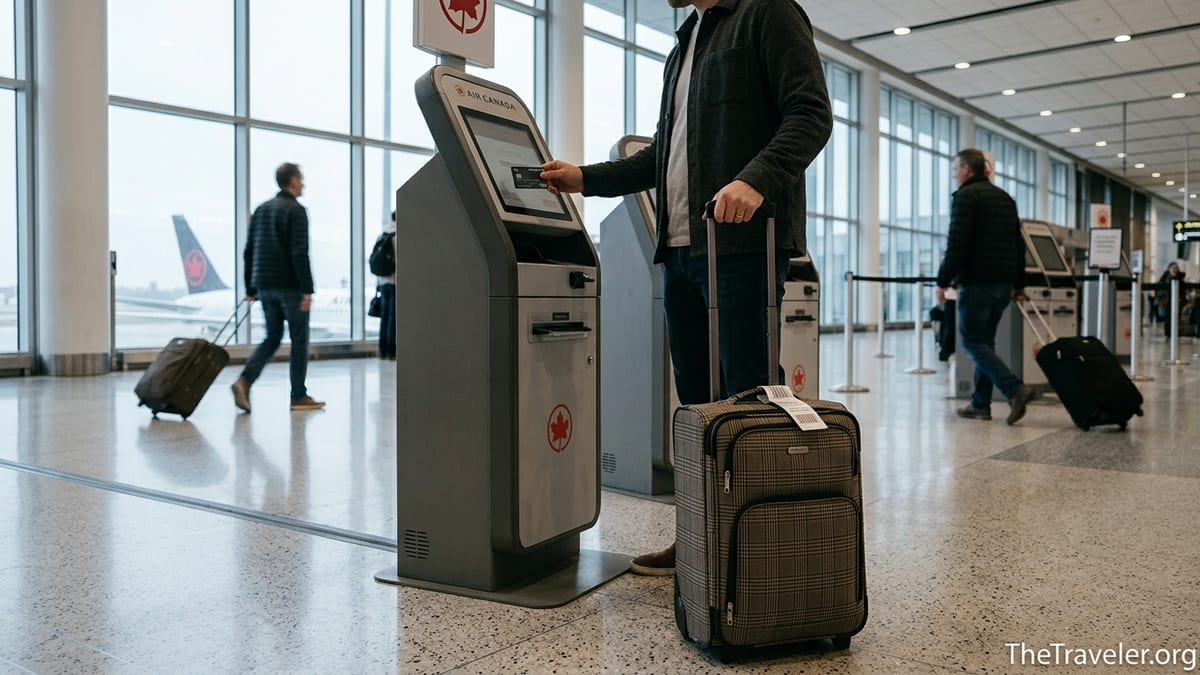
Key Features of the TD Aeroplan Visa Infinite in 2026
The TD Aeroplan Visa Infinite is a mid-tier travel rewards card aimed at Canadians who fly Air Canada at least a couple of times per year. As of mid-2026, the annual fee is typically around the mid-100 dollar range for the primary card, with an additional fee for authorized users. Many public offers include a first-year annual fee rebate for new cardholders, which significantly lowers the cost of trying the card for a year.
The card’s core value comes from Aeroplan points. Typical earn rates advertised in 2026 include a higher return on Air Canada purchases, groceries, and gas, and a base rate on everything else. For example, you may see accelerated earning on Air Canada directly and on common categories like supermarkets and fuel, along with 1 point per dollar on other everyday spending. This mix makes it realistic for a household that puts most bills and grocery runs on the card to collect tens of thousands of points in a year.
New cardholders often see a welcome offer in the range of up to 45,000 Aeroplan points when certain spending conditions are met within the first year. While the exact structure changes over time, a typical 2026 offer involves an initial chunk of points after first purchase, a second chunk after a few thousand dollars of spending within 90 days, and a final bonus after a larger annual spend. For a family planning one big trip in the next 12 months, this kind of sign-up structure aligns naturally with booking flights, hotels, and everyday expenses.
On top of points, the TD Aeroplan Visa Infinite adds airline benefits that apply when you fly Air Canada, including a free first checked bag for the primary cardholder and eligible companions on the same reservation, and a rebate on a NEXUS application fee every 48 months. For travelers who pay out of pocket for checked bags or regularly queue at busy security lines, these are real cash and time savings, not just nice-to-have perks.
How Earning Aeroplan Points Works Day to Day
Most Aeroplan collectors do not earn their balance solely from flying. The TD Aeroplan Visa Infinite is designed so that your weekly spending quietly builds a pool of points you can later redeem for flights. Imagine a couple in Toronto who put their groceries, gas, streaming subscriptions, and restaurant bills on the card. If they spend about 2,000 dollars a month, with roughly half of that in elevated categories like groceries and gas and half in other purchases, they might easily earn well over 20,000 Aeroplan points in a year from spending alone, before any welcome bonus.
Consider a more concrete scenario. A family in Vancouver has the TD Aeroplan Visa Infinite and spends 800 dollars per month on groceries, 300 on gas, and 900 on other expenses, all on the card. The elevated categories earn points at a higher rate, so groceries and gas together might generate close to twice the points of their miscellaneous spending. Over 12 months, this pattern can translate into enough points for at least one short-haul economy round-trip in North America, especially if they stack those points with a welcome offer earned in the first year.
Where the card really accelerates earnings is on Air Canada purchases. When the same family books four economy tickets from Vancouver to Toronto on Air Canada, paying 1,600 dollars before taxes and fees, that airfare charged to the TD Aeroplan Visa Infinite can earn an enhanced rate of points. Combined with points earned from the base Aeroplan flight credit itself, one family trip can add several thousand points to their balance in a single transaction.
Many cardholders also link their TD Aeroplan Visa Infinite with bonus partners and targeted promotions through Aeroplan. For example, booking a hotel through an Aeroplan partner portal or using the card in limited-time Aeroplan shopping offers can generate extra points on top of the card’s base earn rate. In practice, that might mean turning a 300 dollar weekend hotel stay in Montreal into several hundred extra points, which contributes directly toward the next flight redemption.
What Aeroplan Points Are Really Worth in 2026
Understanding the value of Aeroplan points is crucial to getting the most from the TD Aeroplan Visa Infinite. Analysts who track Canadian loyalty programs generally place Aeroplan’s average value around 1.4 to 2 cents per point on typical economy flight redemptions, with higher values possible on long-haul business class flights. In practical terms, 20,000 points often translates into roughly 280 to 400 dollars of flight value, depending on the route, date, and how far in advance you book.
Take a popular leisure route such as Toronto to Cancun. In 2026, off-peak economy tickets on Air Canada or partner airlines sometimes price out around 12,500 Aeroplan points one way, plus taxes and fees. Cash fares on the same route might range from about 350 to 550 dollars round-trip in economy. When you compare what you would pay in cash to what you pay in points plus taxes, you can often achieve close to 3 cents per point. For a couple holding 45,000 points from a welcome offer, that could cover two round-trip economy tickets to Mexico if they book at favorable dates.
On domestic travel, consider Vancouver to Toronto in economy. Aeroplan’s dynamic pricing means ticket costs can vary widely, but many travelers still see one-way pricing in the ballpark of 12,000 to 20,000 points in lower-demand periods. If a cash fare is 350 dollars one way and you redeem 15,000 points plus taxes, you are getting roughly 2.3 cents of value per point. A single 45,000-point balance from the TD Aeroplan Visa Infinite welcome offer could cover one round-trip for two people on that route if you choose off-peak dates and accept some flexibility.
The highest values generally come from long-haul premium cabin bookings, such as business class flights to Europe or Asia on Air Canada or Star Alliance partners. For example, a one-way business class seat from Montreal to Zurich might price at 70,000 to 90,000 points plus taxes and fees, while cash fares can approach 3,000 dollars or more. If you redeem 80,000 points for a seat that would have cost 3,000 dollars, your effective value exceeds 3.5 cents per point. While this kind of redemption requires more points than the TD Aeroplan Visa Infinite alone will generate quickly, a couple who uses the card actively, adds a spouse as an authorized user, and collects the welcome bonus can realistically accumulate 100,000 or more points over a couple of years.
Air Canada Travel Perks: Free Bags, NEXUS, and Airport Comfort
The TD Aeroplan Visa Infinite is strongest for those who actually fly Air Canada. One of the most tangible benefits in 2026 is the free first checked bag for the primary cardholder and up to eight other travelers on the same reservation, for itineraries operated by Air Canada. A single checked bag on many North American routes can cost around 30 to 35 dollars each way. For a family of four flying round-trip from Calgary to Orlando on economy fares that do not otherwise include checked luggage, this perk alone can save roughly 240 to 280 dollars on one vacation.
To benefit, cardholders must ensure their Aeroplan number, which is linked to the TD Aeroplan Visa Infinite, is correctly attached to the Air Canada booking. In practice, that might mean logging in with your Aeroplan profile when you book on Air Canada, or adding your Aeroplan number to a third-party booking after purchase. At online check-in, the system sometimes does not show the discount clearly, so travelers often confirm the free bag benefit at the airport check-in counter, where agents can see the card-linked perk and adjust the baggage charge to zero.
The NEXUS fee rebate is another quietly powerful perk. A NEXUS membership, which expedites border and security processing between Canada and the United States, costs approximately 50 US dollars per person for a five-year membership. The TD Aeroplan Visa Infinite will reimburse the equivalent of up to 100 Canadian dollars for a qualifying NEXUS application fee once every 48 months. For a frequent business traveler flying from Vancouver to San Francisco several times a year, a NEXUS membership can easily shave 20 to 30 minutes off typical airport waits, turning the rebate into a very practical time-saving benefit.
Unlike premium versions of Aeroplan credit cards, the standard TD Aeroplan Visa Infinite does not generally provide Maple Leaf Lounge access. For lounge entry, travelers either need Air Canada Elite Status, a paid lounge membership, or a higher-tier card such as a Visa Infinite Privilege. This distinction matters for travelers evaluating whether to upgrade: if your main pain point is checked bag fees and occasional delays, the Visa Infinite tier is often sufficient. If you prioritize lounge access and priority services, you may find better value stepping up to a more premium card that includes those privileges alongside similar Aeroplan earning.
Travel Insurance: When the Card Protects Your Trip
One of the most underappreciated aspects of the TD Aeroplan Visa Infinite is its built-in travel insurance suite. As of 2026, the card typically offers emergency medical insurance when you travel outside your home province, with coverage amounts in the low millions of dollars range and coverage periods of up to about 21 days for travelers under 65. That means a week-long family vacation in Hawaii or a 10-day road trip through Europe can be covered automatically as long as you meet age and residency requirements and are not traveling against medical advice.
For trip cancellation and interruption, the card’s policy usually requires that you pay at least 75 percent of the trip cost with your TD Aeroplan Visa Infinite or Aeroplan points from the same account. Suppose you book a 3,000 dollar family trip to Paris, including flights and a prepaid hotel, and charge 2,500 dollars of it to the card. If an insured risk such as serious illness forces you to cancel just before departure, the insurance may reimburse you up to specified limits per person, which are commonly in the low thousands of dollars range, for nonrefundable costs. The same applies if you must cut your trip short and book last-minute flights home because of a covered event.
The card also typically includes flight delay and delayed or lost baggage coverage when you meet the same payment threshold with your card or associated Aeroplan points. If your Toronto to Los Angeles flight is delayed overnight due to weather and you charged most of the fare to your TD Aeroplan Visa Infinite, you may be reimbursed for reasonable expenses such as a hotel room and meals up to a set dollar cap after a qualifying delay period, often around four hours. If your checked bag is delayed by more than six hours on a trip from Montreal to Vancouver, you may be able to claim reimbursement for essential purchases like clothing and toiletries, up to a maximum amount per insured person.
These benefits can easily offset the card’s annual fee if you travel regularly. However, travelers must pay close attention to the policy wording. Age limits, pre-existing condition clauses, and coverage periods all affect eligibility. It is common, for example, to see shorter coverage durations or different rules for cardholders 65 and older, which matters to retirees planning extended winter stays in destinations like Florida or Mexico. Before relying solely on the card’s insurance, read the current benefit coverage guide and, if necessary, coordinate it with separate travel insurance for longer or more complex trips.
Real-World Trip Scenarios Using the TD Aeroplan Visa Infinite
To see how the TD Aeroplan Visa Infinite works in practice, imagine a couple from Ottawa planning a winter getaway to Vancouver. They apply for the card during a promotion offering up to 45,000 Aeroplan points and a first-year annual fee rebate. Over the next three months, they put 4,000 dollars of spending on the card for groceries, gas, and holiday shopping, unlocking the first two tiers of the welcome bonus. By the time they are ready to book flights, they have accumulated around 50,000 points when you combine welcome points and everyday spending.
They find Air Canada economy flights from Ottawa to Vancouver in February for 19,000 Aeroplan points per person round-trip, plus taxes and fees. For two people, that is 38,000 points. They redeem points for the flights, paying the remaining taxes and surcharges on the TD Aeroplan Visa Infinite. At the airport, both check one suitcase each. Normally, a checked bag for this route might cost about 30 to 35 dollars each way per person, but because the primary traveler holds the card and their Aeroplan number is on the booking, both enjoy one free checked bag. Across the round-trip, this saves them roughly 120 to 140 dollars in baggage fees, in addition to the hundreds saved by redeeming points instead of cash for flights.
Now consider a different scenario: a Toronto family of four planning a summer trip to Orlando to visit theme parks. They have held the TD Aeroplan Visa Infinite for two years, using it for all household spending. Over time, they have built a balance of about 80,000 Aeroplan points. They book four economy tickets Toronto to Orlando on Air Canada, using a mix of points and cash. Even if they do not have enough points to cover the entire cost of all four tickets, they can strategically redeem for two of the travelers and pay cash for the others, charging the cash portion to the TD Aeroplan Visa Infinite to earn additional points.
On this trip, checked luggage would normally be expensive for a family with multiple suitcases. Thanks to the free first checked bag benefit for the primary cardholder and up to eight companions on the same reservation, all four travelers check one bag each at no charge. Conservatively, if a single checked bag would otherwise be about 30 dollars each way, the family saves around 240 dollars in baggage fees on one vacation. If their outbound flight is delayed long enough to trigger the card’s delay coverage, they may also claim reasonable expenses for airport meals or an overnight hotel, subject to policy limits, without having purchased separate trip delay insurance.
The Takeaway
The TD Aeroplan Visa Infinite is most valuable for Canadians who fly Air Canada at least occasionally, are willing to plan redemptions a bit in advance, and can comfortably put a meaningful portion of their everyday spending on the card. Its combination of Aeroplan earning, Air Canada perks such as a free checked bag and NEXUS fee rebate, and comprehensive travel insurance makes it more than just a points engine. Used thoughtfully, it is a genuine travel tool that can save hundreds of dollars per year.
For a casual traveler, the card can still make sense if a welcome bonus and one or two Air Canada trips per year line up with your plans. In that case, the free checked bag and the ability to cover a domestic or near-sun destination flight with points can offset the annual fee on their own, especially when a first-year fee rebate is in play. For frequent travelers and Aeroplan enthusiasts, the card works best as part of a broader strategy that may include companion cards, premium lounge-access cards, and deliberate use of Aeroplan’s routing rules and partner airlines.
As with any travel credit card, the TD Aeroplan Visa Infinite is not a fit for everyone. If you rarely fly Air Canada, prefer ultra-low-cost airlines, or do not want to deal with dynamic award pricing, a straightforward cash-back card or a more flexible points program may serve you better. But if Air Canada is your primary carrier and you enjoy the idea of turning daily life into flights, the TD Aeroplan Visa Infinite remains one of the strongest Aeroplan-focused options on the Canadian market in 2026.
FAQ
Q1. Do I need to buy my Air Canada ticket with the TD Aeroplan Visa Infinite to get the free checked bag?
No. In most cases the key is that your Aeroplan number, which is linked to your TD Aeroplan Visa Infinite, is on the reservation and the flight is operated by Air Canada. You can often pay with another card or cash and still receive the bag benefit, though it is always safer to verify with Air Canada before travel.
Q2. How many people get a free checked bag with one TD Aeroplan Visa Infinite?
The benefit generally applies to the primary cardholder and up to eight additional travelers on the same Air Canada reservation, for a total of up to nine passengers each receiving one free checked bag, provided other eligibility conditions are met.
Q3. Does the TD Aeroplan Visa Infinite come with Maple Leaf Lounge access?
No. The standard TD Aeroplan Visa Infinite does not include Maple Leaf Lounge access. Lounge entry is usually reserved for Air Canada Elite Status holders, paid lounge members, or travelers with higher-tier cards such as Aeroplan-focused Visa Infinite Privilege products.
Q4. What happens if I already get a free checked bag from my airfare or elite status?
If your fare or Aeroplan Elite Status already includes a free first checked bag, the TD Aeroplan Visa Infinite does not typically add an extra free bag on top. In that case, the card’s bag benefit may not provide additional savings for that particular trip.
Q5. How long does the emergency medical insurance cover me when I travel?
As of 2026, the emergency medical insurance on the TD Aeroplan Visa Infinite generally covers eligible cardholders for trips of up to around 21 days if under a specified age threshold, and a shorter period if older, when traveling outside their home province. Exact durations and age brackets are detailed in the current policy documents.
Q6. Do I have to pay for my whole trip with the card to get trip cancellation or interruption insurance?
No, but you usually need to pay at least 75 percent of the eligible trip cost with your TD Aeroplan Visa Infinite or Aeroplan points from the same account for the cancellation and interruption coverage to apply. Always review the most recent coverage guide before booking.
Q7. How valuable are Aeroplan points from the TD Aeroplan Visa Infinite compared with cash back?
When used for flights, Aeroplan points often deliver around 1.4 to 2 cents per point in value, and sometimes more on premium cabin redemptions. That can beat simple cash-back cards for travelers who regularly redeem on Air Canada or Star Alliance partners and are flexible with travel dates.
Q8. Can I combine Aeroplan points from my TD Aeroplan Visa Infinite with points earned from flying?
Yes. All Aeroplan points earned from the card, from flying on Air Canada and partners, and from other Aeroplan partners pool in the same Aeroplan account. This makes it easier to reach the thresholds needed for long-haul or premium-cabin redemptions.
Q9. Is the TD Aeroplan Visa Infinite worth it if I only fly once a year?
It can be, especially in the first year when a welcome bonus and a fee rebate are available. If you use the points for a single round-trip flight and save on checked bags on that trip, you may more than offset the net cost of the card, but the long-term value will depend on your ongoing travel and spending patterns.
Q10. What credit score or income do I need to qualify for the TD Aeroplan Visa Infinite?
Visa Infinite products in Canada typically target applicants with good to excellent credit and a minimum personal or household income in the moderate to higher range. TD does not publish a precise credit score cut-off, so approval also depends on your overall credit profile, existing debts, and relationship with the bank.