


More news on this day
Hundreds of travelers were left in limbo in Argentina as a cluster of cancellations and delays involving Flybondi, Aerolíneas Argentinas, GOL, JetSMART, LATAM Peru and other carriers disrupted operations at Buenos Aires’ Aeroparque Jorge Newbery and nearby regional airports, according to flight-tracking data and local airport information published on Sunday.
Get the latest news straight to your inbox!
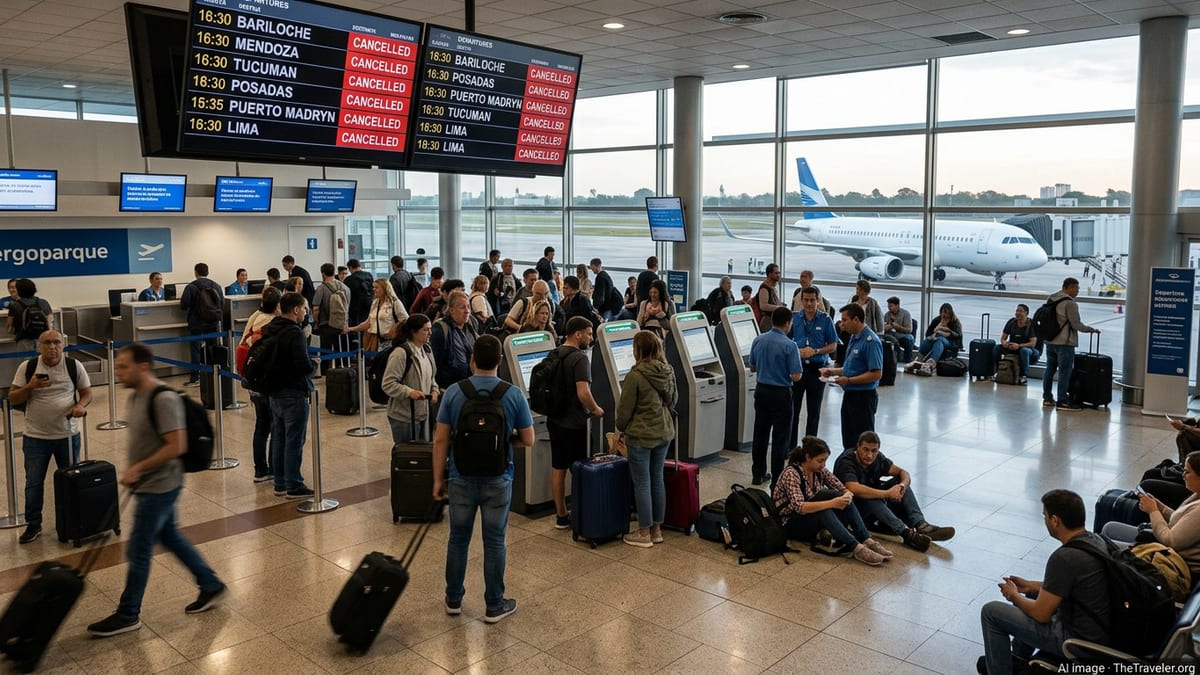
Disruptions Concentrated Around Buenos Aires City Airports
Publicly available flight-status boards and schedule aggregators for late June indicate at least a dozen cancellations and more than a dozen significant delays affecting services into and out of Aeroparque Jorge Newbery, Buenos Aires’ main city airport, on routes that connect key Argentine destinations such as Puerto Iguazú, Tucumán, Salta and Bariloche. The pattern has left passengers facing missed connections, overnight waits and last-minute changes in travel plans as aircraft and crews fell out of position.
Domestic services operated by Aerolíneas Argentinas, Flybondi and JetSMART appear among the most affected, particularly on heavily trafficked leisure and business corridors linking the capital with the country’s north and northwest. Some of these flights are sold under codeshare agreements with GOL and LATAM, meaning customers holding tickets marketed by foreign airlines can also be drawn into the disruption even when the operating carrier is Argentine.
Operational data for the weekend period suggest that delays often stretched beyond an hour on certain rotations, with select departures cancelled altogether. For many travelers, the bottlenecks at Aeroparque translated into extended queues at check-in and rebooking desks, as well as crowded gate areas where rolling schedule changes were announced over several hours.
Although the highest concentration of problems was visible at the city airport itself, knock-on effects were also reported at secondary airports that feed Buenos Aires, including services touching down at regional gateways and then continuing to the capital. That network effect compounded the challenge for travelers who had structured itineraries around tight domestic connections.
Regional Links to Brazil and Peru Also Affected
The wave of disruptions did not remain confined to Argentina’s domestic market. According to published schedules and flight-status tools, a portion of the impacted flights involved codeshares or onward connections to Brazil and Peru, implicating brands such as GOL and LATAM Peru even when their aircraft were not always directly operating the segments.
LATAM Peru, which uses Buenos Aires as a key spoke for services to Lima and onwards to other South American capitals, appears in booking platforms alongside Aerolíneas Argentinas and JetSMART on several routes that feed its long-haul and regional network. When city-airport departures run late or are cancelled, passengers aiming to reach Lima or make same-day onward connections can find themselves forced to replan entire itineraries or spend unplanned nights in transit.
Similarly, GOL’s cooperation with Aerolíneas Argentinas on links between Buenos Aires and Brazilian cities such as São Paulo and Rio de Janeiro means that a cancelled or heavily delayed domestic leg can ripple into missed regional departures. Travel forums in recent months have highlighted how travelers relying on these mixed itineraries sometimes face additional complications when tickets are issued across different reservation systems or on separate bookings.
While the number of flights directly cancelled may appear modest compared with total daily traffic, the strategic nature of these regional connections has magnified the impact for affected travelers, especially those attempting to stitch together multi-country trips across the Southern Cone.
Low-Cost Carriers Under Renewed Scrutiny
The latest disruptions come amid ongoing scrutiny of Argentina’s low-cost segment. In recent seasons, Flybondi in particular has drawn criticism from passengers and commentators for frequent schedule changes, cancellations and lengthy delays, with consumer complaints surfacing across social media and travel discussion platforms. Historical data cited in public reporting has described periods in which a large proportion of the airline’s operations were cancelled over a short span, leaving thousands of travelers stranded.
JetSMART, another budget player active on domestic and short regional routes, has generally been perceived by some travelers as a more reliable alternative, though online accounts also describe incidents of late-running services and re-timed flights affecting passengers in Argentina, Chile and Peru. The latest wave of delays at Buenos Aires city airports appears to have touched both low-cost and full-service airlines, underscoring how congestion, crew rotations and aircraft availability can intersect to create broader operational stress.
For price-sensitive travelers, the appeal of ultralow fares often comes with an implicit expectation of schedule risk. Recent commentary on travel forums has emphasized the importance of building in long connection buffers, especially when combining low-cost domestic segments with separate tickets on international or long-haul carriers departing from Buenos Aires.
Consumer advocates regularly advise that, when possible, passengers book on a single through-ticket or allow ample extra time between flights, particularly during busy travel periods or when relying on airlines with a history of operational volatility.
Impact on Stranded Travelers and Travel Planning
The immediate human impact of the latest cancellations and delays has been most visible in crowded terminals and rebooking lines, as passengers attempt to secure seats on later departures or re-route via alternative cities. Families heading home from holidays in Argentina’s interior, business travelers connecting to regional hubs, and international tourists on tight itineraries have all been affected when flights into or out of Aeroparque failed to operate as planned.
Publicly accessible accounts describe travelers purchasing last-minute intercity bus tickets, booking overnight hotel stays near airports, or rerouting via larger hubs such as São Paulo or Santiago in order to salvage onward journeys. Others have opted to switch from low-cost carriers to full-service airlines on the same routes, even at higher prices, in the hope of greater schedule stability or more responsive customer service in the event of further disruptions.
For those planning upcoming trips, the recent pattern in Buenos Aires serves as a reminder to scrutinize routing choices, connection times and airline reputations. Travel planning platforms and aviation trackers can help passengers monitor on-time performance and spot routes or carriers that have recently experienced elevated levels of delay or cancellation.
In a region where many domestic and regional flights still funnel through a small number of key airports, any localized operational shock at hubs such as Aeroparque Jorge Newbery can quickly cascade across multiple countries, leaving hundreds of travelers waiting in terminals from Argentina to Brazil and Peru.
What Travelers Can Do Next
In the wake of the latest disruptions, travel specialists and consumer information sites generally point to a few basic strategies for mitigating risk. Among them are booking longer layovers for any itinerary involving a connection in Buenos Aires, favoring single-ticket journeys when combining domestic and international segments, and tracking flight status closely in the 24 hours before departure.
Passengers holding tickets on itineraries that mix airlines such as Aerolíneas Argentinas, Flybondi, JetSMART, GOL and LATAM Peru may benefit from confirming in advance which company is responsible for each segment and where to seek assistance if schedules change. Understanding whether a leg is operated as a codeshare can be crucial when it comes to check-in rules, baggage transfers and rebooking options.
Travelers already in Argentina who face unexpected cancellations often turn to alternative transport, including long-distance buses or, on shorter routes, overnight services, especially when same-day flight options are unavailable or prohibitively expensive. While such solutions can be time-consuming, they provide a safety net for reaching Buenos Aires or connecting cities when air operations become unpredictable.
With the busy winter travel period in the Southern Hemisphere under way, the recent problems at Buenos Aires’ city airports highlight how quickly a handful of cancellations and delays can swell into a major inconvenience for hundreds of people, and reinforce the importance of flexible planning for anyone flying through Argentina in the coming weeks.