


More news on this day
Travel across northern Europe faced fresh turbulence this week as a wave of operational issues linked to Copenhagen rippled through airline networks, triggering 318 flight delays and 15 cancellations affecting key hubs in Denmark, Sweden, Norway and Germany.
Get the latest news straight to your inbox!
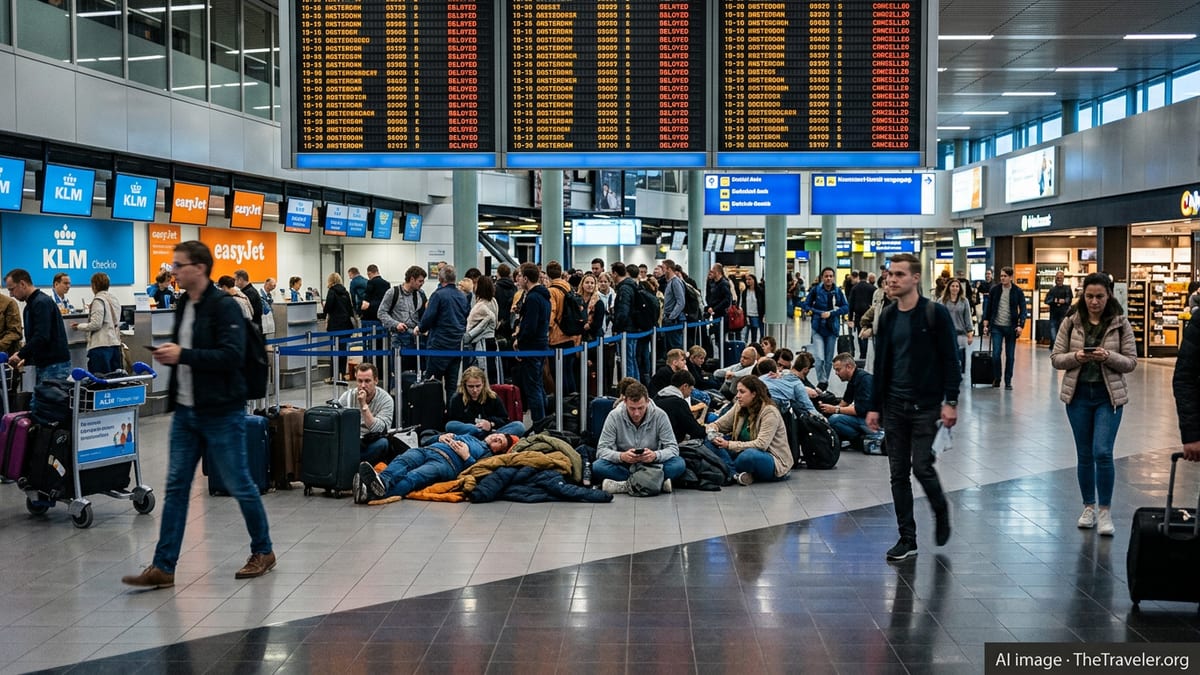
Chain Reaction Across Copenhagen, Stockholm, Oslo and Berlin
Published data from flight-tracking services and passenger-rights platforms indicates that recent problems centered on Copenhagen have once again exposed the vulnerability of tightly timed airline schedules across Scandinavia and nearby European hubs. Disruptions linked to Denmark’s primary airport have contributed to hundreds of delayed departures and arrivals across Copenhagen, Stockholm Arlanda, Oslo Gardermoen, Berlin Brandenburg and other destinations.
Reports summarizing the current disruption pattern point to a combined tally of 318 delays and 15 cancellations across affected routes, as airlines struggled to reposition crews and aircraft. Scandinavian Airlines, Norwegian Air Sweden and Lufthansa appear among the most heavily exposed, reflecting their dense schedules through Copenhagen, Stockholm and Oslo as well as onward services to cities such as Berlin and Frankfurt.
Operational summaries show that even when only a handful of flights are formally canceled, extensive delays can cascade throughout the day as late-arriving aircraft and crews miss subsequent departure slots. That pattern has been visible on short-haul routes such as Copenhagen to Berlin and Copenhagen to Oslo, as well as on feeder services into larger European hubs, creating missed connections and unplanned overnight stays for travelers.
The latest figures follow several days in June in which Copenhagen and Stockholm experienced concentrated disruption events, with earlier tallies already showing dozens of delays and cancellations at each airport. The cumulative effect has left airlines and passengers dealing with a rolling backlog of schedule changes just as the busy summer travel period accelerates.
Scandinavian Airlines, Norwegian Air Sweden and Lufthansa Under Pressure
Publicly available information shows that Scandinavian Airlines remains at the center of the turbulence, in line with its role as a major carrier at Copenhagen, Oslo and Stockholm. The airline has faced a mix of delays and cancellations on core intra-Scandinavian sectors, including Copenhagen to Oslo and Copenhagen to Stockholm, where even modest timetable slips have quickly affected subsequent rotations.
Norwegian Air Sweden has also encountered significant knock-on effects, particularly on short-haul European links between Copenhagen, Berlin and other continental cities. Flight-history data for recent days highlights services such as the Copenhagen to Berlin route experiencing substantial arrival delays, with some sectors running hours behind schedule. For passengers relying on onward connections within Europe, those delays have frequently meant missed flights and forced rebookings.
Lufthansa’s network has been pulled into the disruption as late-arriving Scandinavian feeder flights undermine carefully structured connection banks in Germany. Travel coverage focused on earlier June disruption waves in Norway and Denmark showed that the airline has on several occasions had to accommodate rebooked passengers from canceled or heavily delayed Scandinavian Airlines services, particularly on routes funneled through Frankfurt and Munich.
Other European carriers, including KLM and CityJet, have also appeared in disruption tallies connected to Copenhagen and Stockholm. While their individual totals are lower, their schedules have still been affected by ground operations and air-traffic flow constraints around Scandinavian hubs, reinforcing how quickly localized issues in one region can spill over into wider European networks.
Weather, Capacity Constraints and Tight Scheduling Combine
Analysis from passenger-rights organizations and airline operations specialists points to a familiar mix of underlying causes: intermittent adverse weather, air-traffic flow restrictions and tight scheduling that leaves little slack in the system. When storms or low-visibility conditions reduce runway capacity, departures and arrivals are metered more slowly, forcing airlines to hold aircraft on the ground and stack them in holding patterns.
At hub airports such as Copenhagen and Stockholm Arlanda, those constraints can quickly lead to ground congestion and missed slot times. Once a morning or early afternoon departure is delayed beyond a certain point, the same aircraft is likely to push back subsequent flights on its roster, especially on busy short-haul rotations that shuttle repeatedly between Scandinavian and central European airports.
Operational challenges are compounded during peak summer travel, when high load factors limit the ability to re-seat disrupted passengers on later flights. Networks operated by Scandinavian Airlines and Norwegian Air Sweden are particularly exposed, as many travelers rely on relatively short connection windows through Copenhagen, Stockholm and Oslo to reach onward destinations.
Industry observers also note that continued staffing and fleet-availability pressures across European aviation mean that airlines have fewer spare aircraft and crew than before the pandemic period. As a result, a single aircraft taken out of service for technical checks, or a crew reaching duty-time limits after long delays, can translate directly into cancellations later in the day.
Impact on Passengers and Travel Plans
The immediate impact for travelers has been a surge in missed connections, extended airport waits and last-minute overnight stays. Public reports from recent weeks describe passengers on routes passing through Copenhagen and Stockholm facing delays of several hours, only to find that onward flights within Scandinavia or to cities such as Berlin, Frankfurt or London had already departed.
For some, particularly those on long-haul itineraries involving connections through northern Europe, disrupted segments have compromised entire trips. Travelers connecting from intercontinental services to domestic Scandinavian flights have in some cases had to be rerouted via alternative hubs operated by partner airlines such as Lufthansa or other Star Alliance members, lengthening travel times and complicating baggage handling.
The timing of the latest disruption wave is especially challenging for leisure travelers embarking on summer holidays, many of whom rely on tightly packed itineraries and nonrefundable accommodation. Reports from consumer forums and travel platforms indicate that some passengers are facing additional costs for missed hotel nights, pre-booked rail tickets and tours that cannot easily be rescheduled.
Business travelers are also affected, particularly those commuting regularly between Copenhagen, Stockholm, Oslo and central European cities. Frequent delays on morning and evening services reduce the reliability of same-day round trips, prompting some companies to adjust meeting schedules or advise staff to build in wider buffers around critical appointments.
What Travelers Should Know About Rights and Next Steps
Passenger-rights organizations emphasize that travelers affected by delays and cancellations in this disruption pattern operate largely under European Union and United Kingdom air-passenger protection rules. Under these frameworks, travelers on eligible flights may be entitled to meals, refreshments, hotel accommodation and rebooking when services are significantly delayed or canceled, even where the underlying cause is outside the airline’s control.
Financial compensation is more complex. Public guidance from consumer groups notes that when disruptions stem from factors such as severe weather or broad air-traffic control restrictions, airlines are often not required to pay cash compensation, although they must still offer care and assistance. Where delays or cancellations are linked to operational or staffing issues within the airline’s control, compensation may be possible, subject to distance and length-of-delay thresholds.
Travel specialists advise passengers to keep boarding passes, booking confirmations and receipts for any extra expenses, and to document actual arrival times, which may differ from scheduled times by several hours. These records can be important when submitting claims through airline channels or third-party compensation services.
With further congestion possible as the summer peak continues, observers suggest that travelers monitor flight status closely before leaving for the airport, consider longer connection windows through congested hubs such as Copenhagen and Stockholm, and prepare contingency plans if key segments are delayed or canceled. While the current wave of disruptions may ease as weather patterns and capacity constraints stabilize, the events of late June underline how quickly operational issues at a single hub can reverberate across northern Europe’s interconnected air network.