


More news on this day
Passengers at Ottawa Macdonald-Cartier International Airport faced a difficult start to the day on June 13 as a cluster of nine cancellations and 12 delays involving Jazz ACA, PAL Airlines, Republic Airways, Porter Airlines and Air France disrupted key routes to Chicago, Newark, Paris, Toronto and Edmonton.
Get the latest news straight to your inbox!
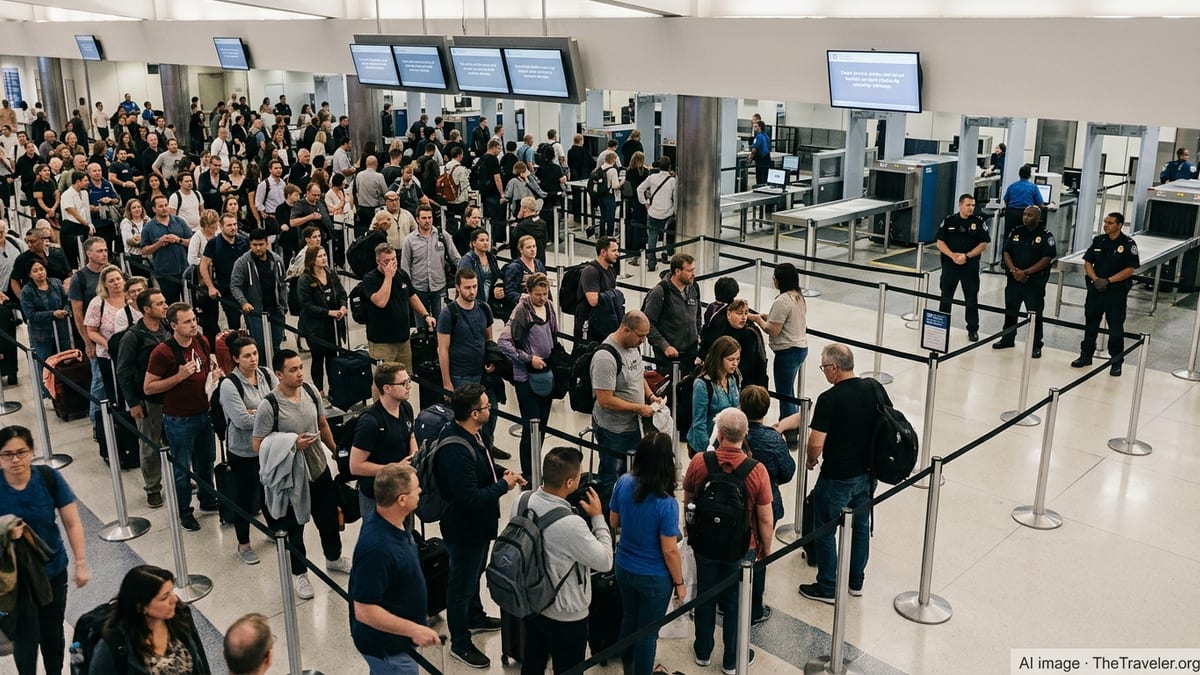
Ripple Effects Hit Ottawa on Busy June Travel Morning
The disruptions at Ottawa Macdonald-Cartier International Airport unfolded against an already strained North American air network, with flight-tracking data pointing to knock-on effects from congestion and operational challenges at major hubs such as Newark and Chicago. Those hubs serve as critical connectors for Ottawa-bound traffic and were themselves dealing with elevated levels of delays and cancellations.
Publicly available flight information showed multiple Ottawa services either canceled outright or significantly delayed, including regional operations associated with Air Canada’s Jazz-branded network and flights linked to Republic Airways and Porter Airlines through their U.S. and Canadian partnerships. Several of these flights were scheduled to feed or draw passengers from Chicago O’Hare and Newark Liberty, amplifying the impact on travelers attempting to make onward connections.
International traffic was also affected as disruptions on transatlantic and domestic feeder routes collided. Ottawa’s relatively new long-haul link to Paris operated by Air France, a route that has helped position the airport as an alternative gateway to Europe, was operating amid a backdrop of schedule volatility that left many passengers wary of missed connections and last-minute itinerary changes.
For many travelers, the result was an extended stay in departure lounges, scrambling to rebook itineraries and navigate compensation rules while monitoring airport displays that shifted frequently as airlines adjusted schedules in real time.
Key Routes to Chicago, Newark, Paris, Toronto and Edmonton Disrupted
The nine cancellations and 12 delays concentrated on some of Ottawa’s most strategically important routes. Services touching Chicago and Newark, both major U.S. hubs for transborder and onward international travel, were among those hardest hit, creating a cascade of missed connections for passengers bound for destinations throughout the United States and overseas.
Regional operations under the Jazz and Republic banners, which typically provide feeder traffic into larger airline networks, were particularly exposed. These carriers connect Ottawa with hubs where congestion, volume-related traffic management measures and airline scheduling bottlenecks can quickly ripple outward, turning relatively short-haul legs into choke points for wider itineraries.
On the domestic side, passengers traveling between Ottawa, Toronto and Edmonton encountered cancellations that affected what is normally a heavily traveled corridor within Canada. Ottawa’s links to Toronto are a key part of the country’s eastern travel spine, while Edmonton connections feed both business travel and long-haul leisure routes for western Canada. Delays and cancellations on these routes forced travelers to scramble for later departures, alternate airports or even different carriers.
The Paris service, operated by Air France, added an international dimension to the disruption. While the day’s flight was still scheduled to connect Ottawa with Paris Charles de Gaulle, publicly accessible timing data indicated shifting departure and arrival estimates, heightening concerns among travelers whose onward European connections relied on tight transfer windows at one of Europe’s busiest hubs.
Operational Strains, Crew Positioning and Weather Among Likely Factors
Although no single cause explained all of the cancellations and delays affecting Ottawa, several familiar pressure points appeared to be in play. Flight-status and aviation-advisory services for major hubs such as Newark showed a mix of volume-related and operational advisories, conditions that often trigger ground delays and schedule reshuffling that can reach into regional markets like Ottawa.
Industry reports in recent months have highlighted how tight crew scheduling and aircraft utilization across North American carriers can exacerbate even minor disruptions. When inbound aircraft or crews arrive late from another city, downstream flights are vulnerable to delay or cancellation, particularly in regional networks where spare capacity is limited. Jazz- and Republic-operated flights, which often function as feeders for larger airlines, are typically sensitive to such upstream issues.
Seasonal weather patterns can also play a role, especially at large U.S. hubs where thunderstorms and low visibility may prompt air traffic control to slow arrivals and departures. Even when conditions at Ottawa remain relatively stable, restrictions at connecting airports can lead airlines to delay departures or consolidate services in order to manage fleet and crew resources more efficiently across their networks.
In this environment, a cluster of nine cancellations and 12 delays at a mid-sized airport like Ottawa reflects how quickly small operational disruptions can compound into a broader travel challenge when multiple carriers and international connections are involved.
Airlines’ Policies and Passenger Options During Irregular Operations
For affected passengers, navigating cancellations and long delays usually turns on the rules set out in each carrier’s contract of carriage and, in Canada, on federal air passenger protection regulations. Publicly available airline policy documents indicate that carriers such as Porter and others commit to providing regular updates to travelers when flights are canceled, rerouted or significantly delayed, and may offer rebooking, refunds or travel vouchers depending on the circumstances and the length of the disruption.
Canadian regulations distinguish between disruptions within an airline’s control, such as crew scheduling or certain maintenance issues, and those outside its control, including severe weather or air traffic control restrictions. In cases where a disruption is deemed within the carrier’s control, passengers may be entitled to compensation in addition to rebooking or refunds, whereas events categorized as outside the carrier’s control generally limit compensation to re-accommodation or fare reimbursement.
Many travelers at Ottawa on June 13 turned to airline apps, websites and airport service desks in an effort to secure new itineraries. When hub connections like Chicago and Newark are affected, options can quickly narrow, especially during peak summer travel periods when remaining seats on later departures are limited. Some passengers opted to reroute through alternative hubs or to switch to competing carriers where same-day seats remained available.
For those traveling on complex itineraries, such as Ottawa to European or western Canadian destinations via Toronto, Edmonton or Paris, irregular operations often meant extended layovers and new overnight stays. Travel experts typically recommend that passengers keep all receipts related to hotels, meals and ground transportation when disruptions occur, as some costs may be recoverable under airline policies or travel insurance coverage.
Ongoing Focus on Reliability at a Growing Capital Gateway
The latest bout of cancellations and delays comes at a time when Ottawa Macdonald-Cartier International Airport has been working to expand its role in both domestic and international networks. The airport has added transatlantic capacity through its Paris connection and has seen investment in new routes and infrastructure as carriers seek to capture demand in Canada’s national capital region.
However, the events of June 13 underscore the vulnerability of mid-sized airports to shocks originating at larger hubs and within airline operational networks. When disruptions strike, airports that rely heavily on a few key connections can see a significant share of their daily schedule affected, even if local conditions such as weather and runway capacity remain favorable.
As summer travel continues to ramp up, reliability and resilience remain central concerns for both travelers and carriers operating in and out of Ottawa. Public reporting on flight-performance metrics across North America has pointed to ongoing challenges in maintaining on-time operations amid tight schedules, high demand and occasionally strained air traffic control resources.
For passengers planning upcoming trips through Ottawa, the day’s events serve as a reminder of the value of monitoring flight status closely, allowing extra time for connections, and familiarizing themselves with airline policies and national passenger protection rules in case their journeys are disrupted at short notice.