


More news on this day
Travellers moving through Buenos Aires’ Aeroparque Jorge Newbery on July 6 faced a fresh wave of disruption as at least six flights operated by Flybondi and Aerolíneas Argentinas were suspended and many more were delayed, interrupting key domestic links to San Juan, Tucumán, El Calafate, Santa Rosa, Jujuy and other cities across Argentina.
Get the latest news straight to your inbox!
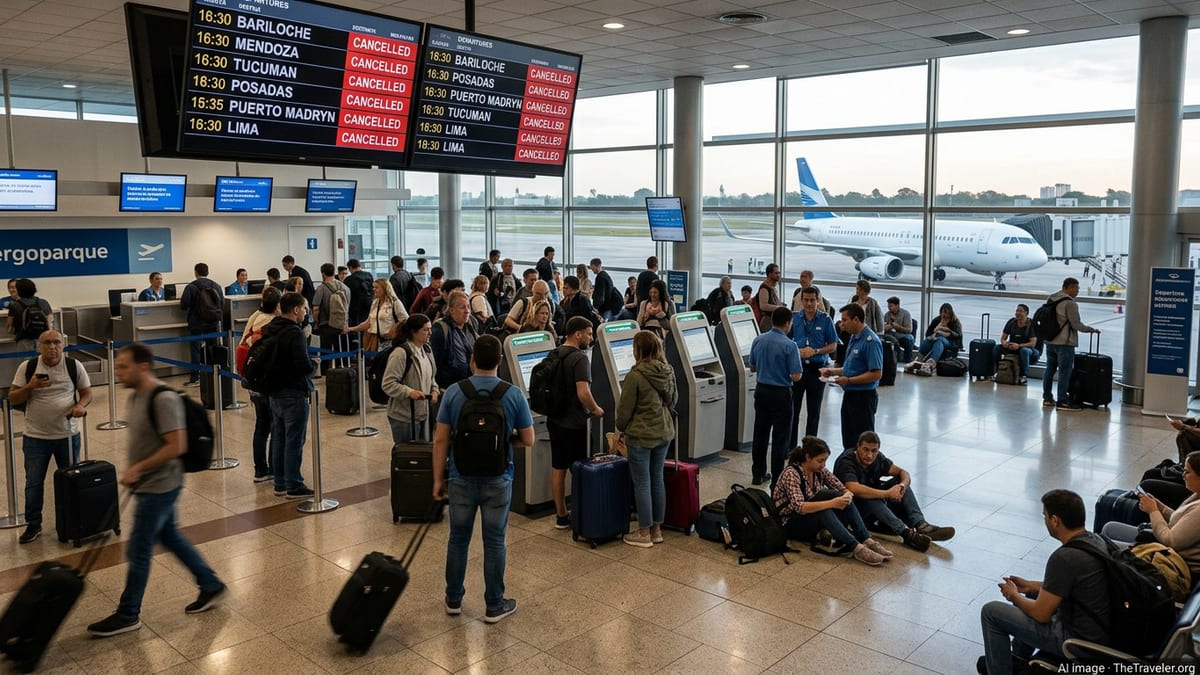
Six Suspended Flights and Dozens of Delays at Aeroparque
Publicly available flight-status boards and local coverage for July 6 indicate that operations at Aeroparque Jorge Newbery were severely strained, with Flybondi and Aerolíneas Argentinas cancelling at least six departures and arrivals and registering dozens of delays across the day. The affected services were concentrated on busy domestic corridors connecting Buenos Aires with inland provinces, magnifying the impact for travellers in both directions.
Routes linking the capital with San Juan, Tucumán, El Calafate, Santa Rosa and Jujuy were among those most disrupted, along with other high-demand destinations served from Aeroparque. Many passengers reported extended waits after early-morning cancellations cascaded into later rotations, as aircraft and crews fell out of position.
According to aggregated schedule and tracking data, the suspensions involved a mix of Flybondi low cost services and Aerolíneas Argentinas trunk routes that typically operate multiple times per day. With several of those frequencies removed from the schedule at short notice, remaining flights quickly filled, leaving limited options for same-day rebooking.
The disruption at Aeroparque occurred on a peak winter-travel weekend for Argentina, compounding pressure on the country’s busiest domestic airport. The facility functions as the primary hub for Aerolíneas Argentinas and as one of the operational bases for Flybondi, meaning irregular operations there tend to ripple through the wider network.
Key Provincial Routes Hit: San Juan, Tucumán, El Calafate and Jujuy
San Juan and Tucumán, both major economic and population centres in northwest Argentina, are heavily reliant on direct links to Buenos Aires for business, tourism and medical travel. Flight-status snapshots for July 6 show multiple schedule changes on these corridors, including cancelled rotations that would usually transport hundreds of passengers between the capital and the provinces.
Farther south, the disruption affected services serving Patagonia’s El Calafate, a key access point for Los Glaciares National Park and one of the country’s flagship tourism destinations. Aerolíneas Argentinas and Flybondi both sell seats on the Buenos Aires to El Calafate market at this time of year, and cancellations on even a small number of departures can force travellers to cut short or reconfigure time-sensitive itineraries built around hotel and excursion bookings.
In central Argentina, Santa Rosa in La Pampa province also saw flights disrupted, reducing connectivity to Buenos Aires for residents of one of the country’s more sparsely populated regions. To the north, links with Jujuy, gateway to the Quebrada de Humahuaca and other Andean attractions, experienced delays and cancellations that left leisure and visiting-friends-and-relatives travellers contending with missed connections and uncertain arrival times.
Across these routes, the sudden loss of capacity from the six suspended flights came on top of an already tight domestic schedule, limiting the ability of carriers to absorb passengers onto later services. Travellers without flexible tickets or travel insurance faced higher walk-up fares on competing flights and, in some cases, overnight stays while waiting for the next available seat.
Low Cost Pressure and Operational Fragility at Flybondi
Flybondi’s role in the disruption has drawn renewed attention to the vulnerability of ultra low cost models when operating with lean fleets and tight turnarounds. Publicly available operational records and recent consumer complaints highlight a pattern of frequent delays, schedule changes and cancellations on various Flybondi domestic routes, particularly at peak periods and during weather or staffing pressures.
On July 6, Flybondi services touching Aeroparque experienced multiple irregularities, with the cancellation of several departures triggering knock-on effects as aircraft rotations were restructured. With a relatively small number of planes covering a growing network, the suspension of even one round trip can cascade quickly, forcing the airline to consolidate flights and reassign capacity at short notice.
Passengers affected by the July 6 cancellations reported a familiar set of challenges documented in recent months across social channels and consumer forums: long queues at airport counters, difficulty accessing timely information and limited alternative same-day options on the same carrier. While some travellers were reprotected on later flights or rerouted via other cities, others turned to rival airlines or long-distance buses to complete their journeys.
The episode has reinforced calls from passenger advocates for clearer communication standards and contingency planning obligations for low cost operators in Argentina, particularly on essential domestic corridors where surface transport alternatives can involve journeys of 12 hours or more.
Aerolíneas Argentinas Faces Strain on Domestic Hub Operations
Aerolíneas Argentinas, the state-owned flag carrier and dominant operator at Aeroparque, also saw several of its flights suspended or heavily delayed on July 6. Public timetables and real-time trackers show that domestic links from Aeroparque to destinations such as San Juan, El Calafate and other regional centres were affected, resulting in missed onward connections and rebooking challenges for passengers holding through itineraries.
The airline has historically been able to rely on its larger fleet and more extensive network to re-accommodate passengers when isolated flights are cancelled. However, constrained aircraft availability, high winter demand and the need to maintain key trunk routes appear to have limited its flexibility during the latest disruption. Reports indicate that some travellers were shifted onto departures from Buenos Aires’ Ezeiza International Airport instead, adding ground transfer time and logistical complexity.
As Aerolíneas Argentinas continues efforts to streamline its domestic operation while maintaining connectivity to all provinces, irregular operations at its main city airport highlight the operational tightrope the carrier walks. Each cancellation or long delay at Aeroparque reverberates across the network, particularly when flights to destinations such as Tucumán or Jujuy are part of longer multi-leg journeys.
Industry observers point out that the flag carrier’s central role in Argentina’s domestic aviation ecosystem means any large-scale disruption at Aeroparque can affect not only leisure and business travel but also movements of medical patients, government officials and cargo shipments scheduled on combination flights.
Wider Impact on Travellers and Calls for More Resilience
For passengers caught up in the July 6 disruption, the operational details mattered less than the immediate impact on their plans. Families heading to winter holidays in Patagonia, students returning to provincial universities and business travellers shuttling between the capital and regional hubs all faced a combination of long waits, unexpected overnight stays and hastily rearranged itineraries.
Travel planning platforms and aviation-focused forums have for months advised would-be visitors to Argentina to build additional margin into domestic connections involving Aeroparque, especially in winter and on routes frequently operated by low cost carriers. The latest wave of cancellations and delays is likely to reinforce those recommendations, with some frequent travellers suggesting that itineraries include backup plans such as alternative dates, flexible fares or reserved seats on long-distance buses.
The Aeroparque episode also feeds into a broader debate over the resilience of Argentina’s domestic aviation system. Analysts note that a combination of tight airline finances, currency pressures, infrastructure constraints and strong seasonal demand has left carriers with little spare capacity to respond when multiple flights are cancelled in a short window.
As the winter high season continues, passenger advocates argue that clearer minimum service standards, more transparent compensation rules and better-coordinated communication between airlines and airport operators could ease the impact of inevitable disruptions. For now, travellers using Aeroparque Jorge Newbery, particularly on routes to San Juan, Tucumán, El Calafate, Santa Rosa and Jujuy, are being urged by publicly available advisories to monitor their flight status closely and allow extra time and flexibility in their plans.