


More news on this day
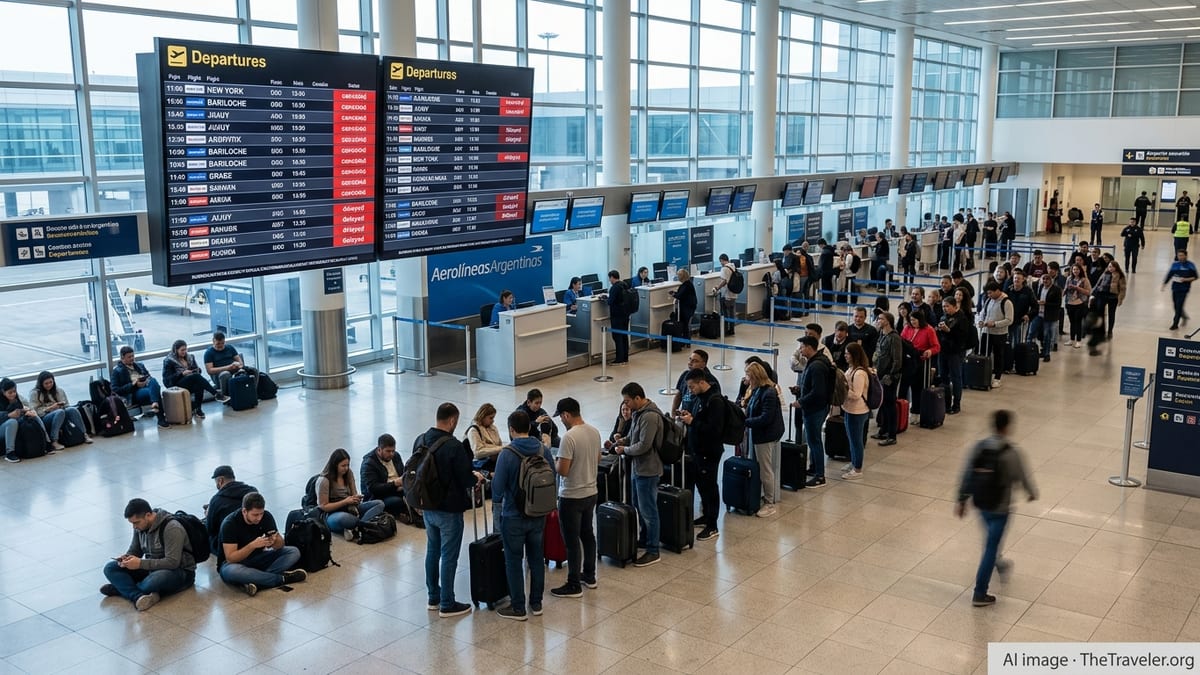
Passengers at Buenos Aires’ Aeroparque Jorge Newbery faced mounting frustration on Monday as six flights from Flybondi and Aerolíneas Argentinas were suspended and many more services suffered long delays, disrupting key domestic routes to San Juan, Tucumán, El Calafate, Santa Rosa, Jujuy and other destinations across Argentina.
Get the latest news straight to your inbox!
Six Suspended Flights Amplify a Day of Disruptions
According to publicly available departure boards and local media coverage on 6 July, a concentrated wave of disruptions at Aeroparque Jorge Newbery resulted in the suspension of six flights operated by Flybondi and Aerolíneas Argentinas. The cancellations were spread across the morning and early afternoon schedule, reducing options on some of the country’s most heavily used domestic corridors.
The affected services included departures toward San Juan, San Miguel de Tucumán, El Calafate, Santa Rosa and San Salvador de Jujuy, all of them routes that connect Buenos Aires with provincial capitals and major tourist hubs. Passengers bound for secondary destinations relying on connections through these cities also saw their plans thrown into uncertainty as missed links began to cascade through the network.
Reports from Argentine outlets described departure boards thick with yellow and red status markers as delays stretched beyond an hour for dozens of flights, compounding the impact of the outright suspensions. Travelers already checked in for their journeys to the interior faced rolling schedule changes, gate swaps and, in some cases, the need to rebook for later in the week.
Neither carrier had issued a detailed breakdown of the causes for each individual cancellation by late afternoon, but data from recent weeks points to a combination of fleet constraints, tight turnaround times and high utilization at the busy city airport.
Flybondi’s Operational Strain Spills Into Peak Travel Day
Low cost airline Flybondi, which has a base at Aeroparque, has been under intense scrutiny in recent weeks after a series of operational setbacks sharply reduced its available fleet. Aviation-focused publications in Argentina have documented days when the carrier operated much of its schedule with a single active aircraft, forcing multiple last-minute cancellations and leaving passengers scattered across terminals.
The suspended Flybondi departures on 6 July followed this same pattern of strain, with services to provincial destinations taken off the board amid what coverage has characterized as a shortage of aircraft and crew. Routes toward northern Argentina, including San Juan and Jujuy, were among those affected, temporarily shrinking low cost capacity on corridors that have seen steady growth over the past decade.
Flybondi’s model depends on keeping aircraft flying as many hours per day as possible, a strategy that can keep fares low but leaves little margin when technical checks, staffing issues or external factors intervene. Industry analysts note that even minor glitches can rapidly translate into multi-hour delays or cancellations when airlines have limited spare capacity to swap in.
Public information released in June already indicated that Flybondi had cut several services and adjusted staffing plans, a move framed as a bid to stabilize operations. Monday’s disruptions at Aeroparque suggest that the ripple effects of that restructuring are still being felt at the height of the southern winter travel season.
Aerolíneas Argentinas Faces Knock-on Delays Across Domestic Network
Aerolíneas Argentinas, the country’s flag carrier and the dominant operator at Aeroparque, also saw its schedule heavily affected on 6 July. While the airline maintained most departures, several flights were suspended and many more departed late, according to real-time tracking boards that showed a dense cluster of delayed services into and out of Buenos Aires.
Interruptions on routes to El Calafate, a gateway to Patagonia’s glaciers, and to regional capitals such as Santa Rosa and Tucumán reverberated across the network. Many of these flights are timed to feed onward services to other domestic destinations, meaning a late aircraft arriving from Aeroparque can translate into missed connections hours later in the day.
The carrier has previously warned that high traffic volumes and infrastructure works across the Argentine airport system are stretching available slots at peak times. On Monday, that pressure was visible at Jorge Newbery, where closely spaced departure times left limited room to absorb late-arriving aircraft without pushing subsequent flights further down the schedule.
Earlier this year, Aerolíneas Argentinas had already contended with nationwide disruptions during labor actions that forced the cancellation of hundreds of services. Although no industrial action was reported in connection with the 6 July events, the new wave of delays highlights the sensitivity of Argentina’s domestic network to any operational shock at its primary city airport.
Why Aeroparque Is So Vulnerable to Cascading Problems
Aeroparque Jorge Newbery occupies a unique role in Argentina’s aviation system. Located just minutes from central Buenos Aires and handling a mix of domestic and short regional international flights, it is the main hub linking the capital with provincial cities such as San Juan, Tucumán and Jujuy, as well as tourism hotspots like El Calafate and Bariloche.
Government and airport operator data show that Aeroparque has recorded record passenger volumes over the past two years, with daily movements frequently topping several hundred flights. At peak times, arrivals and departures follow one another in rapid succession, with aircraft turning around quickly before heading back out to the provinces.
Analysts point out that in such an environment, a delayed aircraft or an unexpected maintenance issue in the morning can spark a chain reaction that lasts into the evening. A plane arriving late from Tucumán, for example, may be scheduled to continue onward to San Juan or Santa Rosa; if it misses its slot at Aeroparque, the next departure can be pushed back, affecting passengers on multiple segments.
Further pressure is expected in August, when previously announced runway works will lead to a complete two-day closure of Aeroparque. Those maintenance windows, considered necessary to keep pace with traffic growth, will likely concentrate more demand on days immediately before and after the shutdown, reducing flexibility if airlines experience any additional operational challenges.
Travelers Confront Long Queues and Limited Alternatives
For passengers traveling on 6 July, the immediate impact of the six suspended flights and numerous delays was felt in long queues at check-in counters and customer service desks. Social media posts and local coverage described travelers seeking rebooking options and, in some cases, being directed to services from Buenos Aires’ Ezeiza International Airport or to departures scheduled for later in the week.
Those heading to destinations with limited daily frequencies, such as El Calafate or some provincial capitals, faced particularly constrained choices. Missing the day’s sole flight can mean losing prepaid hotel nights or tour reservations, with only partial recourse through airline vouchers or travel insurance depending on individual booking conditions.
Travel specialists monitoring the Argentine market advise that passengers planning domestic trips in the coming weeks build extra flexibility into their itineraries, especially when transiting Aeroparque at peak times. Recommendations include scheduling important connections with longer buffers, checking flight status frequently in the 24 hours before departure and considering refundable or changeable fares when possible.
With Aeroparque operating close to capacity and some carriers working to stabilize their operations, Monday’s events illustrate how swiftly local disruptions can ripple through Argentina’s broader domestic network, affecting not just business travelers on core routes to San Juan and Tucumán but also tourists embarking on long-anticipated journeys to Patagonia and the northwest.