


More news on this day
Arrivals into San Francisco International Airport were facing delays approaching two hours on Monday, July 6, as a federal ground delay program slowed traffic into the Bay Area hub following one of the busiest Independence Day travel periods on record.
Get the latest news straight to your inbox!
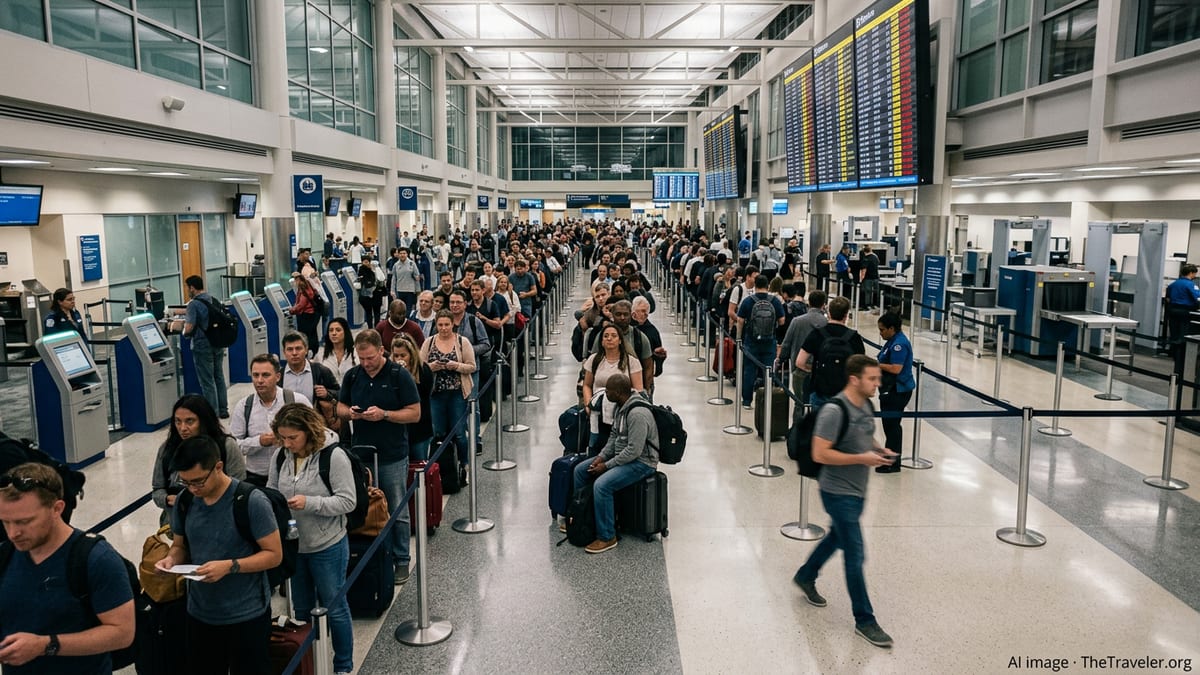
Ground delay program slows post-holiday arrivals
Publicly available data from the Federal Aviation Administration showed a ground delay program in effect for San Francisco International Airport on Monday afternoon, reducing the rate at which arriving flights could land. Advisories indicated that the airport’s arrival rate was capped at roughly three dozen flights per hour, below typical peak capacity, contributing to mounting delays for inbound traffic.
Tracking services and airport status boards showed that many arrivals into San Francisco were running well behind schedule, with some flights posted more than 90 minutes late and a number approaching the two-hour mark. The disruption affected a mix of domestic and international services, including long-haul flights arriving from Asia and transcontinental routes from the East Coast.
The FAA’s national airspace status page also reflected a broader pattern of traffic management initiatives across the country, as weather and demand continued to strain the system at multiple major hubs. On Monday, several East Coast airports, including those serving New York, Boston, Washington and Philadelphia, were listed under ground stops or delay programs tied largely to thunderstorms, adding knock-on effects to westbound departures bound for San Francisco.
While the ground delay program focused on arrivals, departures from San Francisco also experienced ripple effects. Aircraft arriving late to the Bay Area often turned around behind schedule, leaving outbound passengers to contend with later-than-planned boarding times and congested gate areas.
Heavy July 4 travel volumes set the stage
The post-holiday delays came on the heels of one of the busiest Independence Day travel periods in recent years. Forecasts from national travel groups for the 2026 holiday window projected tens of millions of Americans journeying 50 miles or more from home, with more than 5 million domestic air travelers expected over the extended period surrounding July 4.
San Francisco International Airport historically ranks among the more delay-prone large U.S. airports because of its runway configuration and the region’s variable coastal weather. Recent analysis of delay and cancellation patterns at the airport, based on historical data and ongoing tracking since late spring, has highlighted how quickly operations can slow when traffic volume climbs or when even modest constraints are introduced on the arrival rate.
Monday’s backup illustrated how a surge in holiday demand can collide with the system’s structural limits. As aircraft returning from vacation destinations converged on the Bay Area, the ground delay program effectively metered their arrivals, requiring some flights to be held on the ground at departure airports or placed in airborne holding patterns en route to San Francisco.
These constraints followed several weeks in which national aviation officials had warned that summer 2026 would test the system, pointing to tight runway capacity at key hubs, staffing considerations and the potential for disruptive weather across multiple regions. The July 4 holiday period marked one of the first major stress tests of the peak season.
Runway and airspace constraints magnify bottlenecks
San Francisco’s location on a narrow peninsula and its runway layout make it particularly sensitive to spacing requirements between arriving aircraft. Industry reference material describes how the FAA uses ground delay programs when expected arrival demand exceeds what the runways and surrounding airspace can safely accommodate at a given moment, often because of low clouds, wind shifts or other operational constraints.
Airport planning and financial documents released earlier this year have noted that side-by-side approaches to San Francisco’s closely spaced parallel runways are currently restricted under federal guidance. That limitation, while described as temporary, effectively reduces the maximum arrival rate under certain conditions and can lead to more frequent use of metering tools such as ground delay programs.
On Monday, the combination of elevated post-holiday demand and these preexisting constraints meant that relatively small disruptions translated into lengthy waits. Aircraft that might otherwise have landed in quick succession were instead sequenced with greater spacing, slowing the overall flow and filling up available arrival slots.
For airlines, this kind of bottleneck often complicates crew scheduling, aircraft rotation and gate assignments. A late arrival may cascade into missed connections, tighter ground intervals for refueling and cleaning, and unexpected schedule changes later in the day.
Impacts felt across airlines and routes
Flight tracking boards for San Francisco showed delays scattered across multiple domestic networks and international partners, suggesting that the disruption was not confined to any single airline. Transcontinental services from major East Coast gateways, short-haul West Coast connections and long-haul international flights all appeared among the arrivals posting extended delays.
Some overnight and early-morning international services into San Francisco already carried modest delays from origin airports, and the midday ground delay program added further time on top of those late arrivals. Travelers connecting onward from San Francisco to regional destinations in California and neighboring states encountered tighter transfer windows or, in some cases, missed connections requiring rebooking.
Published flight performance data for recent weeks shows that average delays into San Francisco can climb rapidly when arrival rates are reduced, even for a few hours. Industry observers note that once delays reach around 60 to 90 minutes for a large share of inbound flights, recovery can extend into the evening, especially on busy travel days when there is little slack left in the system.
For passengers, the experience often translates into crowded gate areas, long lines at customer service desks and increased demand for food, seating and power outlets. Social media posts from travelers during similar events in recent weeks have reflected frustration with rolling delay estimates and limited information about when flights might actually depart or arrive.
Travelers urged to monitor flights and plan buffer time
With the peak summer travel season underway, aviation experts routinely advise passengers using busy hub airports like San Francisco to build buffer time into their itineraries, particularly when traveling immediately after major holidays. Connecting travelers are often encouraged to choose longer layovers where possible and to book earlier flights in the day, when there may be more recovery options if a delay occurs.
Public-facing tools from airlines, airports and the FAA allow passengers to monitor the broader state of the system as well as their individual flights. On Monday, these dashboards provided early indications that San Francisco’s arrival rate was being constrained, giving some travelers advance warning of potential disruptions.
Consumer advocates also recommend that passengers stay familiar with airline policies on rebooking, meal vouchers and hotel accommodations, which can vary widely by carrier and by the cause of a delay. In cases where delays are linked to system capacity or weather rather than mechanical problems, compensation options may be more limited, underscoring the value of travel insurance or flexible ticket options for trips scheduled during busy periods.
As the summer progresses, San Francisco is expected to remain a closely watched airport for operational performance. Industry planners and regulators will be monitoring how often tools like ground delay programs are needed and how effectively airlines and the broader system manage post-holiday surges similar to the one following this year’s July 4 travel rush.