


More news on this day
Operations at Buenos Aires’ Jorge Newbery Airport were disrupted as Flybondi and Aerolíneas Argentinas suspended seven flights and registered multiple delays, affecting key domestic corridors to San Juan, Puerto Iguazú, Mendoza, Bahía Blanca, Tucumán and other destinations across Argentina.
Get the latest news straight to your inbox!
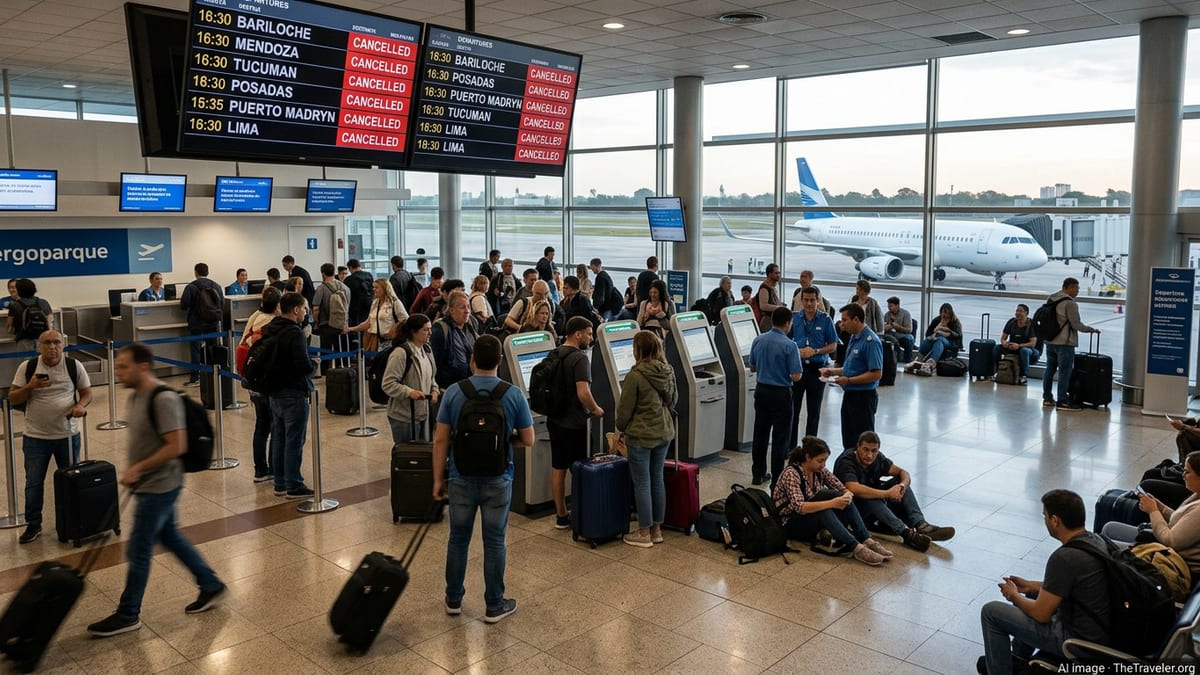
Wave of Cancellations Hits Domestic Network
The latest disruptions at Jorge Newbery come amid a fragile period for Argentina’s domestic aviation market, where low cost and traditional carriers share congested slots at the riverfront airport. Reports from aviation tracking platforms and local coverage indicate that on the affected day Flybondi and Aerolíneas Argentinas jointly suspended seven flights, while several others departed late or arrived outside their scheduled windows.
Routes impacted include links from Buenos Aires to San Juan, Puerto Iguazú, Mendoza, Bahía Blanca and Tucumán, all of them central to the country’s internal connectivity. Travelers reported extended waits at boarding gates, rolling departure times and last minute notifications of cancellations, echoing patterns seen in recent months as airlines grapple with operational and fleet constraints.
Publicly available information shows that the cancellations were spread across both morning and afternoon waves, limiting alternatives for same day rebooking. The concentration of affected services at Jorge Newbery, which concentrates a large share of Argentina’s domestic traffic, amplified the knock on effect for passengers with onward connections and time sensitive travel plans.
While some flights were ultimately reprogrammed or combined, others were removed from the schedule entirely, forcing passengers to seek seats on remaining departures from Jorge Newbery or shift itineraries to Buenos Aires’ Ezeiza International Airport.
Flybondi Under Scrutiny Over Operational Reliability
Flybondi, Argentina’s pioneer low cost carrier, has been under intense scrutiny for several months over its punctuality and the volume of cancellations. Published investigations and official statistics cited in local media describe a pattern in which a significant proportion of the airline’s services between late 2025 and early 2026 experienced delays or operational incidents, contributing to a perception of instability among travelers.
Coverage in national outlets has highlighted that Flybondi has, at times, operated with a sharply reduced fleet, including days when only one or a handful of aircraft were available to service its network from Jorge Newbery. On those days, data compiled by local newspapers show a high number of cancelled sectors compared with completed flights, putting pressure on already tight schedules.
The latest suspensions at Jorge Newbery fit into that broader picture. Industry observers note that the low cost model depends on fast turnarounds and high aircraft utilization. When technical issues, maintenance requirements or staffing constraints limit the number of planes in operation, even minor disruptions can quickly cascade, leading to multiple cancellations across the day’s rotations.
Consumer forums and traveler reports compiled online describe difficulties in securing timely rebooking or refunds after unexpected cancellations, especially for non Spanish speaking visitors. For many tourists using Buenos Aires as a hub to reach Patagonia, the northwest or the Iguazú Falls area, Flybondi’s pricing remains attractive, but recent episodes have prompted warnings to plan itineraries with wider margins for potential changes.
Aerolíneas Argentinas Adjusts Amid Capacity Pressures
Aerolíneas Argentinas, the state linked flag carrier and largest operator at Jorge Newbery, has also contributed to the day’s disruption with a portion of the seven suspended flights attributed to its schedule. In recent years the airline has periodically adjusted frequencies on domestic routes, temporarily suspending some services or delaying planned increases in capacity in response to demand patterns and cost considerations.
On the day highlighted, real time tracking tools show Aerolíneas Argentinas operating numerous arrivals and departures to and from airports such as Tucumán, Mendoza and Puerto Iguazú. At the same time, some services were removed from the timetable or experienced delays, illustrating the strain on domestic connectivity when even a limited number of high demand flights do not operate as planned.
Analysts of Argentina’s aviation sector note that Aerolíneas Argentinas has the dual challenge of maintaining coverage to provincial capitals and tourist destinations while managing financial and operational constraints. When an aircraft goes out of service or when crew availability is disrupted, the airline may consolidate operations by cancelling less profitable rotations, impacting travelers in smaller markets like San Juan or Bahía Blanca.
Published commentary from industry specialists suggests that both Aerolíneas Argentinas and its private competitors are navigating a complex environment shaped by currency volatility, fuel costs and regulatory changes. These pressures can limit the buffer capacity in their fleets, making it harder to absorb unexpected shocks without visible consequences for passengers.
Key Routes Affected: San Juan, Iguazú, Mendoza and Beyond
The routes disrupted by the latest round of cancellations are among the most strategic in Argentina’s domestic network. Jorge Newbery’s connections with San Juan, Puerto Iguazú, Mendoza, Bahía Blanca and Tucumán link the capital not only with provincial governments and business centers but also with major tourism gateways including wine regions and natural attractions.
San Juan and Mendoza form part of the Cuyo region, a corridor that combines mining, agriculture and a thriving wine industry. Flight schedules between these cities and Buenos Aires are important for corporate travel, trade events and harvest season labor mobility. When flights are suspended, travelers often face long overland journeys through mountainous terrain or must accept lengthy layovers via other hubs.
Puerto Iguazú, gateway to the Iguazú Falls on the border with Brazil and Paraguay, depends heavily on reliable air links from Buenos Aires. Local tourism reports have already warned that repeated cancellations or last minute schedule changes can dampen visitor confidence and complicate tour logistics, especially for short stay international tourists pairing the falls with time in the capital.
Bahía Blanca and Tucumán, meanwhile, serve as regional nodes for southern and northern Argentina, respectively. The suspension of services connecting these cities with Jorge Newbery can disrupt not only leisure trips but also university calendars, medical travel and cargo carried in the belly of passenger aircraft. The combined impact across multiple routes magnifies the perception of a system under strain.
Growing Frustration Among Travelers and Calls for Clearer Information
As news of the suspended flights spread, passengers at Jorge Newbery and in affected provincial airports expressed frustration on social media and in local comment sections about the lack of advance notice and the difficulty of accessing clear, real time information. Travelers described learning of cancellations at check in or shortly before boarding times, limiting their options for alternative arrangements.
Consumer advocates cited in national coverage argue that the recurring nature of these disruptions raises questions about how airlines communicate contingency plans, compensation rights and the practical steps available to stranded passengers. They emphasize that clear signage in airports, consistent digital updates and multilingual support channels can mitigate some of the stress generated by unexpected schedule changes.
At the same time, sector analysts point out that Argentina’s broader aviation infrastructure concentrates a significant share of domestic flows through Jorge Newbery. This concentration means that when operational issues affect even a single carrier at the airport, the knock on effects are quickly felt across security checkpoints, boarding areas and baggage systems, amplifying delays.
In the wake of the latest wave of cancellations, attention is once again focused on how carriers such as Flybondi and Aerolíneas Argentinas plan to stabilize their operations during the upcoming peak travel periods. Travelers, both domestic and international, are being encouraged by local travel media to monitor flight status repeatedly in the days and hours before departure and to consider travel insurance or flexible tickets when flying on Argentina’s most congested routes.