


More news on this day
Hundreds of travelers at Frederick Douglass/Greater Rochester International Airport faced cancellations, rolling delays, and missed connections after seven regional flights operated by Endeavor Air, JetBlue, Republic Airways, and PSA Airlines were suspended on key routes to Boston, Newark, Detroit, and Philadelphia.
Get the latest news straight to your inbox!
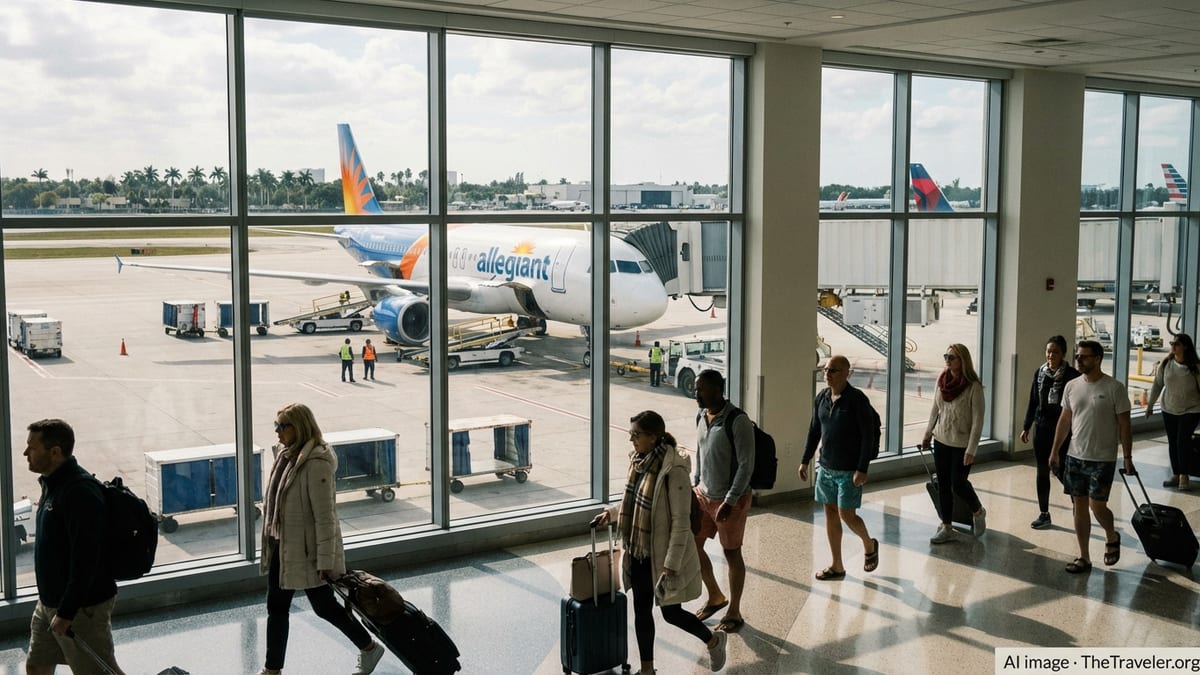
Cluster of Cancellations Hits Regional Connectors
Operations data and live flight-status platforms on July 6 indicate that at least seven departures and arrivals linked to Frederick Douglass/Greater Rochester International Airport were suspended within a short window, primarily affecting short-haul routes that connect Rochester to major East Coast hubs. The impact fell heavily on services commonly operated by regional partners Endeavor Air, Republic Airways, PSA Airlines, and JetBlue, which together handle a substantial share of feeder traffic into larger airline networks.
The suspended flights were concentrated on routes to Boston, Newark, Detroit, and Philadelphia, which function as critical spokes in the broader U.S. air travel system. Disruptions on these sectors can quickly ripple outward, knocking onward connections off schedule for travelers who rely on regional jets to reach larger domestic and international departures.
While the wider airport remained open for operations, the loss of multiple rotations on the same day sharply reduced the number of available seats on these traditionally high-demand corridors. Travelers attempting to rebook found themselves competing for space on remaining services and, in some cases, facing overnight stays or significant detours.
The pattern of suspensions suggests an operational event involving regional fleets rather than a full-scale shutdown of the Rochester facility itself. Publicly available information from air-traffic authorities showed no ground stop at ROC during the period when passengers reported difficulties, underscoring that the disruption was carrier-side rather than driven by airport closure.
Major Hubs Affected: Boston, Newark, Detroit, Philadelphia
Boston, Newark, Detroit, and Philadelphia serve as primary connection points for upstate New York passengers heading across the United States and overseas. Rochester’s links to these hubs are typically operated by regional affiliates flying under the brands of larger legacy carriers, as well as by JetBlue on select point-to-point services. When several of these departures vanish from the board in quick succession, the effects cascade through the day’s schedule.
Detroit and Newark, in particular, are crucial for connecting Rochester travelers to the Midwest and transatlantic services. Canceled Detroit-bound flights limit access to one of Delta Air Lines’ busiest hubs, while suspended Newark operations reduce options on the New York–New Jersey side of the metropolitan area, where United operates a major gateway. Even for travelers who are not flying onward, these routes are core business and leisure links for the Rochester region.
Boston and Philadelphia flights play a similar role for passengers connecting into the networks of JetBlue and American Airlines, as well as for regional business traffic on the Northeast corridor. The loss of multiple Boston and Philadelphia sectors in a single day effectively squeezes capacity on a route map that many residents depend on for same-day trips, medical travel, and time-sensitive professional engagements.
Because these city pairs sit within a relatively short flying distance, same-day recovery is usually possible under normal conditions. However, a concentrated wave of cancellations across several carriers on the same set of routes reduces the flexibility airlines have to reposition aircraft and crews to restore service later in the day.
Airlines Cite Operational Strains, Not Airport Closure
Publicly accessible operations summaries and industry reporting point to airline-level operational problems as the likely driver of July’s disruptions rather than any closure of Frederick Douglass/Greater Rochester International Airport itself. Federal aviation dashboards continued to list the airport as open with no general delay program in place, indicating that runway and tower functions remained available.
Regional carriers such as Endeavor Air, Republic Airways, and PSA Airlines operate dense schedules with small fleets of regional jets, which can be especially vulnerable when mechanical issues, crew availability challenges, or network-wide inspections arise. In such circumstances, airlines often prioritize protecting long-haul and hub-to-hub flying, which can leave shorter regional segments exposed to cancellation.
In recent federal performance reports, Endeavor and PSA have been listed among the better-performing U.S. regionals by cancellation rate, while Republic and JetBlue have historically shown somewhat higher cancellation percentages during periods of operational stress. Industry analysts note that even relatively strong performers can see abrupt spikes in scrubbed flights if inspections or weather events force sudden aircraft rotations or groundings.
Carriers generally classify suspensions into categories such as weather, crew, maintenance, and air-traffic control constraints. In this latest Rochester disruption, publicly available flight-status feeds largely referenced operational or equipment-related issues, with no broad weather advisory over Rochester itself during the peak of the cancellations. That pattern is consistent with a carrier-driven event affecting specific fleets or routes rather than a region-wide storm or airspace restriction.
Passengers Face Missed Connections and Limited Rebooking Options
The immediate consequence of the suspended flights was a wave of missed connections for travelers who were relying on short regional hops from Rochester to reach onward services at Boston, Newark, Detroit, or Philadelphia. When a feeder leg is canceled, passengers scheduled on later long-haul departures may find that rebooking options involve completely rerouting through different hubs or shifting to flights on the following day.
Given the relatively modest size of the Rochester market, alternative direct flights to the same hubs can be limited, especially once multiple carriers have trimmed the schedule on the same day. Travelers affected by the July disruption reported facing lengthy waits in customer-service queues, as remaining seats on evening departures filled quickly with rebooked passengers.
These dynamics can be particularly challenging for those with fixed commitments at their destinations, including events, cruises, or medical appointments. Even when airlines arrange hotel accommodation or meal vouchers in line with their policies, passengers may still incur additional out-of-pocket expenses for ground transport, rescheduled plans, or lost prepaid reservations.
Consumer advocates note that the complex mix of domestic, international, and codeshare itineraries touching these hubs can make it difficult for travelers to immediately understand their rights. Compensation and care obligations vary depending on whether disruptions are categorized as controllable by the airline, such as mechanical issues or crew shortages, or outside the carrier’s control, such as severe weather or air-traffic management decisions.
Regional Network Reliability Under renewed Scrutiny
The cluster of cancellations at Frederick Douglass/Greater Rochester International Airport arrives at a time when regional airline reliability is already being closely watched by regulators, airport authorities, and travelers. Data from federal transportation agencies show that regional affiliates play an outsized role in connecting smaller and midsize communities to the nation’s largest hubs, yet they often operate with thinner buffers of spare aircraft and crews.
Rochester’s airport has emphasized in recent public communications that it continues to secure new or expanded service from a variety of carriers, including low cost and regional operators, even as individual airlines adjust their networks. The facility has also highlighted investments in terminal amenities and passenger-flow improvements, which are intended to make the experience more resilient in the face of irregular operations.
For travelers, the latest disruption reinforces longstanding advice to build additional time into itineraries that depend on regional connections, especially when same-day international departures or important events are at stake. Travel planners often recommend early-morning departures, longer connection windows, and flexible tickets when flying via hubs like Boston, Newark, Detroit, or Philadelphia from smaller origin airports.
Industry observers suggest that how quickly Endeavor Air, JetBlue, Republic, and PSA Airlines stabilize their Rochester schedules after this incident will shape perceptions of the reliability of regional service in western New York. Any prolonged pattern of cancellations on the same city pairs could prompt both business travelers and leisure passengers to reassess their route choices or even drive to larger airports in search of more dependable options.