


More news on this day
Track clearance work has reached a critical milestone at the site of a recent freight train derailment, with the last damaged cars now removed from the line and engineering teams shifting their focus to infrastructure repairs and the gradual restoration of rail traffic in the surrounding area.
Get the latest news straight to your inbox!
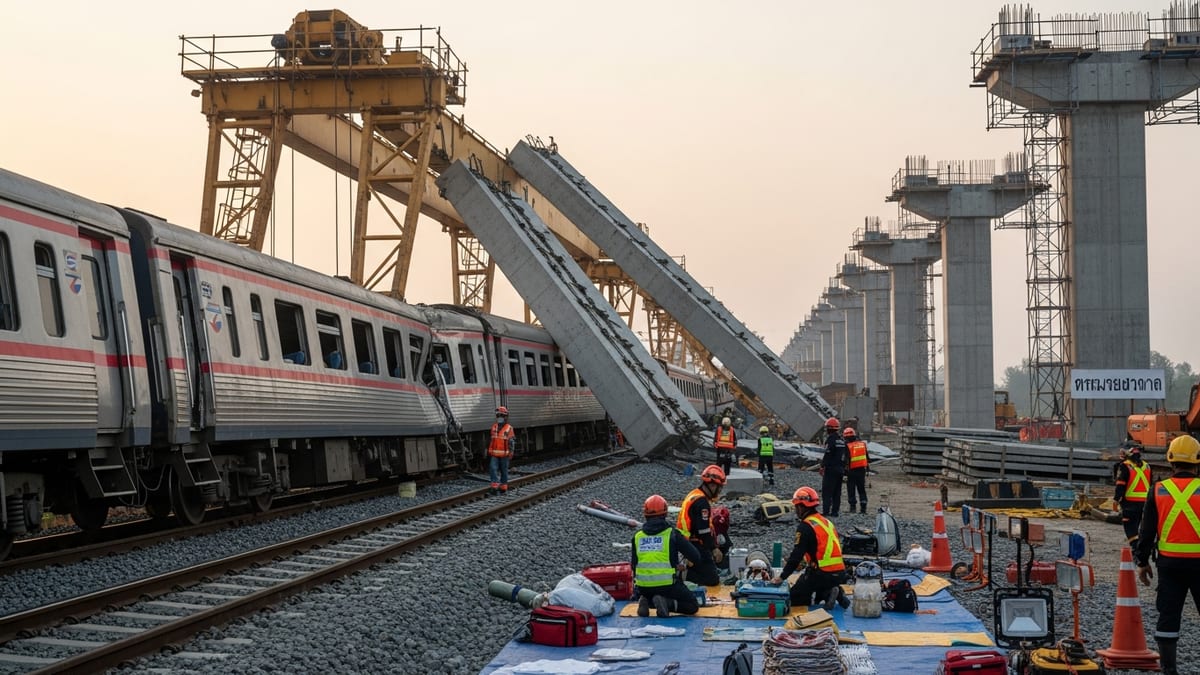
Clearance Milestone at the Derailment Site
Recovery teams have completed the complex task of lifting and removing derailed freight wagons from the right of way, a step described in published coverage as the turning point between emergency response and infrastructure restoration. Heavy cranes and specialized rail-borne equipment were used to stabilize the wreckage before it could be safely moved away from the running tracks.
Reports indicate that work at the scene proceeded in phases, with responders first securing any compromised cars, then cutting and lifting damaged components to a safe distance from the track bed. This incremental approach is common in recent derailment cleanups where cars have come to rest at awkward angles or in hard-to-reach locations near bridges, waterways, or embankments.
Publicly available information shows that clearance operations continued on a round-the-clock basis to shorten the disruption window for both freight flows and nearby passenger services. The final clearance of wagons has allowed rail engineers to gain uninterrupted access to the damaged section of line for a full structural assessment.
With the line physically unobstructed, the incident response has entered a new stage focused less on removing debris and more on ensuring the long-term safety and reliability of the route.
Track Repairs and Inspections Underway
Engineering teams are now concentrating on the permanent way itself, including rails, sleepers, ballast, and associated signaling infrastructure. Initial visual checks are being supplemented by more detailed measurements to identify twists, depressions, or alignment issues caused by the weight and movement of the derailed train.
According to recent rail incident coverage from other regions, typical repair programs after a freight derailment can involve replacing several hundred meters of rail and sleepers, re-tamping or renewing ballast, and inspecting buried cables or trackside cabinets that may have been struck by debris. In severe cases, overhead power lines or track drainage systems also require reconstruction before normal operations can resume.
At the current site, early indications suggest that teams are prioritizing the restoration of at least one track where the route is double-tracked, allowing a controlled resumption of limited traffic while more extensive work continues on adjacent infrastructure. Safety protocols require that every repaired component be stress-tested, with verification runs carried out before any regular passenger services are allowed to operate through the affected section.
Rail operators in previous incidents have emphasized that this inspection phase is often more time-consuming than the initial clearance, but essential to avoid further disruption or secondary faults once full traffic resumes.
Service Disruption and Gradual Resumption of Traffic
While the derailment involved a freight consist rather than a scheduled passenger service, the location of the incident has had a noticeable impact on passenger timetables in the wider corridor. Published operator updates point to service reductions, diversions, and in some cases replacement buses where no viable alternative rail route is available.
With the derailment site now cleared, limited services are expected to pass through under temporary speed restrictions as repairs progress. On comparable routes affected by recent derailments, early trains have been routed over a single operational track with extended journey times, while freight movements are carefully sequenced around peak passenger periods.
Booking platforms and journey planners for nearby commuter and intercity trains continue to flag residual delays and short-notice alterations. Travelers are being advised in public information notices to allow extra time, check for last-minute platform changes, and be prepared for crowding on certain departures as capacity remains constrained.
Freight operators in previous cases have often needed several additional days to clear backlogs, as priority is given to restoring core passenger flows before heavy freight schedules return to normal levels.
Safety Context and Infrastructure Resilience
The latest derailment unfolds against a backdrop of growing public interest in rail safety and infrastructure resilience. Recent years have seen several high-profile freight and passenger incidents worldwide, prompting renewed attention to track maintenance regimes, speed controls, and the performance of monitoring systems that detect faults before they lead to accidents.
According to summaries of recent rail accidents, single-track routes and older infrastructure can be particularly vulnerable, as recovery operations are more complex and often require longer closures. In contrast, multi-track main lines sometimes permit partial reopening once one track has been repaired and proven safe, even while heavy engineering work continues nearby.
Specialist analyses of past derailments highlight the importance of robust inspection programs, including regular ultrasonic rail testing, ballast condition surveys, and real-time monitoring of track geometry. These measures are designed to catch wear, heat-related distortion, or drainage problems that might otherwise contribute to a derailment or complicate recovery efforts.
Rail infrastructure managers commonly use the aftermath of such incidents to review local maintenance records, signaling performance, and rolling-stock condition, with any relevant findings feeding into broader safety improvement programs across the network.
Advice for Travelers in the Affected Region
For travelers planning journeys through the region surrounding the derailment, the most immediate effects are expected to be longer journey times, altered stopping patterns, and possible transfers to bus services on certain legs. Publicly available journey updates are continuing to recommend that passengers verify their specific train shortly before departure.
Where alternative rail routes exist, timetables may be adjusted to channel more services onto parallel lines, potentially shifting congestion rather than eliminating it. Travelers connecting to airports, cruise departures, or time-sensitive events are being encouraged in published advisories to build in additional contingency time and to consider earlier departures if possible.
Hotel and tourism operators close to the affected corridor may experience a short-term rise in same-day inquiries from passengers whose connections have been missed or whose trains have been curtailed. Some local tourism organizations have used similar situations in the past to highlight nearby attractions accessible despite the disruption, aiming to salvage travel plans where possible.
Although clearance of the derailed train is a significant turning point, rail users can expect a period of transitional timetables and intermittent disruption while repairs are finalized and the line is progressively returned to full capacity.